Showing posts with label USDA. Show all posts

Monday, July 16, 2012

on my mind 07.16.12 - meg's edition

news | photo: mconnors
Normally this is where I write about what's on my mind and share information and links on a variety of food, nutrition and holistic health topics.  Today we have a guest post from Meg in Connecticut who has been reading along for a while and was inspired to put together this list of links.

Triage Your Food - this excellent tip from Lifehacker claims that by creating a triage box in your fridge you can keep track of what needs to be eaten first and possibly save $100 per month or more.  I'm currently scrounging around my bin collection to see what I have that can be repurposed so I can implement this very idea.

USDA 'playing chicken with safety' - Essentially the government wants to turn the inspections over to the companies themselves.  This is not the first time this sort of issue has come up and I am assuming it won't be the last.  Unfortunately this is like putting the fox in charge of the henhouse and I do not believe that safety will continue along its current levels which are already not good enough.

Maryland politicians chicken out on arsenic ban - Yes, there is arsenic in chicken feed.  No it is not necessary.  Yes chickens, and people, would be healthier if it was removed from the feed.  The producers put it in there to reduce or eliminate coccidiosis, a common problem with overcrowded poultry conditions.  The dangers of arsenic go beyond the exposure in the meat, the run-off present in chicken excrement also poisons water supplies and the environment.  Buying organic chicken or from a a farmer you know and trust is the only way to avoid exposure to this toxic metal.

Ag-gag laws in five states - I find this very disturbing.  Producers are so concerned about public opinion if consumers know what they are really doing that they have managed, in five states, to successfully gag anyone who tries to report on them.  So what are they hiding?  Poor conditions, inhumane treatment of animals, unhealthy and unsanitary conditions, and possible/probable contamination which can affect the consumer.

USDA needs to label mechanically tenderized beef - meat that is tenderized by machine is considered "non-intact" and therefore has more surface area.  This higher level of surface area provides more growth medium for bacteria, therefore requiring a higher cooking temperature to avoid illness.  This issue has apparently been under review since 2009.  Quite frankly I'm not sure what the holdup is, this could prevent illness and bacterial outbreak and makes perfect sense to me.

What's inside the 26-ingredient school lunch burger - The first ingredient is meat and the second is water.  But the third ingredient is soy flour (hmmmmm.....is there no allergen label in those school cafeterias?).  Most of the ingredients are not food and should not be in there, including "natural" flavor and disodium inosinate both of which are key words for MSG, and caramel color, which the Center for Science in the Public Interest says is a carcinogenic ingredient.  Last time I made burgers I had just six whole food ingredients, meat, egg, onion, parsley, oregano, and salt.  No chemicals, no harmful ingredients.  What's in your burger?

Paper Mache Carrot Pencils - a really cute craft idea to encourage veggie interaction.

Regulating sugar like alcohol - This is an opinion piece from CNN which points out all the reasons that sugar is so bad for our health and how difficult it is to control in our diet.  If nothing else it should at least help you to be more cognizant of how much sugar you may actually be consuming in your diet without being fully aware of it.

Growing Your Own Veggies - more and more people are turning to the idea of home gardening.  Not only to combat the rising cost of food or the increasing food contamination issues, but because growing food is fun.  And other people are learning how to identify, forage for, and eat weeds.


Tuesday, June 5, 2012

antifreeze in your ice cream

ice cream | photo: fruhstuckbeistaphanie
Ah, those lazy, hazy, crazy days of summer.  Hot, humid, sweltering temperatures just beg for you to stop and enjoy a cold frozen confection.  Just the thing to cool you off.  Or not.

If you are looking for a cool summer treat you may want to consider making your own frozen confections.  It turns out that there is a little known ingredient called propylene glycol hiding out in your ice cream.  Considered a "non-toxic" antifreeze (as opposed to ethylene glycol which is highly toxic) many manufacturers use it in a wide variety of foods, especially ice cream.  While it prevents your car from freezing it also keeps your ice cream smooth and prevents ice crystals from forming.  Homemade ice cream turns fairly hard once frozen completely but this doesn't seem to happen with a lot of commercial ice creams.  Now you know why.

Looking for it on the label provides an even bigger shock.  Propylene glycol is not listed.  Why?  It turns out there is a, previously unknown to me (and presumably all of you), USDA regulation which covers incidental food additive labeling.  This labeling allows the manufacturers to not include this ingredient on the label.  My research so far seems to indicate that propylene glycol is covered under this regulation.

Unfortunately it does not take into effect the "ick" factor (after all who really wants to eat anti-freeze, even if it is the "non-toxic" variety?).  Nor does it take into effect the fact that there are people who are highly sensitive to the substance.  While I don't know how much propylene glycol is in ice cream I'm assuming it's not a huge amount.  However if you eat a lot of ice cream, or frosting, or other foods that contain it you could be getting a significant exposure.

Apparently people who suffer from vulvodynia and interstitial cystitis can be particularly sensitive.  It's known to cause skin problems when it appears in lotions, asthma or other allergies in children exposed through airborne sources, and large doses administered orally have been been shown to have a depressive effect on the central nervous system in animals.  The challenge with the large dose testing is that because it's not labeled we do not know how much we may potentially be exposed to through ingestion or through osmotic skin absorption.

What can you do to avoid it?  That's not so easy since it's not labeled.  Still want those creamy, cool summer treats?  Consider making your own.  Here are a couple of recipes that really hit the spot when the temperatures are climbing outside.

Strawberry or raspberry water ice, recipe from Good Things by Jane Grigson

1 lb. strawberries or raspberries
1 cup sugar
1-2 cups water
juice of 1 lemon
juice of 1 orange
5 tablespoons orange liqueur, or kirsch
2 egg whites (optional)

Put the fruit through a blender.
Make a syrup of the sugar and 1/2 cup water.
When it is cool add the puree and strain.
Flavor to taste with lemon juice.
Dilute with the extra water if required.
Pour into a container, stirring the frozen sides of the mixture into the more liquid middle part every so often.  With shallow trays this needs to be done every half hour; deep boxes can be left longer.
In 2-3 hours, the time depends on the depth of the mixture, you will have a thick mush of iced granules, called a granita.
IN 3-4 hours you will have a firm but not impenetrable block of water ice ready to be turned into sorbet.
Beat the egg whites in a large bowl until they're stiff.
Add spoonfuls of ice gradually, if properly done the mixture blow up to a mass of white foam.
Refreeze in a larger container until the sorbet has the consistency of firm snow.
Add the liqueur gradually at the end during the last stirring; with the sorbet add when ice and beaten egg white are mixed together.


Vanilla Ice Cream, recipe from Nourishing Traditions by Sally Fallons
makes 1 quart

3 egg yolks
1/2 cup maple syrup
1 tablespoon vanilla extract
1 tablespoon arrowroot
3 cups heavy cream, preferably raw, not ultra-pasteurized

Beat egg yolks and blend in remaining ingredients.
Pour into an ice cream maker and process according to instructions.
For ease of serving, transfer ice cream to a shallow container, cover and store in the freezer.

I have found that adding 1-2 cups of fresh fruit makes a wonderful addition to this recipe


And in a side note: as an outcome of my research I did manage to find an online source for propylene glycol free flavoring.

disclaimer: cmp.ly/5


Tuesday, March 20, 2012

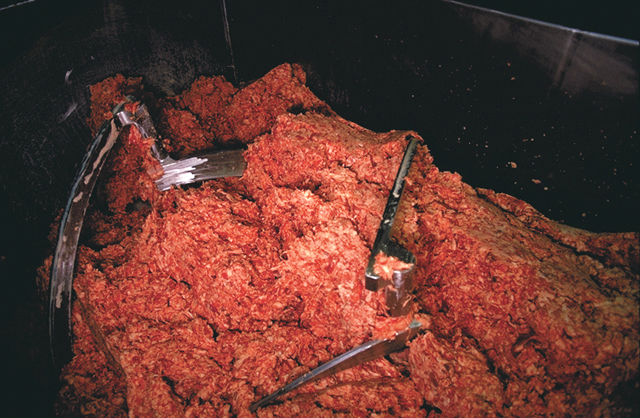
pink slime clarified

ground beef | photo: Rainer Zenz
One reader contacted me asking, "What cafeteria food is made with this pink slime stuff?  I've never heard about this and [my son] is now eating in the cafeteria at public school.  He took his lunch every day for four years but not this year.  I was just worried about the nutritional value of what he was eating but now, this is creepy."

The quick answer to your question is any hamburger product is potentially made with pink slime.  The industry term is actually "lean finely textured beef."  It is a meat-product made from scraps and trimmings, heated, de-fatted, and treated with ammonium hydroxide.

Current federal regulations say it does not need to be listed as an ingredient and reports suggest that it can be the basis for as much as 50-70 percent of "hamburger" meat.  Although many fast food restaurants are backing away from it in response to consumer disgust, the industry still wants to sell it because it is cheap and profitable.  The USDA has just approved it for school lunches.

News reports indicate that in response to growing outrage by consumers, schools will be allowed to opt out of receiving this product.  Not, however, until next Fall and not until after currently signed contracts have been fulfilled.  I assume there will be schools which will claim they didn't hear from enough families so they signed contracts and it will continue to be available in the school food for some time to come.

There is a petition being sent to Agriculture Secretary Tom Vilsack (started by Houston resident Bettina Elias Siegel who runs the blog The Lunch Tray) urging a ban of pink slime in schools.  Although I no longer have children in the public school system I am furious that my tax dollars are being spent to feed garbage to children and I have signed.

Current research shows that this product is also in grocery stores.  However, once again, because it is not required to be labeled you may not know.  As of today, March 20, 2012, the most recent list I have been able to find indicates the following:

Pink Slime NOT In Grocery Store:

Costco, Whole Foods, HEB, Ingles, and Publix

Pink Slime ALLOWED In Grocery Store:

Safeway, Stop&Shop, Kroger, Giant, Frys (I'm going to assume this includes Randalls since they are owned by Safeway)

Stores Not Responding About Pink Slime:

Walmart, Food Mart, Fred Meyer  (I'm going to assume this includes Sam's Club since they are owned by Walmart)

If your store is on the list for allowing or not responding the ONLY way to avoid purchasing this product is to purchase organic ground beef as it is, to the best of my knowledge, fillers are not allowed under the rules of organic production.

Monday, January 30, 2012

on my mind monday 1.30.12

newspaper | photo: mconnors
Once again, it's time to see what's on my mind.  These are the articles that have come across my desk and that I am interested in this week.

My Subversive (garden) Plot - Roger Doiron's funny TEDx talk about gardening and food.  While it's funny there's also a message.  He talks about how we are going to feed people and how we need to grow more food to keep up with the growing population.  But we need to do so with less. Less oil, less water, less farmland, less genetic diversity, and so on.  I highly encourage you to watch the clip, it's worth the time.

Local Food Sovereignty Being Challenged in Maine - Roger's talk, above, lead to to search for food sovereignty.  I discovered that in some ways Maine is ahead of the curve.  Hey, they voted in many towns for food sovereignty - allowing cottage food industries to come into existence and grow.  But then there's the challenge that comes up from one farmer who is being challenged.  I am continually amazed at how major corporations produce harmful food, salmonella laden peanut butter, the massive egg recall of 2010, and others.  There appears to not only be very little consequence for these companies for knowingly producing bad food, but the government is increasingly going after small producers whose food is not contaminated or harmful.  Their primary crime seems to be that they are small producers.  Doesn't make sense to me.

Big Pharma Is Putting Microchips in Drugs - This article disturbs me on a lot of different levels.  First of all, I don't want to be microchipped.  For any reason.  Second of all, I'm not convinced that the data collected from this will be able to take into account bio-individual response to the medication or to other lifestyle issues.  I see this as a potential gateway to the doctor deciding that based on your results you need more medication.  Thirdly, I think it has the potential to go massively awry.  We are not meant to eat or ingest microchips.  One of the thoughts that occurs to me is that although right now we can know if we have it because the chip transmits to a patch on the skin, what if they find another way for the chip to transmit.  Then we won't know if this is in our medications.  Just not a good idea.

Why Woman Should Stop Their Cholesterol Lowering Medication - I was stunned to learn that for post-menopausal women, taking statins can increase their risk of diabetes by as much as 48%.  That's an enormous risk.  Cholesterol is important to our health.  It comes from two sources, either we make it naturally in our liver, or we ingest it from our food.  In the rush to reduce cholesterol many of us lose sight of (or are unaware) that cholesterol that is too low is also unhealthy.  Studies done in 2000 show that low cholesterol (below 160 mg/dl) can cause anxiety and depression in otherwise healthy women.  And other studies show that reduced cholesterol (and saturated fats in the diet) can increase the risk of hemorrhagic stroke.

    All of the above indicates a need to look carefully at your diet, your cholesterol intake and cholesterol levels before taking statins.  As a side note it is important to know that if you are taking statins you would do well to also take CoQ10.  Statins deplete CoQ10 from your body.  Adding it to your supplemental routine can help prevent or reduce some muscle problems that can go along with statin use.  


Monday, January 23, 2012

on my mind monday

newspaper | photo: mconnors
It's Monday and these are the news articles that have caught my attention from around the web:

A look at the $175 in your compost - That's how much many Americans throw our per month in food.  Most of it probably goes straight to the landfill not to a compost pile.  Wherever it goes, however, is a huge waste of food and resources.  We work hard at our house to make good use of leftovers, to plan what I call sequential eating, and menu planning.  This idea of not wasting food ties in with what Jonathan Bloom has been promoting for a while through his book, American Wasteland, and his Wasted Food blog.  Given the rising cost of food, it makes even more sense to think about what we're eating and how much we're buying.

Walnuts Are Drugs - Says FDA - seriously?  This is just ridiculous.  There are large numbers of scientific studies showing the health benefits of walnuts but apparently this is not good enough for the FDA.  It kind of makes me wonder how oats managed to get their approval for their ability to lower cholesterol (which they do.  There are studies to this effect and yet oat producers are not being told they cannot use those studies).  I have no problem with stopping unvalidated health claims, but where there is evidence that shows the healthful benefits why is the FDA stopping them?  Of course this is the same agency that told the cherry industry that they couldn't promote the healthful benefits of cherries, even with USDA funded studies that showed exactly what the producers were claiming.  Obviously there is a huge conflict of interest between food and drugs.

Fruits and Veggies Challenge - ever since reading last week about the sad fact that the USDA is not going to use the clever videos promoting fruit and vegetables they received in response to their contest, I have been working my way through watching the videos.  They're all good, one I like a lot is the Fruit Veggie Swag video.  I find it ridiculous that the USDA has received some wonderful replies that clearly promote eating more fruits and veggies and they won't use them.  I would much rather watch these than an over-hyped unhealthy fast food ad.

Just Label It - This link takes you to a video by Robert Kenner, the filmmaker who made Food Inc.  I am a huge proponent of food labeling for all sorts of reasons.  I am very much pro-label for GMO and believe we all have a right to know what's in our food.  The website also allows you to tell FDA Commissioner Hamburg how you feel about this issue.


disclosure: cmp.ly5

Friday, November 18, 2011

pizza as a vegetable


My mind is reeling.  Last week Congress declared pizza a vegetable, again.  Having just returned home from the Wise Traditions conference of the Weston A. Price Foundation (WAPF), where the focus was on whole, nourishing, traditional foods, to a this kind of absurdity is mind boggling.

I should not be surprised, this has been policy up until now but I confess I'm appalled to think that anyone in our government is stupid enough to believe that the tomato paste on a slice of pizza in any way counts as a serving of vegetables.  It's barely got any nutrition at all and comes wrapped in highly processed, chemically conditioned dough, covered with cheese that is no doubt loaded with rBST and antibiotics and possibly some preservative-laden pepperoni.  As the video above states, we, and our children, are having their taste buds conditioned to prefer unhealthy foods.

While this is nothing new, it is certainly getting a lot of press.  I hope it's also getting a lot of attention from a lot of parents.  This is not what you want to feed your kids to have them grow up strong and healthy.  I encourage everyone who cares about these issues to get involved:

Monday, October 24, 2011

food day


Our food system in this country is broken.  Many people don't have access to real food, often eating highly processed, low nutrition food; they live in what are called food desserts.  Much of our food supply is not raised in a sustainable, environmentally friendly manner.  Many of our food animals are raised in confined quarters making their lives less humane.  And Big Ag receives massive subsidies from the government, our tax dollars paying for processing instead of supporting wholesome, whole foods and the farmers who raise them.  This in turn often leads to more ill health and more tax dollars supporting a sick-care system.

Food Day is an organization that is lobbying Congress to make changes to our system.  To help bring real food back to our schools and our neighborhoods.  To help educate people about what truly constitutes a healthy diet.  To bring real food back into our homes.  This issue is more than just me or you.  It's our neighbors, our community, it spreads outwards and I believe it is a vital part of our future.

With more and more food recalls happening, with the shrinking of the American family farm, with the aggressive advertising that junk food producers create, our health as a nation is rapidly declining.  We need to turn this cycle around.  I believe one way to do this is to speak up, to tell your elected representatives how you feel.

I rarely publicize campaigns on this blog but in this particular instance I feel moved to do so because this one issue encompasses so many of the challenges facing our food supply.  I have signed the petition and I encourage you to visit Food Day, learn more about the issues, and sign.

Monday, August 29, 2011

eggs again

egg | photo: Kacper "Kangel" Aniotek
A recent article brought to light the fact that eggs are still not being appropriately monitored and companies are free to do what they wish.  Unfortunately egg producers are apparently not required to tell the federal government when they find salmonella, nor are they required to share the names of companies under which they sell their eggs.  There's no egg recall currently underway but I believe it may not be long until there is.

I find it exceedingly strange that one agency, the U.S. Department of Agriculture, is responsible for overseeing the health of chickens, the FDA is responsible for whole eggs, the USDA is responsible for eggs if they are transported or broken (sold as liquid), and then the FDA is responsible again for eggs sold in retail environments.  It's enough to make anyone's head spin.

I have several thoughts that come to mind about this whole situation:

  1. Monitoring:  For years food manufacturers in all different areas of the industry have claimed that they are perfectly capable of monitoring themselves and that the industry does not require government legislation because the industry is so good as self-monitoring.  Obviously this (and other examples) prove that line of thinking to be fallacious.
  2. Consistency:  While I confess to not always being a fan of how the government does business with regards to food and/or nutrition, I believe this situation highlights the need for one agency that oversees all aspects of food.  Bouncing back and forth between agencies leaves too many gaps in the system.  Gaps that manufacturers are only too willing to take advantage of, leaving the consumers as the ones at risk.
  3. Oversight:  On the one hand there is too much transparency to certain parts of the system and too much secrecy regarding others.  Federal agents tell egg producers when they're coming to visit?  Or allow the producers to suggest dates that might be convenient for them?  How is that helpful?  I think we're all smart enough to know that you don't warn someone that you're coming if you want to check and make sure they're doing what they are supposed to.  And if, in spite of these pre-arranged visits, the inspectors find problems they don't tell the public and there are no sanctions?  Then why bother to go in the first place?  And how does this in any way protect the consumer?
  4. Location:  With the vast majority of egg farms located in Iowa this type of situation once again highlights how far removed we are from our food.  I believe it is very important for consumers to consider shopping a little closer to home.  Get to know your local farmer, farmer's market, or join a CSA. Pay attention to where your food comes from.  Does this mean that you won't be affected by illness or other disease?  Honestly no, but I believe your chances will be reduced.  The vast majority of people I know who are farming in more of a small-holding are more conscientious about the quality of their product.  I believe they are not as overwhelmed by the demands of large scale farming which leads to many practices which in turn can make the food chain more susceptible to problems.
We all need to become informed consumers.  We need to be aware of these problems and we need to start paying attention to our food.  I spend what many consider to be far too much time looking at information about food, health and nutrition on a daily basis.  I also spend a lot of time letting people know how I feel and what I think.  I do this because I believe it's important.  

Until the manufacturers and the government know that we, as consumers, are not willing to idly sit by and let them make poor decisions about our food that affect our health, they will continue to do what they've always done -- support the manufacturer over the consumer.  Marion Nestle has written a wonderful book about this which has many eye-opening passages in it that show how consumers are, in some ways, seen as product of the industry rather than a valued customer.

It goes back to something I've said a number of times, not only do we need to become informed, we need to vote; with our voices and with our wallets.  I'm thrilled to see more products in the store that are labeled from local sources or that are made without artificial colors and preservatives.  These changes are happening because people are speaking up.  These ideas are being implemented because at the end of the day the manufacturers want your money.  And while I believe they would far rather have an uninformed, apathetic consumer on the other end of their production line, they will change if they have to in order to get your business and your dollars.

So while it seems like a long way from eggs to artificial colors, the process and the end result is the same.    Read the labels, know what's in your food, and be willing to speak out about how you feel.

Saturday, August 6, 2011

food rights

milk | photo: wax115
In case you missed it on the news, there was a raid of a store in California that was selling raw milk.  The owner and two suppliers were arrested and an unknown amount of raw milk was dumped.

As I understand it this was a store that essentially functioned as a buying club.  Consumers were required to be members before they could buy.  I will grant that the government claims the raid was in part because the store owner did not have the proper permits.  The owner apparently thought that because his operation was a private buying club not a public place of sale he did not need one.

However leaving aside that permitting misunderstanding, this is not the first time that there have been raids against raw milk sellers; last May there was a raid in Pennsylvania and there have been many others.  For some reason it appears that raw milk and it's advocates have been targeted and are being dealt with by force.

I find this sort of thing disturbing for a number of reasons:

1.  According to the Weston A. Price Foundation's Real Milk Campaign there are lots of health benefits from drinking raw milk.  If the government feels that raw milk is so much of a problem then create legislation for it.  But honestly Diet Coke is horrific to our health and there is no legislation there.  This over-reaching attack on one product seems excessive and misplaced;

2.  Those who want to drink raw milk should have access to it, they are aware of the risks and most of them are dealing with farmers that they trust to run a clean operation; those who don't want to drink raw milk don't have to.  I'm not sure how this is considered a problem, raw milk is always clearly labeled and is only sold to those who specifically search it out;

3.  The raids frequently go after raw milk producers or stores where they sell raw milk yet I am easily able to buy raw milk cheese and butter at my local big-chain grocery store.  In order to make these products the producer has to start with a raw milk product.  If the raw milk cheese producers can get approval to make and sell their product why not the base product?

I find all of this attention toward raw milk producers confusing in part because in other areas the governmental agencies in charge are clearly not doing their job.  In the recent ground turkey recall it has come to light that the USDA suspected a problem two weeks before it actually forced the recall.  The egg recall from last summer revealed that the owner had years of health and environmental violations.  And the peanut butter recall from two years ago showed that the company had serious health violations but was never shut down.  So major manufacturers appear to get a nod-and-a-wink while farmers and consumers are arrested and subjected to armed arrest?

I feel that those who want to eat a certain way are being denied their rights.  Going back to point number one above, smoking kills yet we still sell cigarettes, alcoholism and drunk driving are a big problem yet we still sell alcohol.  I don't see raw milk as being harmful or costly to society yet it's being portrayed as this over-reaching evil product that kills.  I'm truly puzzled by this attitude.  Is it because cigarettes and alcohol and junk food generate big profits and those industries can afford to fund political legislators while small farmers and small groups of consumers can't?  And why does it seem that the efforts of those agencies which are supposed to be protecting our food supply are being unevenly thrown against a minority population that wants nothing more than what they consider to be a healthy, nutritious food?  I know many people have started to buy cow shares in order to preserve their right to have access to raw milk but even that appears to be under assault.

I have come to believe that raw milk is the next dairy battle.  Although I remember drinking it when I was a kid I don't recall it being popular or easily accessible and I certainly don't remember news headlines about it.  Now that it is more available and more in demand it has suddenly become a problem?

When organic milk became more publicized for it's lack of hormones, antibiotics and pesticides the dairy industry pushed back hard and tried to block labeling that stated milk was "rBGH free" because this would cut into their profits (note: rBHG is sometimes referred to as rBST).  They did win a legislative ruling that milk which was labeled rBGH free also had to carry a statement that there was no difference between milk with and without the hormone.  This was later shown to be not true with one study reporting rBGH milk had "Fat levels, particularly long chain saturated fatty acids incriminated in heart disease, are increased, while levels of a thyroid hormone enzyme are increased."  For many people the only way to ensure added-hormone free milk was to purchase organic which is legislated not to contain it.


I will make a side note here - just because a cow is organically raised does not mean that it is not still in some sort of a feedlot operation.  The organic label does not automatically ensure fat, happy, grass-fed cows regardless of the cute pictures (which is sad because milk from grass fed cows is better for you).  Organic simply means that cow is not fed GMO feed, not shot up with artificial hormones and not pumped up with antibiotics.  If you want grass-fed, free-ranging cows you need to either raise them yourself or get to know a farmer who raises their animals that way.


Now that manufacturers have lost the organic dairy war and more organic dairy products are arriving on the shelf regularly, the big producers are getting into the business themselves.  I'm sure much of this is profit driven.  If people are willing to pay more for organic dairy and you can't legislate it away then you might as well join in.  But raw dairy is different.  It doesn't travel well unless it's been turned into something like cheese or butter.  That means a shift back to local smaller scale farming.  I guess that's somehow seen as a problem.  

Monday, April 25, 2011

mom-advocate

Social change happens slowly. Sometimes it's difficult because the organizational mountain that is entrenched does not want to be moved.  With the second season of Jamie Oliver's Food Revolution well underway we are once again seeing the challenges that many parents face trying to get better choices for their children at school.  As this video from the last meeting for the National School Lunch Program shows, manufacturers and lobbyists are extremely prevalent (although not always very visible) in making school food decisions.  These standards are only revised once every five years; with this highly politicized structure, our children are the ones who suffer the consequences.

A friend of mine, P.W., shared her recent frustrations with her school district, the mixed messages kids are getting, and the challenges of helping adolescents to better understand nutrition and health so that they can make better choices.

In order to protect privacy names and identifying information have been removed. These letters were edited for clarity. 

P.W. wrote to her school district:

Our daughter saw "Super Size Me"  today in health class at school and it really made an impression on her. Talk about NOT practicing what you teach! Good nutrition is so highly tied to academic success and yet my daughter's options for a school lunch are absolutely dreadful. Our daughter has access to multiple fried foods with a Gatorade every day. Your lunch program conditions them to a high fat, high calorie junk food diet. The lack of nutrition causes them to crave more, as well as affecting their overall development. I do not understand why the schools are able to teach the 
horrors of a junk food diet and then NOT offer them a sensible lunch that will provide the nourishment they need. It grieves me to think that this may be the only decent meal some of these kids have each day and it is junk!


This is something that has bothered my husband and I since our children were in grade
school. To see this hypocrisy is more than I can take.


I am certain that you must know what a good nutritional diet really looks like. I can only assume that there are other factors that are causing the schools to fail our children this way. What do I need to do to help you fix this problem?

[In order to protect the words and privacy of the Health Teacher I am summarizing their responses]

The teacher wrote to my friend explaining that there has not been a fryer in the school kitchen for 10 years, that all hot food is either steamed or baked. The school does have a conveyor oven that gives a crisp texture without frying.


The school is not allowed to serve any product over 23 grams of fat and follow strict portion sizes.

The nutritional plan has changed to allow for higher fiber, lower sugar, lower fat foods.

Cucumber slices and green bell peppers are offered during the week, fresh fruit is available on each school line every day and beverage choices available daily are water, 100% fruit juice and low fat milk.

The teacher remarks that there is a challenge in providing healthy menu choices that the kids will want to eat within their budget.

P.W. was invited to research the nutritional information of the food online at the school's website. The Health Teacher also suggested that the child should be educated at home about portion sizes and healthier choices.

P.W. responded:

It is encouraging that our daughter is learning about better nutrition,
 recognizes the value of fresh produce and is making an effort to make better
 choices. I appreciate her having access to fresh fruits and vegetables 
at school. It is also somewhat comforting that you are limiting the amount 
of fat and using a cooking process that avoids frying. However when I researched 
the menus and nutritional information on the Parent Access site, the hot
meals are all basically junk food and do not have much variety.

I sympathize 
with your challenge of balancing a budget with high product and labor costs,
 but I believe that we should offer a better and more varied menu and it can
 be done without breaking the budget. My concern is that the junk food
 offered daily, even though it is a "healthier" variety of junk food, clearly
 needs to be a small percentage of our diet and yet it is the majority of 
what is offered. Although you are making an effort to serve lower
 fat/higher fiber items, they still have the appearance, taste and texture of
 high fat. I don't see that they have much access to a home-style hot meal 
that isn't highly processed or available on a daily basis.

From the menu, it
 doesn't appear that much is made from scratch, much less from local products 
and it largely looks to be heat and eat. Preservatives and chemicals are just
 as much an issue as the empty calories of fast food.  From what I hear,
 much of the fruit offered is not fresh either, which translates into a much 
lower nutritional product. I also don't understand why our kids are only 
offered 1% and skim milk, when whole milk would be a better choice for most. 
Adding a full fat live yogurt to the menu would be a great addition, as well 
as seasonal melons, berries, grapes, and citrus. 


The other issue I have is that my daughter is on 4th lunch. This means that by
 the time she gets to have lunch, the cafeteria is out of certain things, 
others are over cooked or burned, or the lines are so long that time 
prohibits her from even eating some days. This cannot be considered acceptable.


In this age group, peer pressure and the school 
experience trumps whatever is being taught at home. It is a huge challenge 
for us to feed our kids well at home when their taste buds become conditioned to a fast food diet when attending school. Years ago, I had the
 privilege of being in a school kitchen that prepared food and distributed it 
to all the area schools. This district must be large enough to be able to support 
such a venture and be able to better utilize seasonal and local products, as well as to create a fresh high quality meal for our kids and staff. You have an 
enormous responsibility to our kids and I respect your challenges and 
appreciate your response, but I can't say that it provides me the assurances
 I was looking for and hope that a new approach is being considered.


P.W. Wrote me privately and shared:


Another thing that really upsets me is that when I was in school, there was a wash basin for the kids to wash their hands when entering the cafeteria. None of the schools here have that and supposedly, the teachers are taking the kids by the bathroom to wash up before lunch, but I don’t believe it. They have staph and other contagious diseases running rampant all the time and good hygiene is essential. There should be a state law that requires hand washing before meals in schools.


My take on all of this:

I frequently find myself very frustrated by school districts serving fatty, sugary, nutritionally deficient foods and then claiming that it is the parent's responsibility to teach their children to eat better and make better choices.  Many families that I know do teach their children these things and do provide much better choices at home.  However in the school environment there are not too many children who are going to choose from the highly limited often not-really-that-healthy option over french fries and pizza.  I believe the school has ice cream and cookies and fast food options because those are the more profitable items.

I know several children who are vegetarians and have heard disturbing stories of the distasteful looking or even empty salad bars that the cafeteria staff refused to replace or refill leaving that child with no viable option.

Earlier in the year I had the opportunity to speak with my local Great Harvest Bread company.  They had received an opportunity to bring whole grain bread, preservative free sandwiches into the school system.  However after a short period of time their contract was reduced to four schools and cut back in the number of days that they were allowed to provide.  They believe part of the reason for this reduction was because the school wanted to bring in Chick-Fil-A more times per day as that was a more profitable option for the school district.  Great Harvest was not allowed to send notes home to parents letting them know that this healthier sandwich option was available.

I believe it is an unfortunate truism that most children, even those who have received more nutritional education at home, will opt for high fat, high sugar foods because they are enticing.  By having an overabundance of these products the school virtually guarantees that they can feed children the least nutritious, cheapest foods and make large profits.

In defense of the school system I do agree that they have a difficult job trying to feed as many children as they need to with the minimal federal dollars allowed.  However this should not be an excuse to allow Pizza Hut, McDonalds and Chick-Fil-A lines in a school cafeteria.

I believe another part of the problem is that school districts simply do not want parents to be involved in the decision making or to have input into the nutrition served at the cafeteria.  School lunches have become a profit center, if not for the school then at least for the food service corporations.  Moves such as this one in Chicago disallowing lunches to be brought from home make me highly suspicious of the intent.  I believe, unfortunately, that many schools are marketing to a captive audience and can therefore preach one thing and do another.

I applaud P.W. and many others like her all around the country who are rallying on behalf of the kids.  Change is happening all across the country.  From the Edible Schoolyard to the Renegade Lunch Lady, Two Angry Moms, Better School Food, Local Food Dude and more, we need to push for the children to have decent nutrition and take back our cafeterias.

Saturday, April 16, 2011

budget (and eco-)conscious grocery shopping

Grocery shopping | photo: BotMultichillT
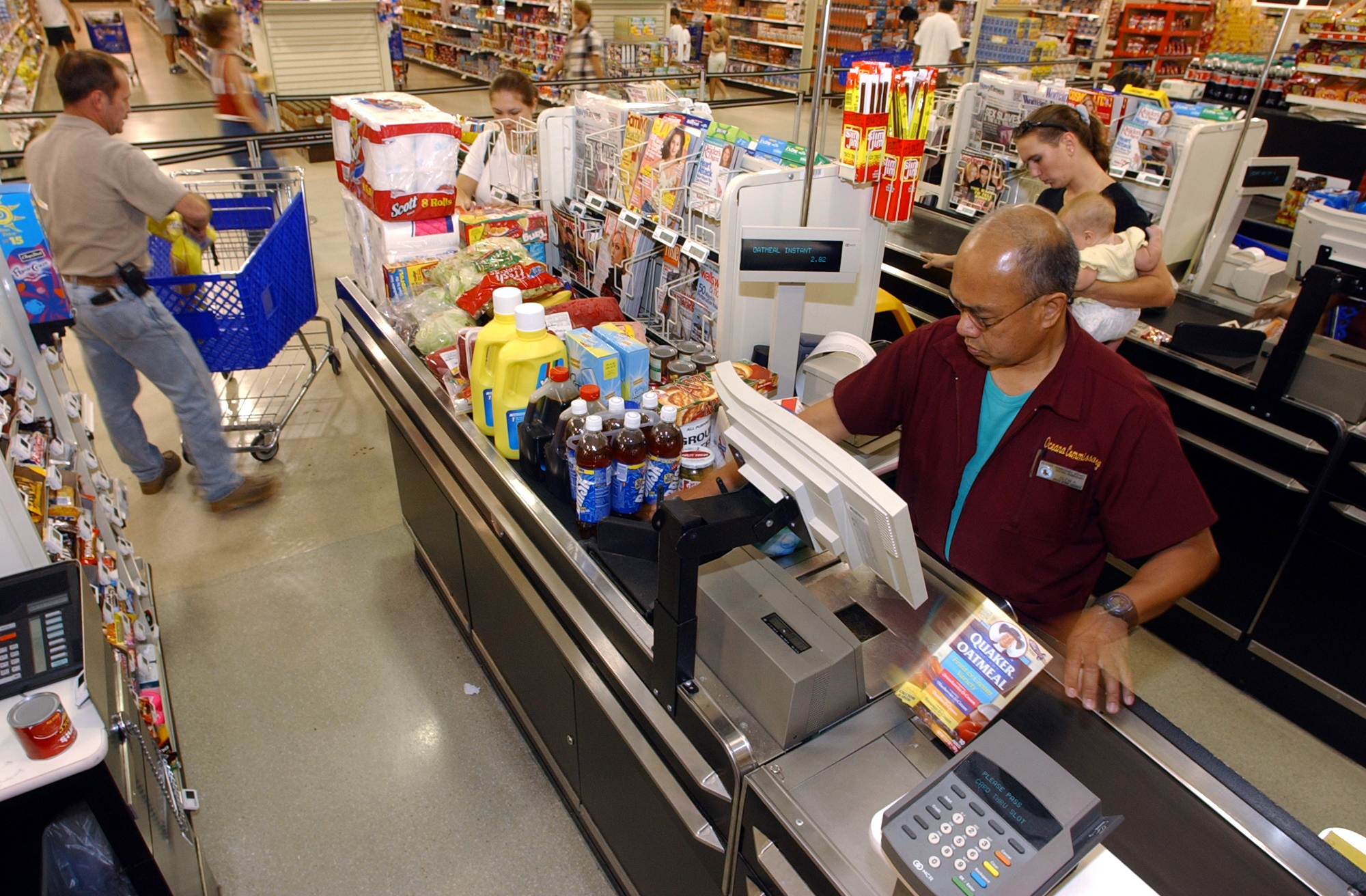
Several times in the recent past when I've given a lecture to a parent group or other organization one of the questions I've been asked is about grocery spending.  Many people are noticing that their grocery bills are going up but the packages are shrinking, as reported in a March 28, 2011 column in the New York Times.

As they look harder at their grocery bills people also question how much they are spending overall.  Wondering what other folks are spending.  Several have told me they are curious but afraid to ask, it seems rather personal and it may not be an apples-to-apples comparison.  After all the chances of two families buying everything the same is pretty minimal.

There is one resource that you can use to help you determine your food budget.  The USDA publishes a Food Plan document which they claim represents categories that people can use to see if they spend in various categories (Thrifty, Low-Cost, Moderate, or Liberal).  The link is to the last available publication as of the time of this writing, February 2011.  Our household consists of two adults, one teenager, two dogs and a cat.  I do include the animals because I buy food for them, even though I know this is not factored into the USDA document.  Our family currently spends in the Low-Cost category.  I'm comfortable with that for a few reasons.  Obviously the aforementioned animals, but also because we choose to spend some of our food dollars on certain organic foods.

Now I understand that not everyone can afford to purchase organic.  I don't know anyone who can afford to purchase 100% organic.  That being said, you can learn where to get the biggest bang for your buck.  The choices that you make are up to you so you need to define what works for you and your family.  One thing I have noticed over time is that certain organic foodstuffs are coming out in storebrands and the prices are dropping.  I call this voting with my wallet.

If enough people are willing to support these foods, producers will take notice.  When it hits the storebranding you know you've made an impact because grocery stores do not spend massive advertising dollars to convince folks to buy something, they let the big guns do that and they come in when they see it's something people want.  It happens all the time, and not just with food.  Look at what has happened to the cost of iPhones.  The first ones were extremely expensive.  Enough people bought them that in just a few months the price was slashed 50%.  The law of supply and demand.  We can effect the same change in our food.  If we choose to purchase foods without artificial ingredients or that are not GMO (and organic is the only way to tell at this point for some foods).  If enough of us do this it sends a message.

Okay, off the soap box and back to the post.  In the interest of helping folks save some money at the grocery store I'd like to offer my

Five Top Tips for Budget (and eco-)Conscious Shopping:

1.  If you're going to buy organic fruits and vegetables buy the ones that really matter.  The Environmental Working Group has put together a Shoppers Guide to Pesticides wallet card that lists the Dirty Dozen; those twelve fruits and vegetables that are most likely to be contaminated by pesticides.  They even have an iPhone app if you'd rather have it with you at all times.  The card also lists something called the Clean Fifteen; those foods that are least likely to be contaminated by pesticides.  So save your money by not purchasing those organic bananas and buy organic strawberries instead.

2.  Buy more whole foods.  Yes those organic apples may seem more expensive.  But how much is that applesauce?  And how much more applesauce can you eat than whole apples?  Orange juice?  Did you know that there is an average of four oranges in one eight ounce glass of juice?  That glass goes down pretty easy but I think most people won't sit there and eat four oranges in one sitting.  On average the more whole foods you buy the more nutrient dense your dietary intake.  Overall this should equate to less money spent at the grocery store.

3.  I truly deeply believe that organic dairy is the way to go.  It has no added hormones, no antibiotics, and the cows are not fed pesticide-laden grain.  What goes into that cow goes into it's milk so it makes sense to not drink or eat those products by choosing organic dairy.  Having said that, it's not always easy to find or afford 100% organic dairy products, I truly understand that.  If you cannot add organic dairy to your budget it is important that you at least purchase products that are free of rBGH.  This hormone was created to make cows give more milk.  But it doesn't go away just because the cow has been milked.  So we consume it right along with the cheese or yogurt or whatever dairy product we are eating.  You can download a free RGBH Free Dairy list for your state from Sustainable Table.

4.  Eat less meat.  Somehow we have become convinced that we NEED meat and we have to serve it at almost every meal.  Nothing could be further from the truth.  Most Americans eat far too much meat.  We could stand to eat more beans and other legumes.  A great source of protein with less environmental impact and far less expensive.  A package of lentils costs less than a dollar at my local grocery store and makes five cups cooked.  That's a LOT of lentils and a lot of protein.

5.  Waste less.  This is probably the biggest money saver out there.  Stop for a moment and think about how much food you may have thrown out in the last week, two weeks, a month?  That's all food that you paid for.  You probably even cooked it, increasing it's value more as you spent time and energy to create the dish which rotted in the back of the fridge before being sent to the landfill.  Jonathan Bloom has an excellent website about the topic of wasting less food and that's his book on the left there.

The premise is simple.  Buy less and you're likely to waste less.  Or at least buy less perishables.  And plan.  Plan not only what you are going to eat but what you might do with the leftovers.  I wrote about this over a year ago in my post on Sequential Eating.  By making a plan it does help to avoid waste which in turn helps to reduce your grocery budget.

If you have the space in your yard and you do wind up with some vegetable waste you can at least compost it.  This way it gets turned into good usable dirt that you can put into your garden.

It's important to remember that if you are making changes to your eating habits and to your grocery budget to make these changes gradually.  Change doesn't happen overnight.  In order to be successful at these changes make one at a time.  Once you've mastered one change you can make another and continue to improve your grocery habit (and spend more wisely).

Tuesday, January 11, 2011

food and money

The USDA is predicting an increase in all foods for 2011; depending on the item it is expected to range from 2% for things like sugars and cereals to as high as 5.5% for dairy products.  If you are interested you can see the chart here.  Part of the increase is due to the higher costs for corn and soybeans.  Remember, it's a cycle, what we eat needs to eat.  I actually anticipate that the costs for meat will be much higher than currently predicted due to more people deciding to purchase meat and dairy that is organic to avoid the GMO contamination of corn and soy.  These are two of the most heavily GMO crops but our government doesn't identify that so the only way to avoid it is to purchase organic.

There are a number of ways that you can save money on your food bill in the upcoming year:

Plant a vegetable garden.  Using your space for edible gardening can be attractive and save you food dollar costs.  During both World Wars Victory Gardens were planted in every yard and public park all across the United States.  It's a concept that I think many people are rediscovering.

 Even if you buy a tomato plant at the garden center and plant it in a pot you will still get far more produce than if you purchase your tomatoes at the grocery store.  And believe me, they'll taste better.  We've just re-arranged our side yard and brought in a load of organic dirt, working on creating a better vegetable garden.  We've also put in herbs and a few fruits in the yard.  

Here are a couple of books that I think are great for backyard vegetable gardening

Mel Bartholomew is the authority on getting the most out of the smallest space. If you have any gardening space available, even just one square foot, you'd be amazed at what you can grow.


Rosalind Creasy shows you how to incorporate beauty and function in your garden by making your landscape edible.


If you live in an apartment or don't have access to a plot of ground you can consider container gardening.  Even one  reasonable size container can grow a lot of tomatoes and basil or peas and mint or...read the book.


And there seems to be an increase in folks growing food on rooftops and terraces.


If you shop at warehouse stores frequently the prices are good but the quantities are huge.  Don't buy more than you need, after all 50 pounds of potatoes is a lot, especially in a family like ours with just three people in the house.  Just because the price per pound is low, if you wind up throwing out rotten potatoes (or anything else) you've just lost money.  If you really want the item consider saving money by asking family, friends and/or neighbors if they want to share these items with you.  This way you'll both save money and there will be less waste.

And speaking of waste...


According to Jonathan Bloom, author of American Wasteland, Americans, on average, throw away half of their food.  Half!  That's a mind-boggling concept.  Knowing, really knowing exactly what is in your pantry is a great start, learning how to be mindful of it is the next step.  Jonathan has a lot of great information on his blog to help you avoid food waste.  Don't want to read the book (although I highly recommend it)?  There's an app for that -- yup, a company called UniByte has created an app to help you better manage your food purchases so you will waste less.


If you do wind up with food waste, and some of it is inevitable such as potato peelings, egg shells, coffee grounds, and the like, consider composting.  This is also environmentally friendly in that the food scraps become usable dirt instead of going to the landfill where they cannot be used to grow more food.  

A little off the beaten path but for those who have access, inclination, and a sharp eye there is always the idea of foraging.  According to my friend Merriweather it is important to remember a couple of key points:

1.  Know what you are foraging.  Many edibles have an inedible counterpart that looks almost the same.  He points out that these inedibles wind up in either the "kill your kid dead" or "keep you on the toilet sick" category so it's important to be very sure of your identifications.

2.  Forage responsibly using appropriate tools to cut and dig rather than ripping and shredding.  This allows the plants to continue to grow and is the best way to forage.

3.  Make sure you have permission. Here in Texas, and probably elsewhere, plant rustling is against the law.  Getting a huge fine for public trespassing or theft is not going to help your grocery bill any.

While Merriweather sadly does not yet have a published book there are some great foraging books out there:


And last, but certainly not least, another way to save money at the grocery store is to learn to make your own.  One of my favorites is making my own granola which definitely saves money over the store-bought versions.  You can make your own pudding, soups, muffins, snacks, spice mixes, beverages, pickles, jams and much much more.  Currently I am fermenting kimchi on my kitchen counter, starting another batch of kefir and have just finished making another batch of bean sprouts.  These require very little hands on time and save quite a few dollars while providing healthful foods for my family.  Making your own has a number of benefits:

1.  It will save you money
2.  You will avoid extra packaging and commercial waste
3.  You will avoid additives, preservatives and chemicals (which you don't need in your diet anyway)
4.  Often when you make your own you make smaller batches so you are less likely to waste it

So here's to a new year, a new grocery budget, and new possibilities for your health.