Showing posts with label habits. Show all posts

Friday, January 11, 2013

three cookie syndrome

We're just past the holiday season and a lot of people are re-examining their eating habits. As I'm working with clients we have one habit that they all seem to be engaging in so I wanted to take a moment to address it.

It's a phenomenon that hits our subconscious when we are eating, especially when we are eating treats of some kind.

I call it the three cookie syndrome. It goes something like this:


  •  you decide to eat cookies 
  •  you open the package of cookies and see a serving size is two cookies 
  •  you eat three cookies 
  •  a little overwhelmed you say to yourself, “what the hell, I ate three cookies.” and then go on to finish the entire sleeve (or half a box, or some overwhelming percentage of the package).
For many people this is the beginning of the downward spiral that can signal the end of a diet or a change to eating plans. They give up, feeling that they are a failure, and feed themselves negative emotions and messages while not paying attention to their eating.

 Rather than allowing the consumption of an entire sleeve of cookies (admittedly not the best choice) to overwhelm us it is more constructive to simply acknowledge that we have veered off the path of our eating plan. Instead of wallowing in guilt or other negative feelings we need to remind ourselves that it's not an all or nothing proposition.  We can start again to rebuild our nutritional plan and to focus on making healthy choices. Sometimes that focus can come in the middle of that sleeve of cookies. Sometimes it happens immediately afterwards, more often it happens the next day.

 Eating well, eating to nourish and support our bodies means loving and accepting ourselves. Garfield says “Diet is die with a t on the end of it.” Rather than looking at our desire to change our food choices as a diet it does help to look at it as a nutritional plan. To remember that we are choosing to make different choices because those choices are supportive for our bodies.

For those who have an illness such as celiac disease, or a food sensitivity, eating those foods brings a fairly immediate negative body response. So we don't do that. For those who are choosing to make changes, it sometimes happens gradually. However it's never too late to start to make those changes. Simply remember what the goal is and why you are making these choices.  Treat yourself with loving kindness and take it one step at a time.


Like this post?  Use the "Share this" button on the bottom left
and share it with your friends


photo: Keith McDuffee

Tuesday, November 27, 2012

national caregiver's month - part 4

November is National Caregiver's Month. A time to focus on those who care for others, especially if that caregiver is ourselves. Dr. Vicki Bradley has created Self-Care Reminders for Caring Professionals and Family Caregivers to focus on those very special people. Part one of this series can be found here, part two here, and part three here.

But when can we care for ourselves?

I have been asked this question several times and I have an answer. We can care for ourselves now, all the time, and while we care for others. All we need to do is redefine self-care. The most helpful definition of self-care is to consider everything we do for ourselves as self-care. So, for example, the way we eat, sleep, breathe, and walk can all be ways to care for ourselves.

The following two self-care reflections are simple metaphors to encourage us to care for ourselves while we care for others. Both reflections are adapted from my book, Self-Care Reflections.

The Dance of Self and Other Care

We need to take care of us while we are taking care of them. We cannot wait until we have some free time or a vacation. We need to care for ourselves now.

We can use the metaphor of a dance to visualize caring for them and us during each day. In a dance, let's say a dance with two partners, the couple steps forward and, then, back - over and over again.

In the "dance" of self and other care, we make choices all day, every day to take care of them and us. One dance step is a movement to help ourselves. The next step is a movement to help them. We can dance through our day!

How will your daily dance steps reflect your self-care?

The Tapestry of Self-Care and Other-Care 

Most information about self-care emphasizes self-care as "taking a break" (getting away from) and "venting" (talking) about the persons in our care. The underlying belief seems to be that we cannot take care of ourselves unless we separate ourselves from the persons in our care.

"Taking breaks" and "venting" can be helpful. However, self-care needs to be an ongoing interwoven part of our lives and our days - similar to weaving a tapestry.

Weaving is an art that intertwines multiple threads to form the whole fabric. Weaving together our self-care with the care of others is also an art. Our focus on both the care of ourselves and others becomes the fabric of our lives. 

How will you weave the fabric of your life to include self-care and other-care?

The mission of Self-Care Reminders is to encourage caring professionals and family caregivers to care for ourselves, so we can better care for others (and we'll be happier, too). Contact Vicki to purchase the book Self-Care Reflections, a set of Self-Care Option Cards, or to schedule a “Filling up Our Wells” workshop.

Tuesday, November 20, 2012

national caregiver's month - part 3

November is National Caregiver's Month. A time to focus on those who care for others, especially if that caregiver is ourselves. Dr. Vicki Bradley has created Self-Care Reminders for Caring Professionals and Family Caregivers to focus on those very special people. Part one of this series can be found here and part two here.

Have you ever felt like this (I have!) 

It makes sense to take good care of ourselves, so we can take better care of our family members. But what if we feel trapped? We may be looking at all those people who are not family caregivers. They don’t seem to struggle with self-care! And, then how do we manage this self-care thing, any way! Our family members may seem to need us so much that there doesn’t seem to be time for anything else.

I have two reflections that might help you. I know they have helped me. I call them “No Comparison” and “Self-Care as a State of Mind.” Both reflections are adapted from my book, Self-Care Reflections. 

No Comparison

Many of us need to "think for them." In other words, we may need to help people in our care be safe and accomplish multiple tasks. We often need to think about how to do these things for them. "Thinking for them" generally becomes a normal part of our everyday lives.

However, “thinking for them" adds an extra layer of mental activity to our lives. Imagine a day or a week or a lifetime without "thinking for them." No, wait! Whose life would that be anyway! We need to be kind to ourselves. If we compare our achievements to another's achievements, then we need to take into account the extra layer of mental work we do as we "think for them." Often, because we are caregivers, we have accomplished more than most people in our everyday lives.

How will you acknowledge your giving achievements?

"Self-Care" as a State of Mind

If I limit my thoughts about "taking care of me" to just specific actions, then it is like turning on and off a switch: "now I am caring for me" to "now I am not caring for me." For example, "now I am taking time for me" but "now I am washing dishes."

If, instead, my attitude is that I am always doing my best to "take care of me" then I feel more taken care of - by me. I am more aware of how I act in ways that are caring to me.

For example: I am "taking care of me" when I am washing dishes. It's not a vacation, but I care enough for me so that I have clean dishes.

How will you become aware of all the ways you care for you all day - every day?

The mission of Self-Care Reminders is to encourage caring professionals and family caregivers to care for ourselves, so we can better care for others (and we'll be happier, too). Contact Vicki to purchase the book Self-Care Reflections, a set of Self-Care Option Cards, or to schedule a “Filling up Our Wells” workshop.

Tuesday, November 13, 2012

national caregiver's month - part 2

November is National Caregiver's Month. A time to focus on those who care for others, especially if that caregiver is ourselves. Dr. Vicki Bradley has created Self-Care Reminders for Caring Professionals and Family Caregivers to focus on those very special people. Part one of this series can be found here.

We may need a reminder to encourage self-care:

Most of us who are family caregivers know that when we feel exhausted, grouchy, or sick, then we really cannot care well for our family members. Only when we take good care of ourselves can we truly care well for them. Imagine asking someone to use a broken wheelchair or learn in a schoolroom with no books. When we do not take good care of ourselves, we are offering our family members a broken inadequate caregiver.

Below are two self-care reflections. The first reflection encourages us to think of all the ways we can care for ourselves. The second suggests a simple way to put our self-care into action. Both reflections are adapted from my book, Self-Care Reflections.

Physically-Mentally-Emotionally-Spiritually

One common way to think of our "selves" is to divide the self into four "parts" - the physical (our bodies), the mental (our minds), the emotional (our feelings), and the spiritual (our souls). To care for ourselves well, we need to care for all four parts of ourselves - our bodies, our minds, our feelings, and our souls.

Caring for All the Parts of Ourselves 

Physically - how we move our bodies, eat, and drink

Mentally - how we think and learn 

Emotionally - how we acknowledge and share our feelings

Spiritually – what we believe and how we live our beliefs

What are ways that you care for the parts of yourself?

Implementing Self-Care Ideas

How can we implement self-care ideas? We may have great ideas and wonderful intentions, but we may be unsure of how to make our ideas become reality. It may seem too difficult to do these things.

If someone else asked for our help, we would probably do our best to help them. We can find a way to help ourselves, too.

To take care of ourselves, we can ask the same kinds of questions we may ask about another person who needs help: What do they (I) need? How can I help them (myself) get their (my) needs met?

With practice, we can learn to implement really big and everyday small self-care ideas. Just like we don't give up on others, let's stick with it for us!

How will you implement your self-care ideas?

The mission of Self-Care Reminders is to encourage caring professionals and family caregivers to care for ourselves, so we can better care for others (and we'll be happier, too). Contact Vicki to purchase the book Self-Care Reflections, a set of Self-Care Option Cards, or to schedule a “Filling up Our Wells” workshop.

Tuesday, November 6, 2012

national caregiver's month - part 1

November is National Caregiver's Month.  A time to focus on those who care for others, expecially if that caregiver is ourselves.  Dr. Vicki Bradley has created Self-Care Reminders for Caring Professionals and Family Caregivers to focus on those very special people.  She has generously offered to write a four-part series about self-care and we'll be sharing it on the blog throughout the month.  

“Filling up Our Giving Wells”

The metaphor of a Well has helped hundreds of people in my workshops (and me!) imagine caring for ourselves, so we can better care for others. This is the way it works: If our Wells are empty, then we don’t have much to give to others. If our Wells are full, then we can do great things for them. And, by the way, we have also found that caring for ourselves makes us happier, too! The following two self-care reflections use the Well metaphor to encourage caregiver self-care. Both reflections are adapted from my book, Self-Care Reflections.

Continuum of Self-Care

I offer the following options as a way to assess our own self-care. Remember, our family members need us (and we’re worth it). Our self-care matters!

"Empty Well" - Loss of Self
Signs - No good well-filling ideas; belief that there is no time to care for self
Feelings - resentful, depressed, pessimistic

"Half Full Well" - Struggling to Care for Self
Signs - May have good self-care ideas, but difficult to implement or remember
Feelings - tired, cranky, overwhelmed

"Full Well" - Self-Caring
Signs - "Self-care" flows in and "giving" flows out in equal measure
Feelings - grateful, happy

Where are you on the continuum of self-care?
If you want a “fuller Well” keep reading . . .

Tiny Buckets We may be worried that taking care of ourselves will be too time-consuming or difficult. However, some of the simplest ways to refill our Wells can be thought of as “tiny buckets.” Tiny buckets do not carry much water, but they are easy to carry. In other words, we can easily do simple things each day to care for ourselves. For example, I love being prepared to write at a moment’s notice. I really do like to write. A technologically-advanced gadget cannot fill this role in my life. I keep pens and scratch paper everywhere – on my desk, on the kitchen table, in my purse, and in my car. Any time I have an idea or remember something I need to do, I just write it down. I have a system that works for me. This “tiny bucket” really makes me feel good! Small things don’t take much time and can easily become part of our routine. Small ways of caring for ourselves can be easily implemented. All of the small ways to care for ourselves do add up to a fuller Well!

What are your “tiny buckets”?

The mission of Self-Care Reminders is to encourage caring professionals and family caregivers to care for ourselves, so we can better care for others (and we'll be happier, too). Contact Vicki to purchase the book Self-Care Reflections, or a set of Self-Care Option Cards, or to schedule a “Filling up Our Wells” workshop.

Thursday, November 1, 2012

quitting smoking (the holistic way)

The Great American Smokeout is on November 15th this year.  Created in 1977, this is a day set aside as a national effort toward encouraging and supporting people to quit smoking.  Today's article is written by Alex Kerwin, a creative writer from Michigan.  In addition to his work as a guest writer, Alex works closely with Best Drug Rehabilitation, helping people find drug rehab programs to aid in their recovery.

There are plenty of studies linking cigarettes to various diseases and health problems, and many people have surely witnessed disturbing ads on TV, which illustrate the dangers of cigarettes by featuring former smokers who use tracheotomy devices to speak or bear scars from removal of a diseased lung. It’s clear that smoking is bad for our health. This increased awareness hopefully sparks more people to quit the habit, but the process is no doubt a test of determination and will power. Focusing on a holistic plan that emphasizes nutrition and exercise can help ease the process of kicking cigarettes to the curb—for good.

Many smokers fear that quitting will cause weight gain. Smoking cigarettes burns an extra 200-250 calories per day, depending on the number of cigarettes and the smoker. This can slightly elevate their metabolism. Nicotine also acts an appetite suppressant, so smokers tend to eat less. Quitting smoking can easily pack on the pounds for smokers who grab a cigarette because they’re stressed or want to feel calm. They may replace smoking with food, and since starchy and sweet foods that are high in carbohydrates increase serotonin levels, just like nicotine, quitters-in-progress can make the mistake of turning to unhealthy foods to get a similar fix.

In 2007, Duke University Medical Center conducted a study that showed dairy products, vegetables and fruits can help break the smoking habit. Nineteen percent of participants reported that dairy products worsened the taste of cigarettes, 14 percent had a similar effect with non-caffeinated beverages, and 16 percent reported the effect with vegetables and fruits. However, alcohol, caffeinated beverages and even meat, enhanced the flavor of cigarettes.

With the average person gaining four to ten pounds after quitting smoking, choosing low-glycemic foods that are filling and help regulate blood sugar levels can help control weight. Foods rich in fiber, such as fruits, vegetables, and nuts, along with lean, protein-rich sources such as beans, fish and egg whites, can result in a satisfying meal that’s low in bad fats and high cholesterol. Providing the body with proper nutrition from natural foods boosts antioxidants, aiding the immune system that might have been damaged by smoking.

Smoking is both physically and emotionally addictive, which only increases the difficulty of quitting. However, a smoker can choose from several options to help gain support in their journey. Consulting a doctor on a regular basis to help with exercise and nutrition plans or joining a support group can aid in recovery. Choosing to participate in a holistic drug rehab program is also beneficial, as these programs emphasize a detoxification process through proper nutrition, exercise, and spiritual exploration to help understand emotions and deal with stress. By discovering what led the person to smoke in the first place, they might be less likely to relapse and start again.

It's important to remember that quitting is a process—be patient with your body and allow it to detoxify the natural way. Avoid crash diets and give your body time to restore its balance so it can provide for you in the future. By getting in tune with your body and your mind, you’ll appreciate the benefits of quitting smoking even more and realize that cigarettes are part of a problem, not a solution.

photo: Challiyil Eswaramangalath Vipin

Wednesday, October 10, 2012

updating pbj


When I was a kid one of my favorite sandwiches was a peanut butter and jelly sandwich.  My preferred version was the ones I got at my friend Donna's house where her mom used a creamy peanut butter.  I don't remember the brand but I remember preferring it to the all natural, fresh ground peanut butter we had at home.  She also used squishy white bread (probably Wonderbread) which I never got at home and adored.   Donna and I would make our sandwiches with enormous amounts of peanut butter and a large heaping of jelly (usually grape) oozing out of the edges of the sandwich.  We would lick the edges to "clean it up" and then bite into a sandwich so thick and sticky that our mouths were somewhat gummed shut.

Over time my tastes have changed and that pbj has gone through several modifications over the years.  At one point I was making ezekiel bread; grinding the grains and legumes myself to make the flour before I baked the bread.  This deliciously robust-flavored bread happens to make a fabulous, filling choice.  I also, over time, lowered the amount of sugar, salt, and added fat in my peanut butter by making different choices.  Then, eventually, I switched altogether and began to use fresh ground almond butter from the machine at my grocery store.  I find it amusing that although I thought the fresh ground peanut butter of my youth was not that good, I've come full circle and now love the crunchiness and true flavor of fresh ground nut butter.  And while I love jam it's usually either handmade or a purchase that is whole fruit, no added sugar or other chemical ingredients.  But even that has now changed and I often find myself mashing up fresh berries with a tiny drizzle of honey as the "jelly" in my sandwich.

These days, due to digestive challenges, I find I do better avoiding gluten and so, unable to, as yet, make a good gluten free ezekiel-style bread I am using a brown rice bread which is very satisfying.  But I've changed the sandwich again and now often have it open face using one slice of bread, some almond butter (just almonds, nothing else), a few mashed berries, that drizzle of honey and it's just as satisfying and comforting as the pbj of my youth.

I suspect that because the changes were gradual and because they were choices that I made, this seems perfectly reasonable to me.  I'm equally certain that if I had abruptly changed from that fluffy air bread, sugar-laden, oily peanut butter, and over-processed grape jelly to today's version I would not have been a happy camper.   While I know it's not the sandwich of my youth, it's what I reach for when I want that kind of food.

Our food is what we think of it and how we see those emotional connections and associations.  What have you changed and yet it's still the same?


photo: Renee Comet

Friday, July 13, 2012

take back your kitchen

I was talking with a friend of mine who recently moved to this area.  She was stunned to discover how many people don't cook.  It seemed very strange to her that so many eat out almost all the time or purchase prepared "convenience" foods.  I think this is something which is happening not just where we live but all over the country.

While I no longer cook the way I used to when I had three small children at home, I do cook on a regular basis.  In prior days I cooked a lot, every day.  I still cook a lot but the meals tend to be simpler and less involved.  I still use my slow cooker frequently however instead of feeding five it now feeds two to three with leftovers, a bonus as far as I am concerned.  A hearty pot of soup, a tasty stew, these are all so easy, delicious and nourishing.  And the leftovers are perfect for our current lifestyle.

I believe that just about anyone who walks into a house fragrant with the smells of a roasting chicken  or a robust ragout will comment on how delicious that house smells.  We know good food when we smell it, we just think we can cut corners to make it.

We've been sold a bill of goods about food and sacrificing "convenience" for time.  I believe it's a myth.  There are things that you can do to make your time in the kitchen faster or less involved.  But there's no way that you can convince me that prepared foods in a box or a can are "just like homemade."  Especially after you read the label and see how many non-food items are in that package.  I also find that in spite of the rising cost of groceries your food dollars are well spent when you buy the ingredients for homemade wholesome food.

Additionally most of us have forgotten how to cook.  A lot of people have lost the native understanding of how flavors go together, how spices work, what constitutes the basics of culinary knowledge.  One of my biggest joys right now is watching my two older daughters taking their culinary knowledge to the next level.  Working together with them in the kitchen or enjoying a fabulous meal that they have made from scratch.  Sharing my cooking knowledge with them as they add their own twist to a dish or develop their own culinary style.

Just because you don't cook doesn't mean that these skills can't be relearned and you can't take back your kitchen.  You can.  And not only will it taste better and, I believe, be better for you, you're nourishing more that just your belly.  There's something intrinsic about cooking and eating something that you have prepared yourself that quite simply nourishes the soul.

Here are a few simple, easy recipes that I have created which you can easily prepare at home:

Breakfast Quiche Muffins - these can be made in muffin form and frozen until needed.  Or you can make it as a quiche and serve it for breakfast, lunch, or dinner.  You need to adjust the time as it will take longer to cook if you cook it in a pie pan as a large quiche.

Black Bean Casserole - this is a great dish to serve as is with lots of steamed veggies on the side.  But the leftovers are also fabulous for topping on salads, baked potatoes (with my salsa recipe), they also stand on their own reheated as leftovers very nicely.

Peas-y Peas and Celery - this is a fabulous side dish, easy to make and absolutely delicious.

For true kitchen basics here are some videos:

Giada DeLaurentis' Tomato Sauce - this is a basic sauce that goes with pasta, chicken, beef, and is very versatile


Mark Bittman's Roasted Tomato Soup - because nothing says comfort food like a good bowl of homemade tomato soup.  This is the deluxe version and totally worth making


Homemade Chili - a classic comfort food it's always good to know how to make this


Bechamel Sauce - a white sauce a basic foundation for many different uses


Paula Deen's Macaroni and Cheese - once you start making homemade you'll never want the boxed stuff again.  Be warned though this is a treat food and needs to be served as a side dish not the entree


Jill Sanpietro's Basic Pizza - much better than store bought and easier to make it just the way you like it


Whole food cooking doesn't have to be expensive.

Friday, June 1, 2012

mindful eating

In a recent on my mind monday blogpost I mentioned the book Savor: Mindful Eating Mindful Life by Thich Nhat Han.  I've been learning a lot from it and have started to implement some of these practices in my own life.  As one of my nutrition heros, Dr. Liz Lipski, author of Digestive Wellness, points out, we often eat the way we fuel our cars.  Stop.  Gas.  Go.  This is not a healthy choice and needs to be corrected.

One of the things that I have started to do is to begin by taking a moment for gratitude before each meal. I stop and reflect on those who planted, tended, grew, harvested, transported, and created the meal in front of me. I also give thanks for the provision of that meal, reflecting on how fortunate I am to be able to eat what I want, when I want, without a need to consider the cost of that meal as an obstacle to my nourishment. I then thank God, the food, and the universe for the blessings that sustain me. I've noticed that I feel much more satisfied with less food when I take that brief moment rather than digging in and rushing through my meal.

Biologically this makes sense; when you eat more slowly your body is better able to respond to the hormonal signals indicating satiety.  Emotionally it also makes sense; if you have a deeper connection with your food you are able to satisfy more than just your appetite.  All of this leads to more nourishment and more fulfillment.

My Aunt Haya wrote to me  after she read the post and shared her thoughts which she has graciously allowed me to share here with you.

Even with the blinds drawn, I tend to wake soon after the sun rises which at this time of year is closer to 5 AM than 6. It is predicted to become very hot so I'm glad to be awake while it is still cool. I had looked forward to eating breakfast out on my large balcony, sitting in/on one of the director's chairs now that I've brought home and attached their new fabric seats and back strips (of white/undyed) heavy cotton duck cloth. My computer indicates that "undyed" is misspelled, but when I right clicked to check this out it offers me "underfed" instead. 


This leads me to your mention of  Savor - the online reviews as well as your comments lead me to want to read it as well.  In relation to mindfulness - I have been rereading Everyday Sacred by Sue Beder who's Plain andSimple about her experiences among the Amish was an earlier favorite.  Now this one which I'd initially not liked as much when I purchased it decades ago, is proving just what I currently want and need.  I recommend it to you.  I had been most impressed with Plain and Simple and reread it every few years, but considered Everyday Sacred of less import to me and read it only once. Opening it again I find it just what I want/need/appreciate now. It relates to what you've written about food, but in every area of one's life. 


The air is full of desert sand dust and the skies overcast.  I'll forgo, eating on the balcony, just looking at it through the wall of glass doors and windows while enjoying my fresh fruit salad. topped with muesli and yogurt.  As "Savor" cautions though, on mornings at home, I thought I'd been enjoying glancing through the newly delivered newspaper during breakfast each morning, starting to puzzle out the crossword answers, I'd become unaware of flavors, textures and the process of chewing, so I am returning to focusing on eating rather than multi tasking, even while engaged in/with pleasurable activities.


In closing we have a video of Dr. Lillian Cheung, the co-author of Savor talking about mindful eating.


disclaimer: cmp.ly/5/2MIynQ

Tuesday, March 20, 2012

eating more

I recently got asked the question, "How do I eat more fruit and veggies, I don't think I'm eating enough?"  That's a good question.  And one that's faced by a lot of people.  Especially parents who are trying to encourage their children to eat a healthier diet.

One of the best ways I have found to encourage people to eat more fruits and vegetables is to have them on hand and convenient.  This means they are not in your fridge just rotting in the bottom of your crisper drawer.  I frequently encourage people to cut them up, prepare and make containers.  Set them out on the shelf in your fridge and it's a grab-and-go snack.  They can either be sorted by type of food or you can make "snack packs" with an assortment.  Either way if you're in the mood to munch and you open the fridge door to see a convient snack right there you may find yourself eating more healthy choices.

Another way is to add veggies to other foods.  You would not believe what gets added to my homemade spaghetti sauce.  Add shredded veggies to a lasagna.  Double the veggies in your omelette or frittata.  What about soups?  Loaded with pureed veggies, especially if it's a creamy style soup base is an easy way to boost your veggie intake without trying very hard.  The trick is to make sure that you put in things that will not overwhelm your soup.  Sharper tasting foods such as cruciferous vegetables (cabbage, cauliflower, broccoli, etc) or onions may not appeal to some.  Mucilaginous textured foods such as okra may not appeal to others.  Experiment and be mindful of what you are adding in.

Choose seasonal fruits and vegetables.  I can't stress this enough.  A tomato in season and from a farmer's market (if possible) tastes like the most delicious, amazing thing.  A tomato in the middle of winter with a waxy coating tastes like cardboard.  When foods are in season, and hopefully local, they are picked close to ripeness.  Otherwise they may be picked early, stored, and then force ripened with ethylene gas.  This forced ripening does not allow the flavor to come through, it just makes it look ripe.  If you're eating unappealing, non-tasty fruits and vegetables it does not encourage you to want to eat more.  As a side benefit, you really appreciate things when you can only have them in season.

Make different choices when you eat out.  There are tasty ways to add more veggies to your diet when you are eating out which allow you to still enjoy your dining experience but avoid getting bogged down by the simple carbs and other unhealthy choices.

Skip the juice and eat the fruit.  Did you know that it takes an average of 4 oranges to make 8 ounces of orange juice?  That's a lot of sugar and those extra calories add up pretty quickly.  It would be pretty difficult to eat four oranges in one sitting.  However each orange you eat comes with a significant amount of fiber which helps to slow down the glycemic effect.  The same is true for other juices.  Switch your juice to water (add a few slices of fruit for flavor if you like) and eat the fruit instead.

Keep a food journal.  An 8.5 x 11 sheet of paper folded into quarters gives you 8 spots to write down what you eat each day.  If you're looking to increase things like water consumption (always a good idea) and fruits and veggies set a goal for yourself and then keep track of it.  By looking back over the week you'll be able to see if you're meeting your goal and where you can make changes to increase your consumption a little at a time.

Small changes add up over time.  By making one or two adjustments you may soon find yourself eating more healthy fruits and veggies.

Thursday, February 9, 2012

walking the walk

walking | photo: jzlomek
Some of the people I work with want to lose weight.  So we talk not only about what they are eating (and how and why), but about the other aspects of their life.  Are they engaged in some sort of mindfulness practice, do they have good social interactions, are they exercising?

When it comes to exercise often not moving enough is a big problem.  If you don't like exercise, if you don't feel well, if you're very tired it can be difficult to get started.  Then there is the self-created shame factor.  I have many people who tell me they don't like to go to exercise classes because they feel uncomfortable in a class where everyone knows the moves and/or is thinner/fitter than they are.  While I feel everyone has to start somewhere I certainly understand the uncertainty and hesitation that comes along with starting to change your routine.

In order to encourage people to begin to make small mindful changes we look at the Metabolic Equivalents for how much activity they are getting now.  Then we look for ways to bump it up.  Small, steady changes can have a huge effect.

Just a couple of days ago I was working with someone and made a few of my favorite suggestions to her for getting more activity into your routine.  Take the stairs instead of the elevator, park further away at the grocery store/mall, and if you are watching television walk up and down the stairs (or use a stepper if you don't have stairs) during the commercials.  This not only gets you moving more, it gets you in the habit of thinking about being more active.

She looked at me and accusingly asked if I did any of those things.  Whoops.  I do choose stairs over elevators as often as possible.  If I have to park further away at the store I don't mind, but I certainly don't choose to do it, and often don't have to.  And I don't walk up and down stairs when watching television (although I also don't watch much).

So I have decided to walk the walk.  For the next 30 days I will deliberately choose to park as close to the furthest end of the row as possible when I am going somewhere (bonus:  should be lots of parking, most people don't choose to do that).  I will also commit to walking up and down stairs if I am watching television and there are commercials.  And I will continue to choose stairs over elevators.  I don't have a pedometer so I won't be able to tell you how many extra steps this adds to my daily/weekly routine, but I know that it will be a good thing  And the next time I suggest this to someone if they ask that same question I'll be able to answer a supportive and affirmative yes.

Saturday, January 7, 2012

saving calories

The New Year has come and gone.  The festivities are over, the days are getting longer and we're one week into what for many people is the annual self torture of resolutions.  As I've mentioned before I really don't like the word resolution.  It seems hard and finite and often is a rather amorphous concept.  "I resolve to lose 10 pounds"  "I resolve to go to the gym more often"  and other statements.  There's no strategy of how it's going to happen, no defined timeline and if you don't succeed you feel like you've failed.

It may seems like splitting hairs but I prefer the term goal.  The goal outlines what you hope to achieve.  And if you don't quite get there that doesn't mean you have to give up in dejected defeat.

Because so many people struggle with their weight at this time of year that tends to be one of the more common health goals I hear.  I'd like to start by sharing that weight loss is more than just eating less.  It's about changing habits, moving more, changing mindsets and, yes, eating less.  But there are ingrained habit that need to change.

Spend some time focusing on mindful eating (chew, be grateful for your food, enjoy your food, take time with your meal, and chew [yes I repeated that one, it's important and many of use don't chew enough]).   Mindful eating helps us to better digest our food in so many ways from making sure that we are breaking down the food, getting adequate salivary enzymes, and also having our body in a calm focused place to be able to digest.  Liz Lipski, the Digestive Wellness guru, tells us that we often fuel our bodies the way we fuel our cars....stop, gas, go.  She's right.  The next time you sit down to a meal stop a moment and recognize how you are eating.  Most of you will discover that you are rushing through your meal and if you take a few extra moments you will feel better and calmer.

Move more.  If you have a car and it just sits in the driveway and never goes anywhere when you eventually need it the tires are cracked and dry, the engine fluids are gummy and don't lubricate well and the car may not function the way it is supposed to.  That car is a metaphor for our bodies.  Use them and they stay active and functioning.  This is nothing you don't already know but sometimes we just need a reminder.  Park a little further away at the grocery store.  Take the stairs instead of the elevator.  Sign up for a physical movement class or find a free one on DVD or the internet.  You'll feel better and your body will be burning calories which can help with weight management.

vegetable broth | photo: Takeaway
I also like give you a few ways to make small measurable food changes that can add up, helping you to shed pounds:

  1. Consider changing your plate size.  We often cue in to the size of the plate to help us determine how much food to put on it.  If you use a smaller plate you often take less food but find yourself just as satisfied.  
  2. Consider changing your plate altogether.  Slimware is a company that sells some really attractive plates that have designs on them that are portion controlled.  This visual cue can help you learn how to choose portion sizes over serving sizes.
  3. Choose salsa instead of queso.  That cheesy dip or melted cheese topping adds up to a lot of calories and a lot of fat.  Substituting salsa for some, or all, of the cheese not only saves calories it adds delicious flavor.  A baked potato with black beans and salsa is one of my favorites and really needs no cheese or sour cream.
  4. Looking for something crunchy?  Forego the corn chips and snack mix.  Try air popped popcorn instead.  With a tiny bit of melted butter or coconut oil, a hint of salt and some spices you've got a great crunchy snack that doesn't have nearly the same caloric count.  Be sure to choose organic popcorn to avoid any potential GM contamination.
  5. Add a cup of soup to your dinnertime routine.  A delicious strong stock with veggies and herbs or even a tomato based veggie soup is a great way to get your digestion going but also to help fill your tummy.   Barbara Rolls, a Ph.D. at Penn State shares that  "Eating a 100-calorie bowl of broth-based soup...at the start of a meal takes the edge off your hunger. Even with the extra course ... you are likely to eat fewer total calories during the meal."
  6. Remember the Three Polite Bite Rule.  If you are going to have dessert have just three polite bites.  You'll get enough to satisfy that sweet tooth without overdoing the sugar intake.
Step-by-step small meaningful changes can add up to a healthier you.

Interested in making more changes?  Anyone who leaves a comment and their email address on the blog will receive a free copy of my "Eating Out - Eating Healthy" ebook.

Disclaimer: cmp.ly/5

Monday, December 5, 2011

the hygiene hypothesis

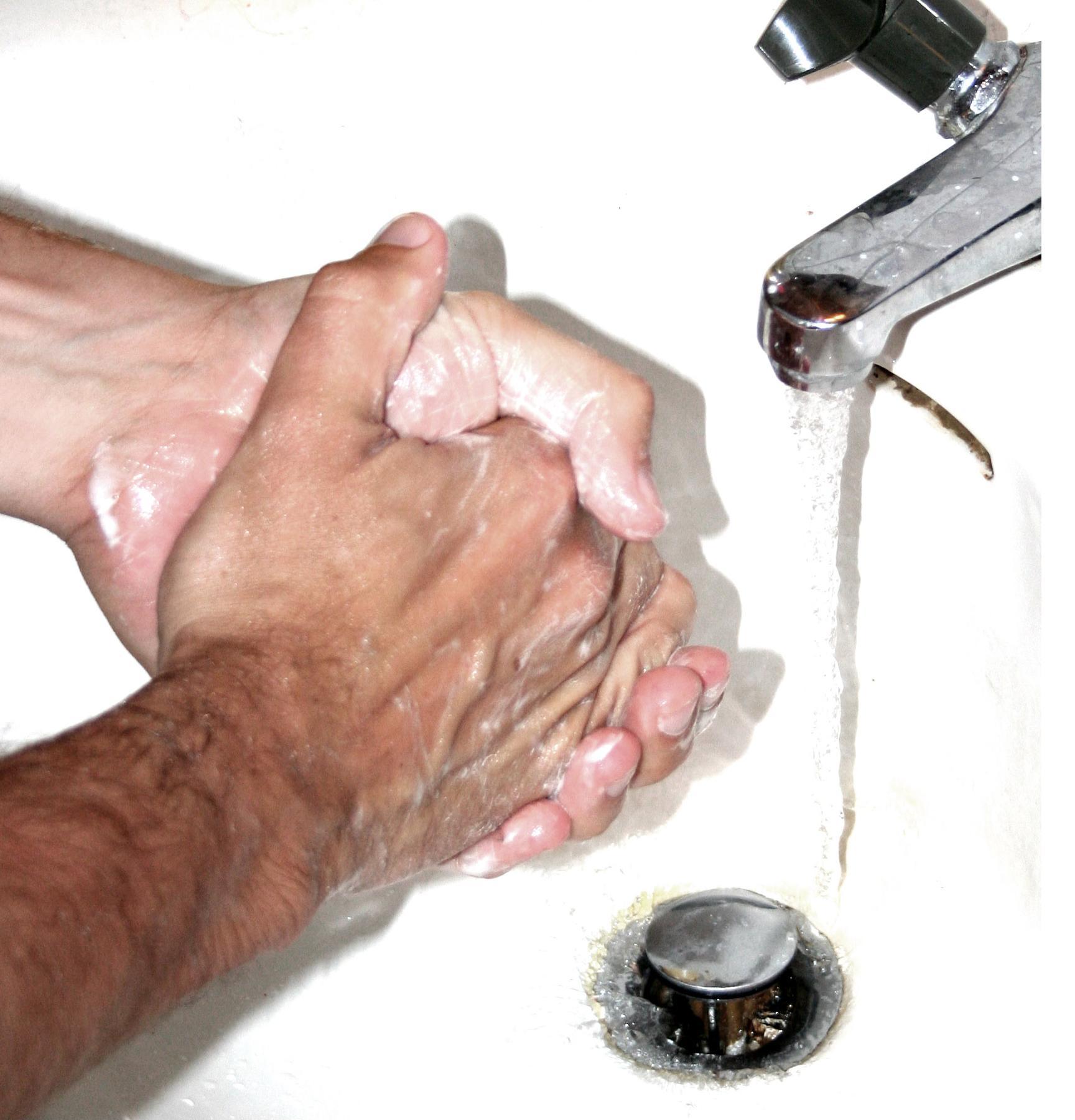
washing hands | photo: Lars Klintwall Malmqvist
There seems to be an increasing number of people affected by asthma and allergies.  Especially children.

One reason put forward is that as we have become more focused on cleanliness, to the point where we have created problems.  Overuse of antibiotic cleansers has reduced our exposure to pathogens, or germs, in our environment.  Because our bodies have been designed to fight these germs, to develop a healthy immune system, when we severely reduce our environmental exposures it is theorized that our bodies over-react.  They become sensitive to increasingly more substances, most of them environmental or food exposures.  As odd as it may sound, the research supports this.  Studies show that children who grow up in rural areas, especially non-Westernized countries, with more exposure to a wider range of microbes, have a vastly reduced rate of allergies.

Of increasing interest to me is the concept that this hyper-clean state that we've created has affected our intestinal health which in turns leads to more problems.  Gary Huffnagle, co-author of the The Probiotics Revolution has gone a step further with the hygiene hypothesis and developed a concept that he calls the microflora hypothesis.  He posits that our Western lifestyle and diet have altered our microflora, our ecosystem, and opened us up to more allergies and, by extension, more digestive disorders.  By not gaining exposure to a wider range of microbes we are unable to build an ecosystem that is fully supportive of our overall health.

Part of the reason that this is of so fascinating to me is because in working with clients I am also seeing more and more digestive health issues.  And I believe the numbers are rising.  More leaky gut, more IBS, IBD, more dysbiosis.  Dr. Liz Lipski, author of Digestive Wellness, in her work shows that the immune system is very strongly tied to digestive function.

In order to support our health we need to stop killing off our symbiotic partners, those bacteria that inhabit our gut, through overuse of antibiotic and antibacterial products.  We also need to feed and support these probiotic colonies.  What do they eat?  Prebiotics.  Their food comes from insoluble fibers found in our food.  Berries, onions, legumes, oatmeal, and other whole grains support not only the probiotic bacteria, but also help maintain good bowel health.  We also need to re-inoculate our systems with a steady supply of healthy bacterial colonies.  Those are found in fermented foods such as kefir, kombucha, and kimchi.  Not that we need to eat an overwhelming amount of these on a regular basis, but they should be a regular part of our diet.

Research does not, as yet, appear to show how much we can reverse the affect on our immune systems, but we certainly can keep it from continuing to decline.  Dr. Natasha Campbell McBride, at the recent Wise Traditions Conference in Dallas, stated, "We are a shell, a habitat for our eco-system."  We need to suport our eco-system.  We can also protect future generations by focusing on and acknowledging that that eco-system needs to be fully supported in order to function properly.

Friday, September 9, 2011

affirmations

Most of us are very hard on ourselves.  No matter how hard we think the world around us is, we are tougher on ourselves than just about anyone else out there.  I work with a lot of people who feed themselves lots of negative messages about their relationship with food, their body or their self-image.  It doesn't have to be this way.

I recently saw the movie "The Help" and while I loved the move as a whole there was one scene that keeps repeating itself for me.  In this scene, Aibilene, the maid, is sitting in a rocking chair with Mae Mobley, her young charge, in her lap.  Aibilene says to Mae Mobley, "You is kind, you is smart, you is important" and Mae Mobley repeats it along with her.  This is such a wonderful affirmation.

We often forget to give ourselves, and our children, positive affirmations.  We give praise, hopefully often and mindfully, but we don't teach that skill of affirmation.  I believe it's never too late to start and want to encourage all of you to think about what affirmations you could incorporate into your life.  If you'd like to share them that would be even better, the we could all certainly use more positive messages.

In the meantime I've started a collection, you can see them on my Affirmation Pinboard.

We all deserve to believe in ourselves, to be kind to ourselves, and to teach our children to feel the same. Make it a habit, a healthy habit, to share positive affirmations with yourself and your loved ones on a daily basis.

Wednesday, August 17, 2011

eco friendly living


Yesterday I attended the Holistic Moms Network twitter party.  It was great fun; I learned a lot about a wide variety of eco-friendly ideas and shared in some great conversations.

tree | photo: dieraecherin
The topic of the party was people talking about different ways to cut down on how much paper we use.  According to PeopleTowels, "Each person in the US uses about 335kg of paper each year--that's 7 times the world average, even twice the average for industrial countries."  That's a lot of trees!  And don't those trees look better as trees rather than a methane-producing, decomposing mass in the landfill?

This discussion got me thinking about the holistic lifestyle many of us are trying to lead.  We bring our own drink containers (stainless steel, BPA free plastic, or glass) instead of taking styrofoam or paper cups from vendors.  We bring shopping bags to the grocery store instead of using paper or plastic.  Many of us are looking for ways to reduce our environmental impact.

Canteen | photo:  Broken Sphere
I confess that I am a work-in-progress in this area.  I think my success rate with the grocery bag issue is about 80%.  I even now bring shopping bags into other stores, not just the grocery store.  The challenge is getting them back into the car if I've been using a lot of them.  We do have a water bottle and BPA free hot cup for each member of the household and they do get used frequently.  We've shifted to dishtowels instead of paper towels.   All of the eco-friendly ideas that many people are starting to adopt.  But there's always more that can be done.

I felt energized by the discussions going on and came across a number of new-to-me products and companies that I wanted to share.  These are products which will help me continue to reduce my environmental impact; something I consider to be an important part of the balance to a holistic life.

PeopleTowel
PeopleTowels - This company sells reusable small towels that are a great size to take with you on the road, to the office, when you travel.  I confess the nerd side of my nature fell in love when I discovered that they had a special towel for Towel Day.*  One of the great things about their towels is that although they have lots of really cute ideas and great towels they also have an option where you can design your own.  So if you want to create a theme set of towels, put pictures on a towel, put one of your kids art projects on it, you can.  And these towels will last for years.  I've already ordered a set of five plus a Towel Day towel and can't wait for them to arrive.

Another topic that came up was the idea of straws.  To be honest we don't use a lot of straws in our house but when we do they are always plastic.  Until now.  It turns out that you can get either glass straws or stainless steel ones.  The glass straws are available from a company called Strawsome.  They have all different sizes, bubble tea, regular, smoothie, plus colors, plus you can get them personalized.  Another option for reusable straws that I like a lot is these stainless steel straws.  This is something that I could easily carry in my bag to use when I am out.  One challenge that I see is what do you do with a used straw if you use it at a restaurant.  But I like the concept a lot and love the thought of not wasting plastic.

As part of the eating out section of the conversation I was re-introduced to the concept of bringing your own takeout container to restaurants.  There are two reasons I like this idea and why I plan to start implementing it.  One is that most restaurants use styrofoam and I have a strong aversion to it.  It hangs around in the landfill forever and if you put hot food into it you are then absorbing some of the plastics that are released due to the heat of the food.  Bringing your own takeout containers is such an eco-friendly idea.  You can reduce waste, still have your takeout (I often wind up with lunch for the next day as most restaurant portions are far too large for one person), and have containers that you feel good about using.  I've decided to go through my BPA free containers and see which ones are going to be designated for takeout.  And I'm going to work on the habit of bringing them with me.

Another part of the conversation was about using cloth napkins which in turn opened up a discussion about cloth sandwich bags.  We do use cloth napkins in our house.  Not 100% of the time, when I have a party I confess I buy paper because I just don't have that many cloth napkins.  But on a daily basis it's cloth and we have a good size, mis-matched collection.  When talking about the idea of reusable sandwich bags I came across only one resource for food-safe plastic fabric.  If you decide to make your own reusable sandwich bags please do not use PUL or oilcloth, neither of those is acceptable for food contact.  This discussion lead me to realize that I think I want to set aside some time to make a few reusable sandwich bags and while I'm at it whip up one or two sets of napkins that actually all match.

I encourage my health clients that we are working one step at a time.  It's important to remember this when you are moving toward a more eco-friendly life as well.  If you try to change everything at once it's too much.  You are trying to remember and be consistent about too many things.  You are not learning and setting those new habits.  When I first started with shopping bags my success rate was about 10%.  I wouldn't remember to bring them in to the store or I wouldn't have enough reusable bags.  While I still forget from time to time to get them back into the car I do use them the vast majority of the time.  I've also gotten very good about telling cashiers that I do not need a bag if I am only purchasing a few products and can easily carry them when I've forgotten my bags.  That was my first big eco-friendly step.  Little by little I added others.  You can do the same.  Pick one thing that is important to you.  Practice and develop that habit.  When you are comfortable that you are utilizing it the majority of the time, move on to another one.  Slow and steady is the way to make effective, long-lasting, positive change.

What do you do in your home to be more mindful of the environment?  I'd love to hear ideas and resources.  Leave a comment below and share your thoughts.

*Towel Day is May 25th.  It is celebrated by fans of The Hitchhiker's Guide to the Galaxy written by Douglas Adams.  Rule #1 is "Don't forget to bring your towel."


Tuesday, August 16, 2011

back to school -- what's for breakfast?

it's that time of year again....moms and kids are out shopping with the school supply list, major retailers are stocked to the brim with classroom supplies, school clothes, sports gear, everything the returning student needs.  It's also time for the cereal and other breakfast food manufacturers to boost their campaigns to win a place at your breakfast table.  Unfortunately they don't deserve that place and I hope you don't give it to them.

not for breakfast | photo: cohdra
In my practice I see so many people who start their day (or their kids day) with what has come to be recognized as the typical American breakfast -- cereal, milk, juice, maybe toast and jam.  Or perhaps a bagel and cream cheese.  Many confess to just a donut and coffee -- which these days is a grande double shot caramel macchiato extra whip but that's a different post altogether.  I'm often surprised at how many people say "I know breakfast is supposed to be the most important meal of the day but I just don't have time."

This is a reminder.  You need to make the time.  Not just for your kids, but also for you.  Yes, breakfast IS the most important meal of the day.  It replenishes the furnace of your body after the metabolic slowdown of sleep.  It should provide protein to help boost the amino acids that are needed for neurotransmitter production.  It should provide a healthy fat to help keep that furnace going slow and steady instead of heading into overdrive with quick-to-digest, blood sugar crashing, simple carbohydrates.

This is also a reminder to avoid front-of-label packaging.  The pretty pictures may look nice and the marketing verbiage may sound good but when you actually read the label it's a different story.

The ad to the side there is a perfect example.  It's part of a video ad online that shows energetic, active, healthy-appearing children.  However the product does little to support their health.  Sure it's made with more whole grains than it used to be, but what about all of the sugar, the artificial colors, the other chemical non-food ingredients.  Plus the ads usually say something along the lines of "part of a balanced breakfast" with a big cup of juice and some toast.

As I've mentioned above, this is far from a balanced breakfast.  Is it better than skipping breakfast?  I hesitate to say it but the answer there would be yes but not by a whole lot.  Anything is better than skipping breakfast.  However if you want to have your kids get a good start to the day you will do best to feed them nutritionally dense foods.  This in turn will help them stay focused, keep their blood sugar level, and help reduce some of that 5 p.m. "witching hour" behavior (believe it or not that behavior starts with a poor-blood-sugar-balancing breakfast).  You need to feed them real food.

Brazilian Breakfast Buffet | photo:  Jeff Belmonte
Protein can be eggs, beans, chicken breast, preservative free sausages or bacon.  For a healthy fat choose avocado, coconut oil, or real organic butter.  Get in some delicious whole foods, fruits and veg are a great choice.  While it may seem a little unusual to start your day that way that's simply because it's not what you're used to. But you can make changes that are healthy and will help you to feel better.  Changes such as the Brazilian Breakfast Buffet on the right there.  I see meats, dairy, vegetables, and and egg to go along with some bread, butter and jam as condiments.  Learn to think outside the box (literally).

green shake | photo: alvimann
Are you an on-the-go-don't-have-time-for-breakfast teen or adult?  Then make yourself a protein smoothie.  With a great balancing whey protein, a good nut milk, some chia seeds, a piece of fruit and a handful of spinach it can be a filling and nutritious start to your day.  For many of my clients who fit this profile I point out that this is a wonderful, quick way to get out the door.  They can then have a second breakfast or snack later in the day and continue balancing their blood sugars with a great avocado chicken tomato wrap or veggies with hummus or....the possibilities are endless.

Many times clients who've made this shift discover that they are no longer experiencing that 3:00 p.m. I-need-a-candy-bar crash.  They feel better, and they are nutritionally going to do better by supporting their body.

School starts soon and many of us are going to be back on that tightly scheduled roller coaster.  Plan now so you know what you're going to serve.  Give them a good start.

Tuesday, May 31, 2011

breakfast shake

Back at home after my travels I'm re-adjusting to the local time zone and wondering why the laundry fairy never shows up when I'm not home.

I enjoyed a number of fabulous meals while I was one the road with family in Northern France.  I indulged and ate outside my usual patterns.  I am a big believer in taking the time to enjoy the culture and opportunities that travel offers you and I certainly wasn't going to pass up some of the delicious experiences.  Who knows when I will find myself back in Northern France again.

One of the big changes was breakfast in a Chambre d'Hotel.  A Chambre d-Hotel is often a room available  in someone's house (although a few of them had a separate building) that you can rent.  There are little signs on the street indicating if someone has a room to rent in their house.  You drive up and inquire if there is space for the night (or if you plan ahead, you can call and make a reservation).  We did not plan ahead which meant that some days we looked at several places before finding one.

The prices seem to vary widely  depending on the size of the room, if there is a suite arrangement, the location of the town, etc.  Each place offers breakfast with the chambre.  What is for breakfast varies.  Every place offers fresh baguette and cheese plus jam.  Most of the time the jams were homemade and absolutely fabulous.  Each place also offered juice, coffee and tea.

Some of the different items in addition to the above which we had for breakfast (it depended on where we were and what they wanted to serve):  different breads or baked goods, sliced ham, cold cereal, yogurt served with stick packets of sugar, or fresh fruit.

Overall the breads were delicious and the yogurt that I ate there was fabulous.  I don't normally drink milk however it was so good that a couple of mornings I had a bowl of warm milk with my breakfast, something I don't normally do at home.

Now I'm back in my regular surroundings and getting back to my normal routine.  Part of that includes eating more in the pattern which works best for me.  I usually don't eat gluten as I find my system works better if I avoid it.  I do not have celiac or other illness that require me to be gluten free which is a good thing because in the French countryside I think that would have proven to be quite problematic.  I also tend to eat a high protein breakfast, again because that's what works best for my body.  Truthfully I believe it's what works best for most people, we need that protein boost in the morning to stabilize our blood sugar after our overnight sleep-fast.

After 12 days away from it I'm really enjoying my morning smoothie again.  It's such a great way to start the day, filling and delicious.

Morning Smoothie

1 cup plain organic whole fat yogurt
1/2 cup unsweetened almond milk or coconut milk
1 cup fresh spinach (pack this in well)
1 small banana (or other fruit)
1 tablespoon unsweetened raw almond butter
1 tablespoon fresh ground flaxseed

Place all the ingredients into a blender and whir together until well incorporated

Makes two servings

As a side note, whenever I share this recipe I always get at least one person who says "Spinach in your shake?  Seriously?"  Yes, seriously.  It is delicious and gives a great boost to the shake.  Truly, aside from the color, you won't know it's in there as the other flavors hide the flavor of the spinach.  If you haven't tried it before I think you should, you'll be pleasantly surprised.  It's a great way to get some veggies into your system first thing in the morning.

Sunday, February 20, 2011

breakfast - break away from the box

Israeli Breakfast | Lior Bakalu
Over the last couple of days I have been seeing articles in the news that have made me literally cringe.  I'm not going to link to them here because the information contained in them is just so wrong I cannot bring myself to share it even as an example of bad information.

What is it?  It's breakfast.  One article claimed that a bowl of cereal was shown to be the best breakfast and a good way to start your day, preventing you from snacking on sugary foods later in the day.  I was unable to find a link to the study that the article referenced but based on what I know about nutrition I'm guessing that the study group was comparing to either breakfast skippers or people who ate a donut or muffin and called that breakfast.  Sadly a bowl of cereal is not enough.  Yes the milk is going to provide a small amount of protein but you are typically getting an over-processed, sugary product in the cereal.  While it's better than not eating breakfast I'm here to tell you that it is not better by much.  Your body will still feel the effects metabolically and it will not be supportive of your blood sugar.

Another article absolutely horrified me by claiming that if you were a picky eater there were some nutritional strategies that allowed you to still get all the nutrition you needed.  Don't like salmon?  The article suggests eating a bowl of cereal instead.  While you will get some vitamin D from the milk you are certainly not going to get the levels of protein and amino acids in cereal that you do from fish.

The third article referenced healthy choices at fast food places.  I'm sorry but I have never been a fan of those.  The food is fatty, over-processed, chemically laden and very few of these places offer a truly healthy start to your day.

Oddly enough just before all of these articles came out College Crunch contacted me about their recently written article.  10 Breakfast Foods Your Body Hates.  They state the facts clearly and correctly.

So what do you eat?

1.   First and foremost it is important to start your day with breakfast.  Don't skip.
2.   Eat protein, your body needs to refuel after the "fast" of sleeping.
3.   Get fiber, supportive to your digestive system it also helps sustain you as your blood sugar balances
      out with this first meal of the day.
4.   Limit sugar. Too much sugar (think cereals, syrups, muffins, etc) will cause a spike in insulin and
      then your body begins the blood sugar roller-coaster.
5.   Avoid simple carbohydrates (pancakes, toast, boxed cereal) your body will digest them too quickly
      and they are not supportive of blood sugar stability.

You don't have to have what is considered "breakfast" food for breakfast if you don't want to.  I know a number of people who start their morning with a chicken breast and veggies.  I had one friend who served her children beans for breakfast and they loved it.  The breakfast in the picture above is from Israel.  Eggs with lots of veggies (fresh and cooked) and fresh herbs.

Break away from the box; eat something that will nourish and support your body.

Saturday, January 29, 2011

reinventing comfort

When I was a little girl my mother used to make something called rice cereal.  My brother and I loved it.  Leftover white rice in a bowl of hot milk with a huge dollop of butter and a spoonful of sugar on top.  It brings back memories of the small kitchen we had when we were young.  Sitting at the table with my brother, legs swinging, enjoying this dish which we viewed as a treat.

When my children were growing up I would make the same dish for them.  And they loved it just as much.  Even now my 16 year old will assemble a bowl if we have the ingredients at hand (which we often do).  It was a great way to use up extra rice -- filling, tasty, and warming to the tummy.  I even served it on occasion to overnight guests.   One such guest, a dear friend from my high-school days, exclaimed about this wonderful breakfast, wanting to know where the recipe came from.  My answer?  My mom.  And probably from her mom.  I think it was simply a frugal way to use leftovers.  But it sure was, and still is, tasty.

Sometimes you have a day where you want comfort food.  This morning was one of those days.  As I was assembling, and then happily eating, my bowl of comfort I realized that I have changed the recipe.  Modified it to be more in line with my healthier eating habits.  But it was still just as comforting, warming and satisfying as it ever was.  Reflecting on this I realized that the concept of comfort food is a state of mind.  Yes it's a comfort to the tummy and makes us feel good; but part of what makes us feel good is the memories associated with that food.  Changing the food doesn't change the comfort level as long as the basic concepts are the same.

So I'm making an offer, what are your comfort foods?  What do you eat when you feel the need for that emotional lift?  Share the recipe and the concept below.  If you'd like (and please ask below) I'm happy to make suggestions to help boost the nutrition or health factor while still helping you get that bowl or plate of comfort you are after.  Eating well to be well doesn't mean we can't still have comfort.

reinventing comfort

When I was a little girl my mother used to make something called rice cereal.  My brother and I loved it.  Leftover white rice in a bowl of hot milk with a huge dollop of butter and a spoonful of sugar on top.  When I had children I would make the same dish for them.  It was a great way to use up extra rice -- filling, tasty, and warming to the tummy.  I would even serve it to guests sometimes.   One time a friend exclaimed about this wonderful dish, wanting to know where the recipe came from.  My answer?  My mom.  And probably from her mom.  I think it was simply a frugal way to use leftovers.  But it sure was tasty.

Sometimes you have a day where you want comfort food.  This morning was one of those days.  As I was assembling, and then happily eating, my bowl of comfort I realized that I have changed the recipe.  Modified it to be more in line with my healthier eating habits.  But it was still just as comforting, warming and satisfying as it ever was.  Reflecting on this I realized that the concept of comfort food is a state of mind.  Yes it's a comfort to the tummy and makes us feel good; but part of what makes us feel good is the memories associated with that food.  Changing the food doesn't change the comfort level as long as the basic concepts are the same.

So I'm making an offer, what are your comfort foods?  What do you eat when you feel the need for that emotional lift?  Share the recipe and the concept below.  If you'd like (and please ask below) I'm happy to make suggestions to help boost the nutrition or health factor while still helping you get that bowl or plate of comfort you are after.  Eating well to be well doesn't mean we can't still have comfort.