Showing posts with label fish. Show all posts

Monday, October 8, 2012

on my mind monday 10.8.12

It's never the same two weeks in a row.  A collection of what I find interesting in the world of food, nutrition, and holistic health.  Here's what's on my mind.

MSG Wastewater As Fertilizer - I was stunned recently when I read that the wastewater from MSG production could be used as a fertilizer for corn.  Knowing how bad MSG is for human consumption it is startling to realize that it may be creeping into our diet in other ways.  I have as yet been unable to determine if it is allowable for use on organic corn.

Eat Fish Low In Mercury for Heart Health - We all know we're supposed to eat more fish.  It's good for our heart, it's good for overall health.  But fish, especially some of the larger fish like shark, king mackerel, and swordfish, tend to be high in mercury which we need to avoid.  Check out the Food and Water Watch Seafood Guide for tips about making healthier seafood choices.

Here's a cartoon that I find amusing about this issue (with thanks to The Deconstructionist Zone):


Differences in taste sensitivity - According to this article obese children and adolescents have less taste sensitivity which can lead to obesity.  This is the exact opposite of other research which shows that those who have more or highly sensitive tastebuds, supertasters, can be obese.  While this is confusing it does show that how we taste can have an effect on our ability to enjoy our food and ultimately on our weight.  But enjoyment of food is, and should be, about more than just taste.  Learning to enjoy the smell, the setting, the textures, the experience of our food is important.  Learning to eat mindfully is a habit we should cultivate.

Berries can slow cognitive decline - Apparently eating between one half to one cup of berries per week over an extended period of time (up to 2.5 years in the study) appear to have a positive effect.  This is believed to be attributable to the anthocyanins.  Whatever the reason, it's delicious and easy to do.  Just be sure to choose organic blueberries and strawberries whenever possible to avoid pesticides.


What I'm Reading:

The Winky-Eyed Jesus and Other Undescribables - Scott Wayland's entertaining description of his cross country human-powered recumbent bicycle journey across the United States.

Wednesday, October 3, 2012

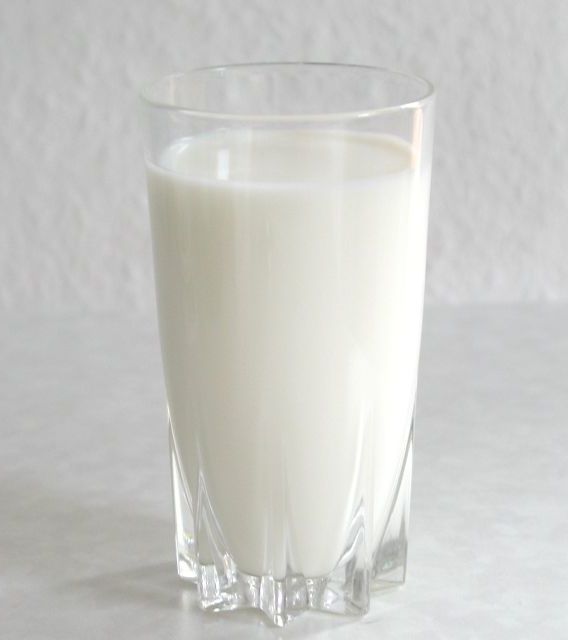
but i need milk for calcium, don't i?

I have some clients who need to avoid dairy products.  Invariably when they find this out their first question is "Don't I have to drink milk to get calcium?" or "But how will I get my calcium?"

Calcium is important in the diet, not only for healthy bones and teeth, but also to support nerve and muscle health as well as for blood clotting.  However it doesn't just come from cows (or goats or sheep or camels or any other milk giving mammal).

Most people think calcium is synonymous with milk.  They've been so sold by the Milk Producers Federation that they feel they've gotta "get milk."  However, milk, and other dairy products, are not the only way to add calcium to the diet.

For those who can't drink milk there are alternatives such as almond, soy, oat, hemp, and rice.  And while the calcium and protein content of alternative milks vary (and is mostly added) it's important to remember that there are ways to get calcium without drinking milk, eating other dairy products, or drinking alternative milks.

As a means of comparison, whole milk provides 110 mg of calcium per 100 gram serving.

Other sources of calcium include:

sesame seeds - 989 mg per 100 g
sardines - 382 mg per 100 g
almonds - 266 mg per 100 g
flax seeds - 255 mg per 100 g
turnip greens - 190 mg per 100 g
brazil nuts - 160 mg per 100 g
collard greens - 140 mg per 100 g
spinach - 99 mg per 100 g


photo: Stefan Kühn

Tuesday, October 18, 2011

aquaculture

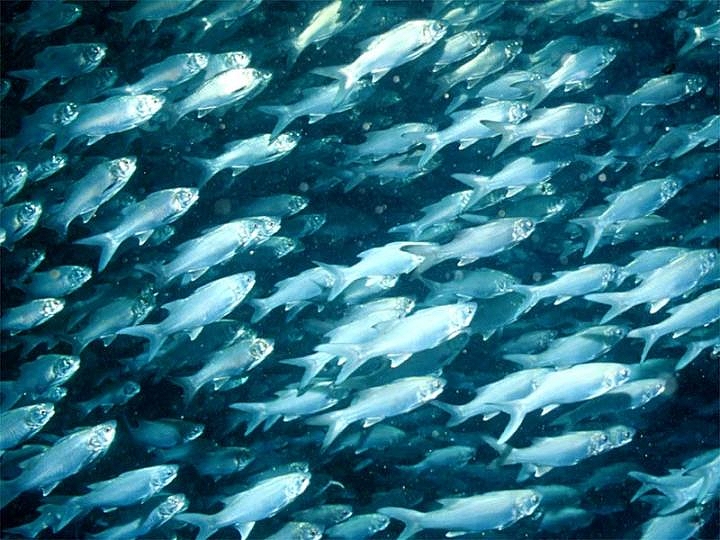
Pacific threadfins in cage | photo: Haplochromis
A recent article on NPR spoke about some of the challenges facing the idea of acquaculture - in other words, farming fish.  As our appetite for fish grows it creates a market for those who want to sell it.  However producers want to sell their product the fastest, most efficient way possible at the highest possible profit.  That means starting to tinker with the food chain.

Leaving aside the issue of the horror of GMO fish here are some objections to what appears to be happening in aquaculture.  It is important to start by pointing out that this is not to oppose sustainable aquaculture;  where fish are grown in an environment that allows them to flourish symbiotically with plants, insects, other fish and aquatic life.  The objection is to the concept of huge aqua-farms; the marine equivalent of confined feedlot operations for meat animals.  The animals are fed the cheapest, most efficient product to make them get fat faster so they can be sold quickly thereby increasing profit.  No real effort is made to raise the animal humanely or sustainably, just profitably.
  1. A direct quote from the article says, "A salmon gets more nutrients from a fish in the wild than it would eating something else."  Well that certainly makes sense.  So why would we want to feed them anything else?
  2. "[Scientists] are looking into new fish feed using renewable sources, such as biofuel co-products, poultry by-products, soybeans and so on."  Excuse me?  First, go back and read statement one above.  Then stop and think about what this says.  Biofuel co-products?  These are already fed to cattle contributing to their ill health.  And when they try to feed it to pigs the pigs don't like it.  Poultry by-products?  As far as I know poultry is not fish and I do not believe that fish should eat poultry guts, bones, skin, and feathers all mulched up into some sort of gloppy muck and then dried into pellets.  And the concept of feeding animals not fit for human consumption to other animals makes no sense either if the animal you are feeding it to will eventually be consumed. Soybeans?  We eat too many of them as it is in this country and the vast majority of what we eat is contaminated by GMO.  This doesn't even begin to take into consideration those people who are allergic to soy.  They may quite possibly now be allergic to farmed fish which I'm sure is not going to be labeled 'this fish was fed soy.'  And so on is another statement that bothers me; it is such a blanket, open ended concept that there's no telling what they'll decide to feed the fish.  As long as it's cheap and makes profit I am sure it will somehow be deemed appropriate to feed to the fish.
  3. "One of the challenges [they] face is getting a fish to eat something unfamiliar." Then why do it?  I don't think it's healthy for the fish.  And if it's not healthy for the fish, ultimately it will not be healthy for us.  There is lots of evidence showing that grass fed is healthier both for cows that are raised that way and for those who eat those cows.  But in this country we persist in raising corn-fed beef, creating unhealthy fatty cows that we then slaughter and eat.  Now we want to do this with fish which is touted as a heart-healthy food?  I do not believe it will be as healthy a food after it has been force fed an unnatural diet.
If you eat seafood you want to print out a copy of the Seafood Watch created by the Monterey Bay Aquarium; it lets you know which fish were raised in an environmentally friendly manner.