Showing posts with label environment. Show all posts

Monday, December 17, 2012

on my mind monday 12.17.12

It's never the same two weeks in a row.  A collection of what I find interesting in the world of food, nutrition, and holistic health.  Here's what's on my mind.

Minimum age for energy drinks - While teens may be upset about it I think this is a good idea.  A better idea would be to get rid of these kinds of drinks altogether.  Banned overseas and with some reports linking these drinks to consumer deaths it is not something to take lightly.

Eat for happiness - often we think we're eating for happiness when we're actually eating for pleasure.  Sadly we're also unaware of the effect that this can have on us.  My friend Trudy Scott, Food Mood Expert and author of The Antianxiety Food Solution points out that many people with depression, anxiety, and other neurobiological disorders frequently do better when they change their diet.  Perhaps it's time we all learned to eat for happiness.

Fruit and Veggie Prescription - As the saying goes, 'Let food be thy medicine." And in D.C. providers at one health care clinic are encouraging just that, food as preventive medicine.  I love the thought that people are getting prescriptions which they can use at farmer's markets.  This will hopefully encourage them to return  on a regular basis and to being to use whole foods, fresh foods, as part of their diet.  Hopefully this program will spread across the country.  It is already possible to use Supplemental Nutrition Assistance Program (SNAP), or what used to be called food stamps, at farmer's markets.  I believe encouraging people to connect with their local farmers, rather than a fast food joint, the better off everyone will be.

Plastic Pollution - I've written before, here and here about plastic, its impact on our environment and on our health.  We've cut back tremendously on how much we use but it still surrounds us, from our toothbrushes, deodorant containers, freezer bags, and remote controls to the sewing machine, packaging on items we buy, dvd covers, and food containers.  It's very very difficult to get rid of plastic in our life.  This article showing the overwhelming amount of plastic that finds its way into the ocean it mind-boggling.  Time to get Beth Terry's book Plastic Free: How I Kicked The Plastic Habit and How You Can Too to find more ways to bump it up a notch.

Expanding the season: I was happy to see this blurb about more farmer's markets being open for a winter season.  While most people tend to think of farmer's markets as providing fresh spring and summer foods (think lettuces, tomatoes, peas, peppers, strawberries, and such) there is a whole season that has been bypassed.  Farms can, and do, also produce a bounty of fall and winter crops that are so delicious and bursting with nutrients.  Winter squashes, root crops, and citrus fruits are just a few.  If more farmer's markets are able to expand their season it means more sales for the farmer, more fresh, local food for you. It's a win for everyone.

Here's a video of an American farmer talking about his concerns about the state of farming in this country and global climate change.


In addition to the impending publication of The Pantry Principle there are some exciting developments coming up for my newsletter which will be offering some content not found here on the blog.  If you're not already signed up, now's your chance.

photo: mconnors

Tuesday, December 11, 2012

christmas tree facts

The winter holidays are here.  Decorations are going up.  The wreaths, the lights, the garlands, lots, and lots of tinsel.  And let's not forget the tree.  The Christmas tree, centerpiece of the holiday celebration.  With ornaments and bows up top, presents and goodies below.  The primary symbol of the holiday gathering for many families all across the country.  And every year there is a dilemma; people struggle with the choice for their tree.  Fresh or artificial?

There are a small percentage who use living trees, brought inside in a tub or burlap. They often plant their tree in the yard after the season.  For them there is not usually a dilemma as they will continue to purchase and plant living trees.  For everyone else there's a choice to be made year after year.

Live cut or artificial?  With tens of millions of trees sold every year that decision has an amazing impact.

According to the Arbor Day Foundation and the National Christmas Tree Association (NCTA), a live Christmas tree outweighs an artificial one due to its many environmental and economic benefits.  It goes without saying that our personal environmental stance would include a live cut tree which does not expose you to pesticides and chemical fertilizers.
  • Environmentally friendly, fresh cut trees are a sustainable resource.
  • The trees help clean the air, protect the soil, and provide wildlife habitat.
  • Planting of natural Christmas trees increases the greenery on the planet. The Christmas tree growers plant one to three new seedlings for every tree that is harvested during the season. 
  • The trees are biodegradable; that means they can be reused or recycled for mulch and other purposes.  Nothing is wasted even when these trees are discarded or disposed. By contrast, an artificial tree may contain lead and non-bio-degradable plastics.
  • The industry employs more than 100,000 Americans.
Learn how to care for your fresh cut tree at the NCTA so it will last all season long.


Christmas Tree Facts - An Infographic by CouponRefund.com
Christmas Tree Facts by CouponRefund.com

photo: Lotus Head

Tuesday, October 30, 2012

gmo: what you need to know

As election day draws nearer there is an enormous amount of attention being paid to what the voters will do at the polls.  California is in the forefront of the move to label GMOs in food.  Other states have considered it but as of yet none have actually passed such a bill.  The general thinking is that if one state passes this legislation manufacturers will be forced to change all of their labeling nationwide in order to not have to create two forms of packaging.

The battle has been heated and intense with both sides contributing money to try to reach out to California voters and garner their support.  The chain of food ownership has become startlingly clear as the Cornucopia Institute put together this infographic showing who contributed what to the campaign.  Consumers were truly able to see that although companies like Cascadian Farms Organic, Larabar, and Kashi have a reputation as being consumer friendly and producing clean products, they are in fact owned by major corporation such as Kellogg and General Mills.  These giant food producers have a vested interest in maintaining our state of ignorance and have contributed hundreds of thousands of dollars to try to convince consumers to vote against GMO labeling.

This is not just an issue that we face here in the US.  All over the world governments and consumers are rethinking the use of GMO.  Just last month Russia suspended the use of GMO corn after a controversial French study showed ill effects in lab animals.  This study has since been brought into question however many of the issues it raised are valid and warrant further study.

This is not, however, the first time that there have been issues with GMO corn.  Back in 2005 there was a German study which showed severe health effects and damage to the liver and kidneys causing the German government to call a halt to the use of the corn.  A 2009 study done in Austria showed that there was a link between GMO crops and a decline in human fertility.

In August of this year two Australia farmers began to travel around New Zealand educating farmers against GMO crops.  As is the case here in the US, those that do not want GMO crops have no recourse if their fields are "accidentally" contaminated.  However there is no way for them to protect against wind, flood, and animals carrying seed.  All of these are potential methods of contaminating crops.  Monsanto has a known reputation for suing farmers for theft if their fields become contaminated, even if this contamination is against the wishes of the farmer.  The only way to protect against GM is to keep it out of the country.

In this video (1.5 hours but worth watching) Jeffrey Smith, the Executive Director of the Institute for Responsible Technology talks about GMO crops and their effects.


You can also watch the movie The World According to Monsanto to learn more.


If you want to read further about GMOs consider the following books:
At this point it may be difficult to stop the spread of GMO crops.  I believe it should be stopped and I believe it should be eradicated to the best of our ability.  But even more importantly I believe that we should have the right to know what's really in our food.  I will be watching the election to see what happens in California.  I will be hoping that Californians lead the way in supporting our right to know what's in our food.

photo: faul

Monday, August 27, 2012

on my mind monday 08.27.12

news | photo: mconnors
It's never the same two weeks in a row.  This is a collection of what I find interesting in food, nutrition, and holistic health.  It's what's on my mind.

Re-homing chickens - Most people are not aware of the fact that chickens do not lay eggs their entire life.  Just for a few years; and  yet they can live to be as much as 15 years old.  So what happens to them when they are no longer "productive?"  In the case of a commercial egg operation they're usually slaughtered.  But now an organization is finding new homes for chickens who are no longer laying eggs.  A very cool concept and definitely part of the ethical cycle of respect for the animal.

The undervalued superfood - I love the concept of superfoods, and there are many, which do not need to come from other continents.  There are so many wonderful, health-supporting foods all around us.  In this case the newest "super" food to get attention?  Beans.  High in fiber and protein, stabilizing for blood sugar, fabulous for intestinal health, these are just a few of the wonderful reasons to eat beans.

Consumers are bad at math - This is a link to a video that explains the reasons why we are bad a shopping math and how marketers use this to their advantage.  While it's harder to do this kind of math 'on the fly' when you're shopping and in a hurry to get home with your purchases, I've realized it's something I need to focus on more in order to make sure I am getting the best deals I can for my family.  My important addendum?  Make sure you are not hungry when you are shopping, that's just going to make things worse.

Ten Year Old Convinces Corporation To Give Up Styrofoam - This is one of those stories that I love.  We are surrounded more and more by kid-advocates who are taking the lead in changing the world around them and changing it for the better.  Birke Baehr, a future farmer, spreading the word about sustainable agriculture, and Julia Bluhm, who convinced a major magazine to start using un-photoshopped pictures in their pages are among just a few of the young heros making a difference.  I think they are wonderful and amazing.

For today's video we have a great one from my friend Julie Matthews - Making Veggie Latkes, a wonderful way to get more veggies into a picky eater.  This recipe also deals with issues for those whose bodies don't handle starches well.


Julie also has a great cooking program available on her website.  If you're looking to make changes to your diet, either because of Autism or because of a need to follows GAPS, SCD, Feingold, Body Ecology or other dietary protocols, this is the program for you.

What I'm Reading:

Drop Dead Healthy: One Mans Humble Quest for Bodily Perfection by A.J. Jacobs.  One man's mission to learn how his body works, to lose weight, lower his cholesterol, and attempt to turn himself into the ultimately healthy person.  Mr. Jacobs took two years to learn everything he could about his body.  The book is a rather self-depreciating, humorous, fact-filled look at all the things we don't know which impact our health.   Breaking the quest into 27 smaller tasks he focuses one-at-a-time on various parts of his body such as The Stomach, The Heart, The Ears, The Butt, etc.

Given his day job as the editor at large for Esquire magazine he had access to an astounding array of experts for support and information.  Each chapter has one or more experts that he consulted to learn the latest information about the science and theories behind what it takes to find health for that body part.

He didn't limit himself to mainstream medicine and modern theory.  He was on a mission to try it all and to learn everything he could.  Along the way he submitted himself to various activities such as a Caveman Workout (running barefoot and bare chested through Central Park), a pole dancing class, neurofeedback, and joining a laughter club.  He also shared his thoughts and reflections on how he feels physically and/or emotionally after trying many of these, being mindfully aware of how his focus is affecting him.

Scattered throughout the book are checkups where he lists his weight, and a few other variable facts (such as how many pushups he can do).  The appendices at the end of the book is filled with tips, the highlights of what he learned during the year-long experiment.  It's a quick and easy read, yet filled with fascinating facts and some good ideas about how to become healthier.

Monday, July 9, 2012

on my mind monday 7.09.12

news | photo: mconnors
It's never the same two weeks in a row.  A collection of what I find interesting in the world of food, nutrition and holistic health.  Here's what's on my mind.

How can a big gulp look so small? - Mayor Bloomberg's soda ban has raised all kinds of backlash across the system.  The biggest misconception put forth is that we "know" how much we are consuming.  Manufacturers keep trotting forth this phrase each time they feel threatened to limited by any type of legislation that may impact their ability to peddle their product.  Frequently it's the least healthy manufacturers who complain the loudest.  So now another study has been done that once again proves that our brains don't do geometry very well.  We are not accurately able to gauge how much we are consuming, instead cueing off the size of the container.  This study, to my mind, confirms a study previously done with bottomless bowls of soup.  We do indeed eat with our eyes, frequently over-eating because we rely on visual cues.

Our Daily Bread - a slightly modified take of the work they've published in their book Hungry Planet: What The World Eats, Peter Menzel and Faith D'Alusio have an exhibit at the Museum of Science in Boston.  It shows a wide variety of people with the food that they plan to eat for that day.  The variety and circumstances are startling.  It gives one definitely pause for thought.  I hope the exhibit is very successful and even more that it will travel around the country, perhaps making it's way to a museum in Houston so that I can go see it.

Food Companies Concerned About Sustainability - As more consumers become more educated, more companies are beginning to listen.  Realizing that they need to be aware of and involved in this issue as well if they want to sell their products.  As always I propose we start with whole foods, but I do believe that sustainable practices across all parts of the food spectrum are important.

Nutrition Education on Wheels - This looks like an interesting concept.  Using a food truck and providing recipe cards and cooking demonstrations people are getting some ideas for how to use the food they get to make healthy, nutritious meals.  This is an idea that I think could be expanded greatly all across the country.  It seems to me that it would not only help people to eat healthier, but also to help avoid food waste as people often don't use what they don't know how to use and it sits until it becomes inedible.  I hope to see more food trucks like this.

EU Organic Label Now Mandatory - Well this just proves that it can be done.  It can't come to our shores fast enough in my opinion.  I even like the symbol they chose.

I use a LOT of onions in my house.  I've tried to grow there but here in my hot, piney woods garden they have not done well.  Out of two onion sets I got one reasonable size onion, yes, one onion.  The others all seemed to melt and disappear into the garden.  I'm still not sure how that happens but I've decided that, for now, growing onions is not for me. I continue to use them as they are flavorful and a great, healthy way to punch up your recipes but, for now, I'm still buying instead of growing them.  As a good source of vitamin C onions also provide a lot of phytonutrients.  They are considered to be beneficial for heart health and are also anti-inflammatory.  Using them can be a challenge however as chopping a spherical object into nice tidy dices or even slices isn't always easy.  Learning the proper way to chop onions is a handy skill.  Here's a great video demonstrating how to do it.


disclaimer: cmp.ly/5

Monday, July 2, 2012

on my mind monday 7.02.12

news | photo:  mconnors
It's never the same two weeks in a row.  A collection of what I find interesting in the world of food, nutrition, health and holistic living.  Read what's on my mind.

Tending the Body's Microbial Garden - It seems that mainstream science is beginning to realize that wholesale, repeated slaughter of our intestinal flora may not be such a good thing. Holistic practitioners have been saying for decades that supporting the gut is key to supporting health. Starting with a baby's first inoculation via the birth process to our exposures we build a hopefully healthy intestinal eco-system.  When we take antibiotics and wipe out both good and bad bacteria there are negative health effects that accumulate from this overarching destruction.   I'm glad to see that mainstream science is beginning to recognize the benefits of a healthy digestive system.  If you want to learn more consider reading Liz Lipski's amazing book, Digestive Wellness.

Meat Without Drugs - For those Omnivore and Flexitarian eaters out there this is a huge deal.  The FDA has known for decades that the producers in the meat industry over-use antibiotics in order to keep their animals healthy in spite of overcrowding and filthy conditions.  The problem is that those antibiotics are still present in the meat when you eat it, leading to a regular low level exposure.  Over 70% of all antibiotic use in this country is in animal feed.  That's an astounding number.  It appears that this situation may also be one of the leading causes behind antibiotic resistant bacteria.  We are essentially inoculating our bodies over and over again.  You can avoid eating meat with antibiotics in it by purchasing organic, purchasing meat labeled "raised without antibiotics", or purchasing directly from a farmer that you trust.  And support this campaign, sign the pledge.


More than honeybees - It turns out the dangers from our damage to the environment are affecting more than just honeybees.  One big takeaway from this article is how the loss of meadows and wildflower habitats is affecting the bee population.  They need to have a wide mixture of plants available for foraging.  All the spaces that we consider weedy and remove or cover over or control by mono-cropping are exactly the spaces needed by the bees.  And we need them to pollinate our food.  It is, after all, an eco-system and one which we need to respect.

Olive Oil and Slippery Politics - sadly it's not just in this country that politics and corporate aims challenge the issues of sustainability and environmental responsibility.  Unfortunately this compounds the situation already clouded by adulteration of olive oil.  To my mind the solution is simple and straightforward.  Stop adulterating the product, support small farmers, accept that this is a regional product that does best when produced sustainably.  However the EU's solution is to create an overwhelmingly tragic repeat of what has happened to the dairy industry in this country by paying farmers to stock a reserve which will at some point no longer be acceptable for consumption.  It's difficult as consumers to know what makes a good choice for olive oil, to know who is not adulterating and who is not being squeezed out (sorry) by corporate interests.  I know of a few producers that I believe sell a clean, quality product if you are interested in purchasing your olive oil for quality and purity.  Sandy Oaks Olive Orchard in Elmendorf, TX, Texas Hill Country Olive Company in Dripping Springs, TX, and the Chaffin Family Orchards in Oroville, CA.  High quality olive oil costs more, but you can tell by the flavor that you are getting an amazing product.

Farm to Dumpster - So much of our food is wasted.  In a world where there is growing disparity between the food haves and the food have-nots this is a deep shame.  In a world where food costs are rising this is sad.  In a world where the environment is stressed and global warming is a reality, this is just wrong.  We need to do better.  We need to be more mindful about our food and how we use it.  Learn more and make changes....start with Jonathan Bloom's excellent book, American Wasteland.


What I'm Reading:

Cooking for Isaiah by Silvana Mardone - This book was on a friend's cookbook shelf and she pulled it down to share a recipe that she particularly liked with me.  Flipping through the pages it looked amazing and, more than that, delicious.  I am one of those people who truly does READ a cookbook.  Reading through the pages of this one is a journey through foods that signify comfort and love.  But they come without gluten and dairy, a huge issue for many people.  I was so inspired by this book that before I was done reading it I ran to the grocery store to buy the gluten free flours to make Sivlana's mix.  The one issue with her mix is the use of Xanthan Gum which is a binding agent.  Some people can be very sensitive to it and suffer from flatulence or bloating when eating it.  I haven't experimented enough with the mix and the recipes to know if it's okay to leave it out but I must say the recipes I've tried so far have all been amazing.

Contact me to learn how you can $ave on high quality supplements


disclaimer:  cmp.ly/5

Monday, June 18, 2012

on my mind monday 6.18.12

news | photo: mconnors
It's never the same two weeks in a row.  This is what I find interesting in food, nutrition and holistic living.  Read what's on my mind.

In El Salvador, Tooth Decay Epidemic Blamed on Junk Food - This link is to a video that shows a dismaying epidemic of ill health strongly linked to the cheap easy access of sugar and cheap junk food.  In watching the video I was horrified to learn that some families, if they have no milk, will put soda or coffee into a baby bottle to feed their baby.  Nutrition education is so important.  We have gotten too far away from understanding our food and it's relationship to our health.

Disney Sets Limits on Food Advertising -  While this is a small step in the right direction it unfortunately also comes as a huge nutri-washing opportunity.  Disney will use this as a major publicity push and possibly as a bargaining chip for deals with vendors and marketing affiliations.  But it's limited in it's scope, will not be fully implemented until 2015, and still does not really address the issue of educating the consumer.  As always caveat emptor (buyer beware).

Food Producers Want Your Nose - Scent is an amazing and powerful tool.  Many people find memories triggered by smells; we often respond to certain smells on an unconscious level, especially those related to food.  This new technology is horrifying; manufacturers are seeking to take advantage of our unconscious response to smells in order to sell more product.  However it fails to take into account the rising numbers of people are affected by Multiple Chemical Sensitivities.  I for one try to avoid the mall as I can't walk past a large number of stores which blast perfume into the space in front of their location, leaving me with a blinding headache if I stay too long.  And people who wear too much perfume or cologne in public places are also problematic for me.  I'm fairly certain that these fake smells are going to linger in the grocery store after people have handled products coated with this technology over and over again.  And touched the cart, leaving residue all over the handles.  The producer claims to only be using "FDA approved flavors" however I'm not convinced that this is anything that should be approved in the first place.

Rachel Carson, Green Revolutionary - Hard to believe it's been 50 years since Silent Spring was published.  A wake-up call regarding the use of pesticides and other environmental chemicals that has been largely ignored.  Although some strides have been made toward banning the use of certain organophosphates and organochlorines it's not enough.  Sadly these chemicals tend to accumulate in body fat and the effects can be cumulative along the food chain.  I also believe these effects to be cumulative through generations.  I plan to take my copy off the shelf and re-read it, I'm encouraging others to read it as well.  The book may be 50 years old but it's cautionary message still holds true.


Father's Day was yesterday and hopefully all those great Dads out there received props for how wonderful and important they are in their families.  Do more for Dad - watch this video to learn some great Heart Health Tips for Men.  There's also a great heart healthy recipe that Dad is sure to love.

 Contact me to learn how you can $ave on professional grade supplements.

Monday, April 16, 2012

on my mind monday 4.16.12

news | photo: mconnors
It's never the same thing two weeks in a row.  This is a snapshot of what I find interest; health, nutrition, and holistic living.  Here's what's on my mind.

Fertilizers causing global warming - according to scientists at the University of California, Berkeley, there is now ample scientific evidence pointing at fertilizers as a significantly affecting the environment.  The scientists figured out how to "fingerprint" the nitrogen isotope ratio and highlight it's changes to greenhouse gases.  The study does not recommend stopping all fertilizer use, sadly, however it does recommend significantly changing how fertilizers are used in the agricultural industry.

Six reasons to switch to reusable bags - I'm a big proponent of reusable bags.  If pictures of the Trash Vortex are not enough to convince you, consider that it takes 12,000,000 barrels of oil to make the plastic bags we use in the U.S. each year.  I not only use them at the grocery store, I have started taking them into other stores as well.  While my family is not 100% plastic bag free, we are certainly far reduced from what we were and week by week we get better and better.  We've even started using reusable produce bags which are great, especially in the bulk bin section.


Another great TEDx presentation - this one focuses on how agriculture is changing the face of the planet.

Salsa - October was National Salsa Month but this is the time of year when I love to eat it the most.  Especially with "chips" made out of fresh veggies such as zucchini or yellow squash slices and sweet bell peppers.  Salsa with a splash of olive oil is also a great way to top of a delicious spring salad with some of the yummy greens that are coming into season in my area.   The link is to a previous posting where I share my delicious basic salsa recipe.

Food Book Fair 2012 - This is such a neat idea that I'm finding it hard to believe it has not happened before this.  I'm also really sad that I will not be able to go as I'm sure it's going to be a really neat event.   I am, of course, making note of all of the books listed by all of the speakers and will have to figure out a way to shoehorn those into my current reading list (which is far too full as it is).  I plan to keep an eye on this event and see what sorts of news and food activism items come out of it.

Monday, April 2, 2012

on my mind monday 4.2.12

news | photo: mconnors
It's never the same two weeks in a row.  This is a snapshot of what I find interesting; information about health, nutrition, and holistic living.  Here's what's on my mind.

Light It Up Blue - Today is World Autism Awareness Day.  With rising rates of autism, which many believe has strong ties to chemical influences in our food and environment, it is important to be more understanding and supportive of those families affected by this disease.  I'll be wearing blue today to show my support.

Beekeepers say we're running out of time - There appears to be more evidence that pesticides are behind the tragic decline of bees.  Bees are so important to our agricultural system, without them there is no pollination, and without that many crops cannot reproduce.  A recently filed lawsuit claims the EPA violated   the law on several counts.  We need to think more about what is good for the planet rather than concentrating only on the bottom line.

Kale is not chikin - Chick-Fil-A continues to press it's lawsuit demanding that Bo Muller-Moore, a t-shirt artist in Vermont, cease and desist in the creation of his t-shirts.  This multi-billion dollar company apparently feels that they own the rights to the words "Eat Mor" and that folks will be very confused when presented a choice between his "Eat More Kale" t-shirts and their Eat Mor Chikin campaign.  I'm happy to say Bo is going to make a documentary about this corporate bully.  I'm also happy to say that I helped to fund this documentary and I'm looking forward to watching it when it comes out.

Artichoke - I've just planted one and am looking forward to seeing how it grows in my Texas garden.  Aside from being delicious, artichokes are a great source of vitamins, K, C, and folate.  They're also a good source of magnesium, manganese, and potassium. One delicious artichoke also provides a lot of  fiber.  For those of you just starting your gardens or starting seed for later crops, here's a neat tip on making your own bio-degradable plant pots.

Governors supporting pink slime - leaving aside the financial contributions that BPI has made to these political leaders who are trying to put a positive spin on this product the fact remains that this is not a good food choice.  It is the leftover bits that the company is trying to eke a profit out of an then hitting up with ammonium hydroxide.  In many countries this product is only considered fit for dog food.  I don't even think it should be fed to animals.  The original term Lean Finely Textured Beef makes it sound like food however it doesn't override the fact that now consumers know what it is and THEY DO NOT WANT TO EAT IT.  I know I'm shouting there but I find it very frustrating when companies feel that their corporate profits are more important.  I choose not to eat this product, I encourage others not to eat it and I'm thrilled that fast food restaurants and grocery stores are bowing to consumer demand and removing this product from their shelves.  Now we need to get it out of the school system and out of the food supply.

Hopping for health - I confess that I no longer have a gym membership.  I never made it to the classes because my schedule never seemed to work out and I get bored by the machines after a while.  For some people gyms work well and that's great.  I've been using walking, bike riding, yoga, and strength exercises at home as my form of exercise.  I know that I'm not getting enough impact exercise which is important for bone health and to help prevent osteoporosis.  This looks like a lot of fun and I'm going to make one on my patio and see how I like it.  Either that or start borrowing neighborhood kids and playing hop scotch.


Luckily we had a very mild winter.  My eggplant and pepper plants did really well and managed to last through the winter.  Now they're loaded with blooms.  I'm going to try to help it along by pinching, as he suggests.  My hot pepper is already producing lots of peppers and I'll let that go, but my bell peppers and eggplants will get a trim.  We'll see what happens.

Thursday, January 26, 2012

vaccines in the news

breastfeeding baby | photo: irene
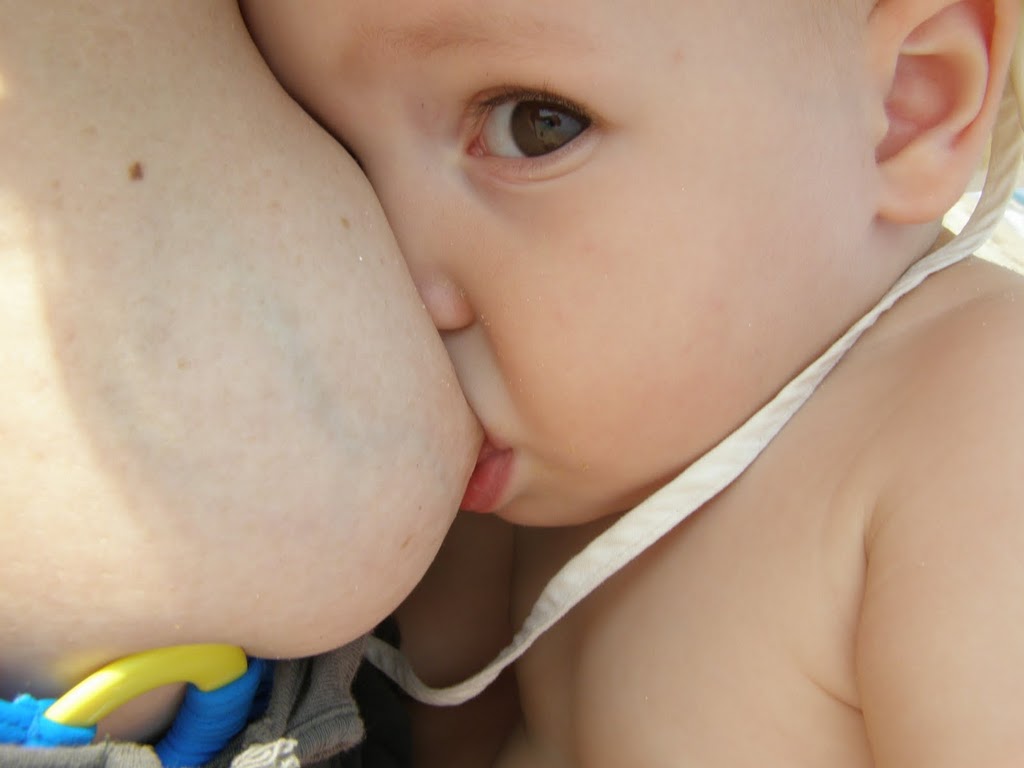
Over on my Facebook page recently I shared an article about a study which appeared to indicate that breast milk inhibits the effects of childhood vaccines.   The authors posited that mothers should not breastfeed their children so that the vaccines would be able to effectively do their thing.

I disagree strongly.  Breastmilk is nature's way of conferring immunity from mother to child in a safe, effective way.  If breastmilk lessens the effectiveness of vaccines perhaps the vaccines themselves need to be looked at more critically.  And just maybe those vaccines are not really as thorough as the pharmaceutical companies claim they are.  I find myself frequently dismayed when manufacturers attempt to improve on a natural biological process just so they can sell drugs, etc.

Now it turns out that there are other inhibitory factors that can lower vaccine effectiveness.  These common chemicals, (perfluorinated compounds (PFCs), found in things like teflon and microwave popcorn bags), appear to reduce the effectiveness of vaccines.

I'd like to start by reminding folks that I am really against microwave popcorn (see addendum 1 of this blog post).  PFCs sometimes referred to as perfluorooctanoic acid (PFOA), are just nasty business.  If you want to eat popcorn choose organic popcorn (to avoid GM contamination) and make it on the stovetop or in a hot air popper.  Dressed with melted coconut oil and the seasonings of your choice it's a great snack.  [side note:  I admit the snarky side of my nature wonders if now that pharmaceutical companies know that PFCs reduce the effectiveness of their vaccines will they somehow lobby to remove them from use?  Because in spite of consumer protests the manufacturers are still using them.]

However, back to the topic at hand, the main point here is that we need to think about our health.  This means thinking about our food, what touches our food, where it comes from, how it nourishes us, our environment, and the impact that all of these things have.  There is a cumulative effect from eating badly.  And by badly I mean not only food that is not wholesome and nutritious, but food that is contaminated in some way.

Those babies who were born with PFCs in their bloodstream got it from their mother and from the environment that she lived in.  If we support healthier mothers we will make healthier babies.

Whether you believe in vaccines or not surely you believe that it is not right for our environment to be so toxic.  For babies to be born with a "sluggish" immune system that "doesn't respond as vigorously against micro-organisms."  We need to clean up our food.  We need to make changes to our environment which support health.  And we definitely need to breast feed our babies.

Monday, January 16, 2012

news review...or...it's on my mind monday

in the news | photo: mconnors
I'm always looking up information about food, health, and what's in the news.  Just as an experiment this is a posting of what's I'm reading right now, some of which may or may not turn into a blog post, but all of which is of interest to me.  I'd be curious to know if any of this is of interest to you.  In no particular order (other than this is what's open across my browsing window) here's what's on my mind:

The little county that could get CA to rethink methyl iodide - I've written about this before.  Essentially CA agreed to let agricultural companies use a known carcinogen (so effective that it is used in laboratories to reliably cause cancer) on strawberry crops.  In spite of massive protests CA went ahead and approved it anyway.  Turns out the fight is still on.  This gives me hope that this awful carcinogenic chemical will be banned.  Until then I have essentially fought back the only way I know how.  I purchase no strawberries from California at all, even the organic ones.

Public Park Helps Feed 200,000 People Every Month -  I love this.  What a great solution to help feed those who are hungry and also make effective use of public lands.  This ties in to a video I shared on my Facebook Page about Suburban Homesteading/Urban Victory Gardening.  Looking at the info I see it's the same guy, John from Growing Your Greens.  I've subscribed to his YouTube channel and am looking forward to more good info.

Low Vitamin D Ups Diabetes Risk in Kids - One more reason to check your vitamin D levels.  I think sometimes people tune out the vitamin D message believing that they are getting enough from their milk.  Sadly that's often not enough, especially if you are drinking skim milk.  Vitamin D is important for so many different reasons and across different populations.  Are you over 65?  Check your vitamin D.  Is it wintertime and you live in a Northern latitude?  etcetera etcetera etcetera.  Check your vitamin D.  I'm not saying everyone needs to supplement, but it's easy to check and if you are low you probably do need to supplement.  Always get the 25 hydroxy test rather than the 1,25 dihydroxy - it's a better indicator of your vitamin D status.

Apple Juice Made In America?  Think Again - This one surprised me.  Because I know we have so many apple orchards in the US I just assumed that our apple juice was made here.  Turns out it's not.  Given that so many children drink it (and the recent fungicide contamination of orange juice) I'm even more convinced that getting our food from abroad is not necessarily a good idea.  I believe the best thing is to get to know your farmer, buy locally, and grow your own.  I'm blown away by the idea that apples which are grown in China can be juice and fossil fuels expended to bring a liquid product (very heavy) all the way around the world to us, and somehow it's cheaper.  There is something very very wrong with that equation.

Programmed To Be Fat? - This looks like a fascinating program and I am going to try to see if I can borrow a copy through my local library.  Given the increasing number of obesogens in our environment (I wrote an article some time back called Is Your Plastic Making You Fat?) and  the rising toxicity levels for newborns this is an issue that really needs to be looked at and worked on.   We are poisoning ourselves, our environment and destroying our future.

Goats being used, instead of pesticides in Eastham - I love this.  What a great way to solve a problem.  Instead of throwing chemicals at the issue of weeds, use goats.  The goats are happy, they get fed, the town gets less toxic chemicals in their environment, the residents have less exposure and, presumably, less potential for illness.

Wednesday, August 17, 2011

eco friendly living


Yesterday I attended the Holistic Moms Network twitter party.  It was great fun; I learned a lot about a wide variety of eco-friendly ideas and shared in some great conversations.

tree | photo: dieraecherin
The topic of the party was people talking about different ways to cut down on how much paper we use.  According to PeopleTowels, "Each person in the US uses about 335kg of paper each year--that's 7 times the world average, even twice the average for industrial countries."  That's a lot of trees!  And don't those trees look better as trees rather than a methane-producing, decomposing mass in the landfill?

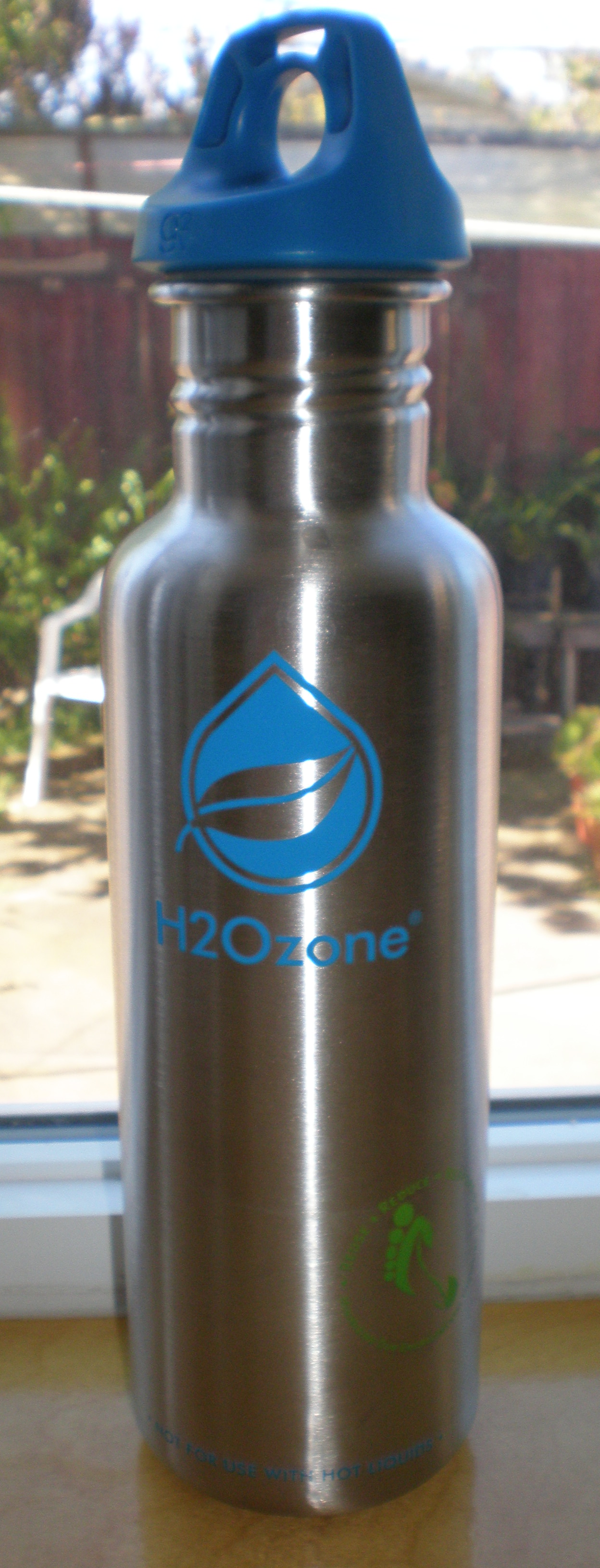
This discussion got me thinking about the holistic lifestyle many of us are trying to lead.  We bring our own drink containers (stainless steel, BPA free plastic, or glass) instead of taking styrofoam or paper cups from vendors.  We bring shopping bags to the grocery store instead of using paper or plastic.  Many of us are looking for ways to reduce our environmental impact.

Canteen | photo:  Broken Sphere
I confess that I am a work-in-progress in this area.  I think my success rate with the grocery bag issue is about 80%.  I even now bring shopping bags into other stores, not just the grocery store.  The challenge is getting them back into the car if I've been using a lot of them.  We do have a water bottle and BPA free hot cup for each member of the household and they do get used frequently.  We've shifted to dishtowels instead of paper towels.   All of the eco-friendly ideas that many people are starting to adopt.  But there's always more that can be done.

I felt energized by the discussions going on and came across a number of new-to-me products and companies that I wanted to share.  These are products which will help me continue to reduce my environmental impact; something I consider to be an important part of the balance to a holistic life.

PeopleTowel
PeopleTowels - This company sells reusable small towels that are a great size to take with you on the road, to the office, when you travel.  I confess the nerd side of my nature fell in love when I discovered that they had a special towel for Towel Day.*  One of the great things about their towels is that although they have lots of really cute ideas and great towels they also have an option where you can design your own.  So if you want to create a theme set of towels, put pictures on a towel, put one of your kids art projects on it, you can.  And these towels will last for years.  I've already ordered a set of five plus a Towel Day towel and can't wait for them to arrive.

Another topic that came up was the idea of straws.  To be honest we don't use a lot of straws in our house but when we do they are always plastic.  Until now.  It turns out that you can get either glass straws or stainless steel ones.  The glass straws are available from a company called Strawsome.  They have all different sizes, bubble tea, regular, smoothie, plus colors, plus you can get them personalized.  Another option for reusable straws that I like a lot is these stainless steel straws.  This is something that I could easily carry in my bag to use when I am out.  One challenge that I see is what do you do with a used straw if you use it at a restaurant.  But I like the concept a lot and love the thought of not wasting plastic.

As part of the eating out section of the conversation I was re-introduced to the concept of bringing your own takeout container to restaurants.  There are two reasons I like this idea and why I plan to start implementing it.  One is that most restaurants use styrofoam and I have a strong aversion to it.  It hangs around in the landfill forever and if you put hot food into it you are then absorbing some of the plastics that are released due to the heat of the food.  Bringing your own takeout containers is such an eco-friendly idea.  You can reduce waste, still have your takeout (I often wind up with lunch for the next day as most restaurant portions are far too large for one person), and have containers that you feel good about using.  I've decided to go through my BPA free containers and see which ones are going to be designated for takeout.  And I'm going to work on the habit of bringing them with me.

Another part of the conversation was about using cloth napkins which in turn opened up a discussion about cloth sandwich bags.  We do use cloth napkins in our house.  Not 100% of the time, when I have a party I confess I buy paper because I just don't have that many cloth napkins.  But on a daily basis it's cloth and we have a good size, mis-matched collection.  When talking about the idea of reusable sandwich bags I came across only one resource for food-safe plastic fabric.  If you decide to make your own reusable sandwich bags please do not use PUL or oilcloth, neither of those is acceptable for food contact.  This discussion lead me to realize that I think I want to set aside some time to make a few reusable sandwich bags and while I'm at it whip up one or two sets of napkins that actually all match.

I encourage my health clients that we are working one step at a time.  It's important to remember this when you are moving toward a more eco-friendly life as well.  If you try to change everything at once it's too much.  You are trying to remember and be consistent about too many things.  You are not learning and setting those new habits.  When I first started with shopping bags my success rate was about 10%.  I wouldn't remember to bring them in to the store or I wouldn't have enough reusable bags.  While I still forget from time to time to get them back into the car I do use them the vast majority of the time.  I've also gotten very good about telling cashiers that I do not need a bag if I am only purchasing a few products and can easily carry them when I've forgotten my bags.  That was my first big eco-friendly step.  Little by little I added others.  You can do the same.  Pick one thing that is important to you.  Practice and develop that habit.  When you are comfortable that you are utilizing it the majority of the time, move on to another one.  Slow and steady is the way to make effective, long-lasting, positive change.

What do you do in your home to be more mindful of the environment?  I'd love to hear ideas and resources.  Leave a comment below and share your thoughts.

*Towel Day is May 25th.  It is celebrated by fans of The Hitchhiker's Guide to the Galaxy written by Douglas Adams.  Rule #1 is "Don't forget to bring your towel."


Wednesday, April 27, 2011

is your plastic making you fat?

plastic overflowing | photo: matei
Plastic, it's all around us, a significant part of our modern lives. From hangers to toothbrushes, hairbrushes, storage containers, toys, and decorative accessories we live our lives surrounded by plastic. One plastic ingredient that is still receiving lot of news coverage is Bisphenol A, also known as BPA. What exactly is BPA? It is a building block for making plastic and plastic additives. Discovered in 1891 it is highly used in polycarbonate plastic items such as shatterproof bottles, CD's and DVD's, eyeglass lenses, and medical and dental equipment. It has also infiltrated our food packaging which can bring serious health risks.

A large part of the concern about BPA is that it is now known to be part of a category of endocrine interrupting chemicals called obesogens. Simply put an obesogen gets into our body and causes harm by reprogramming stem cells to turn into fat cells, or altering gene function. A study published in 2009 in Molecular and Cellular Endocrinology stated, "The recent dramatic rise in obesity rates is an alarming global health trend that consumes an ever increasing portion of health care budgets in Western countries. Recent research implicates environmental risk factors...evidence points to endocrine disrupting chemicals that interfere with the body's adipose tissue biology, endocrine hormone systems or central hypothalamic–pituitary–adrenal axis as suspects in derailing the homeostatic mechanisms important to weight control."  In plain English, our exposure to BPA may be one of the factors that is contributing to the growing epidemic of obesity.

Obesogens also have the ability to mimic estrogen and it's effects on the body. This estrogenic effect may be linked to reproductive abnormalities, breast cancer, prostate cancer and even diabetes. Unfortunately, in spite of the knowledge of how bad BPA is for us, it still permeates our food chain. At the end of 2010 Canada acknowledged BPA as a toxic substance for both humans and for the environment; their government is working to remove it from use.

The use of BPA in our modern environment can be overwhelming.  One high exposure source of BPA is the thermal paper lining credit card receipts, the BPA makes the paper printable.  Unfortunately it also flakes off easily when we touch the paper, allowing transfer to anything you touch or ingest afterwards.  When you receive credit card receipts fold them inward so that the printed side (the side with the BPA lining) is more contained.  If the receipt is printed on both sides, which is happening more and more, try to handle the receipt as little as possible.

There are some things you can do to decrease your exposure:

Avoid products that are known to be most contaminated by BPA. Canned foods are a big health hazard as the lining in most cans has BPA in it. There are a few brands that claim to be BPA free but unfortunately an article from Consumer Reports, December 2009, showed that some companies which claimed to have BPA free cans still had trace amounts of the chemical in their product. The report went on to state that those foods in plastic containers with metal pull-off lids, specifically Chef Boyardee Beef Ravioli in Tomato and Meat Sauce, had BPA levels that were 1.5 times higher than the same product in a metal can.

In addition to canned foods, plastics that are marked with a number 7 recycling code and any unmarked plastic containers are highly likely to be made with BPA.

Even products in glass jars may contain BPA in the lid. As a matter of fact those people who process their own food at home thinking that they are avoiding exposure may not be aware that Jarden Home Brands, the manufacturer of Ball, Kerr, Golden Harvest, and Bernardin brands, admits that there is some BPA in it's lids. Although it is a small amount, BPA is most highly released under heat and pressure, both conditions which are met during the canning process. (In fairness it is important to note that the plastic storage lids made by Jarden do not contain BPA) It is important to avoid these containers in order to reduce your exposure. Soups and other products are now available in cardboard packaging which does not have BPA. If you are planning on doing home canning you can purchase reasonably priced, reusable, BPA-free canning lids from a company called Tattler.

Other BPA containing products can include plastic bottles, plastic lined metal bottles, sippy cups, a lot of microwaveable cookware, and plastic bags. Using unlined stainless steel drinking bottles and cups can avoid exposure. When purchasing lunch-meats at the deli re-wrap them into wax paper or food safe BPA free containers (either glass or BPA free plastic). One new line of BPA free plastic containers is FreshKeeper available from Frye International. With an airtight seal, these durable nesting containers come in a wide range of colors and shapes. The company generously sent me a set to test and I found them convenient to use and easy to store.  They have also held up very well to heavy, regular use.

Nutritionally, aside from removing as much BPA from your environment as possible, one of the dietary changes you can make is to increase your intake of folate. Early stage research coming out of Duke University shows that increased folate intake by pregnant mice negated the harmful effects of BPA exposure. Good sources of folic acid are dark leafy greens. Kale, spinach, romaine lettuce, swiss chard, mustard greens and turnip greens. Folate can also be found in asparagus, broccoli, cauliflower, and lentils. Adding generous amounts of these whole foods to your diet is a healthy way to help protect your health.

It is important to be mindful of the different ways that BPA exposure exists in your environment. With these tips you can help limit and control your exposure.

Wednesday, June 23, 2010

carcinogenic strawberries

A while back I wrote a post about the proposed use of Methyl Iodide as a pesticide for strawberry crops.

The original post stated that the comment period would end on June 14.  That has been extended to June 29.

If you have not yet made your feelings about this issue known I urge you to take a moment and do so.  The United Farm Workers has a quick and easy way for you to participate on their website.

As I stated previously, this is a known carcinogen, one used in laboratories for it's reliable ability to create tumors.  Many scientists, including Nobel winners, have urged that this never be used.  Yet California is considering going ahead with it.  The potential for damage and illness is huge.  Not only those who eat those strawberries, but those who work with the crops, those who harvest and or package those crops, those who live near the fields, all will be affected.  This is truly horrifying.  Please take just a moment of your time and vote for clean food by stating your objection to the use of Methyl Iodide.

Monday, May 24, 2010

shopping guides

I just came across this detergent shopping guide from Organic Consumers and it's so important that I knew I had to pass it along.  It has a list of all of the soaps/detergents that use 1,4 dioxane, a known carcinogen that can cause a host of health problems.

This seemed like a good opportunity to pass along a couple of other good resources that are available online.

The Environmental Working Group Shopper's Guide to Pesticides

The Environmental Working Group Safety Guide to Children's Personal Care Products

The Environmental Working Group Shopper's Guide to Safer Sunscreen

The Food and Water Watch rBGH-free Dairy Guide (search by state)

The Non-GMO Shopping Guide

Sunday, May 9, 2010

strawberry contamination

Recently it has come to my attention that the State of California has approved methyl iodide for use as a pesticide on strawberry crops.


Methyl iodide is a potent carcinogen, it is used to induce cancer in lab animals because it is so effective.  Back in 2007 dozens of well respected scientists (many of them Nobel winning scientists) urged the EPA to ban this substance because it was such a dangerous chemical.


I find it disturbing and appalling that any organization, governmental or otherwise, would knowingly approve use of a substance virtually guaranteed to cause cancer in consumers.   I plan to watch this issue closely and, if methyl oxide is approved, will no longer be eating strawberries from California.  I will then be watching further to see if they approve it for other crops which I will then also no longer eat.  


The State is now seeking public comment on the issue before they implement it, you have until June 14th to let them know how you feel.  Please take a moment to stand up for your rights as consumers to non-carcinogenic foods.


Photo courtesy of Henning 48 | Wikimedia Commons

Monday, September 21, 2009

environmentally and form friendly

I just ran across this beautiful rainbarrel and had to share. Sadly it's not available in the US although I hope that one day soon it will be.

Rainwater is a great resource, no chlorine or fluoride to go into your plants.

Apparently 1" of rain on a 1,000 s.f. roof can produce 6,000 gallons of rainwater. That's a lot of water! Why not use some of it to water plants instead of tap water? Until this one comes to the US look for local options for rainbarrels. The hardware is easy to find at your local hardware store, the barrel might be a little more difficult to obtain.

photo courtesy of: http://www.basvanderveer.nl/index.php?id=2

Saturday, August 15, 2009

windows and weeds

My friend Tracy asks, "I'm looking for a natural window cleaner as well as a natural weedkiller. Do you have any proven concoctions you would like to share? I'd love to give up the Windex and pulling weeds around the pool patio -- well, let's just say there must be a better way!!" There is a better way, and believe it or not you use the same thing for both (with some disclaimers).

Windows first. That good old standby vinegar and water works great. I use 1/4 C. white vinegar and 2 C. water in a spray bottle. Mirrors, glass and chrome come out streak-free and clean. There are a lot of wonderful household cleaners that you can easily make yourself with common ingredients. To get some good recipes visit Women's Voices for the Earth. You'll find recipes for all-purpose cleaner, drain opener, and more.

Weeds are a little more difficult. There was a study done by the University of Wisconsin-Madison Department of Horticulture that showed that vinegar (acetic acid) works well as a weed killer. But what worked the best was a 20% solution (the stuff we buy for home use is typically only 5%) which is not easy to purchase for household use. I have successfully used vinegar mixed with liquid soap and water as a weed killer but only in areas such as a brick path because the spray will affect almost any plant that it touches. A single application will kill the plant; the exception seems to be plants with fuzzy leaves, for some reason they are not as affected by the solution. Plants with thick roots, like dandelions, usually have regrowth, however multiple applications appear to weaken the plant and, in some cases, completely kill it. I use a formula of 1 part dish soap, 2 parts vinegar, 2 parts water. So for a small batch you would make up a solution of 1/2 C. dish soap, 1 C. vinegar and 1 C. water.

It's a good thing to be able to use ingredients that do the job without relying on harsh chemicals that aren't good for you or for the environment.

Thursday, July 30, 2009

is organic food better

I have had a number of people asking me what I think about a recent BBC article that claims that organic food is not as healthy as it claims to be.  I've been asked what I think about this and can it really be true.  There's a lot of buzz being generated about this at the moment, here's my take on it:

1.  The article addresses only the nutritional content of the food in question.  A friend of mine who is a farmer claims that if the study had looked at smaller, sustainably produced organic farms the result would be different than large industrial organic farms.  I'm not sure whether that is true or not but it certainly is worth investigating before deciding that there is no nutritional benefit to organic farming.

2.a.  The article does not address pesticides, chemicals and hormones.  A large part of the reason people purchase organic foodstuffs is because they don't want the chemicals come along with conventional farming methods.  As I've mentioned before, there is something called the Dirty Dozen.  These foods are the ones that pick up chemical residue most readily.  If you don't want to eat that you can find out which foods they are by downloading the Environmental Working Group's Shopping Guide.

2.b. Many people, myself included, do not believe that saturating the soil with pesticides, fungicides, chemical fertilizers and such is healthy for the earth.  So aside from not ingesting these things when you purchase organic you also do a good thing for the environment.  

2.c.  Organic farming methods are also better for the people who work on the farms.  According to  Toxic Free NC "Agricultural families are at very high risk for exposure to pesticides. Workers can inadvertently take toxic pesticide residues home on contaminated clothes, hair, and skin. Because most workers also live very close to the fields, they are also subject to pesticide drift at home. Once in the home, pesticide residues are very easily picked up by small children, who are especially sensitive to health damage from pesticide exposure.  Subjecting workers to hazardous pesticide exposure on the job puts both the workers and their families at risk for serious health consequences."  

3.  Part of the organic standard is more humane treatment of animals that are grown for food.  I believe that this is important.  You can read an article I wrote about organic milk.   Shouldn't the humane treatment of animals be part of our consciousness?  Aren't we evolved enough to not want these animals to live in discomfort before they provide for us?  I believe that we still have a distance to go before the system is where it should be concerning the treatment of farm workers and animals, but certainly the measures provided by organic standards are a solid beginning.

4.  Another part of the organic standard is that foodstuffs may not be Genetically Modified (GM).  Since the only way to ensure that something is not GM is to purchase organic this becomes an important distinction.  Read this article by the Institute for Food and Development Policy to learn more about some of the concerns about GM food.

In his book, "In Defense Of Food," Michael Pollan writes about how our diet has been hijacked by the theory of nutritionism.  That everything has to boil down to a perfect science of nutrition.  Unfortunately that falls far short of the mark and is not a complete answer.  This study falls firmly under the category of nutritionism, ignoring all other reasons to consider organics.  

So when friends and clients ask what I think about this I point out the thoughts above and say that my choices are based on more than just the nutrients in the food.  It's about the choice for no sewage in the fields, no chemicals, more humane treatment of animals, what I believe is better tasting food, and especially my desire to limit my exposure to GM food.


Wednesday, July 1, 2009

recycling #5 plastics

In our family we eat a lot of yogurt.  Most mornings we have a smoothie for breakfast.  We cook a lot of Indian food and use yogurt on the side either as a raita or plain to help cut the spiciness.  Sometimes we even have it as a dessert, straining it to make a Greek style yogurt, topped with fresh fruit and a drizzle of honey it is a very satisfying way to end a meal.

But what to do with all of those leftover containers?  They are #5 plastics and will not be recycled by my local service.  This grade of plastic, also known as polypropylene, is found in a wide number of containers including yogurts, cottage cheese, cream cheese, ricotta cheese, margarine (although you should not eat this), as well as some ice cream containers.  It also includes toothbrushes, plastic plates, medicine bottles, ketchup bottles, and more.  They are even in your Brita water filter; #5 plastics are all around us.  

Now there is a way to recycle them. Preserve, a company based in Cortland, NY has a recycling program and they want your #5 plastic products. According to Preserve their recycled products us 54% less water and 75% less oil than creating virgin plastic; they also release 64% less greenhouse gases. After using the product you clean it and then deliver it to your nearest Whole Foods.  If you don't have a Whole Foods near you Preserve will accept mailed packages of #5 plastics.  This is a great way to help save the planet and to help support recycling efforts.  Although Preserve does not reimburse for mailing costs you could consider banding together with a group of friends and mailing a large amount together.  Shipments must be by ground and should be sent to:

Preserve Gimme 5 
823 NYS Rte 13 
Cortland, NY 13045

Preserve sells products made from the recycled #5's such as toothbrushes, razors, tableware and kitchenware.  And when you are done using those products they can be recycled even further into plastic lumber.  All of their products are designed to stay out of the landfill and reduce environmental impact.

Recycle your #5's it's good for the environment and that's good for everyone.

photo courtesy of Stonyfield.com