I've been seeing changes in yogurt in the grocery stores lately. It used to be that yogurt was mostly a gelatinized "Swiss-style" fruit mixed in or on the bottom kind of product. At least that's what was presented to us at the grocery store. Then came those tubes followed by the drinkables. Now we're getting back to the real thing and the choices for whole milk, organic, live culture yogurt are easily available.
Greek yogurt has come to the forefront. Many people seem to prefer it even in the face of the higher cost. Greek yogurt is higher in protein, almost 50% more according to the Berkeley Wellness Letter. The whey is strained out giving it a thicker consistency and a longer shelf life. When you strain out the whey you wind up with a product that is higher in fat and lower in calcium but also lower in lactose (the milk sugar that some people have trouble digesting). So you have to decide what you want.
Of course what many people don't realize is that you can make a Greek style yogurt of your own very simply. Take a 32 ounce container of whole milk, organic, live culture yogurt. Place cheescloth (I use a coffee filter) into a colander. Place the colander on top of a bowl and then dump the yogurt in. Put the whole thing in the fridge overnight and in the morning you have a thicker, Greek style yogurt, and the whey which has strained out. The whey is great for soaking beans or grains, it can be added to soups, and some people even drink it straight. It's a little tart for me for that so if I have too much I usually feed it to the dogs, they consider it a great treat.
What to do with the thickened yogurt? You can use it as a substitute for sour cream, you can add things to it to make a savory dip, mixed with a drop of stevia it makes a fabulous fresh fruit dip or you can eat it plain. One of my favorite ways is to mix it with cottage cheese and a bunch of fresh vegetables, cucumbers, cherry tomatoes, chunks of sweet peppers add a pinch of sea salt and a grind of fresh pepper and you've got a tasty summer lunch. Yogurt doesn't have to be used just for sweet things, it also makes a great savory dish.
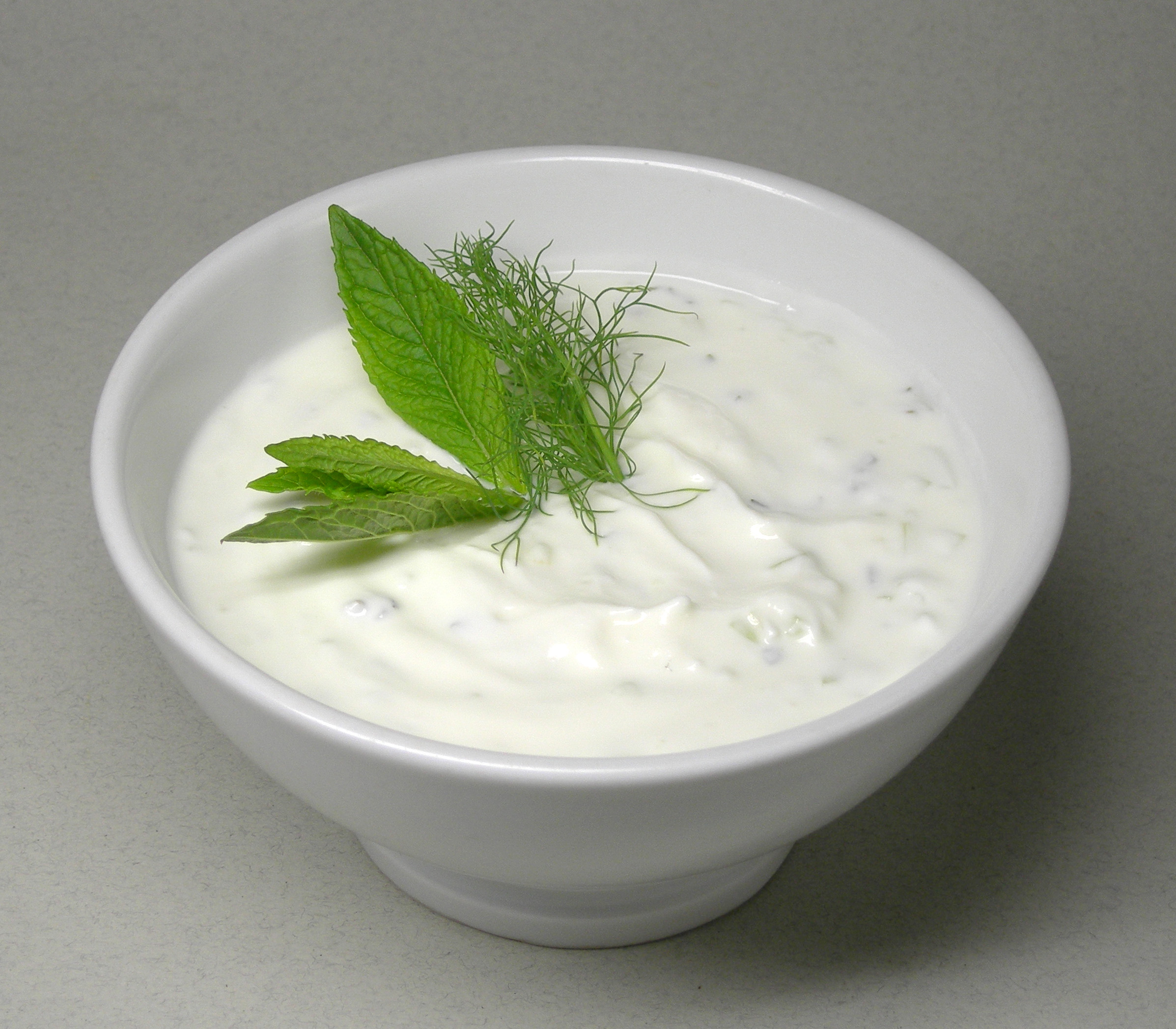
Many cultures have a yogurt dish of some kind mixed with different spices or foods to make a condiment. For example in India there is a shredded cucumber yogurt dish with scallions, garlic, cumin and pepper that helps to cut the spicy heat of the cuisine called Raita. A similar dish can be found in Greek cultures and is called Tzatziki; it's made with yogurt, cucumber, garlic and mint. There's even a cold soup called Tarator from Bulgaria which has yogurt, cucumber, dill, garlic, walnuts, and oil, it makes a great starter for meal on a hot day.
The yogurt market appears to be growing by leaps and bounds. A recent trip to the grocery store revealed coconut milk yogurt and soy milk yogurt (for those who can't have dairy), Bulgarian style, Australian style, and even Icelandic style. As far as I can figure out the difference is primarily the type of bacteria used and perhaps how thick the yogurt is.
Also appearing more and more is kefir, a fermented yogurt that is drinkable. The fermentation increases the probiotic activity of the yogurt and can be very healthy for you as long as the cultures are live. Soon enough I expect that we'll start seeing bottled containers of lassi which is a similar fermented yogurt drink from India.
Whatever style or type of yogurt you are eating (or drinking) it is important to remember that you want the real stuff. Live cultures, no added artificial ingredients, just good, healthy, probiotic, digestive supporting yogurt.