Showing posts with label ingredients. Show all posts
Showing posts with label ingredients. Show all posts
Saturday, January 26, 2013


Wednesday, October 10, 2012
updating pbj
 |
Over time my tastes have changed and that pbj has gone through several modifications over the years. At one point I was making ezekiel bread; grinding the grains and legumes myself to make the flour before I baked the bread. This deliciously robust-flavored bread happens to make a fabulous, filling choice. I also, over time, lowered the amount of sugar, salt, and added fat in my peanut butter by making different choices. Then, eventually, I switched altogether and began to use fresh ground almond butter from the machine at my grocery store. I find it amusing that although I thought the fresh ground peanut butter of my youth was not that good, I've come full circle and now love the crunchiness and true flavor of fresh ground nut butter. And while I love jam it's usually either handmade or a purchase that is whole fruit, no added sugar or other chemical ingredients. But even that has now changed and I often find myself mashing up fresh berries with a tiny drizzle of honey as the "jelly" in my sandwich.
These days, due to digestive challenges, I find I do better avoiding gluten and so, unable to, as yet, make a good gluten free ezekiel-style bread I am using a brown rice bread which is very satisfying. But I've changed the sandwich again and now often have it open face using one slice of bread, some almond butter (just almonds, nothing else), a few mashed berries, that drizzle of honey and it's just as satisfying and comforting as the pbj of my youth.
I suspect that because the changes were gradual and because they were choices that I made, this seems perfectly reasonable to me. I'm equally certain that if I had abruptly changed from that fluffy air bread, sugar-laden, oily peanut butter, and over-processed grape jelly to today's version I would not have been a happy camper. While I know it's not the sandwich of my youth, it's what I reach for when I want that kind of food.
Our food is what we think of it and how we see those emotional connections and associations. What have you changed and yet it's still the same?
photo: Renee Comet
Tuesday, June 5, 2012
antifreeze in your ice cream
 |
| ice cream | photo: fruhstuckbeistaphanie |
If you are looking for a cool summer treat you may want to consider making your own frozen confections. It turns out that there is a little known ingredient called propylene glycol hiding out in your ice cream. Considered a "non-toxic" antifreeze (as opposed to ethylene glycol which is highly toxic) many manufacturers use it in a wide variety of foods, especially ice cream. While it prevents your car from freezing it also keeps your ice cream smooth and prevents ice crystals from forming. Homemade ice cream turns fairly hard once frozen completely but this doesn't seem to happen with a lot of commercial ice creams. Now you know why.
Looking for it on the label provides an even bigger shock. Propylene glycol is not listed. Why? It turns out there is a, previously unknown to me (and presumably all of you), USDA regulation which covers incidental food additive labeling. This labeling allows the manufacturers to not include this ingredient on the label. My research so far seems to indicate that propylene glycol is covered under this regulation.
Unfortunately it does not take into effect the "ick" factor (after all who really wants to eat anti-freeze, even if it is the "non-toxic" variety?). Nor does it take into effect the fact that there are people who are highly sensitive to the substance. While I don't know how much propylene glycol is in ice cream I'm assuming it's not a huge amount. However if you eat a lot of ice cream, or frosting, or other foods that contain it you could be getting a significant exposure.
Apparently people who suffer from vulvodynia and interstitial cystitis can be particularly sensitive. It's known to cause skin problems when it appears in lotions, asthma or other allergies in children exposed through airborne sources, and large doses administered orally have been been shown to have a depressive effect on the central nervous system in animals. The challenge with the large dose testing is that because it's not labeled we do not know how much we may potentially be exposed to through ingestion or through osmotic skin absorption.
What can you do to avoid it? That's not so easy since it's not labeled. Still want those creamy, cool summer treats? Consider making your own. Here are a couple of recipes that really hit the spot when the temperatures are climbing outside.
Strawberry or raspberry water ice, recipe from Good Things by Jane Grigson
1 lb. strawberries or raspberries
1 cup sugar
1-2 cups water
juice of 1 lemon
juice of 1 orange
5 tablespoons orange liqueur, or kirsch
2 egg whites (optional)
Put the fruit through a blender.
Make a syrup of the sugar and 1/2 cup water.
When it is cool add the puree and strain.
Flavor to taste with lemon juice.
Dilute with the extra water if required.
Pour into a container, stirring the frozen sides of the mixture into the more liquid middle part every so often. With shallow trays this needs to be done every half hour; deep boxes can be left longer.
In 2-3 hours, the time depends on the depth of the mixture, you will have a thick mush of iced granules, called a granita.
IN 3-4 hours you will have a firm but not impenetrable block of water ice ready to be turned into sorbet.
Beat the egg whites in a large bowl until they're stiff.
Add spoonfuls of ice gradually, if properly done the mixture blow up to a mass of white foam.
Refreeze in a larger container until the sorbet has the consistency of firm snow.
Add the liqueur gradually at the end during the last stirring; with the sorbet add when ice and beaten egg white are mixed together.
Vanilla Ice Cream, recipe from Nourishing Traditions by Sally Fallons
makes 1 quart
3 egg yolks
1/2 cup maple syrup
1 tablespoon vanilla extract
1 tablespoon arrowroot
3 cups heavy cream, preferably raw, not ultra-pasteurized
Beat egg yolks and blend in remaining ingredients.
Pour into an ice cream maker and process according to instructions.
For ease of serving, transfer ice cream to a shallow container, cover and store in the freezer.
I have found that adding 1-2 cups of fresh fruit makes a wonderful addition to this recipe
And in a side note: as an outcome of my research I did manage to find an online source for propylene glycol free flavoring.
disclaimer: cmp.ly/5
Thursday, May 24, 2012
what's in your vitamins?
 |
| gummi bears | photo: Pumbaa80 |
This particular client happened to keep their vitamins in the pantry. At one point, as we were talking about a number of the negative ingredients in various food items, I happened to grab one of the vitamin bottles. That vitamin bottle brings us to today's blog entry.
It's important for you to understand that nutrition applies not only to food; it applies to whatever you put in your mouth. If you eat it or ingest it in any way, you need to be aware of the ingredients that are in it; because if it goes into your mouth it gets into your system. This includes Food, medicine, vitamins, mouthwash, and toothpaste.
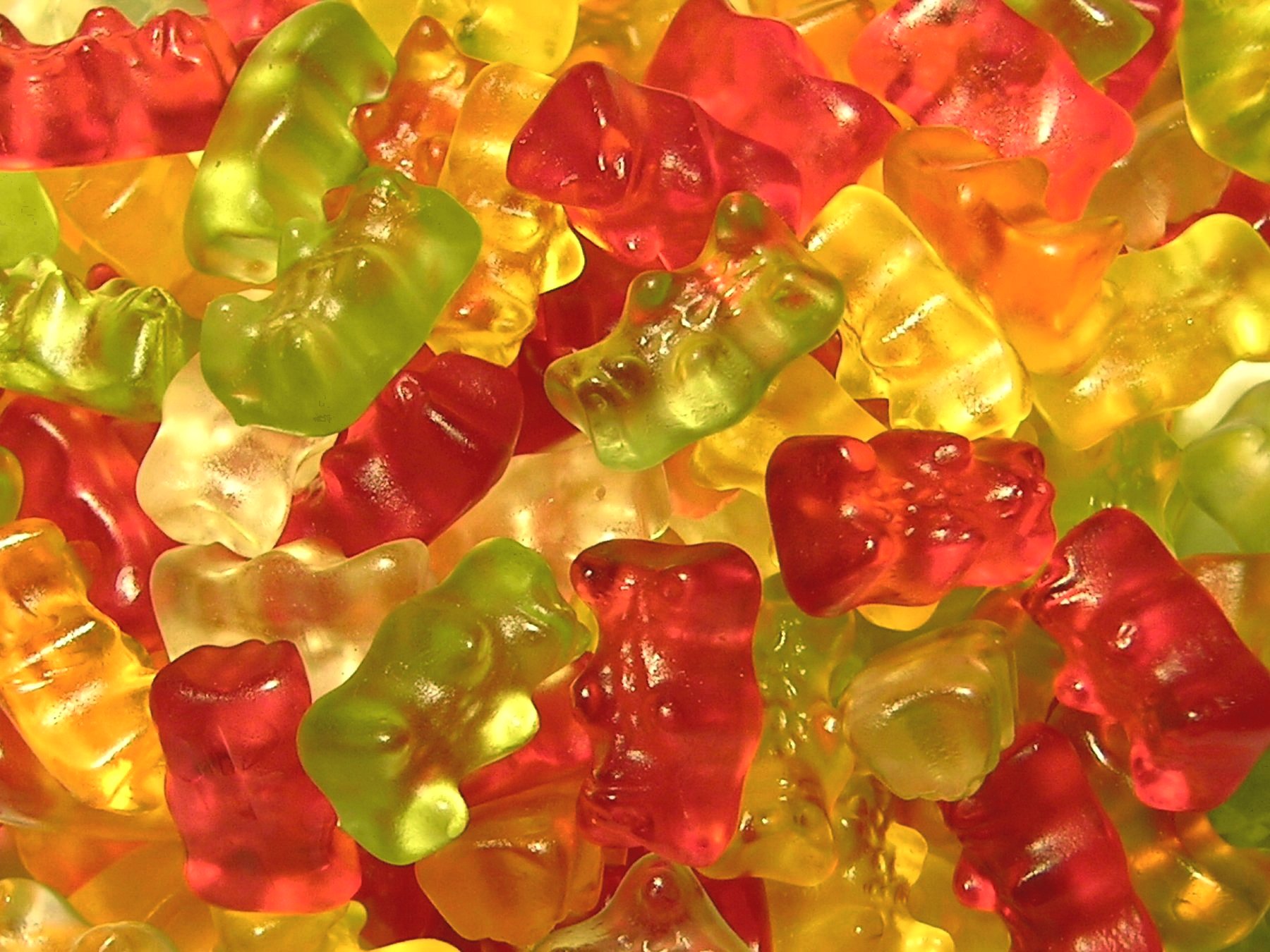
I am going to focus on one particular vitamin here but this information and thought process would apply to any supplement. First, I will start by saying I do not get the gummy-bears-as-vitamin concept. Sure it sounds good in theory, make vitamins fun and perhaps more people will take them. But vitamins are not candy and we should not be thinking of them as equivalents.
I am, admittedly, a huge proponent of food as medicine; however I do recognize the potential need for supplementation. My theory is supplement, replete, and stop (having corrected the diet along the way). Gummy vitamins/supplements fall very low on my list because all of that sticky, candy residue stays on your teeth and creates a perfect environment for bacterial growth.
I know, I know, some of you are going to complain that gummy candies are fun and I shouldn't be such a spoilsport. I get that they're tasty and the chewiness is fun. But every day? Not a good habit to get into in my book.
This particular vitamin is meant for adults. It's a calcium supplement with vitamin D3.
 |
| citracal |
On the plus side:
- Taking calcium with D3 is a good choice, the D helps the body to properly utilize the calcium and D3 is the better choice over D2.
- This supplement uses maqui berry (also known as Chilean winterberry) juice concentrate for color. A good choice because it's a fruit, however why go all the way to Chile? Why not use something like cherries or blackberries?
- The tricalcium phosphate is meant to provide the calcium supplementation. There is some debate about which forms of calcium are best, but leaving that out of the discussion this is not an unreasonable form.
- The very first ingredient is corn syrup which is essentially a sugar.
- The second ingredient is sucrose, also known as table sugar.
- If we look at the nutrition label we see that this product provides 7 grams of sugar for two gummies. That's as much sugar as a 3.5 ounce cheese danish (not that I recommend you eat the danish either).
- The artificial flavoring, Yellow #6 and Red #40 are definite negative ingredients.
Inert or neutral ingredients would be the water, sodium citrate, citric acid and pectin. These are used to make the form, or body, of the candy. The citric acid is for flavor, the pectin is what makes it gummy.
Overall that makes this not a great choice if you are looking to supplement your calcium. Considering the food as medicine concept, it is important to remember that if you eat right you can, in fact, support your health with food. One study from 2007 concluded that, "Calcium from dietary sources is associated with a shift in estrogen metabolism toward the active 16α-hydroxyl metabolic pathway and with greater BMD and thus may produce more favorable effects in bone health in postmenopausal women than will calcium from supplements."
Am I telling you not to take supplements? Absolutely not, that's a decision that you need to make for yourself, in combination with all of your health professionals. But I am strongly suggesting that instead of trying to supplement your calcium with candy you may want to consider adding foods that are high in calcium to your diet. Obviously this includes dairy, but for non dairy sources consider the following foods:
salmon, sardines, collard greens, spinach, turnip greens, okra, white beans, broccoli,
Brussels sprouts, and sesame seeds
Update: I just found this article stating calcium supplements may not be good for your heart, possibly even leading to cardiac arrest. Especially if you are a woman. The article points out that the body handles calcium very differently (and very well) when it comes from food sources. The rush of calcium to the system from supplements however may not be so beneficial. One of the study researchers, Dr. Ian Reid was quoted as saying,"A reassessment of the role of calcium supplements in osteoporosis management is warranted."
Want to connect with me for a Pantry Party? Send me an email.
Tuesday, May 22, 2012
another helping of meat glue?
 |
| meat glue | photo: the bovine |
Now we have "meat glue." Approved for human consumption by the FDA, allowed in Canada, and defended by the American Meat Institute it is made from something called transglutaminase. Used to put together pieces of meat, this powder can be used to make them look like a better cut of meat. It is also used to improve the texture of certain foods.
According to my research, transglutaminase, or meat glue, can be found in processed meat and other foods such as imitation crabmeat, fish products, and ham. However it's not just used for meat and can also be used in those food products where a gelling process is needed such as cheeses, jellies, yogurts, or frozen desserts. Meat glue is made utilizing Streptoverticillium mobaraense. What is S. mobaraense? Apparently it's a micro-organism that secretes transglutaminase. I'm not exactly clear on how the process works but that is the condensed version. Anyone who would like to dig through the more extensive explanation can find it at the American Society for Microbiology.
One complaint is that producers may be selling cheaper cuts of meat as a higher grade because it looks like something it's not. This is a valid point; it would definitely be a reason to get upset for being overcharged by a producer making cheap cuts of meat pieces look like a very expensive filet. Searching the web it appears that one area where this may happen is buffet restaurant settings. Those places where you can get as much filet mignon as you want for one low low price. Apparently there's a reason that price is so low; it may not be what you think it is. I want to point out, in all fairness, that there is a big kerfluffle about this issue but so far I have not found any legal cases where a producer or seller is being charged with this practice.
The health challenge is potentially different. The use of meat glue means that there could be a higher risk for bacterial contamination due to the increased number of surfaces. The more surfaces, the more area for bacteria to live. For those consumers who like their meat less well done this creates more risk. If the meat is not fully cooked (i.e., rare rather than well done) the joined parts may not reach a temperature capable of killing bacteria. With the new meat nutrition labeling requirement we should be able to see if transglutaminase is used on the meat at the grocery store. However, I have yet to see a single package that is using this new labeling.
Made by Ajinomoto, the same company that makes MSG, I would like to point to a few other health issues that concern me. The picture above is a packet of meat glue powder. It comes with a dose of maltodextrin and sodium caseinate. Maltodextrin is corn based so there is probably some GMO exposure as the use of organic corn would not make financial sense. Sodium caseinate is a milk protein and according to Truth In Labeling always has free glutamic acid making it a form of MSG. Additionally there is a possibility that the milk used to obtain the protein has rBGH in it, a hormone that makes cows give more milk. That's a whole blog post in and of itself, but the bottom line is you don't want to consume rBGH. The issue at hand is the possible reaction to corn or dairy that could be brought about by ingestion of meat in those with high level food sensitivities.
How to avoid meat glue? That appears to be a little trickier. I have been extra diligent about reading labels at the grocery store lately and have not seen transglutaminase listed on any ingredient labels. For meat products I believe the answer to be the purchase of organic meat or to buy from a trusted source. Kosher meat is not exempt from the use of meat glue as there is a kosher version available. Otherwise, until meat labeling actually happens, and unless they include transglutaminase on the label, you won't know. For other products I don't have an answer at the moment. Purchasing organic dairy, which I recommend anyway, is a good option. But until this product is properly labeled or removed from the food supply we may not know if we are ingesting it.
Monday, April 23, 2012
on my mind monday 4.23.12
 |
| news | photo: mconnors |
The mother who stood up to Monsanto in Argentina - Monsanto and their agrochemicals are not only problematic here in the US, but are having a hugely negative effect around the world. We often don't hear much about what is happening in other countries, sometimes leading us to believe we are the only ones fighting. Sofia Gatica plans to take on Monsanto not only in Argentina, but all across South America.
Canadian nutrition labels often misleading - This is, to put it bluntly, extremely frustrating. Calories, fat, sugar, were all potentially understated. And positive ingredients were possibly overstated. This means that some foods looked far healthier than they actually are. If you can't rely on the nutrition label to accurately relay the facts of the food it becomes even more difficult to make appropriate choices. Whole food still is the best way to go. However we live in a real world and that does include the influence of other foods. The label is one way to help you navigate prepared or processed foods. Unfortunately it appears that this was widespread across a wide variety of manufacturers. Kraft and Heinz were included, but so were companies such as Eden Organic, Kashi, and Amy's Kitchen. While the issue will hopefully be resolved, this situation does beg the question, what about the other locations where these companies sell their products. Like the United States.
Football fields to farms - Given how committed many schools are to their football teams this article caught my eye. Becoming partners in the community and helping to support agriculture in an area that was classified as a food desert, the college is making a difference. Even better they have added farming as part of the curriculum so their students can learn how to take care of the land. Knowledge that they will surely take with them when they graduate.
A week in the life of a food stylist - I've always been interested in food photography and food styling. I'm not very good at it and really appreciate the beautiful work of those who are. But the truth is sometimes a little sad because the food isn't always how it appears. "1:40pm: We got some sad mangos today. It happens. I had to give them a soak in water with a little bit of food coloring added to so that I could boost the color and "mango-ness" of them." Artificial colors...rats.
Fermentation - that's on my mind a lot as I make fermented foods such as kefir and fermented vegetables. I was really pleased to come across this BBC Radio 4 program on The Fermentation Revival which included some members of the UK chapters of the Weston A. Price Foundation, an organization which promotes traditional foods, as well as an interview with Sandor Katz.
Here's a video of Sandor Katz demonstrating making fermented saurkraut.
Two books on fermentation that have recently come out which need to go on my purchasing list:
Wardeh Harmon is a wonderful and knowledgeable traditional foods expert who I met at the Wise Traditions Conference 2011 in Dallas. It was great to get to spend a little bit of time with her at the conference and I've enjoyed following her online. The book looks great and is sure to be a wonderful addition to any traditional, nourishing foods kitchen.
If you're going to get into fermenting foods I strongly recommend that you purchase a set of pickle weights made by my friend Sandy Der. I bought mine two years ago and love using them. They're cute, functional, and work very well.
And if you want to get serious about fermenting foods you'll need to pay a visit to the nice folks at Cultures for Health, they've got just what you need to get started. My water kefir culture, also known as tibicos, came from them and is going strong. I'm thinking about separating some of them to try to make ginger beer which my husband used to drink as a kid and loves.
disclaimer: cmp.ly/5
Friday, March 30, 2012
bugs in your frappucino?
 |
| cochineal bugs | photo: Zyance |
Also referred to as carmine, this coloring agent has been known to cause severe allergies including urticaria and asthma. There have also been reported cases of anaphylaxis.
Because it is made from bugs, it is considered a natural food substance and some companies use it in place of petro-chemically derived artificial colors. Also because it is made from bugs, vegetarians do not eat cochineal. And I believe this ingredient is considered non-kosher. However it is appearing in a wider and wider range of foods including yogurts, ice cream, candies, and some beverages. Cochineal is also finding it's way into cosmetics as a coloring agent.
While I know there are many cultures that eat bugs as part of their diet, they are high in protein, research has not shown that these other edible bugs carry the same allergic potential as the cochineal bug. I also find it very irresponsible for Starbucks, which advertises that it can made vegetarian friendly drinks, would change it's ingredients without notifying it's consumers. Even those who are not vegetarian may prefer not to ingest this substance. And why cochineal in the first place? There are fruit and vegetable based sources for red coloring such as beets or raspberries which could have been used instead.
Don't want to eat bugs? Another good reason to read the label.
Tuesday, March 20, 2012
pink slime clarified
 |
| ground beef | photo: Rainer Zenz |
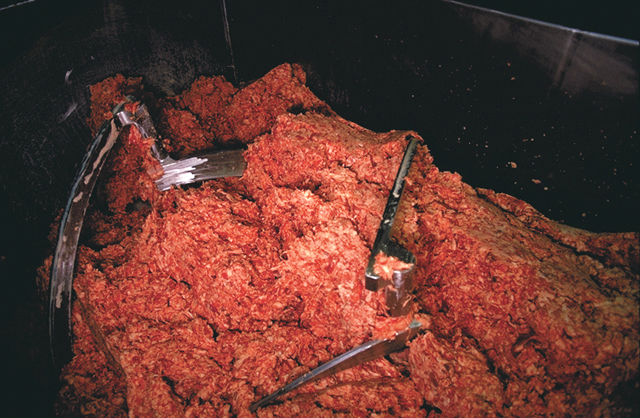
The quick answer to your question is any hamburger product is potentially made with pink slime. The industry term is actually "lean finely textured beef." It is a meat-product made from scraps and trimmings, heated, de-fatted, and treated with ammonium hydroxide.
Current federal regulations say it does not need to be listed as an ingredient and reports suggest that it can be the basis for as much as 50-70 percent of "hamburger" meat. Although many fast food restaurants are backing away from it in response to consumer disgust, the industry still wants to sell it because it is cheap and profitable. The USDA has just approved it for school lunches.
News reports indicate that in response to growing outrage by consumers, schools will be allowed to opt out of receiving this product. Not, however, until next Fall and not until after currently signed contracts have been fulfilled. I assume there will be schools which will claim they didn't hear from enough families so they signed contracts and it will continue to be available in the school food for some time to come.
There is a petition being sent to Agriculture Secretary Tom Vilsack (started by Houston resident Bettina Elias Siegel who runs the blog The Lunch Tray) urging a ban of pink slime in schools. Although I no longer have children in the public school system I am furious that my tax dollars are being spent to feed garbage to children and I have signed.
Current research shows that this product is also in grocery stores. However, once again, because it is not required to be labeled you may not know. As of today, March 20, 2012, the most recent list I have been able to find indicates the following:
Pink Slime NOT In Grocery Store:
Costco, Whole Foods, HEB, Ingles, and Publix
Pink Slime ALLOWED In Grocery Store:
Safeway, Stop&Shop, Kroger, Giant, Frys (I'm going to assume this includes Randalls since they are owned by Safeway)
Stores Not Responding About Pink Slime:
Walmart, Food Mart, Fred Meyer (I'm going to assume this includes Sam's Club since they are owned by Walmart)
If your store is on the list for allowing or not responding the ONLY way to avoid purchasing this product is to purchase organic ground beef as it is, to the best of my knowledge, fillers are not allowed under the rules of organic production.
Friday, March 16, 2012
are you gonna light that potato chip?
 |
| potato chips | photo: Evan Amos |
This word isn't really a word, it's a non-word, and a non-food at that. What is it?
TBHQ
Does it look familiar? If it doesn't that's okay, but now that I've brought it to your attention I hope that when you read the label (and you are reading labels aren't you?) it will stand out. And not in a good way.
TBHQ is the abbreviation for tertiary butylhydroquinone. That's not exactly any clearer than the abbreviation. What, exactly is TBHQ and why is it in the food? It's a preservative; a fake anti-oxidant if you will. It's found in a wide array of foods and is there to help delay rancidity and extend the shelf life.
As mentioned in The Omnivore's Dilemma by Michael Pollan:
- But perhaps the most alarming ingredient in a Chicken McNugget is tertiary butylhydroquinone, or TBHQ, an antioxidant derived from petroleum that is either sprayed directly on the nugget or the inside of the box it comes in to "help preserve freshness." According to A Consumer's Dictionary of Food Additives, TBHQ is a form of butane (i.e. lighter fluid) the FDA allows processors to use sparingly in our food: It can comprise no more than 0.02 percent of the oil in a nugget. Which is probably just as well, considering that ingesting a single gram of TBHQ can cause "nausea, vomiting, ringing in the ears, delirium, a sense of suffocation, and collapse." Ingesting five grams of TBHQ can kill.
There are also claims that TBHQ can cause anxiety and restlessness in children. Animal studies appear to indicate the possibility of large amounts causing stomach problems and oxidative DNA damage.
My suggestion, as always, remains the same. Eat whole food, understand what you are eating, and read the label. By the way, TBHQ can also appear in pet food. You may want to consider reading those labels as well. After all, if you're not going to eat it why should they?
disclaimer: cmp.ly/5
Wednesday, February 29, 2012
leap day giveaway
Whoo hoo! We love free stuff. And there's a great gift on the way to one lucky winner.
 The nice folks over at PurelyGreat are offering up a F-R-E-E 50 gram container of Women's Citrus Deodorant. Made with only four natural ingredients this deodorant contains no aluminum and is vegan friendly.
According to the Environmental Working Group's (EWG) Skin Deep Database many deodorants have chemicals which are known to be bad for our health. The EWG lists these chemicals as potentially causing cancer, as endocrine disruptors, neurotoxins, highly allergenic, and or causing organ system toxicity.
If you've been looking for a great smelling product that doesn't have any of these chemicals in it, this may just be the answer for you. After all, the object is to help you smell better, not to add more chemicals to your daily load.
Here comes the legalese:
1. This giveaway is limited to the USA and Canada (sorry folks who don't live in either of those countries)
2. Grains&More makes no guarantees regarding prize delivery and is not responsible for any possible taxes or fees
3. Grains&More has received no compensation for this announcement
4. The contest is open for one week from 2/29/12 to 3/06/12
5. The winner will be chosen at random and all results are final
Good luck!
According to the Environmental Working Group's (EWG) Skin Deep Database many deodorants have chemicals which are known to be bad for our health. The EWG lists these chemicals as potentially causing cancer, as endocrine disruptors, neurotoxins, highly allergenic, and or causing organ system toxicity.
If you've been looking for a great smelling product that doesn't have any of these chemicals in it, this may just be the answer for you. After all, the object is to help you smell better, not to add more chemicals to your daily load.
Here comes the legalese:
1. This giveaway is limited to the USA and Canada (sorry folks who don't live in either of those countries)
2. Grains&More makes no guarantees regarding prize delivery and is not responsible for any possible taxes or fees
3. Grains&More has received no compensation for this announcement
4. The contest is open for one week from 2/29/12 to 3/06/12
5. The winner will be chosen at random and all results are final
Good luck!
Monday, February 20, 2012
on my mind monday 2.20.12
 |
| newspaper | photo: mconnors |
Walmart 'Great For You' Healthy Labels - While I think we need to have appropriate labeling for food I'm not so sure who is the best organization to create it. As proven by the Smart Choice label fiasco manufacturers are certainly not a good choice. But are retailers any better? Considering that they have a vested interest in selling product and that their shelf space and advertising efforts can be bought, I'm not so sure this is a winning scenario for the consumer.
What's In Your Food: Weight Watcher's Blueberry Muffins - the usual suspects of bad food, artificial ingredients, chemical additives, and far too much sugar. Read the label, not just the front of the box. Unfortunately many people assume that the front of the box tells the whole story when it comes to health and nutrition information. Not true, that's the marketorial space that producers use to try to convince you that you want to buy their product.
Bright Farms - this is an organization that is bringing hydroponic greenhouse farms to grocery stores. I think this could potentially be a great idea. One issue is getting grocery stores to consider buying in to the concept of truly local sourcing. Another is the strategy of growing what/enough for consumer preferences. But it could potentially be a fabulous idea, especially in urban areas.
Wow! The Discover High School Farm. This is another twist on the education/food concept. This effort is really spreading in a variety of wonderful and creative ways across the country. Starting with Alice Waters' Edible Schoolyard to the Real School Gardens and more, kids are learning about their food, where it comes from, and making great choices because it's easily available. Now we have this high school connecting their kids to food in a meaningful and productive way.
Raw Milk Debates - As I've written about here and here, raw milk is in the news. There are many people who prefer raw milk. And both the Raw Milk Institute and the Weston A. Price Foundations Campaign for Real Milk support those consumers who want raw milk and those farmers who want to provide it. Here is a great blog post by someone who drinks raw milk. This issue seems to be getting more and more attention in the news and in legislative issues. On a personal level, in case you are wondering, yes, there is a raw milk dairy about 45 minutes from my house. Yes I do occasionally drink raw milk, but only when it is convenient for me to go that way and get it. I'll also share that my husband and teen daughter are not willing to drink it, so I don't force them. But I find it to be delicious and if it were more easily available I would consume more of it.
Arsenic found in infant formula - I am once again very upset to find such serious problems in the food supply. The arsenic is found in rice which is a very efficient at uptaking it from the soil. Apparently even if the field is now organic (a process which takes three years to achieve) if there is significant arsenic in the soil it will still find it's way into the rice. Where did the arsenic come from? It's being used as a pesticide. We need to stop dumping toxins on our food and to stop poisoning our soil.
Friday, February 17, 2012
candy bars
%E2%80%94_101_%D0%B3_(50,5_%D0%B3_%D1%85_2)_.JPG) |
| snickers candy bar | photo: FightinG FalcoN |
I'm not convinced they do. Let's remember, their job is to sell candy. And they're going to try to convince you that their candy is a healthier choice than that of another brand. But whatever they say, and whatever they do, the bottom line is that they need you to buy their candy.
These super-sized candy bars are a problem. A king-sized snickers bar is supposedly three servings, each one containing 170 calories, 8 grams of fat and 18 grams of sugar. Eat the whole thing and you are getting a whopping 510 calories, 24 grams of fat and 54 grams of sugar. Not a good thing.
It's pretty much a given that we are programmed to finish our food. I'm guessing that the vast majority of people who open a king-size candy bar wind up finishing the whole thing. In that regard downsizing could be a good thing. If Mars limits their candy bars to be no more than 250 calories (regardless of how many servings) that's less than half of what king-size candy bar consumers are currently getting.
Before we get all excited about that, however, we have to look at the ingredient list of a snickers bar:
- Milk chocolate (sugar, cocoa butter, chocolate, lactose, skim milk, milkfat, soy lecithin, artificial flavor), peanuts, corn syrup, sugar, skim milk, butter, milkfat, vegetable oil (partially hydrogenated soybean and/or hydrogenated palm kernel oil), lactose, salt, egg whites, artificial flavor
Next we look at the soy lecithin, soybean oil, and corn syrup. These are, in all likelihood, from genetically modified crops. Those of you who have been reading the blog for a while know that I am vigorously opposed to the use of GMO's in our food. Unfortunately the government does not believe that consumers have the right to know what's in their food and does not require manufacturers to label the source. Better to avoid them to the best of your ability.
Then there's the artificial flavor. We don't need that, it's not good for us, and we shouldn't be eating it.
So while Mars claims to have a "broad based commitment to health and nutrition" the answer is, not really.
Friday, June 17, 2011
gotta get grapes
 |
| Concord Grapes | photo: grongar |
My frustration? NOT ONE SINGLE jar of grape jelly at the grocery store came without HFCS. Several even had HFCS as the number one ingredient. Seriously? That number one ingredient means that the majority of the jelly isn't even grapes, it's HFCS. That is insane. First of all grape jelly is incredible easy to make. Grapes are very high in pectin. Throw them together with a little water, the right amount of sugar, heat to the correct temperature and voila! Grape jelly. Even more upsetting to me is the fact that many of the grape jellies at the grocery store come with artificial flavorings. I'm not exactly sure why as to my mind grapes have a pretty distinctive taste all their own.
Needless to say I did not buy any grape jelly (luckily she also likes orange marmalade so that's what she got) and I'm going to have to work a little harder to find a good source of either muscadines or concord grapes to start making my own jelly again.
For those who have access to good grapes for jelly making here's a great recipe from the book Preserving Memories: Growing Up in My Mother's Kitchen
 . In the interest of full disclosure I'll tell you that this book was written by my mom. I'm not recommending it because she wrote it (honestly). It really is one of my favorite canning/preserving books and my first go-to when I'm looking to make something. To get all of the great commentary, hints and tips you'll have to get the book, but here's the recipe:
Grape Jelly
10 C. or more Concord grapes (approximately 8 lbs.)
1 apple (optional)
2 C. water
Sugar
- Wash the Concord grapes.
- Cut the apple into quarters -- peel, core, and all -- then chop coarsely. Set aside.
- Put a couple of cups of grapes int a large stainless-steel pot, then crush them with a potato masher of the bottom of a clean glass jar. this provides a small amount of juice and prevents scorching.
- Add the water.
- Add the cut-up apple.
- Heat the fruit mixture slowly to the boiling point, reduce the heat, and simmer until the seeds come free from the pulp.
- Line a large colander with several layers of damp cotton cheesecloth. Set the colander over a large pot or bowl and carefully pour the grapes and liquid into it. Allow the free-run juice to drip through the cheesecloth. You may also use a chinois or jelly bag. Do not press down on the fruit.
- Measure the free-run juice. Process into jelly 4 cups of juice at a time - a smaller batch means the jell point is reached more quickly, resulting in better flavor.
- Taste a little bit of the juice. For every 1 cup of reasonably sweet grape juice, measure out 2/3 cup of sugar. If you used a greater percentage of under-ripe grapes and the juice is on the tart side, you can use 3 or 3 1/2 cups of sugar to 4 cups of juice.
- Bring juice to a boil then add the sugar. Boil to the jell point.
- Fill and process prepared jars.
Saturday, January 8, 2011
grocery store flow chart
Remember my motto: Eat well to be well? Obviously a lot of what we eat has to come from somewhere and for most of us that starting point is the grocery store. A lot of people have sent me this very funny flow chart "How To Find Real Food At The Supermarket" by Darya Pino of Summer Tomato . I love it and am taking her permission to "feel free to share this with friends" by sharing it with all of you.
While written in a humorous vein it certainly isn't too far off the mark. If it's not whole food don't eat it. Too many ingredients? syllables? vague claims about health? It's probably not healthy.

While written in a humorous vein it certainly isn't too far off the mark. If it's not whole food don't eat it. Too many ingredients? syllables? vague claims about health? It's probably not healthy.

Monday, December 20, 2010
what's in your water?
 |
| Water | Abhijit Tembhekar | Wikimedia Commons |
I was horrified when the pediatrician told my daughter that she needed to add more water to her diet, suggesting that she start drinking Propel. My daughter was thrilled and turned to me with a gleeful look on her face that faded when she saw my expression.
I am continually amazed at how manipulated we are by manufacturers. There is no other way to say this other than to just say it. Water is water period end of story. Why are they trying to fancy it up with all sorts of chemical additives for color and flavor, and why are they adding preservatives. Preservatives? What's in water than needs preserving?
Are many of us dehydrated? I believe the answer is yes. Do we need 8 glasses of water per day? That depends on what your bio-individual needs are. If you live in a climate that causes you to lose a lot of moisture or you exercise a lot or you don't eat high moisture foods and take in other liquids it all adds up. However I also believe that by the time we feel thirsty we are generally more dehydrated than we realize.
Dehydration is known to cause headaches, can lead to worsening asthma, hypertension and other health issues. Proper hydration is also key to helping the body eliminate toxins. That is why it's important to make sure that we are getting enough fluids to stay well hydrated. Breathing, digesting, sweating, and excreting all cause us to lose fluids.
If what we need is to stay well hydrated what we do not need is all of the extra chemicals that come with most packaged water drinks. Not only that if you look at the label you will see that they are misleading you by claiming to only have a certain number of calories. What you need to remember is to look at the label and see how many calories are in a serving and how many servings are in a bottle. One bottle of VitaminWater has 50 calories and 13g of sugar per serving. The label purports to contain 2.5 servings per bottle. Most people I know drink the whole bottle; that means 125 calories and over 32g of sugar per bottle. And those are empty calories. Providing no nutritional value and not filling you up at all.
Let me give you a hint, there are no calories in water. If you are looking for a little flavor in your water consider adding a slice of fresh fruit, a squeeze of citrus, a slice of cucumber, or a sprig of mint. These all add a lot of flavor without adding sugar, calories, "natural flavors", or other chemicals. Just drink water. It's what your body needs.
I am continually amazed at how manipulated we are by manufacturers. There is no other way to say this other than to just say it. Water is water period end of story. Why are they trying to fancy it up with all sorts of chemical additives for color and flavor, and why are they adding preservatives. Preservatives? What's in water than needs preserving?
Are many of us dehydrated? I believe the answer is yes. Do we need 8 glasses of water per day? That depends on what your bio-individual needs are. If you live in a climate that causes you to lose a lot of moisture or you exercise a lot or you don't eat high moisture foods and take in other liquids it all adds up. However I also believe that by the time we feel thirsty we are generally more dehydrated than we realize.
Dehydration is known to cause headaches, can lead to worsening asthma, hypertension and other health issues. Proper hydration is also key to helping the body eliminate toxins. That is why it's important to make sure that we are getting enough fluids to stay well hydrated. Breathing, digesting, sweating, and excreting all cause us to lose fluids.
If what we need is to stay well hydrated what we do not need is all of the extra chemicals that come with most packaged water drinks. Not only that if you look at the label you will see that they are misleading you by claiming to only have a certain number of calories. What you need to remember is to look at the label and see how many calories are in a serving and how many servings are in a bottle. One bottle of VitaminWater has 50 calories and 13g of sugar per serving. The label purports to contain 2.5 servings per bottle. Most people I know drink the whole bottle; that means 125 calories and over 32g of sugar per bottle. And those are empty calories. Providing no nutritional value and not filling you up at all.
Let me give you a hint, there are no calories in water. If you are looking for a little flavor in your water consider adding a slice of fresh fruit, a squeeze of citrus, a slice of cucumber, or a sprig of mint. These all add a lot of flavor without adding sugar, calories, "natural flavors", or other chemicals. Just drink water. It's what your body needs.
Sunday, September 12, 2010
reorganizing the pantry

Summer is all but over and Fall is just around the corner. At this time of year I like to start cleaning out my clothes closet for the change in seasons. I also go through my pantry so that I can re-organize it.
There are two reasons that I do this. The first is that things just get messy. With various different people putting things away the organization slowly dwindles down to nil; finding what you're looking for becomes a challenge. Especially in my pantry where there is a side "wing" making some things harder to see.
The other reason is that I like to make note of my ingredients, see if I need to replenish anything, and make sure that I am using what I have on hand. Beans and other dry goods are best if used within a year, I find that beyond that they start to get "old" and may not cook well.
I also like to take this time to check my stock of dehydrated ingredients, tomatoes, peppers, other vegetables, and fruit, so that I can take advantage of the summer bounty if I need more. My herb garden isn't producing in huge quantities yet, but in past years I've also dehydrated herbs to use during the year. This is a great way to know we are getting organic, pesticide-free foods that we can use during the upcoming year.
If your pantry is looking a little disorganized, consider taking some time (it doesn't usually take very long) to re-arrange the contents so that you can find things easily. This would also be a perfect time to start pruning your pantry of non-food ingredients such as HFCS, BHT and TBHQ. Knowing what you have on hand will help you reduce overbuying such as when you buy 3 jars of olives because you can't find the 2 jars that are already there. It will also help you better plan meals for the upcoming busy Fall season.
Subscribe to:
Posts (Atom)