Monday, October 8, 2012

on my mind monday 10.8.12

It's never the same two weeks in a row.  A collection of what I find interesting in the world of food, nutrition, and holistic health.  Here's what's on my mind.

MSG Wastewater As Fertilizer - I was stunned recently when I read that the wastewater from MSG production could be used as a fertilizer for corn.  Knowing how bad MSG is for human consumption it is startling to realize that it may be creeping into our diet in other ways.  I have as yet been unable to determine if it is allowable for use on organic corn.

Eat Fish Low In Mercury for Heart Health - We all know we're supposed to eat more fish.  It's good for our heart, it's good for overall health.  But fish, especially some of the larger fish like shark, king mackerel, and swordfish, tend to be high in mercury which we need to avoid.  Check out the Food and Water Watch Seafood Guide for tips about making healthier seafood choices.

Here's a cartoon that I find amusing about this issue (with thanks to The Deconstructionist Zone):


Differences in taste sensitivity - According to this article obese children and adolescents have less taste sensitivity which can lead to obesity.  This is the exact opposite of other research which shows that those who have more or highly sensitive tastebuds, supertasters, can be obese.  While this is confusing it does show that how we taste can have an effect on our ability to enjoy our food and ultimately on our weight.  But enjoyment of food is, and should be, about more than just taste.  Learning to enjoy the smell, the setting, the textures, the experience of our food is important.  Learning to eat mindfully is a habit we should cultivate.

Berries can slow cognitive decline - Apparently eating between one half to one cup of berries per week over an extended period of time (up to 2.5 years in the study) appear to have a positive effect.  This is believed to be attributable to the anthocyanins.  Whatever the reason, it's delicious and easy to do.  Just be sure to choose organic blueberries and strawberries whenever possible to avoid pesticides.


What I'm Reading:

The Winky-Eyed Jesus and Other Undescribables - Scott Wayland's entertaining description of his cross country human-powered recumbent bicycle journey across the United States.

Wednesday, October 3, 2012

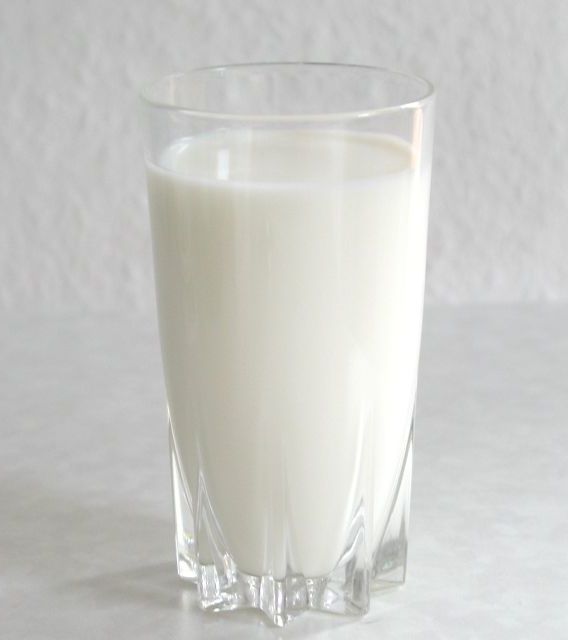
but i need milk for calcium, don't i?

I have some clients who need to avoid dairy products.  Invariably when they find this out their first question is "Don't I have to drink milk to get calcium?" or "But how will I get my calcium?"

Calcium is important in the diet, not only for healthy bones and teeth, but also to support nerve and muscle health as well as for blood clotting.  However it doesn't just come from cows (or goats or sheep or camels or any other milk giving mammal).

Most people think calcium is synonymous with milk.  They've been so sold by the Milk Producers Federation that they feel they've gotta "get milk."  However, milk, and other dairy products, are not the only way to add calcium to the diet.

For those who can't drink milk there are alternatives such as almond, soy, oat, hemp, and rice.  And while the calcium and protein content of alternative milks vary (and is mostly added) it's important to remember that there are ways to get calcium without drinking milk, eating other dairy products, or drinking alternative milks.

As a means of comparison, whole milk provides 110 mg of calcium per 100 gram serving.

Other sources of calcium include:

sesame seeds - 989 mg per 100 g
sardines - 382 mg per 100 g
almonds - 266 mg per 100 g
flax seeds - 255 mg per 100 g
turnip greens - 190 mg per 100 g
brazil nuts - 160 mg per 100 g
collard greens - 140 mg per 100 g
spinach - 99 mg per 100 g


photo: Stefan Kühn

Monday, October 1, 2012

on my mind monday 10.01.12

It's never the same two weeks in a row.  A collection of what I find interesting in the world of food, nutrition and holistic health.  Here's what's on my mind.

Women who read nutrition labels are slimmer - Supposedly several new studies who that women who read nutrition labels have either a lower Body Mass Index (BMI) or are nine pounds lighter than those who don't.  There are other studies out there which look for connections between label usage among mothers and BMI in their children.  I am skeptical of the numbers quoted here as I don't believe the connection is quite as clear cut as the article would have you believe.  I am, however, a huge proponent of learning to read the label and truly understand what you are reading.  That should, in theory, help people potentially lose weight.  It will, in actuality, help them to understand what is in their food.  Hopefully that knowledge will encourage them to make healthful choices.

Ingredient Delivery - Similar to a service I wrote about a while back where the take-out restaurant would, for an extra fee, bring you the dirty dishes to go with your meal so it looked like you actually cooked.  This service however just brings you all of the prepared food.  Apparently it comes all ready to go in the oven so you can actually cook it, but you don't have to shop, slice, and dice.  I'm glad to see that the options are local and organic but wonder if there really are that many people who will utilize something like this.  It will be interesting to see if this becomes a trend.

Drought tolerant corn? Not really - Monsanto is apparently at it again.  The USDA approved this GM corn in December of last year and then admitted that it doesn't work well.  So why did they approve it in the first place?  These types of useless modifications are only one small part of the reason we should not be playing around with our food like this.  I believe that the more modifications we release into the environment the higher the potential damage to non-modified crops from cross-breeding.  I also believe we are giving up too much control of our food to one company and that is not a smart idea.

Pink Slime Manufacturer Sues  - Who are they suing?  Well, it appears just about everyone.  ABC News, Diane Sawyer, several ABC reporters, a former USDA scientist.  They're even suing a couple of guys who used to work for them.  Apparently if you can't convince the public that your product is suitable for consumption and they stop buying it, you sue the folks who told people what was really in their food.  They are suing for $1.2 billion dollars (yes, that's billion with a B).  But if people don't want your product and you created all kinds of hokey spin around it and that still didn't work what do you hope to accomplish.  People are STILL not going to eat your product.  It will be interesting to watch this one unfold in the news.

Milk's Nutritional Value Debated - There is a huge misconception about milk and dairy products in this country.  We somehow have come to believe that we need dairy products in our diet in order to get enough calcium.  The truth is that we don't have to have dairy and there are other food sources of calcium.  There are also a lot of people who are sensitive to dairy products, who have lactose intolerance, and, if you're not drinking organic milk, it comes with a hefty dose of hormones and antibiotics.  I'm not saying we should not have any dairy whatsoever.  I'll be the first to admit that I love my organic whole milk yogurt.  However, if you want to make sure you are getting enough calcium in your diet and you don't like or consume a lot of dairy it's not a problem.  Consider adding sesame seeds, tahini (sesame seed paste), sardines, and dark leafy greens.

photo: mconnors