Sunday, September 25, 2011

persimmon raisin muffins

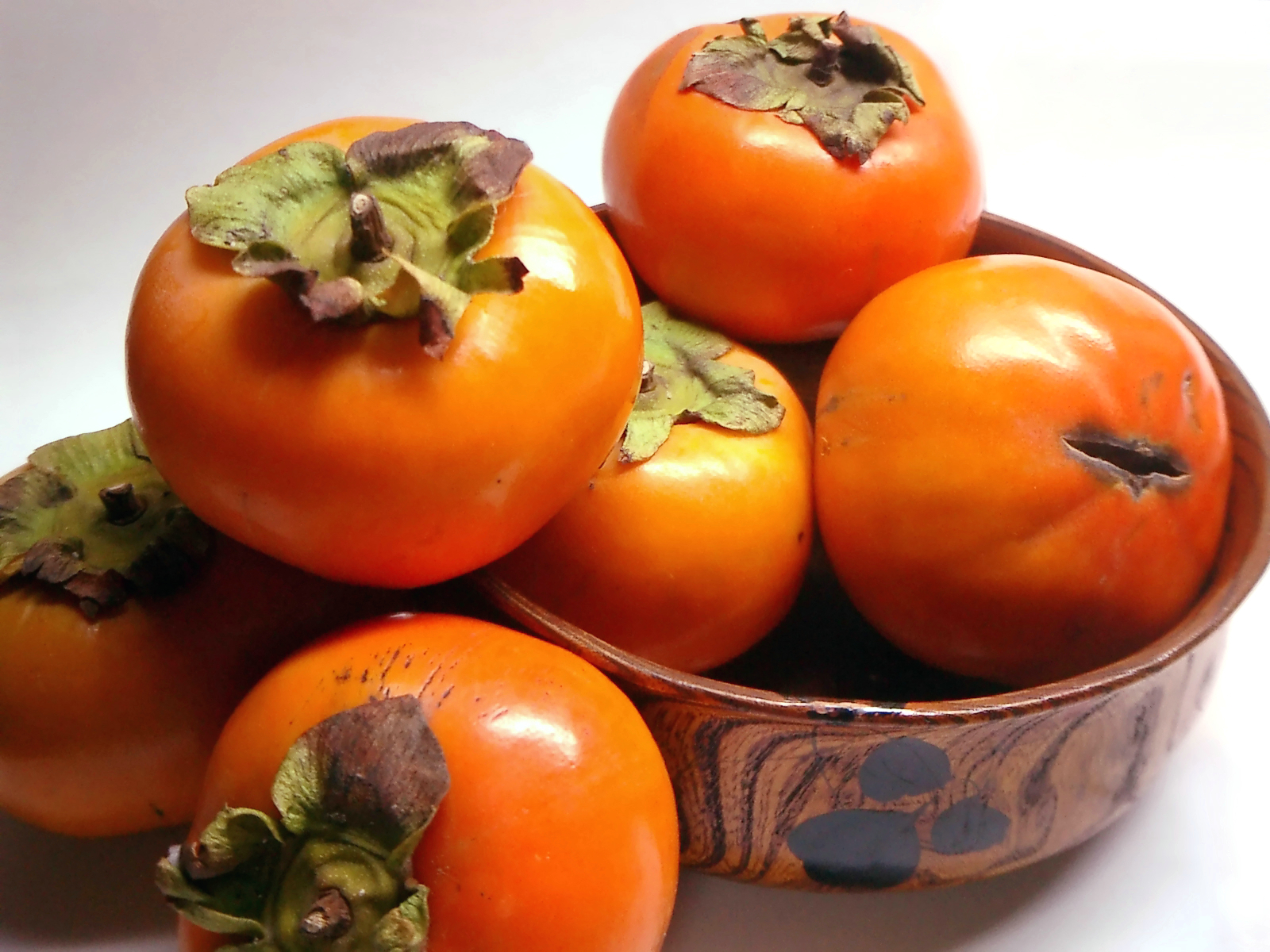
Persimmons | photo: Tomomarusan
It's persimmon season.  I love these tasty little fruits, with their rich fragrant scent and amazing flavor.  Luckily for me there is a pick your own place not too far away.  Each year I go and pick pounds and pounds of them.  I eat as many as I can before they get so ripe and so soft that they are in danger of sliding out of the fruit bowl and off the counter.  They have to be pretty soft before they are ripe enough to eat so this window is pretty small.

When I get to this point I turn the rest into pulp to store in the freezer.  This allows me to make cakes, cookies, and other persimmon delights for as long as the supply lasts. Apparently you can make jam from persimmons but I somehow never seem to get around to doing that.  I'm also not sure if I would use it as I'm currently the only one in the house who likes persimmons.

One of my favorite things to bake with persimmons are these muffins.  They're a great treat with a rich dark flavor that is so reminiscent of the crisp fall weather.  I'm sure they would freeze well but somehow they've never lasted long enough for me to test that theory.

Persimmon Raisin Muffins

3 cups white whole wheat flour
1 teaspoon cinnamon
1/2 teaspoon nutmeg
1 teaspoon baking soda
½ teaspoon baking powder
1 teaspoon sea salt
1 cup persimmon pulp
1 egg
1 cup sucanat
1 tablespoon vanilla
1 cup raisins
1 cup chopped pecans

Preheat oven to 375°F
Grease loaf pans
Sift together flour, cinnamon, nutmeg, baking soda, baking powder and salt
In a separate bowl beat egg, add persimmon pulp and sucanat
Add vanilla, raisins and pecans
Add sifted ingredients and mix well
Spoon into greased muffin tins
Bake 15 minutes or until tops spring back when tapped
Remove from oven and cool in tins 3-4 minutes before moving to wire rack
Finish cooling on wire rack

Monday, September 19, 2011

water kefir

This is a guest post from my friend Trudy Scott (CN).  She is a Certified Nutritionist and the founder of www.everywomanover29.com, a thriving nutrition practice with a focus on food, mood and women’s health. Trudy educates women about the amazing healing powers of food and nutrients and helps them find natural solutions for anxiety and other mood problems. Trudy’s goal for all her clients (and all women): "You can be your healthiest, look your best and feel on-top-of-the-world emotionally!"  She's also the author of The Antianxiety Food Solution.

It's a good idea to drink fermented beverages – they contain probiotics, or good bacteria, and are great for your digestion! Studies also show that probiotics help when you are depressed or anxious.

Kombucha is one example of a fermented beverage.  Another great one is water kefir.   The best part is that you can actually make these delicious beverages at home.

I have to say water kefir is my favorite when it comes to home-made because it’s so quick and simple.

Here's how to make water kefir:
  1. Dissolve 1/3 cup sugar with filtered warm water in a clean one quart glass jar. I like to use turbinado or rapadura sugars because they are not stripped of all their nutrients.
  2. Add water kefir grains (about 1 to 2 tablespoons)
  3. Add something to provide some flavor – I like ginger so I add 5-10 slices of freshly peeled ginger. Another option is a few mint leaves.
  4. Place jar out of direct sunlight.
  5. Cover jar with a clean dish towel.
  6. Let sit for 24 to 30 hours or to your taste. If you aren’t sure how it should taste, try some from someone else’s batch or buy a bottle of plain kombucha…it should taste similar to cider but less sweet. The length of time will differ depending on the room temperature; the fermentation process  will take less time when it’s warmer.
  7. Strain the water kefir grains from liquid and discard any flavorings (ie the ginger or mint leaves)
  8. Transfer the liquid to another one quart glass jar and save in the fridge to start drinking
  9. Rinse your grains and start over for an unlimited supply of delicious and nourishing water kefir loaded with probiotics or good bacteria!
A few other notes:
  • Don’t worry about the sugar as it’s mostly used up during the fermentation process
  • Your kefir grains will actually start to grow so you can share them with friends – getting from grains from a friend is a good way to get started
  • The grains sort of look like very baby cauliflower florets and should be kept cool when not being used
For those of you who would like to try making water kefir at home Cultures for Health is a great source for your grains.  They also sell a large number of other culture products for yogurt, sourdough, cheese and more.

Saturday, September 17, 2011

what is it?

The birds are very messy and tend to throw seeds everywhere when picking through the large feeder.  I assume they do this because they are looking for their favorite bits.  Having been lazy not weeded very well I found a few large plants growing under the feeder.  At first I thought it was corn which was pretty cool.  So we left them.

Obviously from these pictures, this is most definitely not corn.  I'm not really sure what it is.  It doesn't look like my pictures of either amaranth or millet so I'm stumped.

Unfortunately I don't have the label from the birdseed so I can't even pick it out from there.  Wondering if I should harvest it for the birds for winter or if it's edible by humans.  Anyone able to identify it?