It's never the same two weeks in a row. A collection of what I find interesting in the world of food, nutrition, and holistic health. Here's what's on my mind.
Wangari Gardens - Yet another great example of community gardens growing out of unused space. I love that it was started by a student who envisioned a way to bring a garden to an area that was previously considered a food desert. Overcoming bureaucratic red tape and a variety of setbacks what now exists is a beautiful community space.
Farmer's worried about GMO contamination? USDA says "get insurance." - This article is eye opening on many levels. Even more so than the issue of GMO contamination, which is huge, is that GMO's do not work. As the article mentions, we are now breeding superweeds which are roundup resistant, having somehow, mysteriously (read with snark) picked up the trait from the plants which were bred to be roundup resistant. This is in spite of the fact that Monsanto in the beginning assured farmers that resistance would not be a problem. Looks like they were wrong on that count. And if that issue were not bad enough it turns out that we are ruining, depleting, our earth to an unsustainable point by mining minerals needed to make chemical fertilizers. Time to wake up and stop the chemical cocktail we are pouring on and in our food.
Are your kids eating too much salt? - If you buy package, processed foods, don't read the labels, and eat out frequently chances are you and your kids are getting far too much salt. Learning to read the label is the first step to controlling in the home sodium intake. Thinking about where and what you eat when you eat out is next. For young kids 1,200 mg is considered the recommended limit but some foods can provide a whopping amount of your daily intake. One example is a two ounce serving of pretzels which could provide up to 900 mg of sodium. But don't go no sodium either, your body needs it for metabolic function as well as to manufacture digestive fluids. Moderation, but not avoidance, is definitely the key when it comes to salt.
The year of the liver - Apparently 2013 will be the year that liver makes it's way back into the American diet. This could be a good thing it's a good protein source that is also high in iron, riboflavin, vitamin A, and vitamin B12. Soaking it in milk is one way to temper the flavor for those who are not used to it. Made into pate it's delicious, but sauteed in onions it's also tasty. The best choice is to choose liver from pasture raised animals as there is no exposure to GMOs, pesticides, chemicals, antibiotics, or added hormones.
C. Difficile sniffer dog - Those cute little beagles (and other breeds) are everywhere. Not just roaming the airports in their working dog jackets sniffing out contraband produce, not just detecting diabetes and various types of cancer, but now also identifying cases of a bacterial infection that can be difficult to treat and which may spread rapidly if not contained. C. difficile can overtake the intestinal environment causing severe pain, cramping, diarrhea and even ulcerations. With the help of Cliff (there's apparently only one sniffer dog at the moment) detection is quicker and easier.
And this video shows the Minister for Public Health and Sanitation of Kenya at a public briefing. Kenya has just banned all GMOs while they evaluate their safety.
Don't forget to "like" The Pantry Principle to stay up to date and
get news and information about what's really in your food.
photo: mconnors
Showing posts with label garden. Show all posts
Monday, December 24, 2012
Monday, September 10, 2012
on my mind monday 09.10.12
It's never the same two weeks in a row. A collection of what I find interesting in the world of food, nutrition and holistic living. Here's what's on my mind.
Meditation in the corporate world - According to this article more major corporations are recognizing the value of having employees take a break -- to meditate. Meditation is known to have a variety of health benefits including lowering blood pressure as well as allowing the mind to refocus. While we don't teach meditation techniques (and there are many) in the US, it may be something that becomes more and more common in response to this sort of corporate acceptance.
A new twist on urban gardening - in Chicago city lots are not just being used for urban farming. Some are being converted to orchards where heirloom varieties will be grown. The time investment to plant, nurture, and eventually harvest an orchard is significant. The hope is that residents and even restaurants will be able to use and eat these heirloom fruits. This will be an interesting project to watch, it could be a novel way for other cities to make use of public spaces.
Corn syrup in what? - This very cheap sugar finds it's way into an amazing array of foods, even those that would not necessarily be thought of as sweet (such as pizza). The only way to avoid it in your food is to read the label. Another important thought to remember, corn is one of the most highly genetically modified crops in the US. So any products with corn in them (unless marked organic or non-gmo) are quite possibly genetically modified.
National Yoga Month - is September. And there are lot of different kinds to choose from. Yoga is a great form of exercise for people who cannot do impact exercises all the way up to those looking for a vigorous workout. It also offers a wide range of health benefits.
Calorie restriction may not extend life - starving mouse studies seemed to indicate that mice fed 30% less than "normal" lived as much as 40% longer. There are a number of people who follow calorie restriction in the hopes that the results will be the same for people. Recent studies appear to indicate that it doesn't work for Rhesus monkeys. However the monkeys did have a better quality of life with lower rates of diabetes and cancer. I wonder what would happen if results were examined again to look at the quality of the food that the monkeys ate.
It's back to school time. Unfortunately for a lot of teens and older kids that may mean a temptation to reach for energy drinks to try to stay on top of their hectic schedules. Unfortunately this is not a good choice. Here's a video from my friend Karen that talks about energy drinks and their effect on the adrenal glands.
photo: mconnors
Meditation in the corporate world - According to this article more major corporations are recognizing the value of having employees take a break -- to meditate. Meditation is known to have a variety of health benefits including lowering blood pressure as well as allowing the mind to refocus. While we don't teach meditation techniques (and there are many) in the US, it may be something that becomes more and more common in response to this sort of corporate acceptance.
A new twist on urban gardening - in Chicago city lots are not just being used for urban farming. Some are being converted to orchards where heirloom varieties will be grown. The time investment to plant, nurture, and eventually harvest an orchard is significant. The hope is that residents and even restaurants will be able to use and eat these heirloom fruits. This will be an interesting project to watch, it could be a novel way for other cities to make use of public spaces.
Corn syrup in what? - This very cheap sugar finds it's way into an amazing array of foods, even those that would not necessarily be thought of as sweet (such as pizza). The only way to avoid it in your food is to read the label. Another important thought to remember, corn is one of the most highly genetically modified crops in the US. So any products with corn in them (unless marked organic or non-gmo) are quite possibly genetically modified.
National Yoga Month - is September. And there are lot of different kinds to choose from. Yoga is a great form of exercise for people who cannot do impact exercises all the way up to those looking for a vigorous workout. It also offers a wide range of health benefits.
Calorie restriction may not extend life - starving mouse studies seemed to indicate that mice fed 30% less than "normal" lived as much as 40% longer. There are a number of people who follow calorie restriction in the hopes that the results will be the same for people. Recent studies appear to indicate that it doesn't work for Rhesus monkeys. However the monkeys did have a better quality of life with lower rates of diabetes and cancer. I wonder what would happen if results were examined again to look at the quality of the food that the monkeys ate.
It's back to school time. Unfortunately for a lot of teens and older kids that may mean a temptation to reach for energy drinks to try to stay on top of their hectic schedules. Unfortunately this is not a good choice. Here's a video from my friend Karen that talks about energy drinks and their effect on the adrenal glands.
photo: mconnors
Monday, May 28, 2012
on my mind monday 5.28.12
![]() |
| news | photo: mconnors |
Flame Retardants Could Affect Our Bodies For Generations - The more we pollute our environment, sadly, the more we pollute our bodies. And the effect is cumulative (and in some cases exponential) from one generation to the next. In her book Origins: How the Nine Months Before Birth Shape The Rest Of Our Lives author Annie Murphy Paul talks about how the placental barrier is not as impermeable and protective as we had previously thought. And with the growing number of chemicals in our environment our bodies are taxed even more. As the article highlights, there are a growing number of studies that show the results affect DNA and last for generations. This is a very scary issue and one that needs to garner more attention both from the public and from industry.
The Garden Summer - a new twist in reality t.v., the main person invited four other people to join her in living on a farm. None of them had any experience. The documentary highlights their journey. I would be interested in seeing the movie although I'm not sure how wide the distribution will be. I envision this as a modern day version of Frontier House, a PBS series where several families were given a little training and then put into a setting reminiscent of the late 1800's. It's a sobering thought, however, that so many of us no longer know how to raise our own food and how to live a more environmentally connected life.
Sunflowers to clean radioactive soil in Japan - The fallout from Fukushima is serious and likely to last for generations. I was glad to hear that phytoremediation (the use of plants to clean up the soil) was an option being encouraged in this disaster. Apparently this method was used after the Chernobyl accident back in the late 1980's. In addition to sunflowers other plants such as mustard, alfalfa, fennel, and barley are effective choices. One important issue is the fact that plants used this way cannot be consumed due to the high level of heavy metals they extract from the soil. I am a little puzzled that Japan is asking local citizens to grow sunflowers and then plans to harvest the seeds and plant them at Fukushima. To my mind it would make more sense to ask for donations of sunflower seeds from around the world and the phytoremediation could be started one growing year earlier. Research on the internet, however, failed to turn up an address where sunflowers seeds could be sent.
Tainted Spinach Detected By A Program Budget Cuts Will Axe - Given the increasing number of food recalls and contamination issues I am very surprised to see that this program will be going away. The governmental agencies already do a poor job at monitoring the food supply, I have to believe this will only make the situation worse. The best solution in this case is to consider shopping more locally and get to know your farmer. Know where your food comes from and how it gets to you.
Composting is wonderful; it's almost magical how you can take leftover coffee grounds, egg shells, potato peels, lawn clippings and other green matter and turn it into a high quality dirt so your garden will grow better. We've finally discovered (after three prior attempts) how to keep the dogs out of the compost bin (really they're pigs in disguise). An off-the-ground tumble style container. Locked behind a gate. We're finally starting to generate enough decent compost to be able to use it in the garden and that's a great thing.
What I'm reading:
Savor by Thich Nhat Han This is a book incorporating information about nutrition with the practice of mindfulness as applied to weight, health, and our relationship with food. An interesting blend of science and spiritual practice I am enjoying it so far.\
disclaimer: cmp.ly/5
Monday, April 9, 2012
on my mind monday 4.9.12
![]() |
| news | photo: mconnors |
World's Largest Rooftop Farm - Farming is changing and no is no longer only the traditional large acreage farm. Bringing fresh food to the city by utilizing spaces differently is a great idea.
Michigan calls heritage pigs invasive - It's beginning to look like BigAg is trying to control your food even further by potentially driving small heritage pig farmers out of business. Not content to allow these smaller farmers a share of the market they've found a way to class their pigs as part of an invasive species and to get the government to buy in to it. I hope that this is overturned...we need genetic diversity in all populations and I am a firm believer in preserving heritage breeds.
Food Adulteration - Food adulteration has been around for millenia. It is a sad truth that when someone makes money selling a food product the temptation to make more money by stretching the product is there. Some examples include:
- using cheaper oils like corn in premium, more desirable products such as olive oil
- honey, there is a huge adulteration of honey, often with high fructose corn syrup
- coffee can be stretched through the use of chicory, roasted corn, and even legumes
Because the adulterants are not listed on the label it can be difficult to know what you are getting. Sadly the Food Fraud Database is difficult to use and results are not clear. This once again highlights the need to know where your food is coming from and to, whenever possible, know your producer.
Gleaning - There appears to be a growing number of gleaning operations as a way to finish off the harvesting of fields with the food collected often going to food banks and soup kitchens. In many places that I have traveled in the US I am often startled to see food going to waste. A recent trip to Austin, TX revealed loquat trees bursting with fruits that were falling off the trees and rotting on the ground. Many homes in California have citrus trees and don't use them all, to the point where the food goes to waste. Farms often leave the last bit of produce because it's not worth the effort to go get it. Yet the ability to deliver fresh food to those in need is a priceless gift. It does however require labor to collect and distribute the food. Finding gleaning organizations where you can donate your extra produce or labor can be a little difficult to find. Here is one, you can also run a local search to look for more in your area.
This is a fascinating idea. Being still relatively new to Texas I find that I have a difficult time growing vegetables in my backyard (we seem to be doing okay with fruit trees so far which is great) and would love a concept like this where someone who knows the area could help. The video is from a few years ago but Your Backyard Farmer is apparently still going strong in the Portland, OR area.
To read:
I just heard about Make the Bread, Buy the Butter and am adding it to my get-and-read list. I'll be interested to see what the author recommends. It's true that there is a lot we can make but is it worth the effort and do we want to take the time to do it. Fermented foods are high on my list but I truly can't see myself making butter. I do make pickles and jams but not nearly as much as I used to (mostly because we don't go through them as fast now that the kids are grown). What I've always found fascinating is how many things can be made by hand that we've forgotten or lost the art of doing. One of my little cooking friends was astounded one day when they were visiting and we made pudding together. In their experience pudding always came from a box. Part of my interest in this book is not only about the time however. Some things I make, such as mayonaise, because I object to the added ingredients and homemade is a way to avoid that.
disclaimer: cmp.ly/5
Monday, April 2, 2012
on my mind monday 4.2.12
![]() |
| news | photo: mconnors |
Light It Up Blue - Today is World Autism Awareness Day. With rising rates of autism, which many believe has strong ties to chemical influences in our food and environment, it is important to be more understanding and supportive of those families affected by this disease. I'll be wearing blue today to show my support.
Beekeepers say we're running out of time - There appears to be more evidence that pesticides are behind the tragic decline of bees. Bees are so important to our agricultural system, without them there is no pollination, and without that many crops cannot reproduce. A recently filed lawsuit claims the EPA violated the law on several counts. We need to think more about what is good for the planet rather than concentrating only on the bottom line.
Kale is not chikin - Chick-Fil-A continues to press it's lawsuit demanding that Bo Muller-Moore, a t-shirt artist in Vermont, cease and desist in the creation of his t-shirts. This multi-billion dollar company apparently feels that they own the rights to the words "Eat Mor" and that folks will be very confused when presented a choice between his "Eat More Kale" t-shirts and their Eat Mor Chikin campaign. I'm happy to say Bo is going to make a documentary about this corporate bully. I'm also happy to say that I helped to fund this documentary and I'm looking forward to watching it when it comes out.
Artichoke - I've just planted one and am looking forward to seeing how it grows in my Texas garden. Aside from being delicious, artichokes are a great source of vitamins, K, C, and folate. They're also a good source of magnesium, manganese, and potassium. One delicious artichoke also provides a lot of fiber. For those of you just starting your gardens or starting seed for later crops, here's a neat tip on making your own bio-degradable plant pots.
Governors supporting pink slime - leaving aside the financial contributions that BPI has made to these political leaders who are trying to put a positive spin on this product the fact remains that this is not a good food choice. It is the leftover bits that the company is trying to eke a profit out of an then hitting up with ammonium hydroxide. In many countries this product is only considered fit for dog food. I don't even think it should be fed to animals. The original term Lean Finely Textured Beef makes it sound like food however it doesn't override the fact that now consumers know what it is and THEY DO NOT WANT TO EAT IT. I know I'm shouting there but I find it very frustrating when companies feel that their corporate profits are more important. I choose not to eat this product, I encourage others not to eat it and I'm thrilled that fast food restaurants and grocery stores are bowing to consumer demand and removing this product from their shelves. Now we need to get it out of the school system and out of the food supply.
Hopping for health - I confess that I no longer have a gym membership. I never made it to the classes because my schedule never seemed to work out and I get bored by the machines after a while. For some people gyms work well and that's great. I've been using walking, bike riding, yoga, and strength exercises at home as my form of exercise. I know that I'm not getting enough impact exercise which is important for bone health and to help prevent osteoporosis. This looks like a lot of fun and I'm going to make one on my patio and see how I like it. Either that or start borrowing neighborhood kids and playing hop scotch.
Luckily we had a very mild winter. My eggplant and pepper plants did really well and managed to last through the winter. Now they're loaded with blooms. I'm going to try to help it along by pinching, as he suggests. My hot pepper is already producing lots of peppers and I'll let that go, but my bell peppers and eggplants will get a trim. We'll see what happens.
Monday, March 26, 2012
on my mind monday 3.26.12
![]() |
| newspaper | photo: mconnors |
Methyl iodide off the market (for now) - I've been following this topic since I first found out about it at the end of 2010. I was highly dismayed when California approved it for use in agriculture and began phasing it in. Upset enough that our family has not eaten any strawberries coming out of California (even organic) since it was approved. I'm happy to say that the decision to use it has been reversed. Apparently the company made a decision to stop using it "based on it's viability in the U.S. marketplace." That means people made enough noise that BigAg listened. However I still have some concerns. the words 'U.S. marketplace' worry me because now I wonder where else they plan to peddle their poison. I also intend to keep an eye on this to see if the company plans to try to reintroduce methyl iodide down the road after they figure the noise has died down. Unfortunately we consumers sometimes tend to have a very short memory span. We need to make sure that we remember this chemical and always demand that it not be used on our food.
GMO Labeling Law Wins Backing In Connecticut - Another positive moment in the press. Some legislators in Connecticut agree that consumers have the right to know what's in their food. Nay sayers claim that it will be more expensive for manufacturers to create two sets of packaging, one for Connecticut and one for everyone else. My response? Just label the stuff. With almost half the states in the nation considering similar legislation it is not going to be long before other states follow suit. At which point everything might as well be labeled. Given the recent press about GMO crops being responsible for the decline in Monarch butterfly populations I believe more people are going to join the anti-GMO cause. The eventual aim, as far as I am concerned, is not just to label (although I believe that is very important) but to stop using this technology. In some cases considerable damage has already been done but it is never to late to stop.
This Land Is Your Land - This Time Magazine article about Joel Salatin is a great read. He has a point of view that challenges the system but, I feel, in a good way. He wants people to take responsibility for their food. To stop seeing conveniently shrink wrapped packages at the food store without thinking about how they got there. To understand the cycle of agriculture; to think about the food chain and how we consume. We need to care, really care, about our food, where it comes from, how it gets to us, and how it's treated along the way.
Must Have Gadgets For The Kitchen - this article made me laugh because I often find myself drooling over gadgets that are one-purpose only or next to unusable for my actual kitchen needs. Over the years I have gotten better and pared down quite a bit. Just recently I went from three spring form pans to one (seriously, I'm not sure why I had three, I have never in my life made three cheesecakes [or anything else that required a springform pan] at the same time). I've decided this is the foodie version of people who drool when they walk into a well-stocked hardware store. You just envision all sorts of possibilities when confronted with all those shiny new gadgets. I do have some kitchen tools that I will never part with but they tend to be the mainstays rather than the oddities. My favorites? My top electric appliances include: KitchenAid Mixer, Cuisinart Food Processor, Immersion Blender, and my Crockpot. My less-than-stellar purchases? Sadly I've made a few of those in my life because I got excited about the possibility of something and then never kept up with it. There was the krumkake maker which is fun but I just don't use it enough, the yogurt maker which went by the wayside when I discovered that I didn't really need it, and the seed sprouter -- same deal -- I didn't really need it. What are some of your kitchen must can/can't live withouts?
How to Save Seeds - this is something that helps plant diversity and supports backyard agriculture. I confess to not being consistent with this, I need to work at it a bit more.
Hungry For Change - this is the new movie made by the same folks that brought you Food Matters. For a limited time only (until March 31, 2012) you can watch a free online preview. Definitely worth watching. This movie talks about why so many foods are so addictive and how this is causing us to be overfed and undernourished.
disclaimer: cmp.ly/5
Monday, March 5, 2012
on my mind monday 3.05.12
![]() |
| news | photo: mconnors |
Growing protein with fewer resources - There are lots of different ways to look at our protein needs and how we get them. Algae is certainly one way which could be very sustainable; algae of all kinds can be used to provide protein for animals as well as for humans. Many vegetarians and vegan's eat it now. Potentially part of an aquaculture solution it would be a very efficient use of resources. Truthfully whether you're using algae or insects (another source of efficient protein) as an alternative source of food the problem is not how much protein we produce but how we produce it. Well that and the fact that when it comes to animal protein those of us in developed countries often consume more than we need. Current commercial methods appear to be mostly inefficient with large scale use of fossil fuels, unhealthy (read unsanitary) conditions, unhealthy methods (GMO feed, over use of antibiotics), and waste. So while this is a good thing and an idea that I think is worth following, I also feel we need to look at current protein production methods and clean up after ourselves.
Monterey County Say No To Methyl Iodide - YES! I'm so happy to see this and hope that other counties in California will follow suit. Some of you may remember that this appeared in an OMMM post in January. This is a horrible, known cancer-causing agent. I'm so happy to hear that the folks in Monterrey County are standing up to BigAg and saying no.
Eating citrus fruit may lower women's stroke risk - many foods have flavonoids, antioxidants that help promote health. Apparently the flavonoids in oranges and grapefruit, called flavanones, are especially beneficial for women in helping to prevent ischemic strokes. It is important to note that if you are trying to increase your intake of oranges and grapefruit eating whole fruit is a better way to go. There are approximately 5 oranges in a glass of orange juice, adding lots of sugar and not much fiber. Eat the orange or the grapefruit and get the benefit of the vitamin C, the flavanones, and the fiber.
Seattle plants a public food forest - I'm happy to hear about more public food resources and stewardship of public lands that does not include turning it into a parking lot. This could give a whole new meaning to the word locavore. It will be interesting to see how this develops and how it is managed over time. It is an added dimension to urban agriculture that I think brings a lot of benefits to the community. Considering our shift to a more urbanized population these sorts of measures are to be welcomed and encouraged.
Push to label GMO's gains ground - I am firmly in the no-GMO camp. I believe that they are harmful to our bodies, our planet and their use should be discontinued. However that is a larger battle. In the meantime I very strongly support labeling of GMOs because I believe that consumers have the right to make an informed choice when it comes to their food. GMO producers disagree, of course, because this would, in all likelihood reduce their sales. I hope the labeling of GMO moves forward and becomes mandatory.
Enjoy Nature
What I'm reading:
The Magnesium Miracle by Carolyn Dean. It's been a busy week so I'm still reading this book. Learning a lot about why magnesium is such an important mineral for our health. For example, it turns out that magnesium is important in helping to support health when it comes to osteoporosis. So it's not just calcium, we also need to be looking at our magnesium levels.
Monday, January 30, 2012
on my mind monday 1.30.12
![]() |
| newspaper | photo: mconnors |
Once again, it's time to see what's on my mind. These are the articles that have come across my desk and that I am interested in this week.
My Subversive (garden) Plot - Roger Doiron's funny TEDx talk about gardening and food. While it's funny there's also a message. He talks about how we are going to feed people and how we need to grow more food to keep up with the growing population. But we need to do so with less. Less oil, less water, less farmland, less genetic diversity, and so on. I highly encourage you to watch the clip, it's worth the time.
Local Food Sovereignty Being Challenged in Maine - Roger's talk, above, lead to to search for food sovereignty. I discovered that in some ways Maine is ahead of the curve. Hey, they voted in many towns for food sovereignty - allowing cottage food industries to come into existence and grow. But then there's the challenge that comes up from one farmer who is being challenged. I am continually amazed at how major corporations produce harmful food, salmonella laden peanut butter, the massive egg recall of 2010, and others. There appears to not only be very little consequence for these companies for knowingly producing bad food, but the government is increasingly going after small producers whose food is not contaminated or harmful. Their primary crime seems to be that they are small producers. Doesn't make sense to me.
Big Pharma Is Putting Microchips in Drugs - This article disturbs me on a lot of different levels. First of all, I don't want to be microchipped. For any reason. Second of all, I'm not convinced that the data collected from this will be able to take into account bio-individual response to the medication or to other lifestyle issues. I see this as a potential gateway to the doctor deciding that based on your results you need more medication. Thirdly, I think it has the potential to go massively awry. We are not meant to eat or ingest microchips. One of the thoughts that occurs to me is that although right now we can know if we have it because the chip transmits to a patch on the skin, what if they find another way for the chip to transmit. Then we won't know if this is in our medications. Just not a good idea.
Why Woman Should Stop Their Cholesterol Lowering Medication - I was stunned to learn that for post-menopausal women, taking statins can increase their risk of diabetes by as much as 48%. That's an enormous risk. Cholesterol is important to our health. It comes from two sources, either we make it naturally in our liver, or we ingest it from our food. In the rush to reduce cholesterol many of us lose sight of (or are unaware) that cholesterol that is too low is also unhealthy. Studies done in 2000 show that low cholesterol (below 160 mg/dl) can cause anxiety and depression in otherwise healthy women. And other studies show that reduced cholesterol (and saturated fats in the diet) can increase the risk of hemorrhagic stroke.
- All of the above indicates a need to look carefully at your diet, your cholesterol intake and cholesterol levels before taking statins. As a side note it is important to know that if you are taking statins you would do well to also take CoQ10. Statins deplete CoQ10 from your body. Adding it to your supplemental routine can help prevent or reduce some muscle problems that can go along with statin use.
Monday, January 16, 2012
news review...or...it's on my mind monday
![]() |
| in the news | photo: mconnors |
The little county that could get CA to rethink methyl iodide - I've written about this before. Essentially CA agreed to let agricultural companies use a known carcinogen (so effective that it is used in laboratories to reliably cause cancer) on strawberry crops. In spite of massive protests CA went ahead and approved it anyway. Turns out the fight is still on. This gives me hope that this awful carcinogenic chemical will be banned. Until then I have essentially fought back the only way I know how. I purchase no strawberries from California at all, even the organic ones.
Public Park Helps Feed 200,000 People Every Month - I love this. What a great solution to help feed those who are hungry and also make effective use of public lands. This ties in to a video I shared on my Facebook Page about Suburban Homesteading/Urban Victory Gardening. Looking at the info I see it's the same guy, John from Growing Your Greens. I've subscribed to his YouTube channel and am looking forward to more good info.
Low Vitamin D Ups Diabetes Risk in Kids - One more reason to check your vitamin D levels. I think sometimes people tune out the vitamin D message believing that they are getting enough from their milk. Sadly that's often not enough, especially if you are drinking skim milk. Vitamin D is important for so many different reasons and across different populations. Are you over 65? Check your vitamin D. Is it wintertime and you live in a Northern latitude? etcetera etcetera etcetera. Check your vitamin D. I'm not saying everyone needs to supplement, but it's easy to check and if you are low you probably do need to supplement. Always get the 25 hydroxy test rather than the 1,25 dihydroxy - it's a better indicator of your vitamin D status.
Apple Juice Made In America? Think Again - This one surprised me. Because I know we have so many apple orchards in the US I just assumed that our apple juice was made here. Turns out it's not. Given that so many children drink it (and the recent fungicide contamination of orange juice) I'm even more convinced that getting our food from abroad is not necessarily a good idea. I believe the best thing is to get to know your farmer, buy locally, and grow your own. I'm blown away by the idea that apples which are grown in China can be juice and fossil fuels expended to bring a liquid product (very heavy) all the way around the world to us, and somehow it's cheaper. There is something very very wrong with that equation.
Programmed To Be Fat? - This looks like a fascinating program and I am going to try to see if I can borrow a copy through my local library. Given the increasing number of obesogens in our environment (I wrote an article some time back called Is Your Plastic Making You Fat?) and the rising toxicity levels for newborns this is an issue that really needs to be looked at and worked on. We are poisoning ourselves, our environment and destroying our future.
Goats being used, instead of pesticides in Eastham - I love this. What a great way to solve a problem. Instead of throwing chemicals at the issue of weeds, use goats. The goats are happy, they get fed, the town gets less toxic chemicals in their environment, the residents have less exposure and, presumably, less potential for illness.
Thursday, December 29, 2011
luscious lemon
Around this time last year I bought some fruit trees at the local County Extension Service Master Gardener's Sale. One was a lemon. All year long we've been watching the tree grow. It produced just one lonely lemon fruit of enormous proportions - you can see it in it's growing phase here. We have been waiting for it to ripen.
Today was the day. Yellow all the way down, smelling fragrantly of....grapefruit? We decided that this was the perfect time to harvest our one and only lemon.
Turns out it really is a lemon, in spite of the grapefruit-y aroma. It's huge and juicy, and the flavor is definitely that of lemon. We all stood around eating small bites of it. We decided that it's not quite as tart as most lemons, still a bit puckery, however there is a hint of sweetness to it.
As you can see it has an amazing amount of seeds in it. We're trying to decide if this is normal for this lemon or if it's just because there was only one fruit.
My hope is that next year we will have more lemons as the tree matures, and each year after that even more. I have a friend whose 12 year old lemon tree is so productive she mails boxes to relatives every year. For us even this one lemon is a delight. It was a great moment to harvest, yet again, something that we grew and all marvel at the fact that we produced something of our very own (with the help of Mother Nature of course) from our teeny-tiny backyard.
As I write this I am enjoying a cup of darjeeling tea with a slice of lemon and somehow, because it came from my garden?, it just tastes better.
Today was the day. Yellow all the way down, smelling fragrantly of....grapefruit? We decided that this was the perfect time to harvest our one and only lemon.
Turns out it really is a lemon, in spite of the grapefruit-y aroma. It's huge and juicy, and the flavor is definitely that of lemon. We all stood around eating small bites of it. We decided that it's not quite as tart as most lemons, still a bit puckery, however there is a hint of sweetness to it.
As you can see it has an amazing amount of seeds in it. We're trying to decide if this is normal for this lemon or if it's just because there was only one fruit.
My hope is that next year we will have more lemons as the tree matures, and each year after that even more. I have a friend whose 12 year old lemon tree is so productive she mails boxes to relatives every year. For us even this one lemon is a delight. It was a great moment to harvest, yet again, something that we grew and all marvel at the fact that we produced something of our very own (with the help of Mother Nature of course) from our teeny-tiny backyard.
As I write this I am enjoying a cup of darjeeling tea with a slice of lemon and somehow, because it came from my garden?, it just tastes better.
Saturday, October 15, 2011
garden update
I woke up this morning to a deliciously cool morning, breezy, sunny, birds singing, perfect garden weather. So I took myself out into the garden for a little early morning weeding and puttering around in the dirt.
This has been a horrible year for vegetable gardening for me. I confess I'm a wimp. If it's raining or over 90 degrees I don't like to be out there. We didn't get rain but we certainly had more than our fair share of extraordinarily hot days. And we had a drought. The end result of which is that we got peas, beans, tomatoes and hot peppers. But the zucchini didn't grow (I had always thought it was impossible to NOT grow zucchini -- shows what an expert I am), the broccoli and sweet peppers were stunted and bitter, and many of my herbs grew so poorly that I was unable to harvest anything. I'm afraid to try to dig the potatoes, I don't think anything is there.
This morning however I was thrilled to see some things survived and are actually doing well. Here in East Texas our Fall weather is mild enough that many folks refer to it as a second spring. We are fortunate enough to have an extended mild season that allows us to grow another set of crops. Given the hope that follows the soaking rain we had a week ago I'm recharged and ready to get back into the garden.
| the cabbage is starting to recover |
| a baseball sized lemon - the only one on the tree |
| our eggplants are starting to fruit |
| the harrdier herbs survived: oregano, sage, chives, pepper basil, a curry plant and yarrow |
| our fig tree is producing a bumper second crop |
Being outside made me realize how much I have been shut inside during the heat of our summer. Yes, I went for walks and bike rides, but to just spend extended amounts of time outdoors enjoying the yard and my surroundings -- didn't happen. I'm grateful for the cooler weather, the opportunity to be back outside and the resiliency of mother nature.
Wednesday, June 15, 2011
growing a garden
![]() |
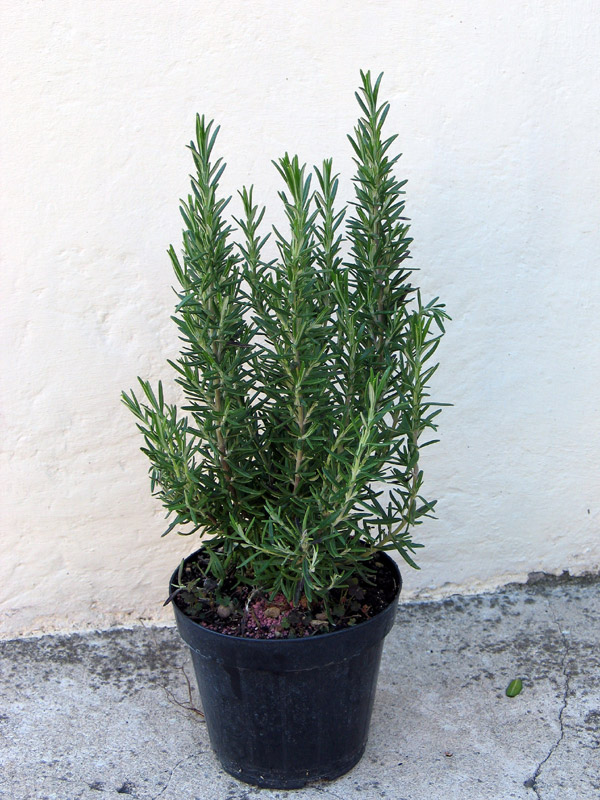
| Rosemary | photo: Nataraja |
I've just gotten back from the store where I have purchased, yet again, a rosemary plant. This is my fourth one of the season. I had one last year. It did pretty well. We enjoyed using it in a lot of recipes, especially veggie marinades, last summer. Then winter came. It was a bad winter (for Texas) and many things in my yard did not make it. One of them was that poor rosemary. Okay, it happens. So I went and bought another one. For some reason it wasn't happy where the first one was and it died. I bought another one and moved it to the bed across the way. That one died too. Then I bought another one and planted it in a pot with the lavender. The lavender is still going but the rosemary? Yup, dead as a doornail.
So I've bought another one (luckily they are just $4 a pot so I can afford to keep shelling out until I get it right) and I'm really hoping this one will make it. I've got a different location in mind, a little more shade, hopefully a better location and nowhere near the areas where the others have not survived.
Along the way I keep being reminded that gardening is an ever-evolving process. Especially after learning how to garden in one area of the country and then moving to a vastly different agricultural zone and temperate climate. Learning what plant where
Since I mentioned it, here's the recipe for Tomato Junk. There are no precise measurements, I just throw it all together but somehow it always works out.
Tomato Junk
a lot of very ripe tomatoes, washed, cored, peeled and quartered
a sweet onion, chopped
a clove or two of garlic, minced
a bunch of basil, minced
Using a generous amount of olive oil in the pan saute onions and garlic until the onion starts to wilt
Add tomatoes and cook until they start to break down
Add basil and cook another 5 minutes
Remove from heat, let cool and then package for the freezer in 1 cup containers
I do not add salt or pepper to this as I season it when I use it
Friday, April 22, 2011
the high density orchard
![]() |
| Indus Valley Sustainable Living Institute |
While I was there I was able to see the high density orchard. It's amazing to see all the different fruit trees that are planted in a very small space. They can be grown closer together in part because there is no need to plant them wide enough for commercial machinery to get through for harvesting. There's also no need to prune/thin to maximize production. The trees will be shaped to make getting through the orchard and around the trees easier, but they will produce enough to be sustainable.
I was very happy to see the way the orchard was laid out. Priyanka shared that they have 6 citrus, 3 figs, 3 persimmons, an avocado, 2 apples, 4 bananas, an olive, two pomegranates a loquat, black berries, blueberries, grapes, strawberries, and "a few more growing around here." Their combined orchard and vegetable garden is all in within a 1/6 acre piece of the 1.25 acres that encompass the property.
It made me realize that what we are doing with our little 1/4 acre property is just right, at least for us. It also made me realize that yes I can have an avocado if I simply move the butterfly ginger just a pinch to the right. Another interesting concept was that in the orchard squashes were growing in between the trees. Priyanka told me that many times vines are encouraged to grow up the tree trunks as a means of support. I think that's great and plan to figure out how I can protect baby squash from the ravages of my little terrier-mix puppy and try to put some in there.
Having your own vegetables and fruit is a great way to connect with your food. On a very basic level there is just something fabulous about picking tomatoes and basil from your own garden to toss into the pan and make a meal.
I have been using Mel Bartholomew's Square Foot Gardening for years. It's been great and allows me to grow a large number of vegetables in a relatively small space. For those who don't have a yard, container gardening can be the way to go. There is quite a lot that can actually be grown in containers and a well done container garden is very attractive. From Container to Kitchen
Another good book is Rosalind Creasy's Edible Landscaping. With a lot of great information about incorporating food plants into the garden in an aesthetic and pleasing way it's a good resource and has a lot of useful ideas for those of us (okay mostly me) who aren't good at landscape design.
While there isn't a similar book that is specifically focussed on growing fruit trees and bushes there are a number of books related to small scale homesteading. These include The Backyard Homestead, Mini Farming
In the meantime if you garden, in the yard, in a container, on your windowsill, I'd love to hear about it.
Monday, April 11, 2011
peas in bloom
![]() |
| Pea blossom | photo: Brynn |
Peas have a lot going for them. While they are definitely in the starchy vegetable category they are also very high in a lot of wonderful nutrients that help our bodies in many different ways. High in phytonutrients they are a good choice as an antioxidant and anti-inflammatory vegetable. And although they are sweet, peas are actually considered to be a low glycemic index food (anything below 55 GI is considered low, peas come in around 48) probably due in part to their level of fiber and protein.
Peas are also high in vitamin K, manganese and vitamin C.
They go into a wide variety of dishes and can be eaten raw when young or in any variety of cooked methods when they are more mature.
One family favorite way to eat them is in a dish I call Peas-y Peas and Celery. When I was a kid I used to love it when my mom would make a dish of new potatoes and peas. It tasted like spring to me, fresh, bright and delicious.
Of course peas also great thrown into a huge Chef's Salad or used as an appetizer or sandwich spread in Mark Bittman's Pea Dip. There are just so many different ways to enjoy them.
However you enjoy them in very short order there are going to be lots of delicious, fresh, new peas at farmer's markets and groceries near you; perhaps even in your own garden. Enjoy them, savor them, let me know what your favorite recipes are.
Tuesday, January 11, 2011
food and money
The USDA is predicting an increase in all foods for 2011; depending on the item it is expected to range from 2% for things like sugars and cereals to as high as 5.5% for dairy products. If you are interested you can see the chart here. Part of the increase is due to the higher costs for corn and soybeans. Remember, it's a cycle, what we eat needs to eat. I actually anticipate that the costs for meat will be much higher than currently predicted due to more people deciding to purchase meat and dairy that is organic to avoid the GMO contamination of corn and soy. These are two of the most heavily GMO crops but our government doesn't identify that so the only way to avoid it is to purchase organic.
There are a number of ways that you can save money on your food bill in the upcoming year:
Plant a vegetable garden. Using your space for edible gardening can be attractive and save you food dollar costs. During both World Wars Victory Gardens were planted in every yard and public park all across the United States. It's a concept that I think many people are rediscovering.
Even if you buy a tomato plant at the garden center and plant it in a pot you will still get far more produce than if you purchase your tomatoes at the grocery store. And believe me, they'll taste better. We've just re-arranged our side yard and brought in a load of organic dirt, working on creating a better vegetable garden. We've also put in herbs and a few fruits in the yard.
Here are a couple of books that I think are great for backyard vegetable gardening
Mel Bartholomew is the authority on getting the most out of the smallest space. If you have any gardening space available, even just one square foot, you'd be amazed at what you can grow.
Rosalind Creasy shows you how to incorporate beauty and function in your garden by making your landscape edible.
If you live in an apartment or don't have access to a plot of ground you can consider container gardening. Even one reasonable size container can grow a lot of tomatoes and basil or peas and mint or...read the book.
And there seems to be an increase in folks growing food on rooftops and terraces.
If you shop at warehouse stores frequently the prices are good but the quantities are huge. Don't buy more than you need, after all 50 pounds of potatoes is a lot, especially in a family like ours with just three people in the house. Just because the price per pound is low, if you wind up throwing out rotten potatoes (or anything else) you've just lost money. If you really want the item consider saving money by asking family, friends and/or neighbors if they want to share these items with you. This way you'll both save money and there will be less waste.
And speaking of waste...
According to Jonathan Bloom, author of American Wasteland, Americans, on average, throw away half of their food. Half! That's a mind-boggling concept. Knowing, really knowing exactly what is in your pantry is a great start, learning how to be mindful of it is the next step. Jonathan has a lot of great information on his blog to help you avoid food waste. Don't want to read the book (although I highly recommend it)? There's an app for that -- yup, a company called UniByte has created an app to help you better manage your food purchases so you will waste less.
If you do wind up with food waste, and some of it is inevitable such as potato peelings, egg shells, coffee grounds, and the like, consider composting. This is also environmentally friendly in that the food scraps become usable dirt instead of going to the landfill where they cannot be used to grow more food.
A little off the beaten path but for those who have access, inclination, and a sharp eye there is always the idea of foraging. According to my friend Merriweather it is important to remember a couple of key points:
1. Know what you are foraging. Many edibles have an inedible counterpart that looks almost the same. He points out that these inedibles wind up in either the "kill your kid dead" or "keep you on the toilet sick" category so it's important to be very sure of your identifications.
2. Forage responsibly using appropriate tools to cut and dig rather than ripping and shredding. This allows the plants to continue to grow and is the best way to forage.
3. Make sure you have permission. Here in Texas, and probably elsewhere, plant rustling is against the law. Getting a huge fine for public trespassing or theft is not going to help your grocery bill any.
While Merriweather sadly does not yet have a published book there are some great foraging books out there:
And last, but certainly not least, another way to save money at the grocery store is to learn to make your own. One of my favorites is making my own granola which definitely saves money over the store-bought versions. You can make your own pudding, soups, muffins, snacks, spice mixes, beverages, pickles, jams and much much more. Currently I am fermenting kimchi on my kitchen counter, starting another batch of kefir and have just finished making another batch of bean sprouts. These require very little hands on time and save quite a few dollars while providing healthful foods for my family. Making your own has a number of benefits:
1. It will save you money
2. You will avoid extra packaging and commercial waste
3. You will avoid additives, preservatives and chemicals (which you don't need in your diet anyway)
4. Often when you make your own you make smaller batches so you are less likely to waste it
So here's to a new year, a new grocery budget, and new possibilities for your health.
Labels:
budget,
garden,
grocery,
pantry,
preserving,
produce,
shopping guides,
USDA
Subscribe to:
Posts (Atom)