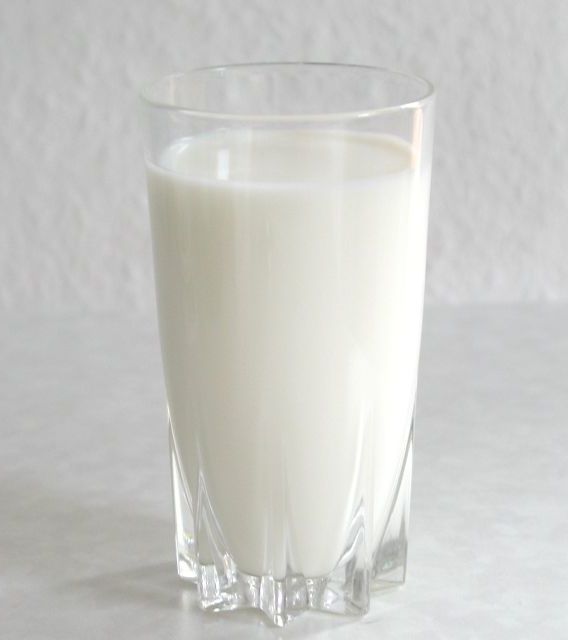
I have some clients who need to avoid dairy products. Invariably when they find this out their first question is "Don't I have to drink milk to get calcium?" or "But how will I get my calcium?"
Calcium is important in the diet, not only for healthy bones and teeth, but also to support nerve and muscle health as well as for blood clotting. However it doesn't just come from cows (or goats or sheep or camels or any other milk giving mammal).
Most people think calcium is synonymous with milk. They've been so sold by the Milk Producers Federation that they feel they've gotta "get milk." However, milk, and other dairy products, are not the only way to add calcium to the diet.
For those who can't drink milk there are alternatives such as almond, soy, oat, hemp, and rice. And while the calcium and protein content of alternative milks vary (and is mostly added) it's important to remember that there are ways to get calcium without drinking milk, eating other dairy products, or drinking alternative milks.
As a means of comparison, whole milk provides 110 mg of calcium per 100 gram serving.
Other sources of calcium include:
sesame seeds - 989 mg per 100 g
sardines - 382 mg per 100 g
almonds - 266 mg per 100 g
flax seeds - 255 mg per 100 g
turnip greens - 190 mg per 100 g
brazil nuts - 160 mg per 100 g
collard greens - 140 mg per 100 g
spinach - 99 mg per 100 g
It's never the same two weeks in a row. This is what I find interesting in the fields of health, nutrition, and holistic living. Read what's on my mind.
Like curry? - turmeric, one of the commonly used spices in curry, contains curcurmin. Evidence appears to indicate that curcurmin can be supportive for conditions such as arthritis, cancer, and diabetes. Now it turns out that curcurmin may actually boost the immune system. In addition to curries, turmeric can be used in making pickles, relishes, added to egg salad, use to flavor rice dishes, and more. I always laugh when I go to visit a friend of mine who is from India. Her kitchen contains a quart jar of turmeric and she goes through it at a fairly quick pace. I have a two ounce jar and it takes me a long time to use it all. Perhaps we all need to be considering other ways to add it to our diet.
RI to vote on banning veal crates - I'm happy to see this in the news and hope that Rhode Island will join Arizona, Colorado, California, Maine, and Michigan in outlawing this inhumane practice. Veal is, essentially, the waste product of the dairy industry. Not able to use male calves the farmers can instead turn them into meat. However part of the reason veal is so pale and tender is because the calves are kept hobbled or caged and cannot walk or use their muscles. It is also believed that many of these calves are given illegal hormones to make them grow faster, thereby making them more profitable for the farmer. Many people, when they find out how veal is raised, are horrified and choose to no longer eat it. That is the clearest message that can be sent to the farmers.
Fast Food Mania TV show - I'm truly stunned by this t.v. concept (and not in a good way). I wonder how hard the fast food producers had to work and how much they had to pay to get this concept on the air. As if we don't have enough of a challenge with obesity and fast food consumption in this country. I get the impression that this show will not only glorify this unhealthy food, but also offer tips on how to maximize your dining experience. Not a good idea.
Right now in my garden outside I have a fair amount of greens growing including kale, swiss chard, and Malabar spinach (Basella alba). While malabar is different than traditional spinach due to it's habit of climbing and the rounded thicker leaves, it's still a spinach and so it get's cooked like spinach. This video from George Mateljan shows a great way to cook it. His healthy take away tips are 1. don't drink the water that you cook the spinach in as it is high in oxalic acid, and 2. use lemon juice on the spinach, this will help to increase the iron absorption.
George has a great book The World's Healthiest Foods which is a wonderful reference for learning about the healthy properties of a tremendous range of foods. It also comes packed with hundreds of delicious recipes. This is one of those books which I believe belongs on everyone's shelf. Sign up for his YouTube channel and stay on top of his healthy, tasty, recipes as well
Those of you who read my Facebook Fan Page know that I regularly remind people to start their day with an alkalizing drink. This invariably brings up the questions, what is an alkalizing drink and why do I need to drink it?
Second question first. Our bodies do better when they are in a more alkaline state. If you remember from high school biology, a pH of 7.0 is base or neutral. We should be somewhere between 7.2-7.4 in order to be healthy. When our bodies are in a more acidic state we can potentially be prone to illness. Maintaining an acidic body state for a long period of time can cause a wide variety of illnesses such as headaches, inflammation, bloating, acne, and possibly even hair or nails that break easily. Because the body seeks balance if it is too acidic it will pull minerals from our bones and from muscle tissue. This is not an appropriate solution as eventually there can be a depletion of minerals.
Our modern diet is very acidic. Especially if we eat a diet that is high in processed foods and animal products. This makes it a good idea to include more more alkalizing foods which are primarily vegetables and most fruits (specifically those with less sugars). In addition to making sure we add alkalizing foods to our diet it is often a good idea to start the day with an alkalizing drink.
So back to question number one...what is an alkalizing drink? A glass of water with 1-2 tablespoons of lemon juice or raw apple cider vinegar is a great choice. Many people may have to work up to 2 tablespoons as it may be too tart if you are not used to it. Adding greens powder to water or a morning smoothie is another way to get an alkalizing beverage into your day. Another option would be to drink kombucha or water kefir, another great start to the day and one that has the added benefit of probiotics to further support gut health.
If you want to test to see whether your specific body state is more alkaline or more acidic you can purchase Ph Test Strips. These strips test either urine or saliva (urine is generally considered to be a better indicator). If you are interested in changing your diet you could also consider getting a copy of The Acid Alkaline Food Guide.
And to answer the unasked question. "But vinegar and lemons are acidic so how can they be alkalizing?" It's one of the odd properties of acid-alkaline balance. Yes, we do consider them to be acidic however their ash, or residue after they have been broken down, is alkaline. That makes them an alkalizing food. This alkalizing effect is also found with limes and grapefruits however not with oranges.
So start your day with an alkalizing beverage and drink to your health.
My husband and I were fortunate enough to be able to take a Wild Edibles Foraging Tour with Merriweather today. He's always interesting and engaging, offering an amazing depth and breadth of information about edible, non-edible, and medicinal plants.
The ground was very wet and muddy at the Spring Creek Greenway Nature Center due to all of the rain we've had lately. And trust me, all of that rain is a good thing after the drought we've had for the last two years. However the muddy terrain didn't hold back our eagerness to follow Merriweather over log and trail in pursuit of the knowledge he had to share.
There are rules to wildcrafting or edible foraging:
1. Respect the law - in Texas it is a crime, carrying fines of up to $500, to rustle. That includes plants. So if you're going to harvest you need to ask permission first.
2. Respect the land - just like I learned in Girl Scouts all those years ago, leave it cleaner than you found it and if you packed it in, pack it out.
3. Respect the plant - make clean cuts so the plant can stay healthy and do not over-harvest.
4. Respect yourself - know, definitively, what you are picking and planning to eat. Don't assume because you could be risking your health.
It was a fascinating class and I think everyone was struck by the vast number of edible plants in our environment that we are not aware of. There was a mind-boggling amount of information. Although there are other books out there, I'm waiting for Merriweather to write one of his own because I'm sure it will be good. He has a unique point of view when it comes to sharing this information.
luna moth | photo: miradessy
There were lots of neat things to see during the class, not just plants. One was this beautiful luna moth which patiently clung to the branch, allowing us to turn it over so everyone could photograph "the pretty side."
In spite of the chilly weather, overcast conditions, and muddy terrain everyone appeared to enjoy the expedition tremendously.
Just a short post today. I recently found out that a number of my friends didn't know this super simple trick for growing spring onions (some folks call them green onions) indoors. So I thought I'd share.
Trim off any wilted or slimy bits from the onion.
Cut the ends so that there is at least 1" of white bulb above the roots.
Place root end down into a glass with a little water at the bottom.
Place in a window where they will get indirect sunlight.
Watch them grow, cut and use as needed.
Here are a couple of pictures to demonstrate:
freshly cut spring onions
spring onions after one day
Isn't that cool? I find it's best the first time you let them re-grow. After that it doesn't always work as well and they're not as firm. But it's a great way to always make sure you have some on hand, especially if you use these onions a lot. And I do.
So what do I use them for? Soups, salads, as a garnish, in sauteed greens, in stir fry, they're very useful, high in vitamin K, and a tasty addition to a lot of dishes.
Note: Thanks to Mike for the reminder. I forgot to mention in the instructions that you need to change the water daily. Otherwise the jar gets rather stinky and the onions won't continue to grow.
Merriweather has been posting delicious pictures and food ideas for many of his foraged delights. The other day he posted a picture of purslane (Portulaca oleracea).
When we lived in CT my husband and I had the stuff running wild all throughout our vegetable garden. It was, quite frankly, a weed. I spent many hours yanking the stuff out cursing at how readily it regrew not realizing that just the act of weeding caused it to reseed and become more vigorous.
All that changed the day I was at a local farmers market and saw one of the farmers there selling the stuff. His was golden purslane which is slightly different than the everyday variety we had in our garden, but it was purslane nonetheless. I began to look at my weedy friends with a rather different eye.
A succlent plant with an unusual sour-yet-sweet flavor I quickly discovered that although you can eat it raw I didn't like it that way. I also don't like okra and the texture was too similar for me. Steamed was okay but the best was when The Washington Post published this recipe for a purslane and spring pea soup. Let me tell you four cups of purslane is a fair amount. And this recipe is so delicious we often doubled it thereby neatly using up large quantities of purslane. High in both vitamin A and C as well as magnesium, purslane can be a good vegetable to add to your nutrition plan...if you can find it.
Purslane Soup
2 tablespoons organic butter
2 leeks (white and light-green parts only), washed and chopped
4 cups purslane, rinsed and dried
2 cups fresh peas
3 medium yukon gold potatoes, peeled and diced
4 cups vegetable broth
Sea salt
Fresh ground black pepper
In a large pot melt the butter.
Add leeks and saute until limp and golden.
Add purslane, peas, potatoes, and broth.
Bring to just under a boil, reduce heat and simmer 30 minutes.
Remove from the heat and blend using an immersion blender.
Salt and pepper to taste.
May be served hot or cold with a dollop of creme fraiche or sour cream on top.
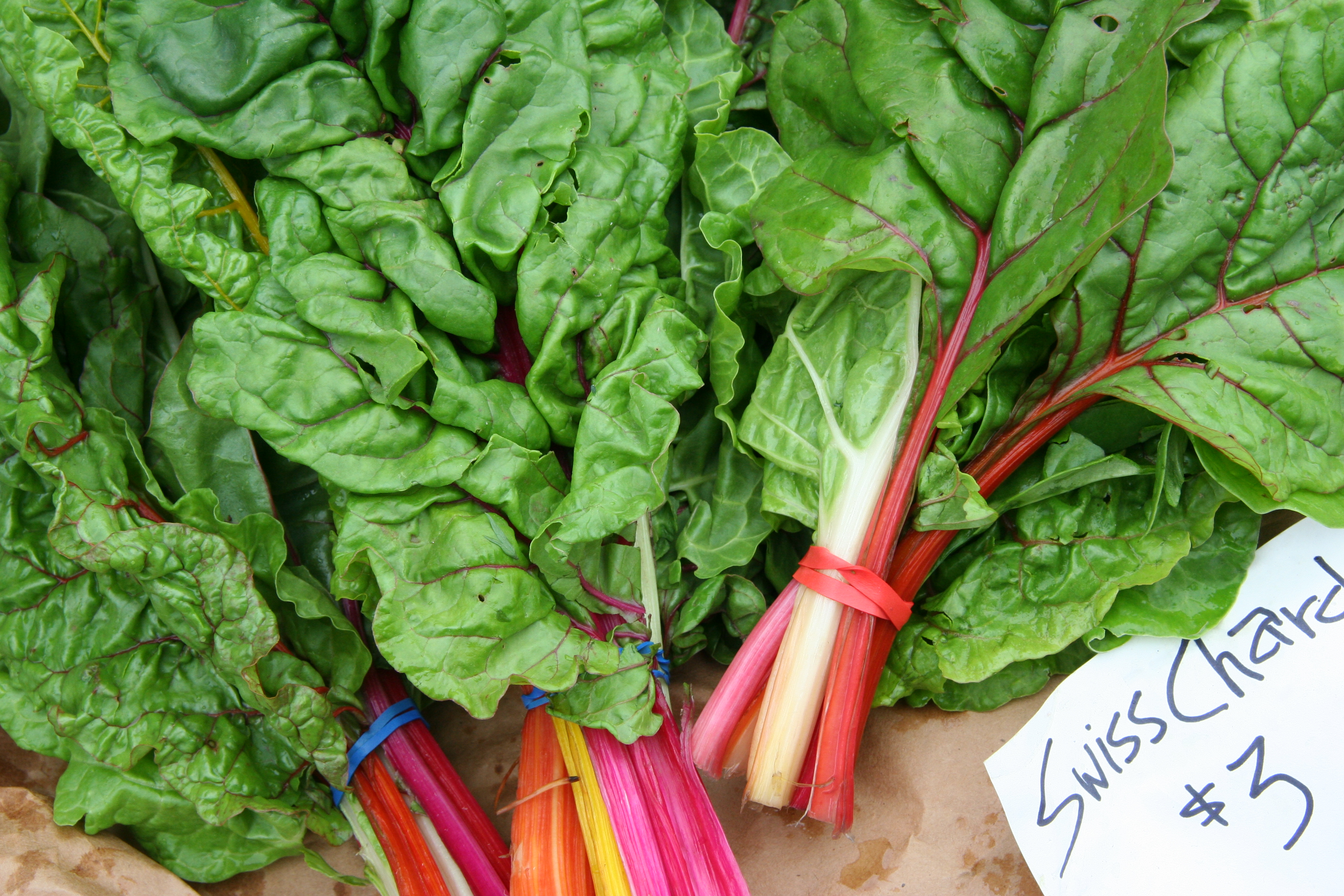
I love Swiss chard. Of course I love all of the dark leafy green but Swiss chard is one of my favorites. Colorful, delicious and easy to use in so many different ways it's really a fabulous green to add to your food plan. I just finished planting some in my garden and am eagerly awaiting it's growth so that we can enjoy it.
Apparently originally from Sicily one of the great things about Swiss chard (Beta vulgaris) is that you can eat the leaves when they are young and quite tender but they are still tasty when they are larger and more mature. The ruby and rainbow varieties are more colorful and I confess a preference that is totally related to that color as I enjoy seeing their beautiful stems and leaves in the garden or in my dishes. For productivity however, the plain green variety does seem to produce more heavily. On the other hand, like beets, the red and rainbow varieties are higher in betacyanins, which are antioxidant, anti-inflammatory and believed to support detoxification.
Nutritionally, like all the dark leafy greens, Swiss chard is a powerhouse food to add to your diet. One cup of the cooked greens provides more than the RDV for vitamin K and vitamin A and around 50% of the RDV for vitamin C. It also delivers a substantial amount of minerals like magnesium, manganese, potassium, and iron.
Recently I came across these two recipes for Swiss chard from Martha Rose Schulman in her New York Times column and they look so delicious they will definitely be included in how we eat this fabulous green this summer.