Achieving and maintaining a healthy lifestyle is arguably the most rewarding and satisfying goal you can set yourself. However, ensuring a holistic and healthy life involves the adoption of many different factors, from getting adequate amounts of exercise to implementing a fulfilling and balanced diet. When people think of healthy and balanced diets, they naturally think of foods like green vegetables, brown rice and lean protein.
Not many people stop to look at their sweetener choices. However, maple syrup, made from the sap of the black or red maple tree, is an alternative to highly processed white sugar that contains less calories than honey. With many nutritional benefits, it is a sweetener worth considering. It is important to note that sugar consumption, even from healthier sources, can still present health challenges when consumed in excess.
Maple syrup is characterised by its rich and earthy taste, natural sweetness, and thick, amber appearance. It is made by piercing the trunk of a red or black maple tree, allowing the sap to trickle out. At this point, the sap is clear in appearance and tasteless. It is then boiled to evaporate the water content, creating a syrup with a high sugar content (about 60 percent) and rich, distinctive taste. Upon boiling, it also adopts its golden coloring which can be found in four different grades from Grade A light amber to Grade B.
Like many other healthy foods, maple syrup is considered a functional food; one that has additional health benefits compared with other foods. Many functional foods have specific nutrients and medicinal benefits that help to combat disease and promote optimum health. Just one ounce of maple syrup contains 22 percent of a person’s recommended daily consumption of manganese, an important antioxidant. Sufficient manganese consumption is essential to ensuring healthy and strong bones, as well as good functioning of the brain and nerves. Manganese is a great natural anti-inflammatory component, which can help the healing process. It is also significant for supporting healthy kidneys, liver and pancreas.
Maple syrup is also high in zinc, utilized by the cells in our bodies to combat illness and ensure a healthy immune system. Zinc deficiency can lead to a number of health problems, most of which are linked to the body’s immune system; it typically results in a lack of white blood cells (specifically B cells, T lymphocytes and macrophages), which are essential for rapid immune response.
Due to the high levels of zinc and manganese found in maple syrup, consumption also has considerable benefits for reproductive health. This is particularly significant for men, as the prostate requires higher levels of zinc than any other part of the body. Higher zinc intake can decrease the risk of prostate cancer, as well as decreasing prostate size. And the manganese in maple syrup helps support a healthy male reproductive system as it aids the production of sexual hormones. For women a deficiency in magnesium is believed to have a strong link to premenstrual syndrome (PMS).
As mentioned already, maple syrup is a great source of zinc, an antioxidant that decreases the risk of heart complications. A healthy intake of zinc ensures that endothelial blood cells are working properly, it also protects against damage to the inner linings of blood vessels leading to and from the heart. Damage is typically caused by harmful oxidized fats, which zinc helps to break down. By consuming the recommended portions of zinc and manganese, you are increasing good cholesterol (HDL) and decreasing bad cholesterol (LDH).
The health benefits of maple syrup should not be ignored. By adding this natural sweetener, in moderation, to your healthy and balanced diet, you are contributing to your overall, holistic health. With it's delicious flavor and functional benefits, maple syrup provides a sweetness that should be part of everyone’s lives.
Lily Rolfe writes health articles on behalf of a number of on and offline health providers based in the US. She is strongly interested in healthy eating and exercise as preventative measures which are, after all, much better than any cure.
photo: Dvortygirl
Showing posts with label sweeteners. Show all posts
Wednesday, January 23, 2013
Friday, September 14, 2012
national honey month
![]() |
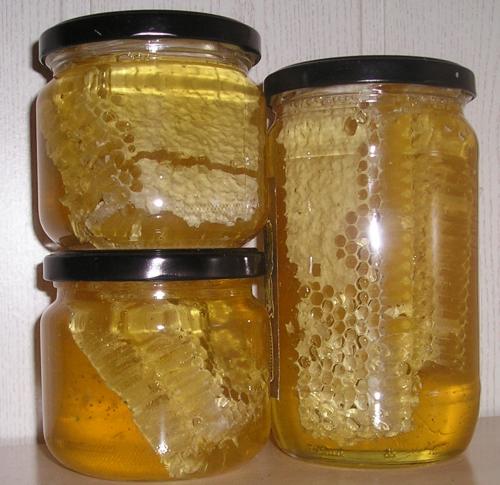
While there are lots of different ways to use honey, one popular usage at this time of year is to make Honey Cake. This dessert is typically served for the Jewish New Year, Rosh Hashanah. This year the holiday starts at sundown on Sunday, September 16.
Honey is often seen as a healthier alternative to sugar although it is important to note that it is still a sweetener, is fairly high in fructose (approximately 38%), and should be consumed in moderation.
Raw, local honey is considered by many to be the best form. Raw honey is not heated or pasteurized, therefore the enzymes remain intact. It is also considered more desirable by those who have allergies as it appears to be helpful in reducing allergic symptoms and chronic sinusitis. Local honey has regional pollens in it making it beneficial for helping with local pollen allergies. One new study even suggests that honey has potential as an additional therapy for "the management of chronic diseases associated with oxidative stress."
photo: akarlovic
Monday, September 10, 2012
on my mind monday 09.10.12
It's never the same two weeks in a row. A collection of what I find interesting in the world of food, nutrition and holistic living. Here's what's on my mind.
Meditation in the corporate world - According to this article more major corporations are recognizing the value of having employees take a break -- to meditate. Meditation is known to have a variety of health benefits including lowering blood pressure as well as allowing the mind to refocus. While we don't teach meditation techniques (and there are many) in the US, it may be something that becomes more and more common in response to this sort of corporate acceptance.
A new twist on urban gardening - in Chicago city lots are not just being used for urban farming. Some are being converted to orchards where heirloom varieties will be grown. The time investment to plant, nurture, and eventually harvest an orchard is significant. The hope is that residents and even restaurants will be able to use and eat these heirloom fruits. This will be an interesting project to watch, it could be a novel way for other cities to make use of public spaces.
Corn syrup in what? - This very cheap sugar finds it's way into an amazing array of foods, even those that would not necessarily be thought of as sweet (such as pizza). The only way to avoid it in your food is to read the label. Another important thought to remember, corn is one of the most highly genetically modified crops in the US. So any products with corn in them (unless marked organic or non-gmo) are quite possibly genetically modified.
National Yoga Month - is September. And there are lot of different kinds to choose from. Yoga is a great form of exercise for people who cannot do impact exercises all the way up to those looking for a vigorous workout. It also offers a wide range of health benefits.
Calorie restriction may not extend life - starving mouse studies seemed to indicate that mice fed 30% less than "normal" lived as much as 40% longer. There are a number of people who follow calorie restriction in the hopes that the results will be the same for people. Recent studies appear to indicate that it doesn't work for Rhesus monkeys. However the monkeys did have a better quality of life with lower rates of diabetes and cancer. I wonder what would happen if results were examined again to look at the quality of the food that the monkeys ate.
It's back to school time. Unfortunately for a lot of teens and older kids that may mean a temptation to reach for energy drinks to try to stay on top of their hectic schedules. Unfortunately this is not a good choice. Here's a video from my friend Karen that talks about energy drinks and their effect on the adrenal glands.
photo: mconnors
Meditation in the corporate world - According to this article more major corporations are recognizing the value of having employees take a break -- to meditate. Meditation is known to have a variety of health benefits including lowering blood pressure as well as allowing the mind to refocus. While we don't teach meditation techniques (and there are many) in the US, it may be something that becomes more and more common in response to this sort of corporate acceptance.
A new twist on urban gardening - in Chicago city lots are not just being used for urban farming. Some are being converted to orchards where heirloom varieties will be grown. The time investment to plant, nurture, and eventually harvest an orchard is significant. The hope is that residents and even restaurants will be able to use and eat these heirloom fruits. This will be an interesting project to watch, it could be a novel way for other cities to make use of public spaces.
Corn syrup in what? - This very cheap sugar finds it's way into an amazing array of foods, even those that would not necessarily be thought of as sweet (such as pizza). The only way to avoid it in your food is to read the label. Another important thought to remember, corn is one of the most highly genetically modified crops in the US. So any products with corn in them (unless marked organic or non-gmo) are quite possibly genetically modified.
National Yoga Month - is September. And there are lot of different kinds to choose from. Yoga is a great form of exercise for people who cannot do impact exercises all the way up to those looking for a vigorous workout. It also offers a wide range of health benefits.
Calorie restriction may not extend life - starving mouse studies seemed to indicate that mice fed 30% less than "normal" lived as much as 40% longer. There are a number of people who follow calorie restriction in the hopes that the results will be the same for people. Recent studies appear to indicate that it doesn't work for Rhesus monkeys. However the monkeys did have a better quality of life with lower rates of diabetes and cancer. I wonder what would happen if results were examined again to look at the quality of the food that the monkeys ate.
It's back to school time. Unfortunately for a lot of teens and older kids that may mean a temptation to reach for energy drinks to try to stay on top of their hectic schedules. Unfortunately this is not a good choice. Here's a video from my friend Karen that talks about energy drinks and their effect on the adrenal glands.
photo: mconnors
Friday, March 23, 2012
making maple syrup
![]() |
| liquid gold | photo: Becky S. |
Although maple syrup is a form of sugar, if it's the real stuff, it has some modest added mineral benefits as well. One tablespoon provides some zinc and a whopping 33% of your daily requirement for manganese (important for bone health, nerve health, blood sugar stability, and thyroid function). Definitely a better choice than the fake, flavored syrup so many people tend to substitute for the real thing.
Here's Becky's story:
Liquid Gold
Five or six years ago, we took our children to a local Maple Sugaring Fest. We were told the charming story of how the Native Americans discovered syrup, boiling it in hollowed logs by dropping hot stones into the sap. When we stepped inside the sugar shack, we were engulfed by steam. We got to see the sap being boiled down in large vats. It was at that point, while receiving my first maple-scented facial, that I became determined to someday make my own syrup from the trees in our backyard. There really is something quite amazing about boiling the bejeebies out of “water” from a tree to create sweet, amber goodness that my children delight in pouring over hot pancakes.
Two weeks ago, perhaps in an attempt to avoid spring cleaning the house, I found myself googling “How to Tap Maple Trees” and discovered Tapmytrees.com which told me everything I needed to get started. Apparently there was no time to spare. In case you haven’t noticed, it has been a tad warm lately; not exactly the right conditions for tapping trees. In our case, a little ignorance was pure bliss...or should I say “pure syrup.” Here's what we learned from the experience and what we will do differently next year...because there WILL be a next year!
Helpful things to know:
![]() |
| placing the spile | photo: Becky S. |
2. A Spile is the metal tap that goes into the tree from which the sap drips. I found a kit with spiles and hooks at our local Agway.
3. Drill the tap holes underneath large limbs. The sap will run much better in that location.
![]() |
| filtering the sap | photo: Becky S. |
5. Keep a cheese cloth handy when collecting the sap so you can filter out unwanted guests. (Ewwwww again)
6. Have a cold place to keep the sap until you are ready to boil. It must stay cold or it will get rancid. We stored ours in 1-gal covered containers, surrounded by ice in keg buckets.
We also learned what not to do:
1. Do not use a concrete drill bit on maple trees...or any tree, for that matter. It takes FOREVER to drill the 2.5” hole for the spile, using up the battery on your cordless drill and turning the wood into putty. Invest in a regular 7/16” drill bit. They’re about $8 at Home Depot. Better yet, call your neighbor to borrow his.
2. Do not think tin foil will be an adequate cover for the sap buckets. Trust me, it’s not. (Read #4 above). Clean, sterilized gallon milk jugs are a great alternative to buckets.
3. Do not wait too long to try tapping. Keep an eye on the weather and the maple syrup blogs. Ideally, the temps should go below freezing at night and above during the day.
![]() |
| boiling sap | photo: Becky S. |
We managed to collect 10 gallons of sap in a day and a half from 7 taps. We boiled it outside (a must!) on a propane turkey burner for approximately 8-9 hours (divided over 2 days). Our final product: one quart of syrup that we affectionately refer to as “Liquid Gold.”
It is delicious!
Next year we are going for a full gallon!
Saturday, January 14, 2012
hidden sugars, diabetes, and glycemic index
| raw cane sugar | photo: Fritzs |
Sugar is a very tricky ingredient in our food supply. Manufacturers want to include it because we are predisposed to like sweet foods. However, unfortunately, this often means that sugars are added to things that don't need them, leaving us with a higher sugar intake and, often, a misguided palate when it comes to understanding what our food should taste like. Common examples include adding sugar to things with fruit in them, such as applesauce, or adding sugar to things that don't really require it, such as ketchup.
One way to identify how much sugar is in a particular food is to look at the label. The sugar grams are listed as part of the nutrition facts. Obviously you want to look for lower numbers in that category. Identifying how much sugar is in something does not, however identify how many sugars or what they are. One trick that manufacturers use to manipulate the ingredient list is using multiple sources of sugars. Because most of us know that the the higher up on the ingredient list the more of that ingredient is in the package, manufacturers don't want any form of sugar as the first ingredient. So they split the sugars up by using a little fructose here, honey there, glucose at the end. This makes it very important to know the names of the various sugars.
Sugar, honey, maple syrup, agave, brown rice syrup, molasses, and barley malt, corn syrup, high fructose corn syrup and fruit juice concentrates are all forms of sugar that are fairly simple to identify by name. Sugar itself is processed into different forms from the lowest process, sucanat (which stands for SUgar CAne NATural) to the most highly processed white, or table, sugar. In between are turbinado, muscovado, demerara, evaporated cane juice crystals, and date sugar. It's important to know that in this country the majority of brown sugar is nothing more than highly refined white sugar with a little molasses added for color and moisture. It's also important to know that if you are feeding a vegetarian or a vegan, many of them will not eat white sugar as it is typically processed through bone char.
For other forms of sugar it's important to understand that in when processed, in most cases the sugar molecule is identified by the ending -ose. This includes fructose, lactose, glucose, dextrose, etc. Sugar alcohols, which do not have as much effect on blood sugar and insulin levels, primarily end in -ol. Examples would be sorbitol, mannitol, erythritol, xylitol, and others. Isomalt is the only sugar alcohol that does not follow that rule. I am not strictly opposed to sugar alcohols (unlike artificial sweeteners) however, because they are processed and can have a laxative effect if ingested in excess (or if you have a sensitive system), I feel that they should be used with caution and in moderation.
Many people with blood sugar instability who try to limit their sugar intake rely on artificial sweeteners. Listing both their common and chemical names, these are splenda, sucralose, neotame, acesulfame potassium, saccharine, nutrasweet, aspartame, and sweet-n-low. These are not healthy choices. Although they have zero calories they may to be carcinogenic or have the potential for other negative health effects.
There is another sweetener choice which is stevia. Made from a plant it is 300 times sweeter than sugar, has zero calories, and is considered a good choice for those who have blood sugar issues as it does not raise blood sugar levels. Unfortunately there are now several chemical analogs available, purevia and truvia. These are not stevia, instead they are laboratory created versions of stevia, and should be considered an artificial sweetener and avoided as much as possible.
When managing blood sugar for those who have diabetes there are several guidelines to follow:
- choose natural, low process sugars in moderation
- if you are going to consume sugar spread it out throughout the day rather than "saving" it all for a big dessert or other treat
- when consuming sugars make sure that you are also getting some protein to help balance the effect of the sugars in your system
- eating smaller meals more often, every 2 1/2-3 hours is often helpful for many people to keep a more stable blood sugar
- get protein at every meal
- reduce simple carbohydrates, white flour products, white pasta, white rice, these are easily broken down by the body to sugars
- reduce alcohol consumption, this is easily converted by the body
- eat foods lower on the glycemic index*
- if you are overweight losing weight can help with blood sugar management
- staying physically active is also important
- don't ignore your blood sugar, if necessary work with a doctor or nutrition professional to help you properly manage your blood sugar levels**
*The Glycemic Index is how much sugar foods have in them. The more processed a food is the higher it's glycemic load. An example would be:
apples - glycemic index 38 - low
applesauce (unsweetened) - glycemic index 53 - medium
** Typical blood sugar levels (for non-diabetics) are considered to be:
fasting (before a meal) - less than 83 mg/dl
post-prandial (after eating) - less than 100 mg/dl 1-2 hours after eating
Tuesday, April 19, 2011
protecting your teeth
| Keep your teeth | photo: Bamagirl |
That said there are a few important things that you can do to protect your teeth, especially if you have weak enamel. Here are five tips to help your teeth stay healthy:
1. Make sure you have regular dental check-ups and cleanings. Obviously the Dentist and Hygienist see your mouth from a totally different angle and can let you know if there are problems forming. Additionally it's important to brush and floss daily. I know we all know this, but it bears repeating since children frequently don't seem to think it's as important. It really is and is one of the best simple things that you can do to help protect your teeth.
2. It's also important to eat foods that have fiber or that require us to bite and chew. We are designed that way. If we eat soft foods most of the time we are not using our teeth the way they are meant to be used. The soft foods are frequently higher in carbs and sugar which can leave behind a plaque which then feeds the bacteria in our mouths leading to dental decay.
3. Make sure you are drinking enough fluids. Staying well hydrated keeps your gum tissues hydrated and can help them stay healthy. Healthy gums can help keep your teeth healthy.
4. Xylitol is known to be very protective of tooth enamel and can be very helpful in re-mineralizing enamel. One study published in 2003 concluded "These results indicate that xylitol can induce remineralization of deeper layers of demineralized enamel." A 2009 study published in the Archives of Pediatric and Adolescent Medicine noted, "Xylitol oral syrup administered topically 2 or 3 times daily at a total daily dose of 8 g was effective in preventing early childhood caries."
Xylitol is easy to add to the diet. As an alternative sweetener it is a far better choice than any of the artificial sweeteners. Made from either corn or birch it is actually a sugar alcohol and is lower in calories (11 calories per serving vs. 16 for white sugar). There are also a growing number of xylitol products on the market, gum, candy, toothpaste, and mouthwash.
It is important to note that because xylitol is a sugar alcohol it can only be consumed in moderation otherwise it can have a laxative effect.
5. Calcium is required for healthy teeth since they, like our bones, are made from it. But don't worry, this doesn't mean that you need massive amounts of milk. Calcium can be easily (and deliciously) obtained from a number of other sources. Sesame seeds have quite a bit of calcium in them as do dark leafy greens, especially spinach, and blackstrap molasses.
In addition to calcium you need vitamin D which helps your body absorb the calcium. The only way to tell if you have enough is to do a blood test at your doctor's office. If you are low in vitamin D you can get it either through exposure to the sun (without sunscreen for 20 minutes), cold water fatty fish, or supplementation.
Take care of your teeth and keep smiling!
Sunday, October 10, 2010
baking with kids
| ready, set, bake |
Baking is wonderful and something I love to do. Even more fun is to bake with kids. They're so excited and fascinated by the process. Learning their way around the ingredients, how to measure, the wet and dry combining process; it's a fun edible science and math experiment in the kitchen.
This is one of my baking buddies, Miss A. She came over the other day with her brother, Mr. C. I had promised them that the next time they came over we would make cookies so that was our plan.
As it turns out Mr. C's idea of making cookies was to allow his sister and I to do all the baking while he played the part of Official Cookie Tester. And, might I add, he was rather impatient for those cookies to be done.
Miss A and I got down to business, put on our aprons and got out my "Famous Chocolate Chip Oaties" recipe. Mr. C. wanted to know why they were famous, had they been on t.v.? Did someone famous invent them? I told him that it was a recipe I had created and I simply call them Famous because everyone who eats them really likes them and wants more. Needless to say he was less than impressed and informed me that unless they've been on t.v. they can't be famous. Maybe I should send a box to Ellen?
One of the things I love about baking with kids is how curious they are. Miss A wanted to taste everything. Of course we decided that the chocolate chips were pretty tasty. Surprisingly she liked the oatmeal, even raw, and requested a large spoonful of her own to nibble on. We had two kinds of sugar and she tasted both of them. Then we got to the baking soda. Miss A asked if she could taste it. I was a little surprised and said, "I'm not sure you want to do that."
"Why?" she asked.
"Well," I replied "it's a little bitter tasting and I'm not sure you're going to like it."
"But I want to taste everything." she said.
So I let her taste it.
Her face scrunched up a little and she said, "It's not really bitter but I don't like it."
"Want some chocolate chips to wash that down?" I asked.
Of course the answer was yes.
We wound up making two batches of cookies the regular variety and the peanut butter variety. The recipe is below and we're sure you're going to enjoy it, just like we did.
Famous Chocolate Chip Oaties
1/2 C butter
1 C evaporated cane juice crystals
1 egg
1/2 t. vanilla
1 C + 2 T white whole wheat flour
1/2 t. salt
1/2 t. baking soda
1 C chocolate chips
1 C rolled oats
Preheat oven to 375
Blend together butter and sugar until creamy
Add egg and blend well
Add vanilla and blend well
Mix together flour, salt and baking soda and sift into butter mixture
Blend in chocolate chips
Blend in oats
Drop by spoonfuls onto a greased baking sheet
Bake 10 minutes
Let sit on baking sheet 2 minutes
Move to rack to finish cooling
For the Peanut Butter variety:
Substitute sucanat for the evaporated cane juice crystals
Add 1/2 C chunky peanut butter
Friday, March 12, 2010
chocolate granola
Today we have a special treat as my friend Christine shares her chocolate granola recipe. I've always loved granola because it's a quick healthy breakfast, a great snack; it's also quick and easy to make. One of the other great things about granola is how it can be changed around to suit individual tastes. The idea of making it in a crockpot, is a big “wow” because it doesn't get any easier than that.Christine shared the following thoughts with me, “A friend had told me a little about using dark chocolate. Apparently, it contains 'good' fats, that our bodies need to digest properly. I began to think about the other good fats I've been trying to feed my family, coconut, olive oil, and nuts, etc. Chocolate granola sounded like a good breakfast food. I knew from prior experience that a little coconut oil at breakfast helped me control my appetite. I found a basic recipe and substituted some things and added a few. It smelled wonderful - kind of like chocolate potporri all day. When all seven of us like something, its a keeper! This one will be a regular breakfast item for our family.”
With the addition of ground flax and coconut oil this recipe provides some great fatty acids (flax seeds have omega-3 while coconut oil has medium-chain fatty acids). These healthy fats help provide saiety, or fullness, which means it helps fill you up. Dark chocolate and cocoa provide antioxidants, especially epicatechin (found also in green tea) which protect against cardiovascular disease.
Here's Christine's recipe, as she says it's a big hit with her family, I'm sure it will be for yours as well.
Chocolate Granola
Mix in crock pot:
7 C. organic old fashioned oats
1/2 C. ground flax
1/4 C. organic brown sugar
1/2 C. shredded coconut
Pinch of sea salt
½ C. raw honey
2 T. maple syrup
¼ C. coconut oil
2 T. cocoa powder
Mix well and heat on low all day, stir once in while.
After slightly browned (4-6 hours on low) stir in:
½ C. 70% chocolate or darker, finely chopped
1 C. chopped almonds & walnuts
Cool completely then store in an airtight container
Chocolate granola photo courtesy of Christine Michael Gibson
Labels:
baking,
breakfast,
crockpot,
fats and oil,
gluten free,
grains,
nuts,
oats,
recipes,
sugar,
sweeteners,
vegetarian
Thursday, September 17, 2009
changing a recipe
Missy had a few questions about changing the flour in recipes, away from using wheat flour, for a ginger snap cookie she wanted to make. You can certainly substitute flours but it is important to remember that if you are using whole grain flours the density of your baked goods may vary a little bit. Also, it's important to let the batter sit for a few minutes to allow the extra fiber to absorb some of the liquid in the recipe. If you are using gluten free flours you may need to add stabilizers or thickeners to replace the missing gluten.I have a few tips about whole grain baking and some yummy recipes on the blog, you can find the baking section here.
Missy also wrote that she was going to replace the butter in her cookie recipe with crisco. I don't actually recommend the use of crisco; it is a hydrogenated vegetable oil and hydrogenated foods are not a healthy choice. Instead a better substitute would be coconut oil. While I am not sure exactly why she is choosing to substitute for the butter, since it is a healthy fat, coconut oil is a healthy choice and provides lauric, caprylic and capric acids, all very beneficial. [ed note: I misunderstood, Missy substituted butter for crisco which is a much better choice. If you wanted to go dairy free you could still substitute the coconut oil for the butter.]
If you are looking to reduc fat, depending on how much butter the recipe calls for (and most ginger cookies call for a lot), you can substitute up to 1/2 of the amount with applesauce. This gives a great flavor and adds moisture if needed. With ginger snaps, if you are looking for a true "snap" you won't get it with the applesauce, but if you are just looking for a soft gingery cookie you could start by substituting 1/4 the amount of fat called for with applesauce. The applesauce gives no discernable flavor. Other substitutes for fat include pumpkin butter and prune puree both of which have a flavor but it is one that can be successfully paired with the other flavors of your baked goods to enhance them.
I will share from personal experience that if you try to change everything at once you may find that you get an unpleasant result and that you're not sure why it happened. I usually change the flour first, then the fat, then the sugar. I've made some great doorstops/hockey pucks in my time by switching everything in the recipe and not understanding where I need to make further changes. Keeping notes along the way helps me to understand the evolution of the recipe.
Missy was also thinking of replacing the sugar with sucanat. This is an excellent choice, especially for a ginger cookie. Sucanat stands for SUgar CAne NATural, a very low process sugar that still retains a lot of the molasses. This gives it a very dark flavor that compliments the ginger a lot. I have written more about sweeteners here.
If you're looking for a good gingersnap type recipe here is one that I was given by my friend Barb. It's a fabulous, tasty recipe, perfect for the fall season.
Barb's Gingerthins
Melt 3 sticks of butter
Mix together with 2 C. Sucanat
Add 2 eggs
Add 2 t. baking powder, 2 t. cinnamon, 1 t. ginger, 1 t. cloves
Add 5 cups. soft white flour (if you don't mill your own you can use King Arthur White Whole Wheat)
Mix well
Let dough sit in fridge for 20 minutes while preheating the oven to 350 F
Make small balls, roll in Sucanat/cinnamon mixture or white sugar and bake on un-greased cookie sheet 8-10 minutes
Let cookies sit 1-2 minutes on cookie sheet before transferring to cookie rack
Barb's Gingerthins
Melt 3 sticks of butter
Mix together with 2 C. Sucanat
Add 2 eggs
Add 2 t. baking powder, 2 t. cinnamon, 1 t. ginger, 1 t. cloves
Add 5 cups. soft white flour (if you don't mill your own you can use King Arthur White Whole Wheat)
Mix well
Let dough sit in fridge for 20 minutes while preheating the oven to 350 F
Make small balls, roll in Sucanat/cinnamon mixture or white sugar and bake on un-greased cookie sheet 8-10 minutes
Let cookies sit 1-2 minutes on cookie sheet before transferring to cookie rack
photo courtesy of commons.wikimedia.org
Tuesday, September 1, 2009
cake questions
My friend Claire recently learned about using carob as a substitute for chocolate and decided that she wanted to try it. She felt that it was best to start with a recipe that already used carob and try to change the sugar/fat ratios so she picked this recipe. Here are her notes, "Instead of using 2/3 cup I substituted with 1/2 cup brown sugar plus 4 tbsp's milk. It turned out looking & tasting just like a chocolate cake; just not as sweet as the ones you normally get from the store, because I didn't use as much sweetener. I shared it with a friend and she liked it and thought it was a chocolate cake. The texture of the cake is dense and more like that of a banana bread. I think if I use 100% all purpose flour or cake flour it will make a difference. I baked for 30 minutes and it turned out a little dry, so I would probably bake less than 30 minutes next time. Also adding icing might help with the dryness but I didn't use it."
My reply: "This certainly looks great and your picture looks wonderful!! I would make one small change. Instead of brown sugar (which these days is nothing more than white sugar stained with molasses) I would try demerara sugar which is a lower process than white sugar and has a fairly good moisture content mimicking the effect of brown sugar.
In case you are wondering why manufacturers pull the molasses out of sugar to make white sugar and then add it back to make brown, it's so that they can get a consistent color palette in the product. Silly but that's why they do it.
As to the moisture...the cake probably came out a little drier because you used less sweetener. You can try to modify that by either adding a little more fat (oil or butter) or by adding something like sour cream (just a little) to help which would also give a subtle richness to the cake or applesauce which would help add moisture. The applesauce typically doesn't add anything to the flavor profile, just moisture.
Since I personally encourage people to eat more whole grains I would leave the whole wheat the way it is is the recipe, switching back to 100% enriched flour is nutritionally less desirable and will also significantly change the properties of the cake."
As a general note, when you are modifying recipes it's sometimes difficult to remember all the different pieces that make up the whole. Changing one ingredient can have a major effect on the overall result. When working with baked goods the most important things to think about are if your change will impact the loft (whole grains are more dense requiring possibly more moisture or more leavening), the moisture, or the flavor. But most importantly, like Claire, have fun and experiment with your food.
Photo: Courtesy of Claire Wang
My reply: "This certainly looks great and your picture looks wonderful!! I would make one small change. Instead of brown sugar (which these days is nothing more than white sugar stained with molasses) I would try demerara sugar which is a lower process than white sugar and has a fairly good moisture content mimicking the effect of brown sugar.
In case you are wondering why manufacturers pull the molasses out of sugar to make white sugar and then add it back to make brown, it's so that they can get a consistent color palette in the product. Silly but that's why they do it.
As to the moisture...the cake probably came out a little drier because you used less sweetener. You can try to modify that by either adding a little more fat (oil or butter) or by adding something like sour cream (just a little) to help which would also give a subtle richness to the cake or applesauce which would help add moisture. The applesauce typically doesn't add anything to the flavor profile, just moisture.
Since I personally encourage people to eat more whole grains I would leave the whole wheat the way it is is the recipe, switching back to 100% enriched flour is nutritionally less desirable and will also significantly change the properties of the cake."
As a general note, when you are modifying recipes it's sometimes difficult to remember all the different pieces that make up the whole. Changing one ingredient can have a major effect on the overall result. When working with baked goods the most important things to think about are if your change will impact the loft (whole grains are more dense requiring possibly more moisture or more leavening), the moisture, or the flavor. But most importantly, like Claire, have fun and experiment with your food.
Photo: Courtesy of Claire Wang
Sunday, April 26, 2009
carob update
I wrote a previous post about using carob as a sweetener. Since it really is more than just a sweetener I thought I would share a little more information about this amazing legume.
http://www.foodnavigator.com/Science-Nutrition/Scientists-study-carob-as-alternative-protein-source, http://www.foodsciencecentral.com/fsc/ixid15288, http://cerealchemistry.aaccnet.org/doi/abs/10.1094/CCHEM.1998.75.4.488?cookieSet=1&journalCode=cchem
Carob is currently being examined as a protein source. Research indicates that the flour made from the germ of carob has a high protein content, 46%. By isolating the germ further, protein content percentages, in a laboratory setting, have reached as high as 95% according to studies currently being done at the Universidad de Sevilla, Instituta de la Grassia. This isolate is of interest because it would offer an alternative to soy or dairy proteins for protein shake formulas created for athletes and for diabetics.
In addition to the higher levels of protein, the germ flour also yields higher levels of arginine, an essential amino acid that is important for healing wounds, immune function, and hormone release among other physiological functions.
Carob flour and carob bean gum are also useful for people with Celiac Disease or gluten intolerance as carob contains no gluten.
Another health benefit is the effect of carob fiber, taken from the pulp of the fruit, in lowering cholesterol. According to a study published in the European Journal of Nutrition "Daily consumption of food products enriched with carob fibre shows beneficial effects on human blood lipid profile and may be effective in prevention and treatment of hypercholesterolemia." The fiber is also high in phenolic antioxidant substances and there are studies underway looking into the chemopreventive qualities of carob.
To rephrase all of that in a less confusing way carob is great as a sweetener substitute, it is high in protein and will probably be coming soon to a protein supplement near you. Useful for people who can not ingest gluten, it is also showing promise as a functional food that may help lower cholesterol and help prevent oxidative cell damage.
Consider adding carob to your diet but please remember to read the labels. If you start seeing wonderful health claims that's fine but always check what other ingredients are in your food before you unthinkingly purchase something because of the marketing on the package.
Be well.
http://www.foodnavigator.com/Science-Nutrition/Scientists-study-carob-as-alternative-protein-source, http://www.foodsciencecentral.com/fsc/ixid15288, http://cerealchemistry.aaccnet.org/doi/abs/10.1094/CCHEM.1998.75.4.488?cookieSet=1&journalCode=cchem
, http://www.google.com/search?hl=en&client=safari&rls=en-us&defl=en&q=define:arginine&ei=AH70Sd2iH5LAM4qFnMAP&sa=X&oi=glossary_definition&ct=title, http://www.herbco.com/p-449-carob-bean-pods-cs.aspx, http://www.botanical.com/products/learn/c/carob-p.html, http://www.nutraingredients.com/Research/Carob-fibre-to-reduce-cholesterol-levels
Saturday, January 24, 2009
carob
Carob (Ceratonia siliqua) is a legume and grows on an evergreen tree. It is also sometimes referred to as St. John's Bread since, as the story goes, St. John the Baptist subsisted on carob beans mixed with honey while he crossed the dessert. It was traditionally eaten in the Middle East as a source of sugar before sugar cane and beets were used for that purpose. The seeds are also referred to as "locust beans" and locust bean gum, a thickening agent, comes from these seeds.
Carob does not have the same taste/flavor as chocolate but many people like it. Per cup carob (compared to cocoa) has more calcium (36% vs. 11%), fiber (41g vs. 29g) and less fat (1g vs. 12g). Many people also prefer carob because, unlike chocolate, it does not contain the stimulants caffeine or theobromine and it is naturally sweeter than unsweetened chocolate.
Carob is rich in tannins creating a binding effect which can be helpful when given to someone with diarrhea. I have found documentation suggesting 15 g. of carob in applesauce (for flavor and ease of ingestion) is an acceptable dose for children.
Carob usually comes in a powder form (although it is possible to also buy it in blocks) and can be substituted for cocoa in a recipe, 1:1.5. -- if recipe calls for one cup of cocoa you would use one and one half cups of carob powder. To substitute for baking chocolate you can use 3 T. carob powder plus 2 T. water for one square baking chocolate. You can also purchase carob chips, look for the unsweetened ones,
I like carob and we do use it sometimes in baking. I don't consider it to be a "substitute" for chocolate, but instead another ingredient with it's own unique flavor. Give it a try, you may discover a new flavor to use.
photo courtesy of ca.wikipedia.org/wiki/Usuari:Chixoy
Thursday, December 18, 2008
sugar notes
Following up on yesterday's post, I received a number of questions about different types of sugar. Rather than getting into a discussion of all the different types of sugar out there I recommend that you check this google link for the particular sugar that you are interested in.I did, however, want to mention a couple of ideas about substitutions that may be helpful.
Sugar - for most baking I substitute sucanat (SUgar CAne NATural - the lowest process sugar you can get) unless I am making something more delicate like scones or lemon cookies, etc. The substitution is one for one, ie, if the recipe calls for 1 C. sugar use 1 C. sucanat.
If I cannot use sucanat because the flavor will overwhelm what I am making, I use evaporated cane juice crystals or demerara depending on what I have on hand. Both are more processed than sucanat but far less processed than white sugar. They are sometimes also found as raw sugar. Again the ratio is one for one.
Brown Sugar - I am going to try using turbinado sugar. I've been using sucanat with a spoonful of molasses mixed in but have recently learned that turbinado is moister and has less calories.
Cinnamon Sugar - I use a 7-1 ratio, 7 T. sucanat to 1 T. cinnamon.
Confectioner's Sugar - I use sucanat or evaporated cane juice crystals whirred in my cuisinart to make it very powdery. For each C. of powdered sucanat I add 1 T. cornstarch.
Other substitutions that may prove helpful are:
Honey - If you want to use honey instead of sugar in a recipe, use 3/4 C. honey for each C. of sugar called for. Then reduce the remaining liquid by 1/4 C, add 1/4 t. baking soda (to help neutralize the honey) and reduce the heat by 25 degrees F (honey tends to make things darker when baked, reducing the temperature will help keep it from over-browning).
Maple Syrup - If you want to use maple syrup instead of sugar in a recipe, use 3/4 C. maple syrup for each C. of sugar. Reduce the remaining liquid by 3 T. and add 1/4 t. baking soda to help neutralize the maple syrup).
Finally the non-caloric sweeteners:
I do not use and do not recommend any of the artificial sweeteners. These include Nutrasweet, Splenda, Equal and Sweet-n-Low.
While I like Stevia as a sugar alternative I have not worked much at substituting it in family favorite recipes. The general theory is that 1 C. of sugar can be replaced with 1 t. stevia liquid/1/2 t. stevia concentrate/18 stevia packets. In baking, for every 1 C. of sugar that is replaced with stevia you need to add 1/3 C. "liquid" to replace the missing bulk. Acceptable substitutes would be yogurt, unsweetened applesauce, egg whites (no yolk because that will change the structure of the baked good), fruit puree, unsweetened fruit juice or water. I have found some good stevia recipes here.
photo courtesy of commons.wikimedia.org/wiki/User:Romainbehar
Wednesday, December 17, 2008
how sweet is it?
I just received an email from my friend Helene:"I recently read that 'Rapadura is just Succanat made by another company. Then there is, Florida Crystals. All three the same thing, they are all processed sugars. The difference between them and regular super-market sugar is that they have not been bleached. All four are identical nutritionally.' what are your thoughts?"
So here goes:
My research shows that sucanat is far less processed than regular white sugar. White sugar goes through so many filterings and then a bleaching that it has no mineral content left, it is pure disaccharide (a form of sucrose made up of fructose and glucose). Sucanat has the following:
Nutritional Analysis of Sucanat:
approximately one cup
* water......................................2.7g
* calories..................................570g
* carbohydrate...........................135.g
* fat..........................................0g
* sodium...................................0.5mg
* potassium..............................1,125mg
* vitamin A...............................1600IU
* thiamin (B1)...........................0.21mg
* riboflavin (B2).........................0.21mg
* niacin.....................................0.20mg
* calcium...................................165mg
* iron.........................................6.5mg
* vitamin B6...............................0.60mg
* magnesium.............................127mg
* zinc........................................2.3mg
* copper.....................................0.3mg
* pantothenic acid......................1.8mg
* chromium................................40mcg
* phosphorus.............................48mg
Source: USDA Handbook of Nutrient Content of Foods
Any form of sugar provides calories that are easily absorbed by the body. Lots of people are looking for the "perfect" sweetener that is sweet but has no impact on the body -- not possible. White sugar is most easily absorbed by the body and spikes insulin because it is broken down into it's lowest form. But there are forms that are better than others, because they are less processed and retain some of the mineral content which slows down the body's response.
I personally use sucanat and find it to be a good sweetener. I do not, and have not for years, used white sugar or brown sugar (which is just white sugar with a little molasses thrown in). I also use evaporated cane juice crystals, also known as raw sugar, as an option when the rich flavor of sucanat would be too overwhelming for what I am making. I have heard that turbinado sugar is a good substitute for brown sugar because it does hold in some of the moisture unlike demerara or sucanat. Turbinado is also lower in calories with 11 calories per per teaspoon versus 16 calories for white sugar. As far as other sweeteners go I also use honey, maple syrup, molasses and stevia.
Nutritional Analysis of Sucanat:
approximately one cup
* water......................................2.7g
* calories..................................570g
* carbohydrate...........................135.g
* fat..........................................0g
* sodium...................................0.5mg
* potassium..............................1,125mg
* vitamin A...............................1600IU
* thiamin (B1)...........................0.21mg
* riboflavin (B2).........................0.21mg
* niacin.....................................0.20mg
* calcium...................................165mg
* iron.........................................6.5mg
* vitamin B6...............................0.60mg
* magnesium.............................127mg
* zinc........................................2.3mg
* copper.....................................0.3mg
* pantothenic acid......................1.8mg
* chromium................................40mcg
* phosphorus.............................48mg
Source: USDA Handbook of Nutrient Content of Foods
Any form of sugar provides calories that are easily absorbed by the body. Lots of people are looking for the "perfect" sweetener that is sweet but has no impact on the body -- not possible. White sugar is most easily absorbed by the body and spikes insulin because it is broken down into it's lowest form. But there are forms that are better than others, because they are less processed and retain some of the mineral content which slows down the body's response.
I personally use sucanat and find it to be a good sweetener. I do not, and have not for years, used white sugar or brown sugar (which is just white sugar with a little molasses thrown in). I also use evaporated cane juice crystals, also known as raw sugar, as an option when the rich flavor of sucanat would be too overwhelming for what I am making. I have heard that turbinado sugar is a good substitute for brown sugar because it does hold in some of the moisture unlike demerara or sucanat. Turbinado is also lower in calories with 11 calories per per teaspoon versus 16 calories for white sugar. As far as other sweeteners go I also use honey, maple syrup, molasses and stevia.
So by way of conclusion, I have heard that rapadura and sucanat are the same thing but even if they are they are not the same as white table sugar. Because they are less processed I do believe that they are a better choice.
Update: Helene says she's happy to hear this. She uses sucanat and honey plus occasionally a splash of stevia in her coffee.
photo courtesy of freephotobank.org
Subscribe to:
Posts (Atom)