Showing posts with label summer. Show all posts

Friday, August 3, 2012

national watermelon day

watermelon | photo: Beyond silence
Enrique Caruso once said, "Watermelon, it's a good fruit.  You eat, you drink, you wash your face."

One of the most alkalizing foods, watermelon is a refreshing, hydrating, low calorie wonderful addition to summertime menus.  High in vitamin A and C while also providing some magnesium and potassium, watermelon is a great antioxidant fruit.  It also provides high levels of lycopene which studies have shown to be helpful in preventing various types of cancer.
Watermelon appears to also have some effect on lowering blood pressure.

There are many delicious ways to include watermelon into your summertime menus such as making watermelon water ice or granita, making agua fresca, fruit salads, or even a savory sweet salad.  My current favorite fruit salad is rich in lycopene and anthocyanins, those dark rich fruits which are supportive of cognitive function while helping to reduce inflammation in the body.  This salad is refreshing and satisfying, I've even been including it as part of my breakfast for a delicious treat.

Anthocyanin-rich Fruit Salad

2 cups watermelon, balled
1 cup blueberries, rinsed
1 cup strawberries, rinsed and sliced
1 cup cherries, rinsed, pitted, and quartered

dressing:

zest 1 small lime
2 tablespoons fresh lime juice
2 teaspoons poppy seeds

Mix together fruits
Mix together dressing in a separate cup
Pour dressing over fruits and toss gently
Let sit 30-60 minutes in the fridge before serving


Saturday, July 2, 2011

stay well-hydrated for summer


Water | photo:  Suat Eman
With summer just around the corner and temperatures rising it's important to stay well-hydrated during the summer months. Most of us don't drink enough water in the first place, add in the higher temperatures and more outdoor activity, it all adds up to sweating more, leading to more fluid loss and potential dehydration. Dehydration can cause a large number of physical problems from headaches and migraines, to constipation to deep fatigue or loss of energy.
Before you reach for that cheap 54-oz Big Gulp think about what your body needs in terms of hydration. It certainly doesn't need all that sugar. An 8-oz can of Sprite claims that it has 26 g of sugar, multiplied by 6.75 to equal a 54-oz drink, that comes to 175.5 g of sugar, not to mention all those chemicals. If you're drinking sugar-free, you are taking in even more chemicals; caffeinated sodas would deliver a jolting 155 mg of caffeine.
Choose refreshing drink choices that are actually good for you. Here are a few suggestions:
  • Water – always good, water is exactly what your body needs. For a refreshing change to plain water add a slice of citrus to your water. For a cool and cleansing taste try slices of peeled cucumber or even a sprig of mint.
  • Iced tea – although tea does have caffeine if you make your iced teas with green tea you'll be getting less caffeine over all. Or you can use herbal teas which have no caffeine and are very refreshing and enjoyable.
  • Spritzers – adding your favorite juice to cool seltzer water with some ice and perhaps a slice of fresh fruit can be a great way to stay hydrated. The usual proportions are 50% juice 50% seltzer. Just be sure to choose juices that are 100% juice, no additives, no preservatives, no colors.  If you are using concentrated juice you will need to adjust the proportions to your preference.
  • Agua fresca – these cool and tasty drinks, originally from Mexico, are made by taking blended fresh fruit, usually melons, and combining them with water, sugar, and a splash of lime juice. Because there is sugar, with both the fresh fruit and the added sugar, these should be consumed in moderation.  There is a delicious recipe posted below.
  • Lemonade or limeade – made with citrus juice, water and sugar this can be very satisfying and cooling. If you make it yourself you control how much sugar is in it.  There are a wide number of tasty recipes available online.

Strawberry Watermelon Agua Fresca | photo Marie the Bee
Agua Fresca
  • 3 cups of melon (cantaloupe, watermelon, honeydew, etc), seeded, peeled and diced
  • 1 1/2 cups cold water
  • 2 tablespoons evaporated cane juice crystals
  • juice of 1-2 limes

  • Blend melon to a pulp in the blender
  • Strain pulp to remove fibers
  • In a pitcher mix together water and sugar until sugar crystals dissolve
  • Add melon juice
  • Add lime juice to taste
  • Serve over ice


It is important to remember that alcohol is a diuretic; this means you loose more body fluids when you drink it. So even though after spending the day in the hot summer sun that beer, wine cooler, or mixed drink seems cool and refreshing, it won't help you stay healthy, hydrated and refreshed.
*this article has been modified from it's original content originally published online at my Houston Holistic Health Examiner column.  

Thursday, June 30, 2011

blueberry bliss

I recently went blueberry picking with a friend.  We went to our local blueberry orchard, Moorhead's Blueberry Farm.  The owner, Sid, told us that his dad started the place 35 years ago and he worked there every summer as a kid.  Now he owns it and works there every day during the season.  They don't use chemical pesticides or fertilizers which is a plus in my book.*

These bushes were fabulous!  Over six feet tall and loaded with berries.  In just 30 short minutes I managed to pick two and a half pounds of plump delicious berries.  As I was picking I was hearing parents with small children scattered throughout the field.  I laughed to myself as I remembered blueberry picking with my girls when they were little.  The three of them were more interested in eating the berries.  They would pick for a while, eating as they picked, and then when they were tired of picking they would come raid my blueberry bucket for handfuls of sweet berries.  Quite frankly I never managed to pick enough to satisfy three hungry tummies and have some for home.  I often had to go back without them in order to have a reasonable amount of berries.

I consider blueberries super-fruits, very high in antioxidants they are one of the few native American fruits.  I've written about some of their health benefits in the past.  New research appears to show that higher consumption of blueberries may be helpful in warding off conditions such as Alzheimers and Parkinson's as well as improving general cognitive function in aging adults.

Whatever their health benefits, no one can deny that they taste wonderful.  After my husband and teenaged daughter plundered the batch I brought home I had just enough left to make a gluten free blueberry coffee cake.  Obviously I'm going to have to go back for more....I guess some things never change.

Gluten Free Blueberry Coffee Cake

Preheat oven to 350 F
grease and flour a 9 x 9 baking pan

1 C. buckwheat flour
1 C. gluten free oat flour
1 C. evaporated cane juice crystals
1 t. baking powder
1/2 t. sea salt
1/4 t. baking soda
1 C. blueberries
1 C. chocolate chips
4 T. butter, cold
1/2 C. Greek yogurt
1/2 C. unsweetened almond milk
1 large egg
1 t. pure vanilla extract

topping:

1/2 C. gluten free rolled oats
1 t. cinnamon
1/2 C. evaporated cane juice crystals
1/4 c. chopped walnuts
1 t. pure vanilla extract


Mix together all of the dried ingredients
Shred butter into flour mixture using the large side of a box grater
Mix butter into the flour mixture with your hands until the mixture resembles coarse crumbs
Add blueberries and chocolate chips and toss well to coat
In a separate bowl mix together yogurt, almond milk, egg, and extract, blend well
Pour liquid ingredients into dry ingredients and quickly blend together, do not overmix the batter
In a separate bowl mix together topping ingredients
Spread topping evenly on the coffee cake
Bake for 25-30 minutes until the top of the coffee cake springs back lightly when tapped
Remove from oven and cool
Serve warm or room temperature


*Sid did share that he uses roundup for weed control (obviously not on the blueberries) because it is  a short-lived weed killer.  I'm hopeful that he will consider switching to something else like vinegar which is shown to be effective. 

Thursday, April 7, 2011

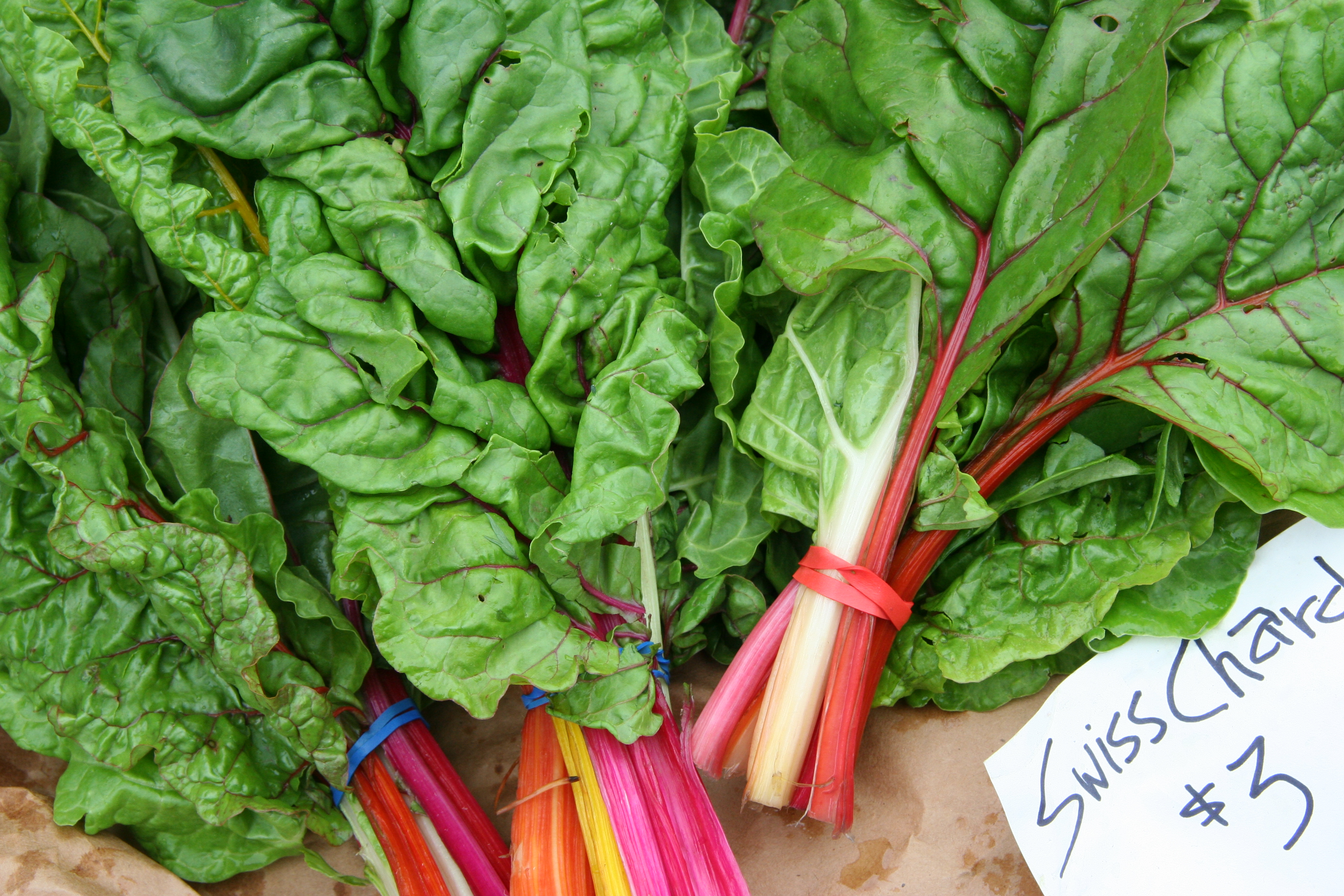
swiss chard

Swiss chard | Jonathunder
I love Swiss chard.  Of course I love all of the dark leafy green but Swiss chard is one of my favorites.  Colorful, delicious and easy to use in so many different ways it's really a fabulous green to add to your food plan.  I just finished planting some in my garden and am eagerly awaiting it's growth so that we can enjoy it.

Apparently originally from Sicily one of the great things about Swiss chard (Beta vulgaris) is that you can eat the leaves when they are young and quite tender but they are still tasty when they are larger and more mature.  The ruby and rainbow varieties are more colorful and I confess a preference that is totally related to that color as  I enjoy seeing their beautiful stems and leaves in the garden or in my dishes.  For productivity however, the plain green variety does seem to produce more heavily.  On the other hand, like beets, the red and rainbow varieties are higher in betacyanins, which are antioxidant, anti-inflammatory and believed to support detoxification.

Nutritionally, like all the dark leafy greens, Swiss chard is a powerhouse food to add to your diet.  One cup of the cooked greens provides more than the RDV for vitamin K and vitamin A and around 50% of the RDV for vitamin C.  It also delivers a substantial amount of minerals like magnesium, manganese, potassium, and iron.

Recently I came across these two recipes for Swiss chard from Martha Rose Schulman in her New York Times column and they look so delicious they will definitely be included in how we eat this fabulous green this summer.

Stir Fried Swiss Chard and Red Peppers

Swiss Chard and Chickpea Minestrone

What's your favorite way to eat this wonderful leafy vegetable?  I'd love it if you'd share a recipe or two.

Saturday, April 2, 2011

yogurt

I've been seeing changes in yogurt in the grocery stores lately.  It used to be that yogurt was mostly a gelatinized "Swiss-style" fruit mixed in or on the bottom kind of product.  At least that's what was presented to us at the grocery store.  Then came those tubes followed by the drinkables.  Now we're getting back to the real thing and the choices for whole milk, organic, live culture yogurt are easily available.

Greek yogurt has come to the forefront.  Many people seem to prefer it even in the face of the higher cost.  Greek yogurt is higher in protein, almost 50% more according to the Berkeley Wellness Letter.  The whey is strained out giving it a thicker consistency and a longer shelf life.  When you strain out the whey you wind up with a product that is higher in fat and lower in calcium but also lower in lactose (the milk sugar that some people have trouble digesting).  So you have to decide what you want.

Of course what many people don't realize is that you can make a Greek style yogurt of your own very simply.  Take a 32 ounce container of whole milk, organic, live culture yogurt.  Place cheescloth (I use a coffee filter) into a colander.  Place the colander on top of a bowl and then dump the yogurt in.  Put the whole thing in the fridge overnight and in the morning you have a thicker, Greek style yogurt, and the whey which has strained out.  The whey is great for soaking beans or grains, it can be added to soups, and some people even drink it straight.  It's a little tart for me for that so if I have too much I usually feed it to the dogs, they consider it a great treat.

What to do with the thickened yogurt?  You can use it as a substitute for sour cream, you can add things to it to make a savory dip, mixed with a drop of stevia it makes a fabulous fresh fruit dip or you can eat it plain.  One of my favorite ways is to mix it with cottage cheese and a bunch of fresh vegetables, cucumbers, cherry tomatoes, chunks of sweet peppers add a pinch of sea salt and a grind of fresh pepper and you've got a tasty summer lunch.  Yogurt doesn't have to be used just for sweet things, it also makes a great savory dish.

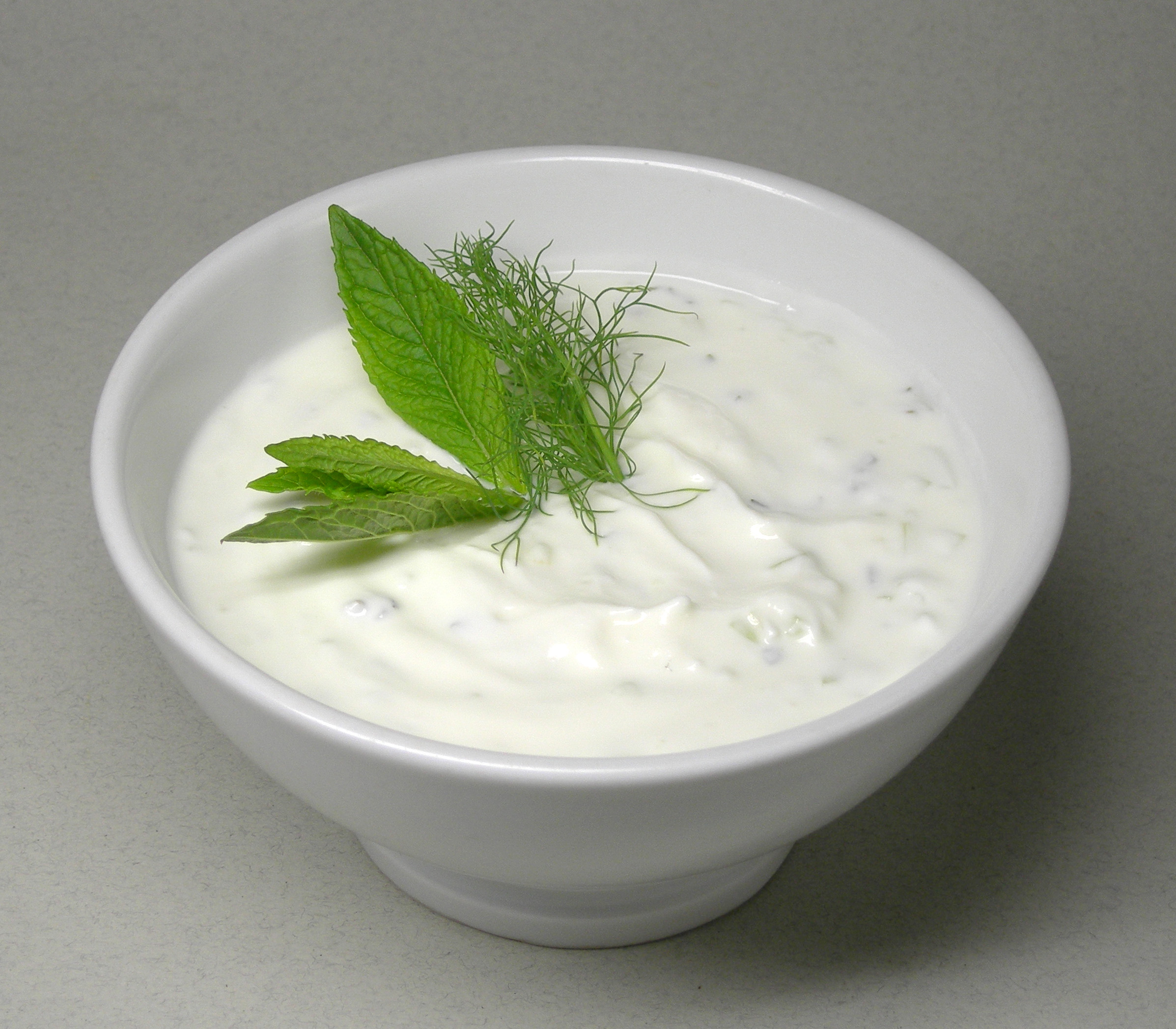
Many cultures have a yogurt dish of some kind mixed with different spices or foods to make a condiment.  For example in India there is a shredded cucumber yogurt dish with scallions, garlic, cumin and pepper that helps to cut the spicy heat of the cuisine called Raita.  A similar dish can be found in Greek cultures and is called Tzatziki; it's made with yogurt, cucumber, garlic and mint.  There's even a cold soup called Tarator from Bulgaria which has yogurt, cucumber, dill, garlic, walnuts, and oil, it makes a great starter for meal on a hot day.

The yogurt market appears to be growing by leaps and bounds.  A recent trip to the grocery store revealed coconut milk yogurt and soy milk yogurt (for those who can't have dairy), Bulgarian style, Australian style, and even Icelandic style.  As far as I can figure out the difference is primarily the type of bacteria used and perhaps how thick the yogurt is.

Also appearing more and more is kefir, a fermented yogurt that is drinkable.  The fermentation increases the probiotic activity of the yogurt and can be very healthy for you as long as the cultures are live.  Soon enough I expect that we'll start seeing bottled containers of lassi which is a similar fermented yogurt drink from India.

Whatever style or type of yogurt you are eating (or drinking) it is important to remember that you want the real stuff.  Live cultures, no added artificial ingredients, just good, healthy, probiotic, digestive supporting yogurt.

Saturday, May 22, 2010

agua fresca

Spanish for fresh waters this is a refreshing summer drink with origins in Mexico where it is sold by street vendors.  Sometimes you can find agua fresca in large containers in South and Central American stores or restaurants where it is ladled out by the glassful.  A great drink for warm weather it's a hydrating and satisfying thirst quencher that is much better than soda or over-sugared bottled drinks and fountain drinks.


Agua frescas are usually made with fruit, lime juice, sugar and water.  Watermelon, canteloupe, strawberry, pineapple, and tamarind are popular flavors.  When you make them at home the ingredients can be adjusted to account for the sweetness of the fruit you are using and for personal taste.  I rarely add sugar because I find that the fruits are sweet enough on their own.


I love using watermelon in agua frescas.  Luciano Pavarotti once said, "Watermelon, it's a great fruit. You eat, you drink, you wash your face."  High in vitamin C  and lycopene watermelon is also rich in the electrolytes potassium  and sodium which makes it a fabulous choice for summer time when we tend to lose a lot of electrolytes through perspiration.


Today I'll be making a watermelon-strawberry agua fresca, here's my recipe:


Agua Fresca
(makes 4 servings)


2 C. strawberries, dehulled
3 C. watermelon, removed from the rind and pitted
juice of 1/2 a lime
1/3-1/2 C. of ice cold water


Place berries, watermelon and lime juice in a blender
Blend until well mixed
Strain through a medium sieve colander to remove any chunks or seeds that escaped the pitting proccess
Add water until you reach a consistency that you prefer
Enjoy!


Some people like it a little sweeter. Taste carefully before adding sweetener, you should not need more than one or two tablespoons of sugar or a few drops of liquid stevia.


photo courtesy of Steve Evans | Wikimedia Commons