Showing posts with label tomatoes. Show all posts

Friday, October 14, 2011

national salsa month

salsa ingredients | photo:  webaware
Salsa is rapidly becoming a favorite condiment for many people.  After all there's nothing else that goes quite so well with nachos and I'm fairly certain that's a popular snack at home or when eating out.  The great thing about salsa is that it can be made so many different ways, with fruit, spicy, mild, any way you like.  Defined as a fresh relish it's readily available on grocery store shelves.  However it's so easy to make at home, and so much tastier, that I prefer to make it myself.

One of the great things about salsa is the way the flavors can be combined to make a condiment to accompany just about any dish.  Fruit flavors, such as peach, pineapple, mango, and many more.  The heat can be adjusted depending on how many chilis you do (or don't) use.

Don't just serve it with chips, depending on the flavor profile you can pair salsa with many different foods:


  • on top of baked potatoes
  • mixed with brown rice and beans
  • as a salad dressing
  • on top of meatloaf
  • with scrambled eggs in a taquito
  • with baked chicken
  • in a TexMex lettuce wrap
  • poured over cream cheese for a dip
  • with baked fish
  • use your imagination.....the possibilities are endless
Here's a basic salsa recipe for you, play with it and make changes however you like, there's really no right or wrong with salsa.

Basic Salsa

8 tomatoes, seeded and chopped
1 medium red onion, diced
1 red pepper, seeded and chopped
3-4 cloves garlic, minced
1 bunch cilantro, minced
1/2 teaspoon sea salt
1/2 teaspoon cumin powder
1 tablespoon lime juice

Mix all ingredients together and serve.

Wednesday, June 15, 2011

growing a garden

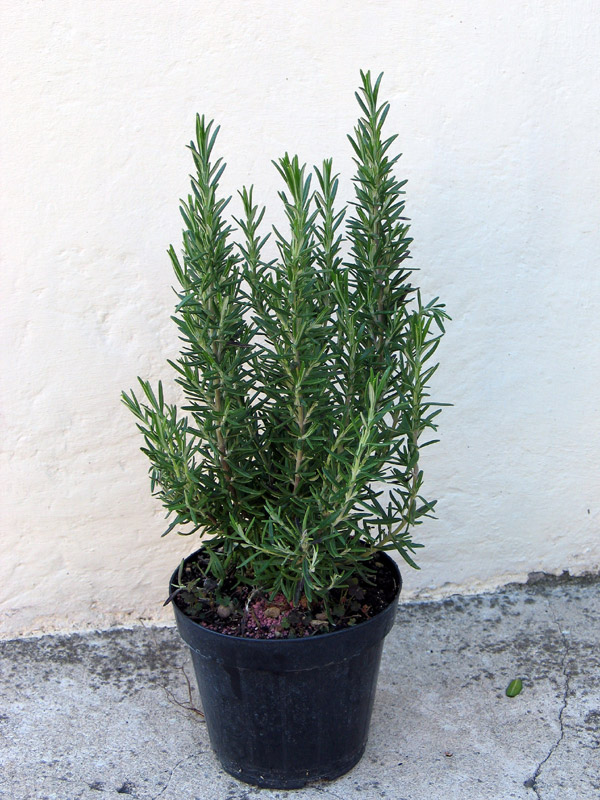
Rosemary | photo: Nataraja
It's been very dry here in the Eastern Piney Woods of Texas.  So dry that there are now warning signs all over town about the potential for fire hazard.  Needless to say this is not boding well for my garden.  This is our third year here and each year we do a little bit better than the year before.  But we also spend a lot of time and energy moving things around trying to find just the *right* spot on our postage stamp-sized property.  We seem to have finally found the right spot for the tomatoes and they're producing faster than we can eat them which is a delicious thing.  If I start to get too many I make something my friend Libby calls Tomato Junk and shove it in the freezer ready to use at a moments notice for pasta dishes, salads, egg scrambles and more.

I've just gotten back from the store where I have purchased, yet again, a rosemary plant.  This is my fourth one of the season.  I had one last year.  It did pretty well.  We enjoyed using it in a lot of recipes, especially veggie marinades, last summer.  Then winter came.  It was a bad winter (for Texas) and many things in my yard did not make it.  One of them was that poor rosemary.  Okay, it happens.  So I went and bought another one.  For some reason it wasn't happy where the first one was and it died.  I bought another one and moved it to the bed across the way.  That one died too.  Then I bought another one and planted it in a pot with the lavender.  The lavender is still going but the rosemary?  Yup, dead as a doornail.

So I've bought another one (luckily they are just $4 a pot so I can afford to keep shelling out until I get it right) and I'm really hoping this one will make it.  I've got a different location in mind, a little more shade, hopefully a better location and nowhere near the areas where the others have not survived.

Along the way I keep being reminded that gardening is an ever-evolving process.  Especially after learning how to garden in one area of the country and then moving to a vastly different agricultural zone and temperate climate.  Learning what plant where takes time and attention and effort.  Luckily most of what my husband and I plant in our garden seems to grow well or I probably would have given up by now.   I also like playing in the dirt and this certainly gives me an excuse to keep on doing it.  And it's a great way to get some sunshine and fresh air, something I recommend for everyone.

Since I mentioned it, here's the recipe for Tomato Junk.  There are no precise measurements, I just throw it all together but somehow it always works out.

Tomato Junk

a lot of very ripe tomatoes, washed, cored, peeled and quartered
a sweet onion, chopped
a clove or two of garlic, minced
a bunch of basil, minced

Using a generous amount of olive oil in the pan saute onions and garlic until the onion starts to wilt
Add tomatoes and cook until they start to break down
Add basil and cook another 5 minutes

Remove from heat, let cool and then package for the freezer in 1 cup containers

I do not add salt or pepper to this as I season it when I use it

Wednesday, October 13, 2010

green tomato chutney

Green Tomatoes | Medved' | Wikimedia Commons
QuantumVegan just harvested about fifty pounds of tomatoes.  That's a LOT of tomatoes.

When we lived in Vermont that kind of a harvest was sure to mean we were getting green tomatoes.  The growing season is so short there tomatoes don't always have time to ripen.  So you come up with lots of good ways to use green tomatoes.  There's green tomato pie, green tomato salsa, the ubiquitous fried green tomatoes and more.

Luckily green tomatoes have lots of nutrition, as I posted before, including lycopene.  If you're getting close to the end of your growing season and you're looking at a large crop of green tomatoes, here's my favorite way to use them up; green tomato chutney.  It goes very well with cheese and crackers, it is excellent with cold roast meats, delicious as a side to a spicy vegetarian lentil dish, it's very versatile condiment to have in your pantry.

This recipe is based on one from Fancy Pantry which appears to be out of print.   find it to be a good book with lots of wonderful recipes and well worth having.  But in the meantime here's my version:

Green Tomato Chutney

4 pounds green tomatoes, cored and cut into chunks
4 pounds green apples, peeled, cored and cut into chunks
2 C. yellow onions, minced
2 C. raisins
3 cloves garlic minced
3 C. evaporated cane juice crystals
1 1/2  C. raw apple cider vinegar
3 T. minced fresh ginger
2 T. mustard seed
1 t. ground cinnamon
1/2 t. ground cloves
1/2 t. red pepper flakes

In a large stock pot mix together tomatoes, apples, onions, raisins, garlic, cane juice crystals, salt, and vinegar.
Bring to a boil over medium heat, stirring frequently.
Continue to boil for approximately 30 minutes continuing to stir frequently.  The fruits will begin to soften and meld together.
Add the spices.
Boil for another 10-15 minutes until you reach the consistency you want.
Ladle into hot sterile jars and seal according to directions.
Bath for 10 minutes remove and let cool.

This recipe needs to settle to allow all of the flavors to come together.  Let it sit in a cool dark space for at least a month before opening.

Makes about 6 pints.

Friday, January 29, 2010

revisiting tuscan stew

The Tuscan Stew appears to have been well received. First Carol wrote in with her notes about it; now Claire has written in and provided this beautiful picture as well (thank you so much for that, I really am not good at photographs and need to work on that).

Claire writes, "Tonight I invited my girl friend over for dinner and used your recipe to cook the lentil dish . I added a lot of Italian seasoning and ground basil and the aroma when the stew was simmering was just fantastic. Both my friend and I enjoyed the flavor as well. She needed to add some salt to it as I didn't put salt. But for me this dish is so flavorful, even without salt I didn't feel like it was missing anything (plus the chicken stock already contains sodium). I like the combination of the colors, textures and flavors of the Italian seasoning, tomatoes, onions and lentils, which really works! We served it over brown rice and it was great!

Thanks for your creativity & recipe. I have always enjoyed reading your posting about nutrition and yummy recipes. Keep up the great work!
"

I'm really glad that people are enjoying this recipe so much. It's become a new favorite in our house and if you haven't tried it I hope you will.

Thanks also for the comments, I love hearing back from folks.

Wednesday, January 20, 2010

tuscan stew update

Carol wrote in via email about the Tuscan Stew recipe that I shared recently" "Hi Mira, I'm about to begin preparing the stew and wonder that the lentils take only a half hour's cooking without any prior soaking--or was that first step left out of the recipe. Also, I don't have any "Italian spice" mix but assume that it would include basil, oregano, parsley and perhaps a bay leaf and or some rosemary the latter of which is growing on buses outside my building. I'm really looking forward to trying, tasting then relishing this dish this evening."

She pointed out that in the polenta recipe it's not clear about adding the cornmeal. I stir while slowly adding and then occasionally stir while it is cooking on low. She shares her method: "I put the mixture into the top of a double boiler and then don't need to keep stirring or even to check it, until it is about ready and it does not scorch if I don't check right on time." This sounds much easier than my method and I plan to try it the next time I make polenta. One of the things that I like most about it is that it removes the possibility of scorching which can be a problem.

Later she wrote back: "I'm eating the stew right now; it is delicious. The lentils (which are a small dark variety) cooked up fine in the half hour with just a prior rinsing, no soaking needed. I cubed a ball of buffalo mozzarella into the polenta after it cooled for 10 minutes, before transferring it to a round pan to firm up. Now, with the hot stew on top, the cheese melted into the wedge and the topping of freshly grated Parmesan on top give it all an extra, rich fillip. I used 3/4 tsp dried basil, 3/4 tsp dried oregano, one bay leaf, and a small amount of chopped fresh parsley for the seasonings in the cooking stew. Thank you for sharing this recipe."

I love the idea of cubing some mozzarella into the recipe and can see how that would add a tasty texture to the polenta. Carol, thank you for sharing your ideas and I'm so glad that you like the recipe.


Monday, January 18, 2010

Tuscan Stew

I love lentils. They are tasty little legumes that pack a powerful nutrition punch. High in fiber, protein, folate, iron, potassium, folate, and manganese they are quick cooking and easy to use in a wide variety of dishes and cuisines. Lentils, referred to in Indian cuisine as daal, come in a number of different colors/types. There are the traditional brown lentils that most of us see at the grocery store however you can also purchase red lentils, which have less fiber, the dark French green, yellow and a type called Masoor which are brown on the outside but red on the inside. When combined with a grain, such as rice, you get a complete protein as all of the essential amino acids are present.

This recipe is one that I created as sort of an Italian style ratatouille, a French peasant stew. I substituted the lentils for the eggplant to give a protein boost and it's a great variation. Served over polenta with a side of spinach sauteed with garlic, lemon and italian spices it makes a fabulous meal. The leftovers, if there are any, are even better than the original because the flavors continue to mellow and combine even after cooking.

Tuscan Stew

1 C. lentils rinsed and picked over
1 onion chopped small
3 cloves garlic minced
3 zucchini cut into 1/2" slices
1 bell pepper diced
3 tomatoes diced
1 1/2 t. Italian herbs
1/2 t. red pepper flakes
2 T. olive oil
2 1/2 C. vegetable stock

In a stock pot heat olive oil and saute onion and garlic until onion is starting to soften
add the herbs and bell pepper and saute one more minute
add remaining ingredients and simmer on med-low until lentils are done, about 30 minutes
you may need another 1/2 C. of stock
salt to taste
serve over polenta and top with fresh grated parmesan cheese

Polenta

1 C. cornmeal (I prefer fresh ground but you can use storebought)
1 t. salt
3 C. water

bring water and salt to a boil
reduce water to a simmer
very slowly add cornmeal (this is important to avoid lumps)
cook approximately 20 minutes until mixture thickens
remove from heat and pour into a pie plate (for triangles) or a cake pan (for squares)
let polenta set for 10-15 minutes
cut and serve

Edit: Carol wrote in and shared her method for making polenta "I put the mixture into the top of a double boiler and then don't need to keep stirring or even to check it, until it is about ready and it does not scorch if I don't check right on time."

I plan to try this the next time I make polenta

Enjoy!

photo courtesy of Justin Cormack : wikimedia commons

Wednesday, August 26, 2009

green tomatoes

I was recently visiting family in the Northeast where they have been hit badly by the tomato blight. All over the area farmers and home growers are ripping out plants and throwing them away because of the blight. Although cherry tomatoes and plum tomatoes seem to hold up better they are certainly not immune.

When I went with my sister-in-law to her beautiful community garden plot everything appeared to be growing well. The garden was lush, greenly fragrant and productive, even the tomatoes looked good at first glance. But the blight had obviously damaged the plants and the fruit. As she began to pull out the plants I realized that many of the fruits were still unscathed. Remembering the years we lived in Vermont (which Shep Ogden, owner of Cook's Garden, jokingly says should be referred to as the Green Tomato State) I knew that there was a lot we could do with the fruit. My sister-in-law agreed to give it a whirl and we began to hunt for all of the un-blighted fruit we could find.

After the patch was cleared and we headed back to the house with bags full of green tomatoes we began to search for recipes. There are so many things you can make with green tomatoes; more than just the familiar fried green tomatoes. We usually don't use them because we are so conditioned to eating them when they are fully ripe. According to the USDA the nutritional profile of green and red tomatoes is almost the same. Green tomatoes have twice the vitamin C, more vitamin K, and more calcium. Red tomatoes have more vitamin A, E, and potassium. Apparently they have the same amount of lycopene and it is believed that the chlorophyll in the green tomatoes hides the red pigment which indicates a lycopene-rich food.

Our cooking and canning foray took two days (in part because we also canned zucchini, but that's another story) and we made green tomato cake, green tomato pickles, green tomato salsa, and some really fabulous green tomato relish. Now when their family sits down in the middle of those cold New England winters they'll still be able to have a jar of summer goodness on the table to enjoy.

Green tomatoes are versatile and can be made into pie (it's delicious, trust me), pasta sauce, and all manner of preserved goods. While I'm not sure if the farmers in those states affected by the blight will be able to harvest and sell their green tomatoes I sure hope they do. And I hope that people realize just how tasty green tomatoes are. Who knows, it might start a new demand for green tomatoes.

photo courtesy of wikimedia.commons.org

Saturday, July 18, 2009

eggplant corn fritters with chunky tomato red pepper coulis

I am always experimenting in the kitchen.  Recently I created a dinner that came together out of ingredients from the farmer's market that I had on hand.  Because this dish turned out so well I definitely plan to make it again; it's a great summertime meal full of flavor and freshness.

Although I used fresh ground flour to make my fritters you can still make this recipe if you don't have a mill by checking out my baking substitutions post.

Eggplant Corn Fritters
Serves 4

Grapeseed oil
1/2 C. cornmeal
2/3 C. Ezekiel flour
2 teaspoons baking powder
Salt and freshly ground black pepper
1/3 cup milk, plus more if needed

1 egg
1 eggplant, peeled and diced
1 ear corn, kernels removed

Cut eggplant into medium dice
Toss with 1 t. salt and let rest 20 minutes
Rinse eggplant
Combine dry ingredients
Beat together milk and egg
Add milk mixture to dry ingredients (adding more milk if needed to make a smooth batter)
Stir in the eggplant and the corn
Drop batter by ¼ C. measure into hot oil
Turn fritters once while cooking, fritters should be golden brown on both sides
Drain fritters on paper towels
Serve with chunky tomato red pepper coulis

Chunky Tomato Red Pepper Coulis

2 T. olive oil
1 small onion, diced
1 clove garlic minced
2 medium tomatoes, chopped
1 red pepper, diced large
1 t. minced fresh basil
1 t. minced fresh oregano
salt and pepper to taste

Saute onion and garlic in a large saucepan until onion starts to soften
Add red pepper and saute 1-2 minutes
Add tomatoes and herbs, turn heat down to medium low and cook 10-12 minutes until vegetables are soft, tossing vegetables frequently
Add salt and pepper
Remove 2/3 of vegetables from the pan and put in a large bowl
Blend thoroughly with an immersion blender
Add reserved vegetables to blended vegetables
Serve over Eggplant Corn Fritters

Enjoy!

Sunday, June 21, 2009

pesto


My friend Tracy recently mentioned that she is growing basil in her back yard garden and would like to eventually make pesto. Pesto is a delicious way to add flavor to a wide number of dishes, it's not just for pasta. It can be used for a fabulous sandwich spread for tomato or tomato and mozzarella sandwiches. It's wonderful to use on chicken and thinned down it is a great dressing for a cold bean salad.

Basil (Ocimum basilicum) is an annual herb with a very strong flavor; originally from Asia it is now most common in Italian cuisine.  Basil comes in a number of different "flavors" so in additional the  sweet basil that we are used to you can also get cinnamon, lemon, Genovese (which has sort of a clove flavor), licorice basil and a wide number of others.  Basil is a very useful herb with high levels of vitamin K as well as calcium, iron and vitamin A.  If you plan to grow it all summer to harvest in the fall for pesto you can increase your yield by pinching the flower stems.  This will prevent the flowers and seeds from forming and keeps the essential oils from drying up.

This is my favorite recipe for pesto:

2 C. fresh basil leaves, washed and destemmed
2 cloves garlic
1/2 C. parmesan cheese
1/2 C. pine nuts
1/2 C. olive oil

place all ingredients into a food processor
turn the food processor on and begin to add in olive oil until mixture is smooth
add salt to taste

Note: you can make different types of pesto by using parsley or red peppers instead of basil, using walnuts instead of pine nuts and changing the parmesan for romano cheese.  Experiment and find out what your favorite flavor is.

Be well.

photo courtesy of freedigitalphotos.net

Friday, May 29, 2009

gazpacho


Mydaughter and I were rummaging through the fridge trying to figure out what to make for lunch and realized that we had all of the ingredients to make gazpacho.  With the temperatures rising into the 90's this cool, flavorful soup was a great idea.  I love gazpacho because it is easy to make, refreshing and a wonderful way to get a huge serving of healthy veggies into your day.

My daughter learned to make it from a friend at college, she prefers it extra chunky, I prefer a smaller dice.  You can also lightly blend all of the ingredients together to make a smoother style soup.  Either way it is delicious.

Gazpacho

dice and place in a large bowl:
1 cucumber
2 large tomatoes
1 small vidalia onion
1 sweet bell pepper
2 stalks of celery
1 zucchini or yellow squash

add in
1 clove of garlic, crushed
1/4 C. red wine vinegar
salt and pepper to taste

cover with:
tomato juice (we didn't measure - just poured until it covered the veggies)

place in the refrigerator and chill for at least two hours

to serve:

ladle into a bowl
drizzle with olive oil
garnish with diced avocado and chopped cilantro

Enjoy!

photo courtesy of Paul Goyette, commons.wikimedia.org/wiki/File:Dicey_gazpacho.jpg

Thursday, May 28, 2009

eightball

Our farm share is including some neat vegetables that I haven't seen before including these cute little eight-ball squash.  They are a type of round zucchini.

 As I've mentioned in a previous post zucchini are great and have a lot of health benefits.  They are also a versatile vegetable and can be served a number of different ways.  The eight-balls seem ideal for stuffing because who would want to cut them up and cook them, destroying that cute shape?  Having some leftover quinoa from when I last made quinoa taboule (I always double quinoa when I cook it because we eat so much of it) I decided to create a quinoa stuffing to fill these little beauties.   This turned out to be so delicious that we can't wait to get more of these squash to make it again.

Quinoa Stuffed Eight-ball Squash

4 eight-ball squash, washed
2 C. cooked quinoa
1/2 C. roasted tomatoes in oil, diced
2 scallions, diced
1 clove garlic diced
2 T. chopped basil
1 t. salt
2 T. olive oil

pre-heat oven to 400 F
cut tops off of squash and set aside
scoop out inside of squash being sure to leave a layer of flesh to maintain the shape
place hollowed out squash into oven proof dish
roughly chop squash 
heat olive oil in a large sauce pan
add squash to pan and saute until starting to soften
add tomatoes, scallions, garlic, and basil and saute 2 minutes
add quinoa and toss to mix well
add salt and toss again
turn off heat, fill squash with mixture
place tops back on squash and place in oven
bake 20 minutes

Enjoy!


Saturday, March 7, 2009

loving lycopene

In my recent post on peppers I mentioned lycopene.  I thought I would mention just a little more about it because it is so beneficial to us.  Lycopene is a carotenoid that produces red color.  There are other carotenoids like beta-carotene, zeaxanthin or lutein; carotenoids produce yellow, orange or red colors in our food.  There is some evidence to suggest the possibility that a diet high in lycopene may be helpful in protecting against prostate cancer although more research is needed.  It is also believed to be helpful in preventing or treating macular degeneration, cataracts and skin cancer.

Lycopene is fat soluble, which means your body absorbs it best when you eat it with some fat.  Think sliced tomatoes with fresh basil and a generous drizzle of a good quality extra-virgin olive oil.   Avocados are another good source of fat to pair with a juicy ripe red tomato.

You don't find lycopene just in red peppers or red tomatoes, it's also there in watermelon, pink guavas, pink grapefruit and papayas.  As we get closer to real-tomato-season (as opposed to the tomato-looking things currently in the grocery store) think about fresh salsa, homemade tomato sauce, gazpacho and other delicious dishes to boost your lycopene.  And if you haven't tried guavas or papayas give them a chance, they're tasty and wonderful just the way they are.

photo courtesy of freedigitalphotos.net

Saturday, February 21, 2009

creamer and meatless meals

My friend Karen recently asked me what she could use for a substitute for vanilla cinnamon Coffeemate creamer.  She would like to give up the artificial ingredients in the creamer.  The best substitute that I can think of is to flavor a half pint of light cream with the amount of vanilla and fresh ground cinnamon (which will be stronger than the already ground stuff).  Mix it all together and keep in the fridge until you need it.  A half pint is 8 ounces and should remain good for approximately 10 days.  The cream really is not that bad for you if you are simply using a small amount for flavor and smoothness.  Of course if you are one of those people who take a little coffee with your cream this is not going to work.

Another question was what is a legume and how can she incorporate more meatless meals into the family diet.  First the definition of a legume:  Legume refers to plants or their fruit of the leguminosae family.  The simple answer is lentils, beans, peas and peanuts.  There are others such as alfalfa, carob, etc but let's stick with the first four.

Making meatless meals is very easy, just substitute a bean or lentil for the meat in a recipe and you're good to go.  In one of my previous posts I mentioned our favorite vegetarian shepherd's pie which is an excellent and tasty dish for a meatless dinner.  We also make taco salad substituting black beans for the meat with taco seasoning, crush tortilla chips in the bottom of the bowl and everyone dresses their own salad with diced tomatoes, lettuce, peppers, shredded cheese, guacamole, sour cream, and salsa; it's a very tasty dinner.  Another great choice is a baked potato bar, I prefer to use sweet potatoes, with broccoli, beans, other vegetables and sauces to taste.  

Of course if you are looking for new recipes rather than converting recipes you already have there are some great resources on the web.  These can be found at:

  • AllRecipes twenty-for-twenty - a great list of 20 ingredients that combined create 20 dinners
  • Vegetarian Times - a neat feature here is the ability to use checkboxes to define your search by season, cuisine, meal-type, appliance and more
  • Recipe Source - formerly the SOAR, this is a list of the vegetarian recipes in the archive

  • I'm sure there are many others but these are the ones that I like the most.


    Wednesday, February 18, 2009

    avoid sugar if you have a cold

    I just spoke with a friend, Sarah, who is feeling a little under the weather.  She's got a bad cold and is generally not feeling well.  She wanted to know if there was anything she could take in addition to orange juice and tea to help her feel better.

    Orange juice is actually not a good choice.  Yes, vitamin C boosts the immune system, but sugar suppresses it.  Unfortunately most people reach straight for the orange juice when they are sick in an attempt to get more vitamin C into their system.  Although they are adding vitamin C to their system they are also adding sugar which slows down the body response.  If you must have juice, although herbal teas and broths would be better, it is best to dilute the fruit juice so that you are taking less sugar.  Even eating fruits is not necessarily recommended as the fruit sugars will still work to suppress your immune system.  

    Taking vitamin C tablets could prove beneficial in lessening the duration of a cold.  According to the Linus Pauling Institute at Oregan State University, "The preventive use of vitamin C supplementation reduced the duration of colds by about 8% in adults and 14% in children." 

    Other food sources of vitamin C (not in order of nutrient) include brussel sprouts, broccoli, kale, sweet potatoes, tomatoes, bell peppers, swiss chard, collard greens, spinach, winter squash and green peas.  There are others but these tend to be the highest.

    Saturday, February 14, 2009

    pick a peck

    I was talking with a friend, Danielle, the other day and she mentioned that she didn't really like vegetables.  It's funny, since I am a Nutrition Educator people somehow feel they have to confess their dietary habits to me.  Whether they don't eat vegetables or they like soda.  What they don't realize it that I'm not here to pass judgement on anyone.  If you want to improve your nutrition, need support for changing food habits, or need information to help with health issues, I'm happy to help.  But I truly don't spend my time making pronouncements about someone else's food habits;  if I did that I wouldn't be a very fun person to hang out with.

    In talking to Danielle about her non-vegetable habit she did share that she likes peppers.  A lot.  While there are a lot of different kinds of peppers (capsicum) from chili peppers to cayenne, I realized that she was talking about sweet, or bell, peppers (capsicum annuum) which are available in a few different colors.  They are all the same fruit (yes, like tomatoes peppers are a fruit because the seeds are on the inside) and the color mostly indicates ripeness.

    Bell peppers are a member of the nightshade (solanaceae) family, similar to potatoes, tomatoes, and eggplant.  Nightshade vegetables are noted for being very high in alkaloids which is an inflammatory substance.  Nightshade vegetables should be avoided by those who have arthritis or other joint difficulties because alkaloids and other inflammatory substances are very hard on their system.

    Green bell peppers are the most common ones found in the supermarket.  They are also the least expensive.  This is because they are not fully ripe.  They are also not as sweet as their colored counterparts.  If left on the plant a green bell pepper will become either yellow or orange.  If left further it will become red.  As a pepper progresses through the growth process it becomes sweeter and the vitamin content changes.  Of the colors red bell peppers are highest in vitamin A, vitamin C, and beta carotene.  Red peppers also contain lycopene which is gaining a lot of positive press as a carotinoid that appears to lower the risk for prostate, cervix and other cancers.  Green bell peppers have more vitamin A and beta carotene than yellow or orange ones.  

    Bell peppers are also a good source of fiber, vitamin K and folate.  They make an easy and tasty addition to almost any dish and can be cooked in a wide variety of ways.  My favorite way is to sautee them with onions and garlic, but grilling them comes in a close second.  Diced and sprinkled on top of a salad or tacos they are delicious.  Stuffed and baked is another tasty way to serve them.   There are many more ways to incorporate them into your diet.

    Although I certainly suggest eating a wide variety of vegetables, and lots of them, every day, peppers are certainly one way to get some fiber and some nutrients into your system.

    Be well.

    photo courtesy of freedigitalphotos.net


    Monday, December 15, 2008

    ratatouille

    Not the movie, the food.  Even though we are slated to have a high of 75 F today it's a great day to make ratatouille.  In part because I have a lot of running around to do and my crock pot makes it very easy to get dinner on the table in spite of that.  The other reason is that eggplants were particularly beautiful at the grocery store yesterday so I bought one.  Glossy, firm, no wrinkles, that's the way to pick a good eggplant.  

    Eggplants are related to the nightshade family (along with potatoes, tomatoes, and sweet peppers, so those who are sensitive to nightshades should avoid them) and are actually fruits because their seeds are on the inside.  They have many wonderful health benefits including a fair amount of fiber (if eaten with the skin), lots of potassium and vitamin B1, also known as thiamin.  

    To be honest, in our house making ratatouille is an inexact science.  The base ingredients are:

    eggplant, onion, tomatoes, sweet peppers, garlic, olive oil, pitted olives, basil, salt, pepper, and parsley

    How much of which ingredient depends on what we have available.  I know that's not really helpful so here are the proportions I used today.  

    Ratatouille

    1 medium size eggplant diced
    1 medium onion diced
    2 zucchini cut into 1/2" rounds
    2 peppers (one red one green) chopped medium
    2 large tomatoes diced
    1 t. dried basil
    1 t. dried parsley
    salt and pepper

    Layer it all in the crockpot
    pour a 14.5 ounce can of diced organic tomatoes over the batch
    let it cook on low for 7-9 hours until it is done

    I plan to serve this ladled over freshly made polenta with a generous shaving of fresh parmesan on top for a delicious, filling meal.

    Polenta

    1 C. fresh ground cornmeal
    1 t. salt
    3 C. water

    bring water and salt to a boil
    reduce water to a simmer
    very slowly add cornmeal (this is important to avoid lumps)
    cook approximately 20 minutes until mixture thickens
    remove from heat and pour into a pie plate (for triangles) or a cake pan (for squares)
    let polenta set for 10-15 minutes
    cut and serve

    Enjoy and be well.

    crockpot photo courtesy of http://en.wikipedia.org/wiki/user:mecu