Showing posts with label questions. Show all posts

Wednesday, June 20, 2012

bubble gum flavored apples anyone?

fake apples | photo:  LeemanS
One of my readers, sent in this picture and comment/question about these apples.

"We came across these apples at Stop & Shop here in town. We could not believe our eyes when we saw flavored apples!! I told my husband to take a pic to send to you because I wasn't sure you would believe me when I tell you that they had bubblegum flavored apples. I believe there were four flavors total to choose from. 


I'm curious what your thoughts are. I walked away all kinds of confused. Was this an attempt to help kids with poor eating habits cross over the healthy eating or the other way around? How exactly did they alter this apple to make it flavored? And of course the obvious...yet another example of FAKE food.
grapples | photo: Qrd2006

Oh and as you can see it's was placed right next to the apples and the packaging says ready to eat snack.  What's so difficult about preparing an apple for eating?  hmmm you wash it?!?!"

Good eye, and good thinking.  This is very similar to something I just saw in my local grocery store called grapples.  Research indicates that the flavoring comes from "natural" (read possible MSG ingredients) and artificial flavoring. It seems that the apples are marinated for several days in an undoubtedly chemical concoction which allows the apple to soak up the flavor.  This process has apparently been approved by the FDA.

The Grapple company website assures the consumer that the product has not been genetically modified and there are no added sugars or calories.  Unfortunately there is a huge chemical load, not just from the flavorings, but one assumes these are not organic apples and therefore potentially high in pesticide residue.

The Crazy Apple company website says they can't tell you how they do it but I assume it's the same sort of process.  They do however assure you that their apples are gluten free (duh!), dairy free (again, duh!), and contain no soy or nuts.

I believe this is seen as a way to market apples to kids but I'm not really sure why this sort of adulteration is seen as a positive.  Since apples by themselves are sweet, crunchy, and tasty I'm not sure what the appeal is here.  Unfortunately I see this as a big step backwards as items like these further dull the taste buds to what food should taste like.

Update:  It turns out these apples are being spotted all over the place and most of you are not happy about it.  My friend Adrienne says, "If you want a grape flavored apple take a slice of apple and some grapes.  Eat them together.  It's a party in your mouth!"  Good advice.


Tuesday, March 20, 2012

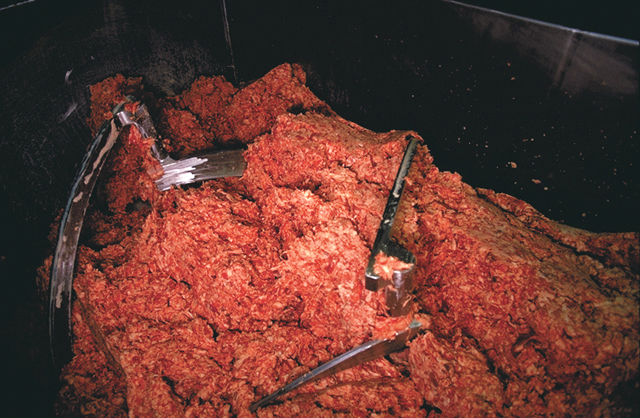
pink slime clarified

ground beef | photo: Rainer Zenz
One reader contacted me asking, "What cafeteria food is made with this pink slime stuff?  I've never heard about this and [my son] is now eating in the cafeteria at public school.  He took his lunch every day for four years but not this year.  I was just worried about the nutritional value of what he was eating but now, this is creepy."

The quick answer to your question is any hamburger product is potentially made with pink slime.  The industry term is actually "lean finely textured beef."  It is a meat-product made from scraps and trimmings, heated, de-fatted, and treated with ammonium hydroxide.

Current federal regulations say it does not need to be listed as an ingredient and reports suggest that it can be the basis for as much as 50-70 percent of "hamburger" meat.  Although many fast food restaurants are backing away from it in response to consumer disgust, the industry still wants to sell it because it is cheap and profitable.  The USDA has just approved it for school lunches.

News reports indicate that in response to growing outrage by consumers, schools will be allowed to opt out of receiving this product.  Not, however, until next Fall and not until after currently signed contracts have been fulfilled.  I assume there will be schools which will claim they didn't hear from enough families so they signed contracts and it will continue to be available in the school food for some time to come.

There is a petition being sent to Agriculture Secretary Tom Vilsack (started by Houston resident Bettina Elias Siegel who runs the blog The Lunch Tray) urging a ban of pink slime in schools.  Although I no longer have children in the public school system I am furious that my tax dollars are being spent to feed garbage to children and I have signed.

Current research shows that this product is also in grocery stores.  However, once again, because it is not required to be labeled you may not know.  As of today, March 20, 2012, the most recent list I have been able to find indicates the following:

Pink Slime NOT In Grocery Store:

Costco, Whole Foods, HEB, Ingles, and Publix

Pink Slime ALLOWED In Grocery Store:

Safeway, Stop&Shop, Kroger, Giant, Frys (I'm going to assume this includes Randalls since they are owned by Safeway)

Stores Not Responding About Pink Slime:

Walmart, Food Mart, Fred Meyer  (I'm going to assume this includes Sam's Club since they are owned by Walmart)

If your store is on the list for allowing or not responding the ONLY way to avoid purchasing this product is to purchase organic ground beef as it is, to the best of my knowledge, fillers are not allowed under the rules of organic production.

eating more

I recently got asked the question, "How do I eat more fruit and veggies, I don't think I'm eating enough?"  That's a good question.  And one that's faced by a lot of people.  Especially parents who are trying to encourage their children to eat a healthier diet.

One of the best ways I have found to encourage people to eat more fruits and vegetables is to have them on hand and convenient.  This means they are not in your fridge just rotting in the bottom of your crisper drawer.  I frequently encourage people to cut them up, prepare and make containers.  Set them out on the shelf in your fridge and it's a grab-and-go snack.  They can either be sorted by type of food or you can make "snack packs" with an assortment.  Either way if you're in the mood to munch and you open the fridge door to see a convient snack right there you may find yourself eating more healthy choices.

Another way is to add veggies to other foods.  You would not believe what gets added to my homemade spaghetti sauce.  Add shredded veggies to a lasagna.  Double the veggies in your omelette or frittata.  What about soups?  Loaded with pureed veggies, especially if it's a creamy style soup base is an easy way to boost your veggie intake without trying very hard.  The trick is to make sure that you put in things that will not overwhelm your soup.  Sharper tasting foods such as cruciferous vegetables (cabbage, cauliflower, broccoli, etc) or onions may not appeal to some.  Mucilaginous textured foods such as okra may not appeal to others.  Experiment and be mindful of what you are adding in.

Choose seasonal fruits and vegetables.  I can't stress this enough.  A tomato in season and from a farmer's market (if possible) tastes like the most delicious, amazing thing.  A tomato in the middle of winter with a waxy coating tastes like cardboard.  When foods are in season, and hopefully local, they are picked close to ripeness.  Otherwise they may be picked early, stored, and then force ripened with ethylene gas.  This forced ripening does not allow the flavor to come through, it just makes it look ripe.  If you're eating unappealing, non-tasty fruits and vegetables it does not encourage you to want to eat more.  As a side benefit, you really appreciate things when you can only have them in season.

Make different choices when you eat out.  There are tasty ways to add more veggies to your diet when you are eating out which allow you to still enjoy your dining experience but avoid getting bogged down by the simple carbs and other unhealthy choices.

Skip the juice and eat the fruit.  Did you know that it takes an average of 4 oranges to make 8 ounces of orange juice?  That's a lot of sugar and those extra calories add up pretty quickly.  It would be pretty difficult to eat four oranges in one sitting.  However each orange you eat comes with a significant amount of fiber which helps to slow down the glycemic effect.  The same is true for other juices.  Switch your juice to water (add a few slices of fruit for flavor if you like) and eat the fruit instead.

Keep a food journal.  An 8.5 x 11 sheet of paper folded into quarters gives you 8 spots to write down what you eat each day.  If you're looking to increase things like water consumption (always a good idea) and fruits and veggies set a goal for yourself and then keep track of it.  By looking back over the week you'll be able to see if you're meeting your goal and where you can make changes to increase your consumption a little at a time.

Small changes add up over time.  By making one or two adjustments you may soon find yourself eating more healthy fruits and veggies.

Thursday, October 13, 2011

sprouted flours

sprouted spelt and chia bread | photo:  wattle12
I recently received a question from Hope who wanted to know about sprouted flours (specifically spelt) and how to use them.

Sprouted flours are a very healthy way to go.  Sprouting essentially deactivates some of the enzymes that can interfere with nutrient absorption.  The grains are sprouted, dried at very low heat, and then ground into flour.  If you do not own a mill (I like both the Blendtec and WonderMill) you can purchase sprouted flours from a number of different sources.

Sprouted flours can be easily interchanged with traditional flours one for one.  There is a difference between the fiber content so if you are switching it for all-purpose flour you'll need to make some adjustments to the moisture content as well as to how long it may take to rise.

Regarding her question about spelt specifically, it is a grain similar to wheat but lower in gluten content.  Some people who do not digest wheat well find spelt to be an acceptable alternative.  For those who have celiac disease or gluten intolerance, spelt still needs to be avoided as it does contain gluten.

To Your Health Sprouted Flour Company has some delicious looking recipes on their website which specifically call for sprouted flours.

Saturday, September 17, 2011

what is it?

The birds are very messy and tend to throw seeds everywhere when picking through the large feeder.  I assume they do this because they are looking for their favorite bits.  Having been lazy not weeded very well I found a few large plants growing under the feeder.  At first I thought it was corn which was pretty cool.  So we left them.

Obviously from these pictures, this is most definitely not corn.  I'm not really sure what it is.  It doesn't look like my pictures of either amaranth or millet so I'm stumped.

Unfortunately I don't have the label from the birdseed so I can't even pick it out from there.  Wondering if I should harvest it for the birds for winter or if it's edible by humans.  Anyone able to identify it?


Monday, September 5, 2011

food storage

Becky wrote and asked about storing food.  She's starting to make more of her own foods and would like to purchase in bulk but is not sure how to store things.  This is a brief post but one that shares my experience and what I do.  The storage that I am talking about here is dry storage, I'm assuming that if you have a freezer or even two freezers you are already using them to full capacity.

dry beans in jars | photo: dancesincreek
For smaller items (seeds, beans, herbs, etc) I collect glass jars.  Lots of them.  I confess that I have aspirations of being one of those wonderfully well organized people who has all their jars coordinated and they are the same so they all fit neatly on the shelf.  The truth is, well, let's just say a little more practical.  It's a mis-matched hodgepodge of jars.  I use smaller jars for smaller things and bigger jars for larger quantities.

If it is something that requires a good seal (such as agar agar) I will sometimes cut a piece of wax paper to put over the top of the jar before placing the lid on it.  Obviously things kept in jars do better stored in a cool dark place.

I like using glass jars, even though they are more breakable, because I feel that they are the best, least contaminating containers.

For large quantities I use five gallon buckets.  Although they are plastic, it is not possible to store very large quantities in other containers.  Many people can get five gallon buckets for free from their local grocery store.  In the bakery section simply ask for their buckets; the grocery stores throw them away.  These are food safe buckets.  Sometimes they come with some of the contents (frosting, etc) still stuck to the inside, but washing them out is a small price to pay.

For the lid I use something called a gamma seal.  This is a great thing to create a water-tight, air-tight, vermin-proof seal.  I like them in part because they are spin-on/spin-off rather than a rip-off-your-fingernails-prying-the-lid-open.  Essentially there is a threaded plastic ring which snaps onto the rim of the bucket.  The lid then threads into the ring.  If I am planning on very long term storage (more than six months) for the contents of a bucket I will add oxygen absorbers to help the contents last longer.  The trick with the oxygen absorbers is to figure out how much airspace is left in the bucket so you know how many absorbers to use.

I find that a five gallon bucket easily stores twenty-five pounds of dry goods.  I use mine to store grains such as hard wheat, barley, oats, and buckwheat.  I also use these buckets to store sucanat and evaporated cane juice crystals.  Due to the weight I don't stack them more than three high.

In order to make sure that I am staying on top of my large scale dry goods I write the contents of the bucket on a piece of scotch tape with weight and the date it needs to be used by.  This piece of tape is placed on the rim of the lid.  This way the buckets are clearly marked and when I go into them and I can see how much I still have left.  The tape sticks well enough to be used but comes off easily enough if the information needs to be changed.


Tuesday, April 19, 2011

protecting your teeth

Keep your teeth | photo: Bamagirl
I was recently talking with someone who was concerned about her young son.  He apparently has weak dental enamel and has developed a cavity at a very young age.    Because he was born with weak enamel she wanted to know if there was anything that she could do nutritionally to help his teeth.  I am certainly not a Dentist and highly recommend that if you or someone you know has dental problems that you get it checked out.  


That said there are a few important things that you can do to protect your teeth, especially if you have weak enamel.  Here are five tips to help your teeth stay healthy:


1.  Make sure you have regular dental check-ups and cleanings.  Obviously the Dentist and Hygienist see your mouth from a totally different angle and can let you know if there are problems forming. Additionally it's important to brush and floss daily.  I know we all know this, but it bears repeating since children frequently don't seem to think it's as important.  It really is and is one of the best simple things that you can do to help protect your teeth.


2.  It's also important to eat foods that have fiber or that require us to bite and chew.  We are designed that way.  If we eat soft foods most of the time we are not using our teeth the way they are meant to be used.  The soft foods are frequently higher in carbs and sugar which can leave behind a plaque which then feeds the bacteria in our mouths leading to dental decay.


3.  Make sure you are drinking enough fluids.  Staying well hydrated keeps your gum tissues hydrated and can help them stay healthy.  Healthy gums can help keep your teeth healthy.


4.  Xylitol is known to be very protective of tooth enamel and can be very helpful in re-mineralizing enamel.  One study published in 2003 concluded "These results indicate that xylitol can induce remineralization of deeper layers of demineralized enamel."  A 2009 study published in the Archives of Pediatric and Adolescent Medicine noted, "Xylitol oral syrup administered topically 2 or 3 times daily at a total daily dose of 8 g was effective in preventing early childhood caries."


Xylitol is easy to add to the diet.  As an alternative sweetener it is a far better choice than any of the artificial sweeteners.  Made from either corn or birch it is actually a sugar alcohol and is lower in calories (11 calories per serving vs. 16 for white sugar).  There are also a growing number of xylitol products on the market, gum, candy, toothpaste, and mouthwash.


It is important to note that because xylitol is a sugar alcohol it can only be consumed in moderation otherwise it can have a laxative effect.


5.  Calcium is required for healthy teeth since they, like our bones, are made from it.  But don't worry, this doesn't mean that you need massive amounts of milk.  Calcium can be easily (and deliciously) obtained from a number of other sources.  Sesame seeds have quite a bit of calcium in them as do dark leafy greens, especially spinach, and blackstrap molasses.  


In addition to calcium you need vitamin D which helps your body absorb the calcium.  The only way to tell if you have enough is to do a blood test at your doctor's office.  If you are low in vitamin D you can get it either through exposure to the sun (without sunscreen for 20 minutes), cold water fatty fish, or supplementation.


Take care of your teeth and keep smiling!  


Thursday, December 16, 2010

musings on a grocery cart

Shopping Carts | Dan4th
Doing my grocery shopping yesterday several things occurred to me.  I usually try not to pay too much attention to what other folks put in their grocery carts or how they shop.  Unless I'm there specifically to work with someone and help them learn how to shop healthier it's not my place to be nosy about that.  However sometimes you can't help overhearing comments, or noticing certain things.  Today was one of those days where things really stood out.


So here are those thoughts that occurred to me:


If you're willing to pay more money for organic grapes why wouldn't you buy organic raisins?  After all raisins are made from grapes.


Most folks don't know this but the reason the organic vegetables are all the way on the other side of the produce area is because there are regulations that the water from the conventional produce can't touch the organic produce.  This is to make sure that there is no cross contamination.  For those people who pick up organic produce and then change their mind when they see the price of the conventional....please don't put the organic stuff into the conventional pile.


The labels on your produce tell you if it's organic or not.  Organic produce has a five digit label starting with a 9.  Conventional produce has a four digit number.


Coupons are created to convince you to buy products.  Often they are highly processed, low nutritional value items.  Not always but usually.  Think about what you are buying and why.  If it's because you have a coupon and that's the main reason, maybe you want to reconsider.


If you or your children get hungry when you are at the grocery store don't buy a box of crackers or chips to snack on; you'll all just be cranky and your blood sugar will be going crazy by the time you get home.  Buy something with protein in it, this will help balance your blood sugar.  Consider string cheese, a healthy (i.e. not over-sugared) protein bar, a smoothie drink (again, choose low sugar), or some raw nuts.  Better yet don't go to the store hungry.


Consider the bulk bins if your grocery store has them.  As an example, at my local grocery store quinoa is cheaper in bulk than in boxes.  The same is true for many other items.


And a personal observation from making dinner...why does the package of brown rice wakame noodles say 4.5 servings per package and then when you open the package at home the noodles are in three bundles.  How does that work?

Friday, December 3, 2010

winter and vitamin D

I have been getting a few emails about vitamin D;  I'm sure it's generated by all of the press about the changing recommended levels, levels of exposure and how important it is for our health.

Vitamin D, known as the "sunshine vitamin" is a fat-soluble vitamin produced in the skin by exposure to ultraviolet (UV) type B rays.  Fatty fish and eggs are a good food source of vitamin D and it is often added to milk.  I have a personal theory that part of the reason behind the epidemic of vitamin D deficiency is that our parents were forced to take cod liver oil by their parents.  They hated it so much they decided not to give it to their kids.  The science of the times did not recognize how important cod liver oil was and it was considered "old fashioned."  As a result I, and many others of my generation, grew up not taking it.  So we didn't give it to our kids.  While I'm not sure how much scientific veracity there is to that theory it certainly seems to fit the current situation.  Decreased cod liver oil consumption combined with reduced sunshine/increased sunscreen and suddenly many people, including pregnant women and their infants, are deficient.

Why all of the scientific attention to vitamin D lately?  It's very important to our health.  Not only does it help support our bone structure, it's vital to immune system health, increasing activity of our natural killer cells and macrophages.  Many studies now show that it may help protect against cancer, cardiovascular disease and there are even suggestions that vitamin D deficiency may be a contributing factor to increased influenza rates during the winter months.

One question I recently received about vitamin D:

"I was taking 400 IU but a while back started reading about re-examined attitudes toward D and upped it to 2,000 IU.  Then I thought that might be too much so I am currently taking 1,000 IU.  Your thoughts?"

Here's a little information to help you understand vitamin D better.  

I believe, and the studies support, that we do not get enough and that the levels set by the government are too low.  If you wear sunscreen you need to be aware that SPF8 and over will effectively block UV-B; this means your body cannot synthesize D from sunlight.

If you do not get enough outdoor exposure, are over 60 years of age (our ability to synthesize D decreases as we age), and/or live in northern latitudes you are probably not getting enough vitamin D.  Someone who lives in New England or further north generally does not get sufficient vitamin D during the winter months and can become deficient.  Especially if they did not have sufficient stores to begin with.

How to find out if you need more?  You need to get a blood test.  It is important to get the 1,25 OH-dihydroxy,  not the 25(OH) vitamin D to find out what your levels are.   Taking 2,000 IU per day is not an unreasonable amount especially in the winter.  

Osteomalacia (vitamin D deficiency) is often treated with 5,000-50,000 IU for three to six months.  Once a good level is reached doctors usually drop people to 1,500-2,000 per day.  Most doctors aim for at least 30-40 ng/dL (nanograms per deciliter) although many Functional Medicine practitioners prefer a level of 50-60 ng/dL.  It is important to note that too much vitamin D can be just as bad for you as too little, which is why it is important to get tested and know what your levels are.

When you take vitamin D is it best to take it as vitamin D3 (cholecalciferol) combined with K2 which is the most effective form.  D2 (ergocalciferol) is not as effective.  I personally prefer to take a sublingual D3/K2 liquid formulation to make sure that I am getting the best possible absorption.

The very best way to get your vitamin D?  Get sunshine.  Whenever possible get 15-20 minutes per day before you put on your sunscreen.  


Other resources which provide good information about vitamin D:


Dr. Holick's YouTube video on Vitamin D 
The Vitamin D Council


Saturday, November 27, 2010

gluten-free holiday gift giving

The holidays are approaching.  Gluten and those with gluten sensitivity or celiac disease have gotten a lot of publicity lately.  There are lots of gluten-free items on the grocery store shelves, there are articles in the news, there are restaurants proclaiming that they have gluten-free items.

Apologies in advance for the advertorial nature of this post, however I've gotten quite a few questions about what to give to folks who need to switch to a gluten-free lifestyle or who know someone who has to deal with this issue.  After writing practically the same email a number of times I've realized that there are probably others out there who have the same question so I'm putting it out on the blog.

While I'm not a gift-giving expert there are a few things that come to mind; items that I think anyone following that lifestyle would be happy to have on their gift list.  I'd like to start by sharing a column that I recently wrote for the Woodlands Family Magazine about gluten-free living.  Admittedly the information is geared toward those who live in The Woodlands, but the information about gluten-free living holds true for anyone.  And many of the grocery stores and restaurants are chains so you may be able to find one near you that can accommodate your needs or the needs of your loved ones.

I do not have any affiliation with any of the products listed below, however they are linked through Amazon and I do receive a few cents if you purchase through the links I provide.

One of the best gifts that I think you can offer someone is a bread machine.  Making bread by hand is wonderful and I love doing it.  But I realize that for many folks this just does not fit into their busy modern lives.  The Breadman is a great machine and I will actually be giving this as a gift this year.  If you have more dollars to spend I have several friends who use a Zojirushi and they love it.

A great thing about a bread machine is how simple it is to use.  Put the ingredients in, push a button, walk away and a few hours later you have fresh bread.  If you are making specialty breads a bread machine is great; it will allow you to thoroughly knead the dough, then pull it out to shape, and bake in a conventional fashion.  This is wonderful for rolls, baguettes, pizza and all sorts of other wonderful treats.

There are a couple of not-to-be-missed gluten-free cookbooks:


These are cookbooks that I own, love and use a lot.  The great thing about these books is that they give you an amazing amount of great information to help you or your loved one learn what they need to know to make the transition to gluten-free living.  They very clearly explain how folks, can live happy, healthy and gluten-free.  I actually feel they're a great choice not only for those who must live gluten-free but those who want to be able to bake and cook for them.  Even if you don't have to avoid gluten, if you have someone in your life who does, these books make it easy to understand what works for that lifestyle.

There are a couple of other books on my personal wish-list that I feel are worth mentioning here:


Another nice thing to do for those on your gift list who need to be gluten-free is to consider giving a gift basket full of gluten-free goodies.  Ingredients that they need for their gluten-free life, or gluten-free mixes that can give them a boost in making delicious treats.


The ingredients that go into gluten-free baking can often be confusing for folks.  Xanthan gum, guar gum, potato or tapioca flour (not starch), nut flours, bean flours.  These are all things that you have to have in your pantry to be able to compensate for the absence of gluten in your baking.


The most important thing to remember is that living gluten-free does not mean you have to be deprived.  There are so many wonderful things that you can eat and so many delicious substitutions that it's really not deprivation, just a different way of doing things.  My friend Claire recently wrote a post about her adventures with gluten-free baking that shows how simple it can be and how delicious.

So enjoy your holidays, with or without gluten, and all that the season has to offer.

Monday, October 4, 2010

blood pressure

This post is for my friend Sam who wonders what foods are good for lowering blood pressure.

Hypertension is a growing concern in this country.  Especially when coupled with the unfortunate reality of  restaurants that over-salt their food.  Not only restaurants, even at home, we are overexposed.  Most of us tend to over-salt our foods, then we become addicted to that level of salt flavor.  It can take some time to readjust our palates.  A diet high in fat, sugar and sodium, but also a high stress lifestyle can all contribute to high blood pressure.  It is important to note that if you have blood pressure problems you need to let both your doctor and any nutrition professional you are working with know what you are doing.  Herbal remedies, lifestyle changes and medication all taken together can cause a drop in blood pressure.  Hypotension, blood pressure that is too low, is just as bad for you as hypertension.  A typical adult blood pressure is considered to be 120/80.

Alfalfa is an herb with a reputation for lowering blood pressure.  Other herbs believed to be beneficial for lower blood pressure include parsley, ginger root, nettle, and sage. Often taken as an infusion or a tea these should be avoided if you are on any sort of blood thinners.

Celery is an easily available food that has been recognized in Chinese medicine as being effective for lowering blood pressure.  Studies done in Western medicine appear to confirm this benefit.  Containing both potassium and sodium celery is not only a vasorelaxant it is also a diuretic helping to relieve the body of excess fluid.

Garlic is also known to be very beneficial for reducing not only blood pressure but also cholesterol.  Fresh garlic is better as the beneficial allicin is fully available when chopped or minced.  Letting the garlic sit for 5-10 minutes after cutting allows the allicin to fully develop.  Cook garlic lightly for 10-15 minutes (in other words closer to the end of the cooking time) to get full benefit.

Hibiscus tea is known to be very effective for lower blood pressure.  The dried flowers can be purchased either through health food stores or even some larger chain grocery stores.  A double-blind study published in 2009 in the Journal of Human Hypertension concluded that non-medicated hypertensive diabetic patients had a positive outcome from drinking two cups of infused tea every day for one month.  The report further stated, "This study supports the of similar studies in which antihypertensive effects have been shown for [Hibiscus sabdariffa]."

Sam also wanted to know about salt.  Specifically the "fake" salt that many folks go on when they are told they can't have table salt anymore.


That "fake" salt is usually potassium chloride.  Because it's not sodium it's deemed to be better for you by some medical practitioners.  I will say that if you need to avoid excess sodium I think it's better to also avoid the potassium chlorides and look for other taste alternatives.  Adding herbals blends like no salt-seasoning mix is a great way to add flavor without the salt.

I also like using lemon juice on things like black beans or sweet potatoes where I might normally use salt.  The tangy flavor really adds a boost without the need for salt.

As to the difference between salts.  I prefer to use sea salt because table salt is typically highly processed, stripped of minerals, chemicals are added to prevent clumping, and then iodine is added back in.  Sea salt is simply dried and bottled.  No additives and all the minerals are still in there.  Sea salt does tend to have less iodine than table salt and iodine is important for our health.  Adding sea vegetables to your diet is a good way to make sure you are getting enough.  Kosher salt is a coarse salt named for the process by which it is created.  To my knowledge there are no additives and it is not stripped of minerals.  But the larger crystals limit some of the uses for it depending on the flavor profile of the dish you are making.

The average person should get from 1,500 to 2,300 mg of salt per day.  1 teaspoon has about 2,000 mg and it's important to remember that many foods already have sodium in them so we don't need to add much.

Saturday, September 11, 2010

raw milk befits


My friend Cindi asked: "I just found a farm down the street from me with raw milk and raw milk products. what does that mean? Is that better for you?"


The short answer is YES, raw milk is great. The proviso is that you need to be sure that your dairy is following good sanitation procedures and that they are testing for pathogens on a regular basis.


Health benefits:
  • One study from 2006 in England and shows that raw milk consumption substantially reduced allergies and asthma in children
  • When you pasteurize milk the heat process destroys a lot of enzymes and good bacteria in the milk. These are beneficial to our health and the only way we can get them is through raw dairy
  • Homogenizing milk forces the fat globules into small particles and prevents the cream from rising to the top. (Honestly in huge dairy business they skim the vast majority of the cream anyway to sell separately at a high price.) This process heat the milk for a second time and many folks feel it changes the flavor and the nutritional value
  • Because unheated milk has all the enzymes and bacteria (important for lactase to break down the milk sugar), many people who think they are lactose intolerant can actually drink raw milk without a problem


Nutrition:
  • Raw milk is noticeably higher in Vitamin C than pasteurized milk. A recent study in 2009 found that all of the DHA (dehydroascorbic acid) and 20% of the ascorbic acid disappeared due to processing
  • When milk is heated there is also a reduction in calcium bioavailability
  • Raw milk contains a lot of CLA (conjugated linoleic acid - an essential fatty acid which can help fight cancer)
  • More than half of the Vitamin D in raw milk is destroyed in processing which is why commercial milk is fortified


I'm going to be honest and tell you that there is a lot of controversy surrounding raw milk.  Lots of pressure comes from commercial dairy operations to force the FDA to shut down raw dairy farmers.  There are folks who are huge fans of raw milk and just as many who are opponents.  I actually find this interesting because there are some large commercial operations (such as Organic Valley) that are now selling raw cheese in the grocery stores.  Raw cheese has to come from raw milk.  So how are the small producers in the wrong?  But I digress...


As I stated above, you need to be sure that you can trust your farmer, that they are running a clean operation.  If you're comfortable with what they offer then raw milk can be a very healthy addition to your diet.


If you want more information check out:


A Campaign for Real (Raw) Milk
Real Raw Milk Facts
RawMilk.Org


source: http://journals.cambridge.org/action/displayAbstract?fromPage=online&aid=5129940, http://journals.cambridge.org/action/displayAbstract?fromPage=online&aid=4531412, http://livingawholelife.blogspot.com/2009/01/is-raw-milk-more-nutritious_16.html
photo courtesy of Nicholas Bullosa

Wednesday, September 8, 2010

is chocolate healthy?


I recently received a question from a high school Senior doing a paper for an Anatomy class.  It was a simple question about whether or not chocolate is good for us, but one which made me realize that although we always hear that dark chocolate is good for us we don't really understand why.  So I thought I'd share:


Dark chocolate is high in flavonoids such as epicatechin. These flavonoids act as antioxidants; in other words they help the body fight free radicals which can cause cellular damage.


One study about the benefits of dark chocolate published in Nutrition Reviews in 2006 stated " ...favorable physiological effects includ[ing] antioxidant activity, vasodilation and blood pressure reduction, inhibition of platelet activity, and decreased inflammation."  In other words it's good for lowering blood pressure and decreasing inflammation.  It's also good for lowering LDL, or bad, cholesterol.


Additionally there are some other nutritional benefits.  Dark chocolate offers a respectable amount of iron, magnesium, phosphorus, copper, and manganese.  


So what makes it dark?  The absence of milk solids.  Dark chocolate ranges from 35% upward, the higher the number the more cacao there is.  While the darker the chocolate the more it tastes tangy (I'll be honest here, some folks say bitter), the higher amount of cacao it contains, and the better it is for you.  Milk chocolate or white chocolate do not have a beneficial effect on the body and should be avoided.


How much are we talking here?  One ounce per day (about 30 grams) was enough to provide a benefit.  Not a lot, but then I find that the darker chocolate is actually more satisfying, so a small amount is enough.


photo courtesy of Clarita | MorgueFile

Sunday, June 27, 2010

how to make bean sprouts

I love bean sprouts.  They're delicious and a great source of nutrition.  Just the act of sprouting beans increases their nutrition.  It also makes their nutrients more bio-available because the first step, soaking, removes phytic acids which interfere with nutrient absorption.

A while back my friend Jen asked me how to make them.  She had been interested in doing it but was afraid it was too difficult.  She wanted pictures to show her how it was done.  I promised that the next time I made bean sprouts I would take pictures and share the process.

This is a batch of lentil, adzuki, mung bean sprouts.  You can use any beans you like depending on what you have handy in your pantry.  I almost always have mung beans and lentils so I use those a lot.  The other beans vary.  I usually make a bean sprout mix with anywhere from three to five different kinds of beans.

Start by putting a small handful of each of the different beans into a colander and picking them over.  Dry beans frequently have small rocks, little clumps of dirt or other debris in the package, it's important to sort through them before you use them.


After picking them over, rinse the beans well.

Then...


Put them into a bowl and cover them with water.

Put them in the oven overnight


(Be sure to put a note on the oven so you don't accidentally turn it on to pre-heat
when your beans are in there.  Trust me on this one.)

The next morning take your beans out of the oven and drain them.
Rinse them well and put them back in the oven.


The next day rinse and drain your beans and put them back in the oven.

Keep doing this.

On day two or three you will notice that your beans have little white sprout tails.


On day three or four you will notice that lots of beans have sprouted and they are ready to eat.


How long they take to sprout depends on how warm or cold it is in your house.  Warmer weather 
causes them to sprout faster so in my house it's usually three days.

Once you have your sprouts ready to eat it's best to store them in the fridge.  

What can you do with them?  I put mine into salads, stir fry, curry, smoothies (just a tiny bit for a protein boost), I also eat them raw as a snack.  They're absolutely fabulous.  

I hope you'll give it a try.

Be well.

Friday, June 25, 2010

lemon juice or powder?

Over on my Facebook Fan Page I recently mentioned how important it is to alkalize your body; a great way to start your day is with 16 oz. of water to which you add 2 T. of either lemon juice or raw apple cider vinegar.


This brought up a couple of questions that I thought I would address here.


"If you want to raise your pH, making you less acidic, why are you drinking something with acid in it?"


Although we tend to think of things like lemon and vinegar as being acidic they have an alkaline effect on the body.  The reason is that they produce an alkaline ash; this is the residue left after they have been digested.  Taking in foods that are more alkaline has an alkalizing effect on the body which in turn helps to avoid acidosis and keeps the body in balance.  There are a number of medical experts who feel that a diet that is 70% alkaline is the best for our bodies.  It is important to remember that our bodies seek balance.  If we eat a diet that is too acidic the body must pull alkalizing minerals from our bones in order to balance.  If we eat a diet that is too alkalizing, similarly, the body must return to a balance.


So what are alkalizing foods?  Mostly fruits and vegetables, although there are some exceptions there, sprouted beans and seeds, almonds, millet, buckwheat, honey, molasses, and olive oil.  If anyone is interested I can put up a list of acid alkaline balance foods.


".True lemon is a powdered lemon juice, there's also True Lime and True Orange. For portablity, would the lemon or lime work as well?"


I don't think so.  I looked up the ingredients:  Citric Acid, Maltodextrin, Lemon Juice, Lemon Oil, Ascorbic Acid.  Citric Acid comes from fermenting the raw sugars in citrus fruit.  Maltodextrin is a sugar  that comes from hydrolyzing starch and is usually made from corn or potatoes.  Not until the third ingredient do we get to actual lemon juice.  This means that the major ingredients are not actually juice.  I think I'd stick with the juice itself.  


Photo courtesy of:  Aka | Wikimedia Commons

Tuesday, May 11, 2010

making homemade jam

Josh wrote in and wondered, "We just made some strawberry jam. Best jelly I've ever had. Do you know if you have to use such a huge amount of sugar? The basic recipe we used was adamant not to adjust or the jam would not set properly."


Strawberries are very low in pectin so you do need to add a fair amount of sugar to get them to set. If you use less sugar they will not set. You can try using some strawberries that are not fully ripe and still have the white tips but I have had hit-or-miss success with this method.


One way to vary the amount of sugar, especially if you are not using pectin, is to mix the strawberries with a higher pectin fruit such as apples, blackberries, crab apples, cranberries, gooseberries, grapes, or citrus peel.  This works for any low pectin fruit such as apricots, blueberries, peaches, pears, rhubarb, and raspberries.


If you are willing to use pectin you can use a commercial variety, and there are some low sugar ones out there, but another option is to make your own homemade pectin using apples or lemons. There are excellent directions in the book "Preserving Memories" by Judy Glattstein (who I confess is my mother and an excellent canner).


There are recipes that talk about using honey or other sweeteners but I find that most of them call for gelatin which I prefer not to use.

Monday, May 10, 2010

grinding flour

Claire wrote in and asked, "I have a question re: grinding your own flours out of grains, say brown rice flour, garbanzo bean flour, etc. When you do it, do you soak the grains/beans before you grind it? I soak everything over night (my grains, beans and nuts) before I cook it. I learned this from my Natural Chef class as soaking deactivates the phytic acid that acts as enzyme inhibitors and makes it more digestable. Cooking alone helps to some extent, but not as good as soaking. I am just wondering if I do soak it first, do I need an extra step, say, using a dehydrator to dry it before I grind it.

The reason I'd like to get the model Super 5200 from Vitamix, is that in addition to a wet container that's good for processing wet goods, there is an additional dry container that has a special set of blades that are designed for grinding flours. Then it follows that do I need to also get a dehydrator before I can even grind it?"


I'll start by saying that yes there is another container that can grind grains and beans into flours.  I use a Wondermill which does a great job and can grind to several different levels of fineness.  You cannot grind wet or oily items (flax seeds, wet sprouts, nuts, etc.) in the electric version.


As far as soaking goes there are a few different ways to do it.  The first is to soak, dry (either in a dehydrator or in an oven set to very low temp for a long time) and then grind.  Another is to sprout, dry and then grind.  The picture above shows flour made from sprouted wheat and sprouted spelt; you can see that the texture is no different than if you use the whole grain.  The third is to grind your grains into flour and then soak the flour overnight before using it, this is the method that I use most.  Any of these methods will work well, it's up to you to determine if you want to use the oven method or purchase a dehydrator.


Using fresh ground flour is an excellent idea because many nutrients are stripped out by commercial processing.  Additionally, if you use fresh ground flour you are getting the full benefit of the germ, which is where all of the beneficial oils are.  It is important to note that using fresh ground flour may require a modification to your recipe because the extra fiber can retard the rise of gluten (requiring a longer rise time or the addition of leavening agents such as vital wheat gluten, lecithin, ascorbic acid or others) and the moisture content may change as the fiber soaks up more liquid.


There are several excellent books that deal with whole grain flours:


Thanks for your question, I hope this helps.

photo courtesy of Jaaq | Wikimedia Commons