Showing posts with label additives. Show all posts
Showing posts with label additives. Show all posts
Saturday, January 26, 2013


Monday, September 3, 2012
on my mind monday 09.03.12 - the bpa issue
 |
| Add caption |
Due to links forwarded and suggested by several readers this week has become the BPA Issue.
BPA ban in baby bottles - 41 months (nearly 3 1/2 years) after they were first asked to ban BPA the FDA has agreed to ban it in baby bottles and sippy cups. It's better than nothing but this is a move that comes very late and doesn't go far enough. Hopefully this is just the beginning and will pave the way for all Bisphenol products to be removed from any situations where they can come into contact with food.
Wednesday, August 29, 2012
sad american exports
 |
| candy | photo: mikebarry |
It's not a good thing that many of our fast food choices, McDonalds, KFC, Pizza Hut, Coca Cola, Pepsi and more have all gone abroad, encouraging obesity and poor nutritional choices.
Now the SAD exports have gone one step further. Apparently British shoppers have begun to develop a taste for "American" foods; something they call squeezy cheese as well as jell-o, Hershey's, tootsie rolls and more. Bringing these products into the grocery stores will create easier access and increase the potential for further destruction of health and nutrition.
Although some of the products may be manufactured slightly differently as I've mentioned in articles before, it can still be an overwhelming deluge of non-healthy food items. I can only hope that the novelty of having foods from another country will wear off and the British will choose to avoid the over-processed, highly chemical versions of not-food coming to a grocery shelf near them. I'm sad to think that junk food is one of our big exports, it's not something to be proud of.
Tuesday, July 17, 2012
unseen labels - what's in your fast food

Unfortunately the ingredients tell a different story:
Icedream (whole milk, sugar, nonfat dry milk, cream, corn syrup, natural and artificial flavors, dried whole eggs, cornstarch, mono and diglycerides, disodium phosphate, cellulose gum, carrageenan, sodium phosphate, guar gum, sodium citrate, annatto and caramel colors, artificial color [Yellow 5&6]), peaches, sugar, dextrose, water, citric acid, pectin (pectin, sodium diphosphate, calcium orthophosphate), lemon juice concentrate, salt, turmeric extract (propylene glycol, extractives of turmeric), natural flavor, ascorbic acid, annatto, milkshake base (whole milk, sugar, cream, whey powder (milk), nonfat dry milk, artificial flavor, disodium phosphate, mono and diglycerides, tetrasodium pyrophosphate, guar gum, cellulose gum, carrageenan), whipped cream (cream, milk, sugar, sorbitol, nonfat milk solids, artificial flavor, mono and diglycerides, carrageenan, polysorbate 80, mixed tocopherols [vitamin E] to protect flavor, propellant: nitrous oxide), cherry.
Rather than a whole food peach milkshake we have a host of chemicals which include artificial flavors (appearing three times), colors, preservatives and other unhealthy ingredients.
Considering that a traditional peach milkshake has ice cream (choose organic, whole fat and chemical free), milk (again organic and whole fat), and peaches (organic - to avoid pesticides), it's somewhat ridiculous that this lab-experiment-gone-wrong is being promoted as a tasty treat.
My suggestion? Skip theirs and make your own.
Wednesday, June 20, 2012
bubble gum flavored apples anyone?
 |
| fake apples | photo: LeemanS |
"We came across these apples at Stop & Shop here in town. We could not believe our eyes when we saw flavored apples!! I told my husband to take a pic to send to you because I wasn't sure you would believe me when I tell you that they had bubblegum flavored apples. I believe there were four flavors total to choose from.
I'm curious what your thoughts are. I walked away all kinds of confused. Was this an attempt to help kids with poor eating habits cross over the healthy eating or the other way around? How exactly did they alter this apple to make it flavored? And of course the obvious...yet another example of FAKE food.
 |
| grapples | photo: Qrd2006 |
Oh and as you can see it's was placed right next to the apples and the packaging says ready to eat snack. What's so difficult about preparing an apple for eating? hmmm you wash it?!?!"
Good eye, and good thinking. This is very similar to something I just saw in my local grocery store called grapples. Research indicates that the flavoring comes from "natural" (read possible MSG ingredients) and artificial flavoring. It seems that the apples are marinated for several days in an undoubtedly chemical concoction which allows the apple to soak up the flavor. This process has apparently been approved by the FDA.
The Grapple company website assures the consumer that the product has not been genetically modified and there are no added sugars or calories. Unfortunately there is a huge chemical load, not just from the flavorings, but one assumes these are not organic apples and therefore potentially high in pesticide residue.
The Crazy Apple company website says they can't tell you how they do it but I assume it's the same sort of process. They do however assure you that their apples are gluten free (duh!), dairy free (again, duh!), and contain no soy or nuts.
I believe this is seen as a way to market apples to kids but I'm not really sure why this sort of adulteration is seen as a positive. Since apples by themselves are sweet, crunchy, and tasty I'm not sure what the appeal is here. Unfortunately I see this as a big step backwards as items like these further dull the taste buds to what food should taste like.
Update: It turns out these apples are being spotted all over the place and most of you are not happy about it. My friend Adrienne says, "If you want a grape flavored apple take a slice of apple and some grapes. Eat them together. It's a party in your mouth!" Good advice.
Monday, June 18, 2012
on my mind monday 6.18.12
 |
| news | photo: mconnors |
In El Salvador, Tooth Decay Epidemic Blamed on Junk Food - This link is to a video that shows a dismaying epidemic of ill health strongly linked to the cheap easy access of sugar and cheap junk food. In watching the video I was horrified to learn that some families, if they have no milk, will put soda or coffee into a baby bottle to feed their baby. Nutrition education is so important. We have gotten too far away from understanding our food and it's relationship to our health.
Disney Sets Limits on Food Advertising - While this is a small step in the right direction it unfortunately also comes as a huge nutri-washing opportunity. Disney will use this as a major publicity push and possibly as a bargaining chip for deals with vendors and marketing affiliations. But it's limited in it's scope, will not be fully implemented until 2015, and still does not really address the issue of educating the consumer. As always caveat emptor (buyer beware).
Food Producers Want Your Nose - Scent is an amazing and powerful tool. Many people find memories triggered by smells; we often respond to certain smells on an unconscious level, especially those related to food. This new technology is horrifying; manufacturers are seeking to take advantage of our unconscious response to smells in order to sell more product. However it fails to take into account the rising numbers of people are affected by Multiple Chemical Sensitivities. I for one try to avoid the mall as I can't walk past a large number of stores which blast perfume into the space in front of their location, leaving me with a blinding headache if I stay too long. And people who wear too much perfume or cologne in public places are also problematic for me. I'm fairly certain that these fake smells are going to linger in the grocery store after people have handled products coated with this technology over and over again. And touched the cart, leaving residue all over the handles. The producer claims to only be using "FDA approved flavors" however I'm not convinced that this is anything that should be approved in the first place.
Rachel Carson, Green Revolutionary - Hard to believe it's been 50 years since Silent Spring was published. A wake-up call regarding the use of pesticides and other environmental chemicals that has been largely ignored. Although some strides have been made toward banning the use of certain organophosphates and organochlorines it's not enough. Sadly these chemicals tend to accumulate in body fat and the effects can be cumulative along the food chain. I also believe these effects to be cumulative through generations. I plan to take my copy off the shelf and re-read it, I'm encouraging others to read it as well. The book may be 50 years old but it's cautionary message still holds true.
Father's Day was yesterday and hopefully all those great Dads out there received props for how wonderful and important they are in their families. Do more for Dad - watch this video to learn some great Heart Health Tips for Men. There's also a great heart healthy recipe that Dad is sure to love.
Contact me to learn how you can $ave on professional grade supplements.
Monday, June 11, 2012
on my mind monday 6.11.12
 |
| news | photo: mconnors |
Bloomberg's soda ban: Mayor Bloomberg in NYC has decided that one way to fight obesity is to institute a ban on sugary drinks over 16 ounces. There are admittedly a number of problems with the legislation, such as the fact that people can still get endless refills, however the concept is sound. Drink less sugar and your weight most likely will decrease. The beverage industry in an effort to push back against this legislation is now claiming that science says that soda is not a contributor to obesity. I'm not exactly sure where they are getting their facts from. The first hit I find when doing an abstract search on "soda + obesity" brings up a study from 2001 which examined 548 ethnically diverse schoolchildren aged 11-17 and studied them for 19 months. The study specifically found, "Consumption of sugar-sweetened drinks is associated with obesity in children." Whether or not you agree with the idea of a ban, a tax, or self-regulation when it comes to consumption of sugary drinks there is no doubt that increased consumption does contribute to obesity.
HFCS will not be called corn sugar: After a hue and cry from consumers and an overall decrease in the purchase of products which contain HFCS the Corn Refiners Association made a bid to try to change the name to corn sugar. It was widely believed that this was in an effort to hide the negative health effects of the product by having it classified under a more innocuous name. The FDA has decided not to allow the change, noting that there is a distinct difference between the concept of sugar and HFCS.
BPA-free products may still contain Bisphenols - In another case of staying one step ahead of consumer knowledge, it appears that bisphenols may not have disappeared to the extent claimed by manufacturers. In an excellent article brought to my attention by Debra Lynn Dadd, author of Toxic Free: How to Protect Your Health and Home From The Chemicals That Are Making You Sick, we learn that there are a wide number of bisphenols, each with a different alphabetic key, Bisphenol A, Bisphenol AB, Bisphenol C, Bisphenol D, and more. Because of the hue and cry about BPA manufacturers appear to have possibly simply switched to another Bisphenol product, most specifically Bisphenol S. Like BPA, BPS appears to be an obesogenic product and carcinogenic and should therefore be avoided. Quite simply, plastics and food (including plastic linings in cans) just don't mix well with healthful eating.
Ch-ch-ch-chia - nope, not to be used as pets, that is slathered on clay forms so that it grows to look like hair or fur, but as an edible seed. Chia is gaining ground in the health food forums. A nutrition powerhouse, one ounce of chia seeds provides 4 grams of protein and 11 grams of fiber, plus very healthy doses of magnesium, phosphorus, and calcium. These tiny seeds also provide a great vegetable source of omega-3 fatty acids. Chia seeds swell tremendously when placed into liquid, many people add them to smoothies for a quick energy burst. Other use them for chia pudding (note-instead of the agave nectar called for in this link use honey or maple syrup). They're easily found in many full service grocery stores or they can be purchased online. While not inexpensive, they pack a healthy nutrition punch and are worth paying extra for.
Sleep is a major issue in our lives. Lack of sleep is a growing problem. Most people don't realize how much we need darkness for sleep and how our world is becoming more and more polluted with light from electric sources. This movie, The City Dark: a search for night on a planet that never sleeps, looks at darkness, the stars, and why this relationship is, should be, so important to us.
One important reason to get enough sleep? Turns out that junk food is more appealing when you're sleepy. The areas of your brain that process are impacted, negatively, when you are sleep deprived. Something to think about when you're tempted to skip a few hours of sleep.
What I'm Reading:
Food Bites: The Science of The Foods We Eat - While I do spend a rather large part of my reading time reading books that relate to food, cooking, nutrition, and holistic health, I do this because I truly enjoy it. Some of them are weightier than others. Some, like this one, are cute, lighthearted looks at food. This is a series of columns written by the author Richard W. Hartel. Based in science but explaining such puzzling issues as why chocolate forms a bloom, these easy to read short chapters are fun and informative.
Contact me to learn how you can save money on professional grade supplements.
disclaimer: cmp.ly/5
Tuesday, June 5, 2012
antifreeze in your ice cream
 |
| ice cream | photo: fruhstuckbeistaphanie |
If you are looking for a cool summer treat you may want to consider making your own frozen confections. It turns out that there is a little known ingredient called propylene glycol hiding out in your ice cream. Considered a "non-toxic" antifreeze (as opposed to ethylene glycol which is highly toxic) many manufacturers use it in a wide variety of foods, especially ice cream. While it prevents your car from freezing it also keeps your ice cream smooth and prevents ice crystals from forming. Homemade ice cream turns fairly hard once frozen completely but this doesn't seem to happen with a lot of commercial ice creams. Now you know why.
Looking for it on the label provides an even bigger shock. Propylene glycol is not listed. Why? It turns out there is a, previously unknown to me (and presumably all of you), USDA regulation which covers incidental food additive labeling. This labeling allows the manufacturers to not include this ingredient on the label. My research so far seems to indicate that propylene glycol is covered under this regulation.
Unfortunately it does not take into effect the "ick" factor (after all who really wants to eat anti-freeze, even if it is the "non-toxic" variety?). Nor does it take into effect the fact that there are people who are highly sensitive to the substance. While I don't know how much propylene glycol is in ice cream I'm assuming it's not a huge amount. However if you eat a lot of ice cream, or frosting, or other foods that contain it you could be getting a significant exposure.
Apparently people who suffer from vulvodynia and interstitial cystitis can be particularly sensitive. It's known to cause skin problems when it appears in lotions, asthma or other allergies in children exposed through airborne sources, and large doses administered orally have been been shown to have a depressive effect on the central nervous system in animals. The challenge with the large dose testing is that because it's not labeled we do not know how much we may potentially be exposed to through ingestion or through osmotic skin absorption.
What can you do to avoid it? That's not so easy since it's not labeled. Still want those creamy, cool summer treats? Consider making your own. Here are a couple of recipes that really hit the spot when the temperatures are climbing outside.
Strawberry or raspberry water ice, recipe from Good Things by Jane Grigson
1 lb. strawberries or raspberries
1 cup sugar
1-2 cups water
juice of 1 lemon
juice of 1 orange
5 tablespoons orange liqueur, or kirsch
2 egg whites (optional)
Put the fruit through a blender.
Make a syrup of the sugar and 1/2 cup water.
When it is cool add the puree and strain.
Flavor to taste with lemon juice.
Dilute with the extra water if required.
Pour into a container, stirring the frozen sides of the mixture into the more liquid middle part every so often. With shallow trays this needs to be done every half hour; deep boxes can be left longer.
In 2-3 hours, the time depends on the depth of the mixture, you will have a thick mush of iced granules, called a granita.
IN 3-4 hours you will have a firm but not impenetrable block of water ice ready to be turned into sorbet.
Beat the egg whites in a large bowl until they're stiff.
Add spoonfuls of ice gradually, if properly done the mixture blow up to a mass of white foam.
Refreeze in a larger container until the sorbet has the consistency of firm snow.
Add the liqueur gradually at the end during the last stirring; with the sorbet add when ice and beaten egg white are mixed together.
Vanilla Ice Cream, recipe from Nourishing Traditions by Sally Fallons
makes 1 quart
3 egg yolks
1/2 cup maple syrup
1 tablespoon vanilla extract
1 tablespoon arrowroot
3 cups heavy cream, preferably raw, not ultra-pasteurized
Beat egg yolks and blend in remaining ingredients.
Pour into an ice cream maker and process according to instructions.
For ease of serving, transfer ice cream to a shallow container, cover and store in the freezer.
I have found that adding 1-2 cups of fresh fruit makes a wonderful addition to this recipe
And in a side note: as an outcome of my research I did manage to find an online source for propylene glycol free flavoring.
disclaimer: cmp.ly/5
Thursday, May 24, 2012
what's in your vitamins?
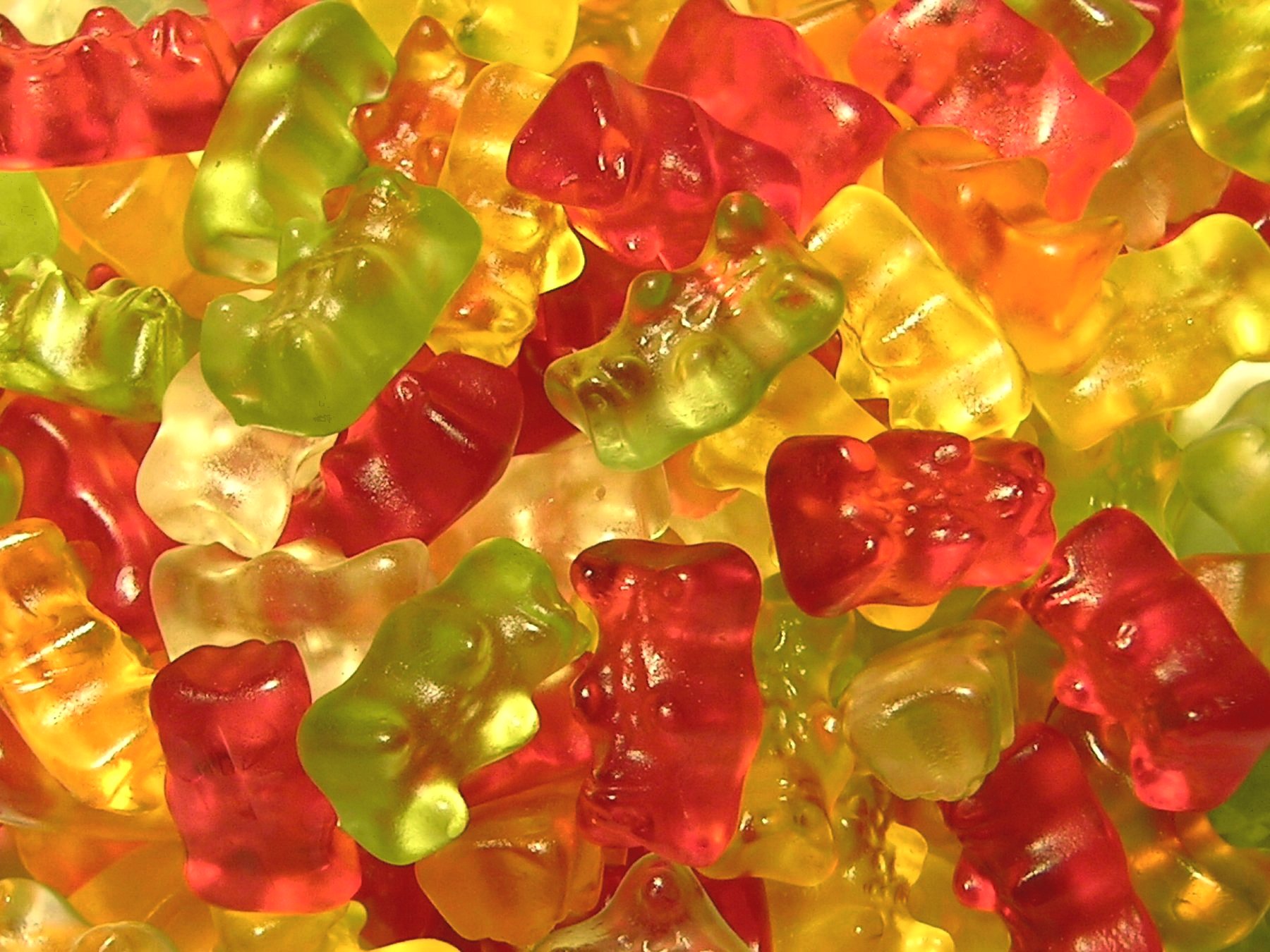 |
| gummi bears | photo: Pumbaa80 |
This particular client happened to keep their vitamins in the pantry. At one point, as we were talking about a number of the negative ingredients in various food items, I happened to grab one of the vitamin bottles. That vitamin bottle brings us to today's blog entry.
It's important for you to understand that nutrition applies not only to food; it applies to whatever you put in your mouth. If you eat it or ingest it in any way, you need to be aware of the ingredients that are in it; because if it goes into your mouth it gets into your system. This includes Food, medicine, vitamins, mouthwash, and toothpaste.
I am going to focus on one particular vitamin here but this information and thought process would apply to any supplement. First, I will start by saying I do not get the gummy-bears-as-vitamin concept. Sure it sounds good in theory, make vitamins fun and perhaps more people will take them. But vitamins are not candy and we should not be thinking of them as equivalents.
I am, admittedly, a huge proponent of food as medicine; however I do recognize the potential need for supplementation. My theory is supplement, replete, and stop (having corrected the diet along the way). Gummy vitamins/supplements fall very low on my list because all of that sticky, candy residue stays on your teeth and creates a perfect environment for bacterial growth.
I know, I know, some of you are going to complain that gummy candies are fun and I shouldn't be such a spoilsport. I get that they're tasty and the chewiness is fun. But every day? Not a good habit to get into in my book.
This particular vitamin is meant for adults. It's a calcium supplement with vitamin D3.
 |
| citracal |
On the plus side:
- Taking calcium with D3 is a good choice, the D helps the body to properly utilize the calcium and D3 is the better choice over D2.
- This supplement uses maqui berry (also known as Chilean winterberry) juice concentrate for color. A good choice because it's a fruit, however why go all the way to Chile? Why not use something like cherries or blackberries?
- The tricalcium phosphate is meant to provide the calcium supplementation. There is some debate about which forms of calcium are best, but leaving that out of the discussion this is not an unreasonable form.
- The very first ingredient is corn syrup which is essentially a sugar.
- The second ingredient is sucrose, also known as table sugar.
- If we look at the nutrition label we see that this product provides 7 grams of sugar for two gummies. That's as much sugar as a 3.5 ounce cheese danish (not that I recommend you eat the danish either).
- The artificial flavoring, Yellow #6 and Red #40 are definite negative ingredients.
Inert or neutral ingredients would be the water, sodium citrate, citric acid and pectin. These are used to make the form, or body, of the candy. The citric acid is for flavor, the pectin is what makes it gummy.
Overall that makes this not a great choice if you are looking to supplement your calcium. Considering the food as medicine concept, it is important to remember that if you eat right you can, in fact, support your health with food. One study from 2007 concluded that, "Calcium from dietary sources is associated with a shift in estrogen metabolism toward the active 16α-hydroxyl metabolic pathway and with greater BMD and thus may produce more favorable effects in bone health in postmenopausal women than will calcium from supplements."
Am I telling you not to take supplements? Absolutely not, that's a decision that you need to make for yourself, in combination with all of your health professionals. But I am strongly suggesting that instead of trying to supplement your calcium with candy you may want to consider adding foods that are high in calcium to your diet. Obviously this includes dairy, but for non dairy sources consider the following foods:
salmon, sardines, collard greens, spinach, turnip greens, okra, white beans, broccoli,
Brussels sprouts, and sesame seeds
Update: I just found this article stating calcium supplements may not be good for your heart, possibly even leading to cardiac arrest. Especially if you are a woman. The article points out that the body handles calcium very differently (and very well) when it comes from food sources. The rush of calcium to the system from supplements however may not be so beneficial. One of the study researchers, Dr. Ian Reid was quoted as saying,"A reassessment of the role of calcium supplements in osteoporosis management is warranted."
Want to connect with me for a Pantry Party? Send me an email.
Tuesday, May 22, 2012
another helping of meat glue?
 |
| meat glue | photo: the bovine |
Now we have "meat glue." Approved for human consumption by the FDA, allowed in Canada, and defended by the American Meat Institute it is made from something called transglutaminase. Used to put together pieces of meat, this powder can be used to make them look like a better cut of meat. It is also used to improve the texture of certain foods.
According to my research, transglutaminase, or meat glue, can be found in processed meat and other foods such as imitation crabmeat, fish products, and ham. However it's not just used for meat and can also be used in those food products where a gelling process is needed such as cheeses, jellies, yogurts, or frozen desserts. Meat glue is made utilizing Streptoverticillium mobaraense. What is S. mobaraense? Apparently it's a micro-organism that secretes transglutaminase. I'm not exactly clear on how the process works but that is the condensed version. Anyone who would like to dig through the more extensive explanation can find it at the American Society for Microbiology.
One complaint is that producers may be selling cheaper cuts of meat as a higher grade because it looks like something it's not. This is a valid point; it would definitely be a reason to get upset for being overcharged by a producer making cheap cuts of meat pieces look like a very expensive filet. Searching the web it appears that one area where this may happen is buffet restaurant settings. Those places where you can get as much filet mignon as you want for one low low price. Apparently there's a reason that price is so low; it may not be what you think it is. I want to point out, in all fairness, that there is a big kerfluffle about this issue but so far I have not found any legal cases where a producer or seller is being charged with this practice.
The health challenge is potentially different. The use of meat glue means that there could be a higher risk for bacterial contamination due to the increased number of surfaces. The more surfaces, the more area for bacteria to live. For those consumers who like their meat less well done this creates more risk. If the meat is not fully cooked (i.e., rare rather than well done) the joined parts may not reach a temperature capable of killing bacteria. With the new meat nutrition labeling requirement we should be able to see if transglutaminase is used on the meat at the grocery store. However, I have yet to see a single package that is using this new labeling.
Made by Ajinomoto, the same company that makes MSG, I would like to point to a few other health issues that concern me. The picture above is a packet of meat glue powder. It comes with a dose of maltodextrin and sodium caseinate. Maltodextrin is corn based so there is probably some GMO exposure as the use of organic corn would not make financial sense. Sodium caseinate is a milk protein and according to Truth In Labeling always has free glutamic acid making it a form of MSG. Additionally there is a possibility that the milk used to obtain the protein has rBGH in it, a hormone that makes cows give more milk. That's a whole blog post in and of itself, but the bottom line is you don't want to consume rBGH. The issue at hand is the possible reaction to corn or dairy that could be brought about by ingestion of meat in those with high level food sensitivities.
How to avoid meat glue? That appears to be a little trickier. I have been extra diligent about reading labels at the grocery store lately and have not seen transglutaminase listed on any ingredient labels. For meat products I believe the answer to be the purchase of organic meat or to buy from a trusted source. Kosher meat is not exempt from the use of meat glue as there is a kosher version available. Otherwise, until meat labeling actually happens, and unless they include transglutaminase on the label, you won't know. For other products I don't have an answer at the moment. Purchasing organic dairy, which I recommend anyway, is a good option. But until this product is properly labeled or removed from the food supply we may not know if we are ingesting it.
Monday, April 23, 2012
on my mind monday 4.23.12
 |
| news | photo: mconnors |
The mother who stood up to Monsanto in Argentina - Monsanto and their agrochemicals are not only problematic here in the US, but are having a hugely negative effect around the world. We often don't hear much about what is happening in other countries, sometimes leading us to believe we are the only ones fighting. Sofia Gatica plans to take on Monsanto not only in Argentina, but all across South America.
Canadian nutrition labels often misleading - This is, to put it bluntly, extremely frustrating. Calories, fat, sugar, were all potentially understated. And positive ingredients were possibly overstated. This means that some foods looked far healthier than they actually are. If you can't rely on the nutrition label to accurately relay the facts of the food it becomes even more difficult to make appropriate choices. Whole food still is the best way to go. However we live in a real world and that does include the influence of other foods. The label is one way to help you navigate prepared or processed foods. Unfortunately it appears that this was widespread across a wide variety of manufacturers. Kraft and Heinz were included, but so were companies such as Eden Organic, Kashi, and Amy's Kitchen. While the issue will hopefully be resolved, this situation does beg the question, what about the other locations where these companies sell their products. Like the United States.
Football fields to farms - Given how committed many schools are to their football teams this article caught my eye. Becoming partners in the community and helping to support agriculture in an area that was classified as a food desert, the college is making a difference. Even better they have added farming as part of the curriculum so their students can learn how to take care of the land. Knowledge that they will surely take with them when they graduate.
A week in the life of a food stylist - I've always been interested in food photography and food styling. I'm not very good at it and really appreciate the beautiful work of those who are. But the truth is sometimes a little sad because the food isn't always how it appears. "1:40pm: We got some sad mangos today. It happens. I had to give them a soak in water with a little bit of food coloring added to so that I could boost the color and "mango-ness" of them." Artificial colors...rats.
Fermentation - that's on my mind a lot as I make fermented foods such as kefir and fermented vegetables. I was really pleased to come across this BBC Radio 4 program on The Fermentation Revival which included some members of the UK chapters of the Weston A. Price Foundation, an organization which promotes traditional foods, as well as an interview with Sandor Katz.
Here's a video of Sandor Katz demonstrating making fermented saurkraut.
Two books on fermentation that have recently come out which need to go on my purchasing list:
Wardeh Harmon is a wonderful and knowledgeable traditional foods expert who I met at the Wise Traditions Conference 2011 in Dallas. It was great to get to spend a little bit of time with her at the conference and I've enjoyed following her online. The book looks great and is sure to be a wonderful addition to any traditional, nourishing foods kitchen.
If you're going to get into fermenting foods I strongly recommend that you purchase a set of pickle weights made by my friend Sandy Der. I bought mine two years ago and love using them. They're cute, functional, and work very well.
And if you want to get serious about fermenting foods you'll need to pay a visit to the nice folks at Cultures for Health, they've got just what you need to get started. My water kefir culture, also known as tibicos, came from them and is going strong. I'm thinking about separating some of them to try to make ginger beer which my husband used to drink as a kid and loves.
disclaimer: cmp.ly/5
Monday, April 9, 2012
on my mind monday 4.9.12
 |
| news | photo: mconnors |
World's Largest Rooftop Farm - Farming is changing and no is no longer only the traditional large acreage farm. Bringing fresh food to the city by utilizing spaces differently is a great idea.
Michigan calls heritage pigs invasive - It's beginning to look like BigAg is trying to control your food even further by potentially driving small heritage pig farmers out of business. Not content to allow these smaller farmers a share of the market they've found a way to class their pigs as part of an invasive species and to get the government to buy in to it. I hope that this is overturned...we need genetic diversity in all populations and I am a firm believer in preserving heritage breeds.
Food Adulteration - Food adulteration has been around for millenia. It is a sad truth that when someone makes money selling a food product the temptation to make more money by stretching the product is there. Some examples include:
- using cheaper oils like corn in premium, more desirable products such as olive oil
- honey, there is a huge adulteration of honey, often with high fructose corn syrup
- coffee can be stretched through the use of chicory, roasted corn, and even legumes
Because the adulterants are not listed on the label it can be difficult to know what you are getting. Sadly the Food Fraud Database is difficult to use and results are not clear. This once again highlights the need to know where your food is coming from and to, whenever possible, know your producer.
Gleaning - There appears to be a growing number of gleaning operations as a way to finish off the harvesting of fields with the food collected often going to food banks and soup kitchens. In many places that I have traveled in the US I am often startled to see food going to waste. A recent trip to Austin, TX revealed loquat trees bursting with fruits that were falling off the trees and rotting on the ground. Many homes in California have citrus trees and don't use them all, to the point where the food goes to waste. Farms often leave the last bit of produce because it's not worth the effort to go get it. Yet the ability to deliver fresh food to those in need is a priceless gift. It does however require labor to collect and distribute the food. Finding gleaning organizations where you can donate your extra produce or labor can be a little difficult to find. Here is one, you can also run a local search to look for more in your area.
This is a fascinating idea. Being still relatively new to Texas I find that I have a difficult time growing vegetables in my backyard (we seem to be doing okay with fruit trees so far which is great) and would love a concept like this where someone who knows the area could help. The video is from a few years ago but Your Backyard Farmer is apparently still going strong in the Portland, OR area.
To read:


I just heard about Make the Bread, Buy the Butter and am adding it to my get-and-read list. I'll be interested to see what the author recommends. It's true that there is a lot we can make but is it worth the effort and do we want to take the time to do it. Fermented foods are high on my list but I truly can't see myself making butter. I do make pickles and jams but not nearly as much as I used to (mostly because we don't go through them as fast now that the kids are grown). What I've always found fascinating is how many things can be made by hand that we've forgotten or lost the art of doing. One of my little cooking friends was astounded one day when they were visiting and we made pudding together. In their experience pudding always came from a box. Part of my interest in this book is not only about the time however. Some things I make, such as mayonaise, because I object to the added ingredients and homemade is a way to avoid that.
disclaimer: cmp.ly/5
Thursday, February 23, 2012
"natural" doesn't mean appetizing
 |
| dictionary | photo: Alex756 |
Castoreum
What's castoreum? I'm so glad you asked. It's a food additive that appears in many of our favorite foods but especially in ice cream. It is used particularly in the following flavors: vanilla, strawberry and raspberry.
Sounds yummy right? I mean who doesn't like vanilla. Or strawberries. Or raspberries for that matter. Well, unfortunately for us castoreum is not really made from vanilla, strawberries or raspberries. And because it's made from a "natural" ingredient it doesn't have to be listed as castoreum on the label either. It's listed as a "natural flavor." I'm not exactly sure why this is...after all, vanilla is vanilla. Why use something else and label it "natural flavor?" I'm sure I don't have the answer but I do know that according to a number of different sources, and the Code of Federal Regulations, castoreum is an ingredient which is allowed in our food.
What is it made from? I promise you, you will never look at things the same way again.
What to do about this unappetizing state of affairs?
Personally I'm planning on hauling out my ice cream maker to make my own this season. I'm pretty sure I can't buy castoreum at the grocery store, and even if I could I wouldn't. Nope, just real old fashioned vanilla and fresh fruits for us.
You will need an ice cream maker to make your own. I have an old-fashioned hand crank machine. The kids are no longer young enough to be tricked Tom Sawyer style into cranking it. That's okay I could use the upper arm exercise. I do however confess to occasionally dreaming about this Kitchen Aid Ice Cream Maker Attachment. But honestly I'm trying to cut down on the embarrassing number of appliances I have in my kitchen. If you don't have a Kitchen Aid, and don't mind cranking a little, this is a nice Donvier 1 quart which works well (we used to have one but it got lost in a move).
I love this recipe from David Lebovitz. Which reminds me, I need to run to Penzey's one of these days to get some vanilla beans. Here's another recipe for vanilla ice cream which is a little simpler if you don't want a custard style.
disclaimer: cmp.ly/5
Tuesday, February 21, 2012
how much caffeine do you need?
 |
| coffee | photo: seriousfun |
Seriously? I've said it before but I'll say it again. How much caffeine do people really think they need? And if they think they need that much they should be looking at what's going on in their lives to re-evaluate.
Sure caffeine can be enjoyable in moderation. But for many people it causes a whole host of issues. According to Trudy Scott, CNC, in her book, The Antianxiety Food Solution caffeine can cause not only physical symptoms such as an increased heart rate, tremors, and an inability to sleep, but is also linked to anxiety and panic disorders.
And yet manufacturers keep looking for new ways to deliver caffeine. We are being pressured to feel that we need to live life at a faster pace and to push ourselves beyond the limits of health. Caffeine is touted as the way to accomplish that need for more energy. Through marshmallows, gum and mints, popcorn, lollipops, beef jerky, lip balm, soap, stockings, hypercaffeinated shots and beverages (thankfully the caffeinated alcoholic over the counter drinks were banned),* and more it's everywhere.
I was stunned recently to read in a Good Housekeeping magazine the suggestion that instead of drinking a grande coffee one should simply have several espresso shots throughout the day to keep you pumped up. This is not a good idea. The potential to become seriously ill from all of this overconsumption of caffeine is a strong possibility. I am baffled to understand why we are being pushed so hard to consume a substance which, for many, is so bad for you. Again I want to state that for those who can consume coffee without ill effect it can be okay in moderation. However, moderate users are, I believe, far fewer than those who over-consume. And many do not do well with caffeine at all.
Be wary of these products, avoid them. The "energy" you think you gain comes at a price.
*I have not linked to these products as I do not wish to promote them. As of this writing however, they are all real products which are, sadly, easily available.
Friday, February 17, 2012
candy bars
%E2%80%94_101_%D0%B3_(50,5_%D0%B3_%D1%85_2)_.JPG) |
| snickers candy bar | photo: FightinG FalcoN |
I'm not convinced they do. Let's remember, their job is to sell candy. And they're going to try to convince you that their candy is a healthier choice than that of another brand. But whatever they say, and whatever they do, the bottom line is that they need you to buy their candy.
These super-sized candy bars are a problem. A king-sized snickers bar is supposedly three servings, each one containing 170 calories, 8 grams of fat and 18 grams of sugar. Eat the whole thing and you are getting a whopping 510 calories, 24 grams of fat and 54 grams of sugar. Not a good thing.
It's pretty much a given that we are programmed to finish our food. I'm guessing that the vast majority of people who open a king-size candy bar wind up finishing the whole thing. In that regard downsizing could be a good thing. If Mars limits their candy bars to be no more than 250 calories (regardless of how many servings) that's less than half of what king-size candy bar consumers are currently getting.
Before we get all excited about that, however, we have to look at the ingredient list of a snickers bar:
- Milk chocolate (sugar, cocoa butter, chocolate, lactose, skim milk, milkfat, soy lecithin, artificial flavor), peanuts, corn syrup, sugar, skim milk, butter, milkfat, vegetable oil (partially hydrogenated soybean and/or hydrogenated palm kernel oil), lactose, salt, egg whites, artificial flavor
Next we look at the soy lecithin, soybean oil, and corn syrup. These are, in all likelihood, from genetically modified crops. Those of you who have been reading the blog for a while know that I am vigorously opposed to the use of GMO's in our food. Unfortunately the government does not believe that consumers have the right to know what's in their food and does not require manufacturers to label the source. Better to avoid them to the best of your ability.
Then there's the artificial flavor. We don't need that, it's not good for us, and we shouldn't be eating it.
So while Mars claims to have a "broad based commitment to health and nutrition" the answer is, not really.
Monday, January 2, 2012
you get your antibiotics where?
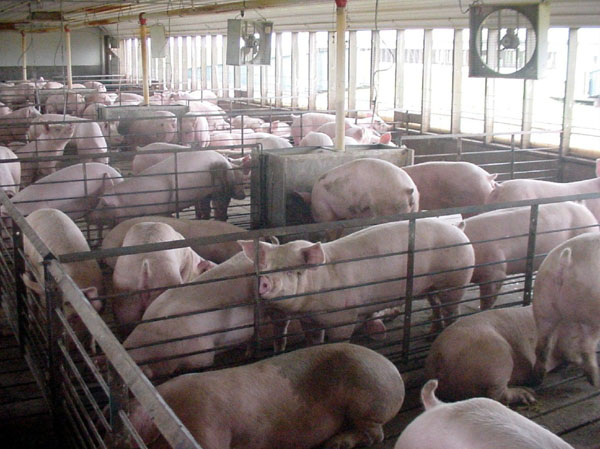 |
| confined feeding lot - pigs | photo: Matthias M. |
It is a disturbing fact that 70% of the antibiotic use in this country is used by the agriculture industry for food animals. Not because the animals are already sick, but to keep them from getting sick due to the way they are raised; in unhealthy, high intensity settings. Unfortunately this means that when you consume conventionally raised animal products, meat, dairy, and eggs, you are getting a dose of antibiotics. Just a dose, not a full course.
As many of you know, when you are prescribed antibiotics by your doctor it is important that you finish the course. This is to make sure that all of the negative bacteria that you are trying to wipe out don't survive and learn to become resistant. Repeated minor doses of antibiotics teach bacteria how to grow stronger against them. Emerging evidence indicates that this overuse of antibiotics is behind the increase of antibiotic resistant bacteria such as MRSA.
According to information about the FDA found at the Natural Resources Defense Council (NRDC), "The agency has known for more than 30 years that mixing human antibiotics into animal feed poses a risk to human health. It first confirmed the connection back in 1977." They have filed a lawsuit in conjunction with the Center for Science in the Public Interest (CSPI), Food Animal Concerns Trust (FACT), Public Citizen, and Union of Concerned Scientists (UCS), to try to get the FDA to follow through on it's own recommendations.
This is a situation that bears watching. We can only hope that the FDA will come to it's senses and follow the lead of the European Union which banned the use of antibiotics for growth purposes as far back as 2006. Until such time as this situation is corrected the only way to avoid ingesting animal products with antibiotics in them is to purchase organic (which is legislated to be antibiotic free) or you can try natural. The "natural" food label is not regulated or legislated however many manufacturers of products bearing this label do share on the packaging that they do not use antibiotics, hormones and preservatives. Read the label.
Friday, June 17, 2011
gotta get grapes
 |
| Concord Grapes | photo: grongar |
My frustration? NOT ONE SINGLE jar of grape jelly at the grocery store came without HFCS. Several even had HFCS as the number one ingredient. Seriously? That number one ingredient means that the majority of the jelly isn't even grapes, it's HFCS. That is insane. First of all grape jelly is incredible easy to make. Grapes are very high in pectin. Throw them together with a little water, the right amount of sugar, heat to the correct temperature and voila! Grape jelly. Even more upsetting to me is the fact that many of the grape jellies at the grocery store come with artificial flavorings. I'm not exactly sure why as to my mind grapes have a pretty distinctive taste all their own.
Needless to say I did not buy any grape jelly (luckily she also likes orange marmalade so that's what she got) and I'm going to have to work a little harder to find a good source of either muscadines or concord grapes to start making my own jelly again.
For those who have access to good grapes for jelly making here's a great recipe from the book Preserving Memories: Growing Up in My Mother's Kitchen
 . In the interest of full disclosure I'll tell you that this book was written by my mom. I'm not recommending it because she wrote it (honestly). It really is one of my favorite canning/preserving books and my first go-to when I'm looking to make something. To get all of the great commentary, hints and tips you'll have to get the book, but here's the recipe:
Grape Jelly
10 C. or more Concord grapes (approximately 8 lbs.)
1 apple (optional)
2 C. water
Sugar
- Wash the Concord grapes.
- Cut the apple into quarters -- peel, core, and all -- then chop coarsely. Set aside.
- Put a couple of cups of grapes int a large stainless-steel pot, then crush them with a potato masher of the bottom of a clean glass jar. this provides a small amount of juice and prevents scorching.
- Add the water.
- Add the cut-up apple.
- Heat the fruit mixture slowly to the boiling point, reduce the heat, and simmer until the seeds come free from the pulp.
- Line a large colander with several layers of damp cotton cheesecloth. Set the colander over a large pot or bowl and carefully pour the grapes and liquid into it. Allow the free-run juice to drip through the cheesecloth. You may also use a chinois or jelly bag. Do not press down on the fruit.
- Measure the free-run juice. Process into jelly 4 cups of juice at a time - a smaller batch means the jell point is reached more quickly, resulting in better flavor.
- Taste a little bit of the juice. For every 1 cup of reasonably sweet grape juice, measure out 2/3 cup of sugar. If you used a greater percentage of under-ripe grapes and the juice is on the tart side, you can use 3 or 3 1/2 cups of sugar to 4 cups of juice.
- Bring juice to a boil then add the sugar. Boil to the jell point.
- Fill and process prepared jars.
Monday, December 20, 2010
what's in your water?
 |
| Water | Abhijit Tembhekar | Wikimedia Commons |
I was horrified when the pediatrician told my daughter that she needed to add more water to her diet, suggesting that she start drinking Propel. My daughter was thrilled and turned to me with a gleeful look on her face that faded when she saw my expression.
I am continually amazed at how manipulated we are by manufacturers. There is no other way to say this other than to just say it. Water is water period end of story. Why are they trying to fancy it up with all sorts of chemical additives for color and flavor, and why are they adding preservatives. Preservatives? What's in water than needs preserving?
Are many of us dehydrated? I believe the answer is yes. Do we need 8 glasses of water per day? That depends on what your bio-individual needs are. If you live in a climate that causes you to lose a lot of moisture or you exercise a lot or you don't eat high moisture foods and take in other liquids it all adds up. However I also believe that by the time we feel thirsty we are generally more dehydrated than we realize.
Dehydration is known to cause headaches, can lead to worsening asthma, hypertension and other health issues. Proper hydration is also key to helping the body eliminate toxins. That is why it's important to make sure that we are getting enough fluids to stay well hydrated. Breathing, digesting, sweating, and excreting all cause us to lose fluids.
If what we need is to stay well hydrated what we do not need is all of the extra chemicals that come with most packaged water drinks. Not only that if you look at the label you will see that they are misleading you by claiming to only have a certain number of calories. What you need to remember is to look at the label and see how many calories are in a serving and how many servings are in a bottle. One bottle of VitaminWater has 50 calories and 13g of sugar per serving. The label purports to contain 2.5 servings per bottle. Most people I know drink the whole bottle; that means 125 calories and over 32g of sugar per bottle. And those are empty calories. Providing no nutritional value and not filling you up at all.
Let me give you a hint, there are no calories in water. If you are looking for a little flavor in your water consider adding a slice of fresh fruit, a squeeze of citrus, a slice of cucumber, or a sprig of mint. These all add a lot of flavor without adding sugar, calories, "natural flavors", or other chemicals. Just drink water. It's what your body needs.
I am continually amazed at how manipulated we are by manufacturers. There is no other way to say this other than to just say it. Water is water period end of story. Why are they trying to fancy it up with all sorts of chemical additives for color and flavor, and why are they adding preservatives. Preservatives? What's in water than needs preserving?
Are many of us dehydrated? I believe the answer is yes. Do we need 8 glasses of water per day? That depends on what your bio-individual needs are. If you live in a climate that causes you to lose a lot of moisture or you exercise a lot or you don't eat high moisture foods and take in other liquids it all adds up. However I also believe that by the time we feel thirsty we are generally more dehydrated than we realize.
Dehydration is known to cause headaches, can lead to worsening asthma, hypertension and other health issues. Proper hydration is also key to helping the body eliminate toxins. That is why it's important to make sure that we are getting enough fluids to stay well hydrated. Breathing, digesting, sweating, and excreting all cause us to lose fluids.
If what we need is to stay well hydrated what we do not need is all of the extra chemicals that come with most packaged water drinks. Not only that if you look at the label you will see that they are misleading you by claiming to only have a certain number of calories. What you need to remember is to look at the label and see how many calories are in a serving and how many servings are in a bottle. One bottle of VitaminWater has 50 calories and 13g of sugar per serving. The label purports to contain 2.5 servings per bottle. Most people I know drink the whole bottle; that means 125 calories and over 32g of sugar per bottle. And those are empty calories. Providing no nutritional value and not filling you up at all.
Let me give you a hint, there are no calories in water. If you are looking for a little flavor in your water consider adding a slice of fresh fruit, a squeeze of citrus, a slice of cucumber, or a sprig of mint. These all add a lot of flavor without adding sugar, calories, "natural flavors", or other chemicals. Just drink water. It's what your body needs.
Thursday, September 9, 2010
gluten-free in an rv

Now that summer is over and the kids are back in school, it's time to get back to the regular routine while daydreaming of summer vacations. My friend Tina recently shared the story of her family and their ability to take a long-awaited cross-country family vacation. It's wonderful that they were able to achieve this dream, and a definite testament to how much advance preparation they had to do to be able to make this trip a reality.
Traveling gluten-free and dairy-free definitely changes what you do and how you do it. Our family has dreamed of a cross-country trip for years. Those dreams were challenged by the fact that my husband is very sensitive to gluten and dairy... even a crumb or drop can leave him with asthma and GI problems for weeks. We decided that the best way to travel would be to take our kitchen with us and do most of our own cooking. With the help of a friend who lent us their RV we were able to do finally make our dream come true and take this trip.
Starting from CT, going across the northern states, down California, then returning via the southern states and up the eastern coast it was a wonderful adventure. We were so happy our dream could become a reality and we had a great time. However we definitely had to consider how we would feed my gluten and dairy-free husband along the way.
Carefully considering our menus we pre-stocked the kitchen with gluten and dairy-free staples we knew we could have a hard time finding on our travels across the country. Not every area of the country offers a wide range of dietary choices and not every store has things like:
rice/potato pastas
gluten-free pretzels
gluten-free bread crumbs
gluten-free bread
dairy-free buttery spread
gluten-free chicken broths
gluten-free, dairy-free cold cuts
gluten-dairy free brownie mix
gluten-dairy free cake mix (we had some birthdays to celebrate along the way)
corned beef without anything added in (in the midwest a lot of stores only sold corned beef with everything already added in and we couldn't trust it)
Our dinner meals were usually a meat (chicken, steak, pork, burger), sometimes breaded with veggies or a stir-fry with brown rice.
One family favorite is a breakfast that we usually have in the winter before spending the day snowmobiling out in the cold. It's tasty, filling, and an easy on-the-road breakfast.
The Berge's Hash and Eggs
Can of corned beef (plain, no potatoes added)
4 potatoes (or as many as you feel is adequate for the # of people you have), diced
3-4 T. olive oil
1 onion, diced
ground pepper, to taste
onion powder (optional)
eggs (1 or 2 per person)
Put the onion in a frying pan with a 1 T. oil until softened.
Add the potatoes, more oil if needed, and cook until potatoes start getting soft.
Add the corned beef and brown it all (no need to add salt since the corned beef has it already)
Season with pepper and more onion powder if needed
When the hash is browned remove from the pan and set aside
Cook the eggs (we like sunny side up)
Place eggs on top of the hash and serve
It's so delicious and for lunch you can get by with just a piece of fruit and some nuts or other light meal... works great when you're travelling around for the day.
My husband's diet influenced us in other ways as well. We ate "out" at a restaurant only twice during the five weeks we were on the road. Before being seated we would ask our server lots of questions about whether they could accomodate us; if they said they could, we would try it. However there was always that feeling of playing "Russian Roulette" with his GI system since you're never really "sure" that the chef and wait person "get it."
While we were on the road we would seek out health food stores and would be in heaven if we found a gluten-free bakery or somewhere with treats (we were on vacation after all!). We were surprised to find that out west people do not know what italian ices are. There's a market to be tapped there, for sure!
We talked a lot about how it would be great if there were some quick, healthy drive-thru type places where gluten and dairy free people could find food. Unfortunately it doesn't exist, even the salads are usually tainted with croutons and/or cheese. It was eye opening how much harder it is to travel when you don't fit into the majority.
Travelling with food allergies can be a great experience if you plan ahead on how to find or make foods that work. Yes, it would be nice to be able to eat out a little more often while on vacation (food is half the fun of vacation!) but we were able to manage. The good news is that the States seem to be getting more aware of food allergies and it is definitely easier to find gluten-free and dairy-free foods than it was 10 years ago.
photo courtesy of: Bill Ward's Brickpile
Wednesday, June 23, 2010
carcinogenic strawberries
A while back I wrote a post about the proposed use of Methyl Iodide as a pesticide for strawberry crops.
The original post stated that the comment period would end on June 14. That has been extended to June 29.
If you have not yet made your feelings about this issue known I urge you to take a moment and do so. The United Farm Workers has a quick and easy way for you to participate on their website.
As I stated previously, this is a known carcinogen, one used in laboratories for it's reliable ability to create tumors. Many scientists, including Nobel winners, have urged that this never be used. Yet California is considering going ahead with it. The potential for damage and illness is huge. Not only those who eat those strawberries, but those who work with the crops, those who harvest and or package those crops, those who live near the fields, all will be affected. This is truly horrifying. Please take just a moment of your time and vote for clean food by stating your objection to the use of Methyl Iodide.
The original post stated that the comment period would end on June 14. That has been extended to June 29.
If you have not yet made your feelings about this issue known I urge you to take a moment and do so. The United Farm Workers has a quick and easy way for you to participate on their website.
As I stated previously, this is a known carcinogen, one used in laboratories for it's reliable ability to create tumors. Many scientists, including Nobel winners, have urged that this never be used. Yet California is considering going ahead with it. The potential for damage and illness is huge. Not only those who eat those strawberries, but those who work with the crops, those who harvest and or package those crops, those who live near the fields, all will be affected. This is truly horrifying. Please take just a moment of your time and vote for clean food by stating your objection to the use of Methyl Iodide.
Subscribe to:
Posts (Atom)