Showing posts with label dairy. Show all posts

Monday, November 5, 2012

on my mind monday 11.5.12

It's never the same two weeks in a row.  A collection of what I find interesting in the world of food, nutrition, and holistic health.  Here's what's on my mind.

Jump rope for health - With the colder weather coming it may not be as comfortable to exercise outdoors.  If you've got a good clear space in your home consider trying jumping rope.  I'm impressed by how much exercise you get in just a short period of time (believe me, it's a workout).  This video showed me a couple of new steps which was pretty cool.

Cows making human milk - this is one of the most disturbing GMO developments I think I've seen yet.  Cows that have been genetically engineered to produce human milk.  If you can't drink cow's milk, don't drink it.  Let's not try to cash in on the dairy industry by making cows give human milk.  One of the disturbing things is that the baby cow who has been created from this experiment has no tail.  Scientists are claiming that this is unrelated to their genetic manipulation but I'm not convinced.  I fervently hope that this experiment is shut down.

New Season's CEO leaving to create a chain of healthy convenience stores - this is an idea that has been needed for a long time.  Huge numbers of people are looking for this sort of option, especially when they are on the go with errands or if they are traveling.  The biggest issue, as I see it, will be getting all those people who say they want this to actually utilize it once it happens.  I'm excited about this idea and hope it grows.

Chipotle signs fair food agreement - Sometimes we get so wrapped up in the environmentally-friendly-chemically-clean-non-gmo-organic food issues that we forget to think about the human cost, the ethical side of food.  Some of this was highlighted in the book Tomatoland by Barry Estabrook, but mostly, as consumers, we never see this side of our food.  This agreement is only a small part of what is needed, but it is a step in the right direction.

Unreal Candy - I'm not a big candy person, although I admit to liking some as a treat now and then.  Most candy is loaded with garbage (artificial colors, preservatives, GMOs, etc) which goes a long way toward keeping me away from it.  Now it appears there's a company that's created a candy bar which is a little bit better for you in that it has no garbage ingredients.  They do use agave nectar which, admittedly, I'm not a fan of, but overall their ingredient list is pretty amazing.  If you plan to try it keep in mind it's still sugar and still something that needs to be a treat, eaten in moderation.

As long-time readers know, I am a huge proponent of finding ways to cut down on food waste.  This video is a reminder about just how much we throw out in this country with a lot of thoughtful commentary on how we can reduce our food waste.

Wednesday, October 3, 2012

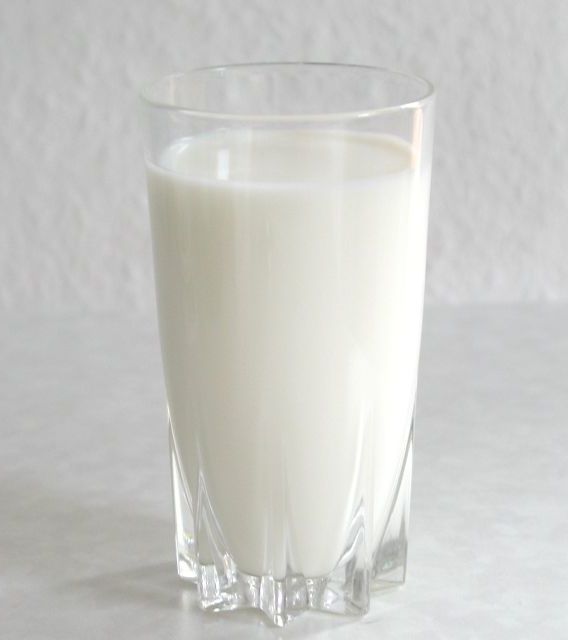
but i need milk for calcium, don't i?

I have some clients who need to avoid dairy products.  Invariably when they find this out their first question is "Don't I have to drink milk to get calcium?" or "But how will I get my calcium?"

Calcium is important in the diet, not only for healthy bones and teeth, but also to support nerve and muscle health as well as for blood clotting.  However it doesn't just come from cows (or goats or sheep or camels or any other milk giving mammal).

Most people think calcium is synonymous with milk.  They've been so sold by the Milk Producers Federation that they feel they've gotta "get milk."  However, milk, and other dairy products, are not the only way to add calcium to the diet.

For those who can't drink milk there are alternatives such as almond, soy, oat, hemp, and rice.  And while the calcium and protein content of alternative milks vary (and is mostly added) it's important to remember that there are ways to get calcium without drinking milk, eating other dairy products, or drinking alternative milks.

As a means of comparison, whole milk provides 110 mg of calcium per 100 gram serving.

Other sources of calcium include:

sesame seeds - 989 mg per 100 g
sardines - 382 mg per 100 g
almonds - 266 mg per 100 g
flax seeds - 255 mg per 100 g
turnip greens - 190 mg per 100 g
brazil nuts - 160 mg per 100 g
collard greens - 140 mg per 100 g
spinach - 99 mg per 100 g


photo: Stefan Kühn

Tuesday, July 17, 2012

unseen labels - what's in your fast food

A friend recently posted this picture on their Facebook page.    And I've heard a number of people talking about the "hand-spun" shakes at Chick Fil-A.  I believe hand-spun means nothing more than using an old-fashioned, metal wand device, rather than a blender.  However, with the words home-spun in there it sounds wholesome.  And the picture, of course, makes it look tempting and delicious with a large peach right up front.  The limited time only is, I suppose, there to make you feel that if you don't get yours now you've missed out.

Unfortunately the ingredients tell a different story:

Icedream (whole milk, sugar, nonfat dry milk, cream, corn syrup, natural and artificial flavors, dried whole eggs, cornstarch, mono and diglycerides, disodium phosphate, cellulose gum, carrageenan, sodium phosphate, guar gum, sodium citrate, annatto and caramel colors, artificial color [Yellow 5&6]), peaches, sugar, dextrose, water, citric acid, pectin (pectin, sodium diphosphate, calcium orthophosphate), lemon juice concentrate, salt, turmeric extract (propylene glycol, extractives of turmeric), natural flavor, ascorbic acid, annatto, milkshake base (whole milk, sugar, cream, whey powder (milk), nonfat dry milk, artificial flavor, disodium phosphate, mono and diglycerides, tetrasodium pyrophosphate, guar gum, cellulose gum, carrageenan), whipped cream (cream, milk, sugar, sorbitol, nonfat milk solids, artificial flavor, mono and diglycerides, carrageenan, polysorbate 80, mixed tocopherols [vitamin E] to protect flavor, propellant: nitrous oxide), cherry.

Rather than a whole food peach milkshake we have a host of chemicals which include artificial flavors (appearing three times), colors, preservatives and other unhealthy ingredients.

Considering that a traditional peach milkshake has ice cream (choose organic, whole fat and chemical free), milk (again organic and whole fat), and peaches (organic - to avoid pesticides), it's somewhat ridiculous that this lab-experiment-gone-wrong is being promoted as a tasty treat.

My suggestion?  Skip theirs and make your own.


Monday, November 28, 2011

do you know what's in your food?

image from: gmo-journal.com
I've been writing more about Genetically Modified (GM - also referred to as GMO or GE) foods lately.  Part of it is because the problem seems to be getting worse.  I am concerned that there is still no labeling required in this country.  According to this article from the San Francisco Chronicle 93 percent of Americans polled want their food labeled.  They want the right to know.  But it's still not happening.  Why?  Because it's bad for business.

I'm reminded of the fight over Recombinant Bovine Growth Hormone (rBGH) when the dairy industry fought like mad to stop farmers from labeling their milk as free of this harmful additive hormone which is not healthy for cows or humans.  The farmers prevailed in that they were allowed to label their products as being rBGH-free but were forced to put a statement on their product that there was no difference between dairy from cows treated with or without rBGH.  Science has since proved them wrong and we now know that rBGH increases Insulin Growth Factor 1 (IGF-1), decreases nutrition in the milk, increases mastitis in the cows (requiring antibiotics which we ingest because they don't stop milking the cows while they are giving them antibiotics), and decreased fertility in cows.  That's obviously a problem for the cows, if they can't be bred, or "freshened" in dairy parlance, they can't be milked and therefore are no longer useful.  If  rBGH causes infertility in cows (apparently studies have showed a reduction of as much as 40%), what does it do to the people who drink the milk?

We are the only industrialized nation, to my knowledge, that still allows this harmful chemical in our food.  Europe, Canada, Australia, and Japan, among others, have all banned it's use.  Purchasing dairy products labeled rBGH-free or organic is the only way to avoid this chemical.

But with GM foods it's a completely different thing.  Yes, purchasing organic is one way to avoid it, but no GM foods are labeled, not everything is available organic, and it's not financially feasible to purchase everything organic (at least not in our house).  You would be amazed at how far GM products have crept into our food supply.  We deserve the right to know what is in our food.  I believe that corporate interests and profits should not supersede the right to choose clean food.

I also wonder what it says when the employees of the company that makes most of the GM foods, Monsanto, won't eat it, demanding GM free foods in their cafeteria?  If they won't eat it why should you?

California is, potentially, about to become the first state to require mandatory GM labeling.  With 80 percent of those polled in California supporting this initiative I am hopeful that they will win.  Striking a blow against these modified foods and their manufacturers.  I'm also hopeful that this will be the first of a steamroller effect across the country.

To stay informed about this issue you can follow along on the blog as well as at Organic Consumers.

Saturday, August 6, 2011

food rights

milk | photo: wax115
In case you missed it on the news, there was a raid of a store in California that was selling raw milk.  The owner and two suppliers were arrested and an unknown amount of raw milk was dumped.

As I understand it this was a store that essentially functioned as a buying club.  Consumers were required to be members before they could buy.  I will grant that the government claims the raid was in part because the store owner did not have the proper permits.  The owner apparently thought that because his operation was a private buying club not a public place of sale he did not need one.

However leaving aside that permitting misunderstanding, this is not the first time that there have been raids against raw milk sellers; last May there was a raid in Pennsylvania and there have been many others.  For some reason it appears that raw milk and it's advocates have been targeted and are being dealt with by force.

I find this sort of thing disturbing for a number of reasons:

1.  According to the Weston A. Price Foundation's Real Milk Campaign there are lots of health benefits from drinking raw milk.  If the government feels that raw milk is so much of a problem then create legislation for it.  But honestly Diet Coke is horrific to our health and there is no legislation there.  This over-reaching attack on one product seems excessive and misplaced;

2.  Those who want to drink raw milk should have access to it, they are aware of the risks and most of them are dealing with farmers that they trust to run a clean operation; those who don't want to drink raw milk don't have to.  I'm not sure how this is considered a problem, raw milk is always clearly labeled and is only sold to those who specifically search it out;

3.  The raids frequently go after raw milk producers or stores where they sell raw milk yet I am easily able to buy raw milk cheese and butter at my local big-chain grocery store.  In order to make these products the producer has to start with a raw milk product.  If the raw milk cheese producers can get approval to make and sell their product why not the base product?

I find all of this attention toward raw milk producers confusing in part because in other areas the governmental agencies in charge are clearly not doing their job.  In the recent ground turkey recall it has come to light that the USDA suspected a problem two weeks before it actually forced the recall.  The egg recall from last summer revealed that the owner had years of health and environmental violations.  And the peanut butter recall from two years ago showed that the company had serious health violations but was never shut down.  So major manufacturers appear to get a nod-and-a-wink while farmers and consumers are arrested and subjected to armed arrest?

I feel that those who want to eat a certain way are being denied their rights.  Going back to point number one above, smoking kills yet we still sell cigarettes, alcoholism and drunk driving are a big problem yet we still sell alcohol.  I don't see raw milk as being harmful or costly to society yet it's being portrayed as this over-reaching evil product that kills.  I'm truly puzzled by this attitude.  Is it because cigarettes and alcohol and junk food generate big profits and those industries can afford to fund political legislators while small farmers and small groups of consumers can't?  And why does it seem that the efforts of those agencies which are supposed to be protecting our food supply are being unevenly thrown against a minority population that wants nothing more than what they consider to be a healthy, nutritious food?  I know many people have started to buy cow shares in order to preserve their right to have access to raw milk but even that appears to be under assault.

I have come to believe that raw milk is the next dairy battle.  Although I remember drinking it when I was a kid I don't recall it being popular or easily accessible and I certainly don't remember news headlines about it.  Now that it is more available and more in demand it has suddenly become a problem?

When organic milk became more publicized for it's lack of hormones, antibiotics and pesticides the dairy industry pushed back hard and tried to block labeling that stated milk was "rBGH free" because this would cut into their profits (note: rBHG is sometimes referred to as rBST).  They did win a legislative ruling that milk which was labeled rBGH free also had to carry a statement that there was no difference between milk with and without the hormone.  This was later shown to be not true with one study reporting rBGH milk had "Fat levels, particularly long chain saturated fatty acids incriminated in heart disease, are increased, while levels of a thyroid hormone enzyme are increased."  For many people the only way to ensure added-hormone free milk was to purchase organic which is legislated not to contain it.


I will make a side note here - just because a cow is organically raised does not mean that it is not still in some sort of a feedlot operation.  The organic label does not automatically ensure fat, happy, grass-fed cows regardless of the cute pictures (which is sad because milk from grass fed cows is better for you).  Organic simply means that cow is not fed GMO feed, not shot up with artificial hormones and not pumped up with antibiotics.  If you want grass-fed, free-ranging cows you need to either raise them yourself or get to know a farmer who raises their animals that way.


Now that manufacturers have lost the organic dairy war and more organic dairy products are arriving on the shelf regularly, the big producers are getting into the business themselves.  I'm sure much of this is profit driven.  If people are willing to pay more for organic dairy and you can't legislate it away then you might as well join in.  But raw dairy is different.  It doesn't travel well unless it's been turned into something like cheese or butter.  That means a shift back to local smaller scale farming.  I guess that's somehow seen as a problem.  

Saturday, April 2, 2011

yogurt

I've been seeing changes in yogurt in the grocery stores lately.  It used to be that yogurt was mostly a gelatinized "Swiss-style" fruit mixed in or on the bottom kind of product.  At least that's what was presented to us at the grocery store.  Then came those tubes followed by the drinkables.  Now we're getting back to the real thing and the choices for whole milk, organic, live culture yogurt are easily available.

Greek yogurt has come to the forefront.  Many people seem to prefer it even in the face of the higher cost.  Greek yogurt is higher in protein, almost 50% more according to the Berkeley Wellness Letter.  The whey is strained out giving it a thicker consistency and a longer shelf life.  When you strain out the whey you wind up with a product that is higher in fat and lower in calcium but also lower in lactose (the milk sugar that some people have trouble digesting).  So you have to decide what you want.

Of course what many people don't realize is that you can make a Greek style yogurt of your own very simply.  Take a 32 ounce container of whole milk, organic, live culture yogurt.  Place cheescloth (I use a coffee filter) into a colander.  Place the colander on top of a bowl and then dump the yogurt in.  Put the whole thing in the fridge overnight and in the morning you have a thicker, Greek style yogurt, and the whey which has strained out.  The whey is great for soaking beans or grains, it can be added to soups, and some people even drink it straight.  It's a little tart for me for that so if I have too much I usually feed it to the dogs, they consider it a great treat.

What to do with the thickened yogurt?  You can use it as a substitute for sour cream, you can add things to it to make a savory dip, mixed with a drop of stevia it makes a fabulous fresh fruit dip or you can eat it plain.  One of my favorite ways is to mix it with cottage cheese and a bunch of fresh vegetables, cucumbers, cherry tomatoes, chunks of sweet peppers add a pinch of sea salt and a grind of fresh pepper and you've got a tasty summer lunch.  Yogurt doesn't have to be used just for sweet things, it also makes a great savory dish.

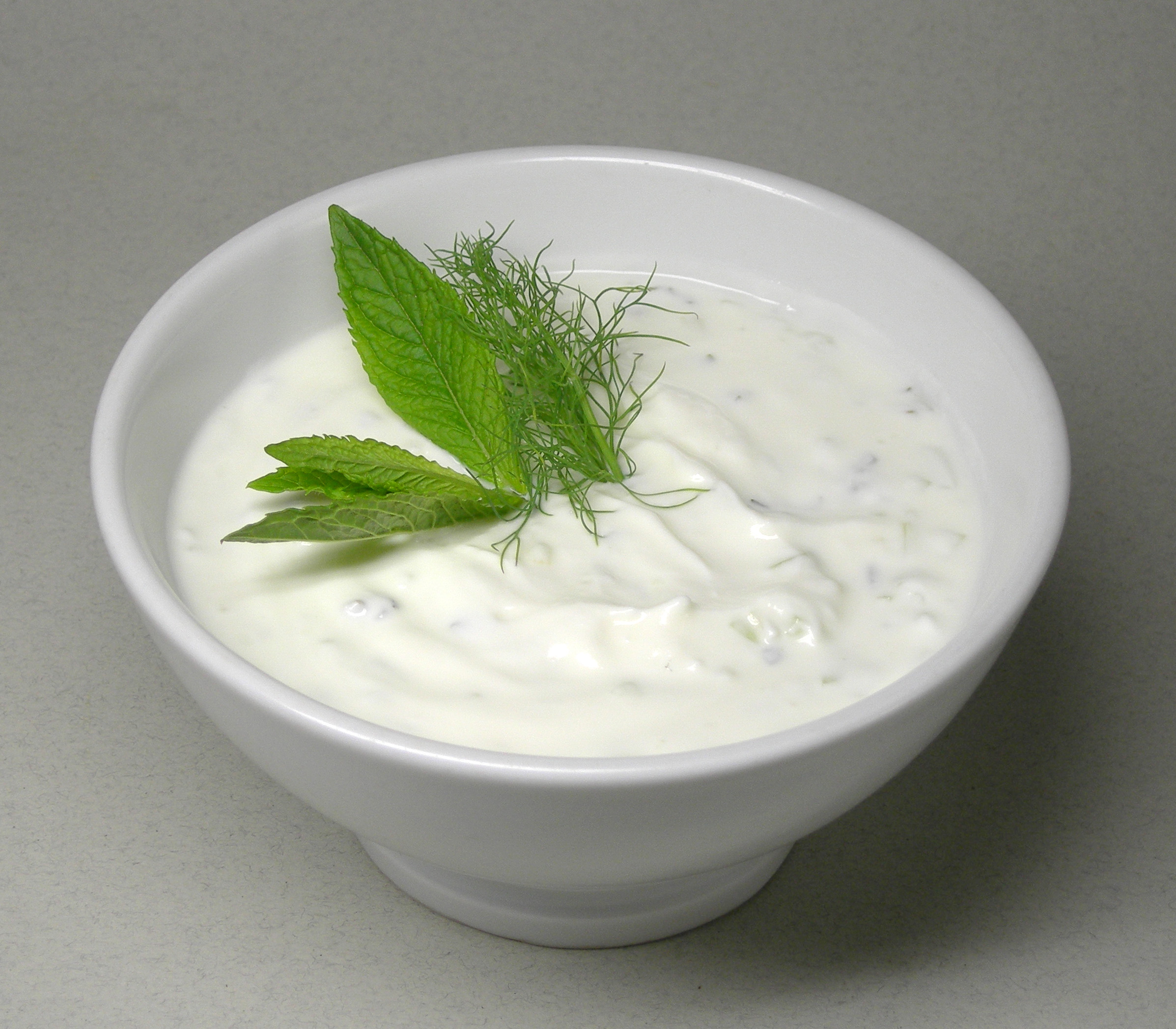
Many cultures have a yogurt dish of some kind mixed with different spices or foods to make a condiment.  For example in India there is a shredded cucumber yogurt dish with scallions, garlic, cumin and pepper that helps to cut the spicy heat of the cuisine called Raita.  A similar dish can be found in Greek cultures and is called Tzatziki; it's made with yogurt, cucumber, garlic and mint.  There's even a cold soup called Tarator from Bulgaria which has yogurt, cucumber, dill, garlic, walnuts, and oil, it makes a great starter for meal on a hot day.

The yogurt market appears to be growing by leaps and bounds.  A recent trip to the grocery store revealed coconut milk yogurt and soy milk yogurt (for those who can't have dairy), Bulgarian style, Australian style, and even Icelandic style.  As far as I can figure out the difference is primarily the type of bacteria used and perhaps how thick the yogurt is.

Also appearing more and more is kefir, a fermented yogurt that is drinkable.  The fermentation increases the probiotic activity of the yogurt and can be very healthy for you as long as the cultures are live.  Soon enough I expect that we'll start seeing bottled containers of lassi which is a similar fermented yogurt drink from India.

Whatever style or type of yogurt you are eating (or drinking) it is important to remember that you want the real stuff.  Live cultures, no added artificial ingredients, just good, healthy, probiotic, digestive supporting yogurt.

Saturday, September 11, 2010

raw milk befits


My friend Cindi asked: "I just found a farm down the street from me with raw milk and raw milk products. what does that mean? Is that better for you?"


The short answer is YES, raw milk is great. The proviso is that you need to be sure that your dairy is following good sanitation procedures and that they are testing for pathogens on a regular basis.


Health benefits:
  • One study from 2006 in England and shows that raw milk consumption substantially reduced allergies and asthma in children
  • When you pasteurize milk the heat process destroys a lot of enzymes and good bacteria in the milk. These are beneficial to our health and the only way we can get them is through raw dairy
  • Homogenizing milk forces the fat globules into small particles and prevents the cream from rising to the top. (Honestly in huge dairy business they skim the vast majority of the cream anyway to sell separately at a high price.) This process heat the milk for a second time and many folks feel it changes the flavor and the nutritional value
  • Because unheated milk has all the enzymes and bacteria (important for lactase to break down the milk sugar), many people who think they are lactose intolerant can actually drink raw milk without a problem


Nutrition:
  • Raw milk is noticeably higher in Vitamin C than pasteurized milk. A recent study in 2009 found that all of the DHA (dehydroascorbic acid) and 20% of the ascorbic acid disappeared due to processing
  • When milk is heated there is also a reduction in calcium bioavailability
  • Raw milk contains a lot of CLA (conjugated linoleic acid - an essential fatty acid which can help fight cancer)
  • More than half of the Vitamin D in raw milk is destroyed in processing which is why commercial milk is fortified


I'm going to be honest and tell you that there is a lot of controversy surrounding raw milk.  Lots of pressure comes from commercial dairy operations to force the FDA to shut down raw dairy farmers.  There are folks who are huge fans of raw milk and just as many who are opponents.  I actually find this interesting because there are some large commercial operations (such as Organic Valley) that are now selling raw cheese in the grocery stores.  Raw cheese has to come from raw milk.  So how are the small producers in the wrong?  But I digress...


As I stated above, you need to be sure that you can trust your farmer, that they are running a clean operation.  If you're comfortable with what they offer then raw milk can be a very healthy addition to your diet.


If you want more information check out:


A Campaign for Real (Raw) Milk
Real Raw Milk Facts
RawMilk.Org


source: http://journals.cambridge.org/action/displayAbstract?fromPage=online&aid=5129940, http://journals.cambridge.org/action/displayAbstract?fromPage=online&aid=4531412, http://livingawholelife.blogspot.com/2009/01/is-raw-milk-more-nutritious_16.html
photo courtesy of Nicholas Bullosa

Tuesday, April 13, 2010

making ghee

I was making ghee and happened to post about it to my Facebook Fan Page.  I like ghee because it has a wonderful sweet flavor and it's easy to use.  It lasts for a very long time at room temperature (a good thing here in Texas where butter left on the counter would turn liquid and then rancid in very short order).  Ghee is especially good for those with lactose intolerance as all of the milk-fat solids have been separated out.  At prices ranging from $7.00 to $13.00 per pound for ghee it is worth it to make your own.


Reading the Fan Page, Claire wrote in wondering what the difference was between ghee and clarified butter and if you scrape off the foam while you make it.  So here's a quick how-to:


Ghee is clarified butter. I use organic, unsalted butter, the better the quality of your butter the better flavor your ghee will have. 16 ounces of butter will yield approximately 12 ounces of ghee.  The most important thing to remember is that you need to watch it the entire time because it goes from done to burned in a snap.  


1. Put your unsalted butter into a thick bottom pan and cook on medium heat until it starts to boil.  
2. It will start to foam and crackle as the milk solids condense and the water boils off. If you want you can turn it down just a smidge at this point.  
3. I scrape off the milk solids foam because I save it as a treat for my dogs but most folks just leave them because they will eventually settle to the bottom of the pot.  
4. After approximately 15-20 minutes you will see that the ghee is a clear golden color and the dark brown milk solids are on the bottom of the pot.  This is where you need to be careful. You want to make sure all the ghee is clarified and you can see all the way to the bottom of the pot.  
5. Remove the ghee from the heat and strain. I use a fine mesh strainer lined with two paper coffee filters into a measuring cup.  
6. Let the ghee sit for about 10 minutes and then pour it into a clean glass jar to finish cooling. 


There is another method to make ghee using your oven. Although you can make more ghee at one time using this method it does take about two hours.


photo courtesy of Rainer Z | Wikimedia Commons

Monday, August 10, 2009

fizzy milk? one has to ask...why?

Apparently Coke is at it again. Not content to try to convince the public that their product is an herbal drink or pushing yet another fake chemical sweetener, they have now developed a new drink...fizzy milk. A combination of skim milk, sparkling water, fruit flavor and sugar. I haven't seen it but supposedly the milk will not curdle even though the product sits on the shelf unrefrigerated. I have to imagine that there are chemicals in there to keep it from spoiling. Add in 26g of sugar per 8oz bottle and it's not something that anyone should be drinking.

If you want to drink milk, drink milk, not an over-sugared, chemical-laden soft drink. Your best choices for drinks are, as always, water, water with lemon or lime, herbal teas, green tea, and nourishing broths.

Thursday, March 5, 2009

calcium comes from....

In a previous post I mentioned that kale is a good source of calcium.  This brought a couple of inquiries as to what other foods you could eat, aside from milk, to get your daily requirement of calcium.  And one question about how much calcium you actually need to take in on a regular daily basis.

Calcium is a mineral that is essential to our development. It is necessary for healthy bones and teeth which many people know. But it is also necessary to help with clotting factor, with muscle contractions and it is also used by your body to help with nerves and enzymes.  

There are a number of different types of calcium.  Calcium carbonate is the least expensive form and needs to be taken with food.  This is the form that you find in something like Tums antacid tablets.  Calcium citrate does not need to be taken with food and is better tolerated by people who suffer from gas or constipation.  It is the calcium supplement recommended for people who are taking proton-pump inhibitors. And there is calcium phosphate which is even less likely to cause intestinal distress than either calcium carbonate or calcium citrate.

I prefer to eat whole foods and try to avoid taking pills when I can.  So what do you eat to get calcium?  Lots of things, mostly dark, leafy greens.  Turnip greens, mustard greens, spinach, collard greens, kale, these are all great sources of calcium.    Blackstrap molasses is also a very good source of calcium.  And it exists in herbs such as basil, rosemary, thyme, even cinnamon.  According to the Eating 4 Health model that I studied, and now practice, spices are booster foods (as are things like nuts, sea vegetables, algae and nutritional yeast) and are an important part of our healthful nutrition.  So don't skimp on the spices, use them, enjoy them, taste them in your food.  A 2 tsp. serving of dried basil contains over 63 mg of calcium. 

According to the Linus Pauling Institute at the University of Oregon the Adequate Intake (AI) of calcium for adults aged 19-50 is 1,000 mg per day.  AI is a recommended value created when an RDA cannot be determined.  That may sound like a lot but if you balance your diet to include more leafy greens it's not that hard to do.  By way of example, one cup of 2% milk provides roughly 297 mg of calcium.  One cup of cooked spinach provides approximately 245 mg.    And,  here's a surprise, four tablespoons of sesame seeds actually provides more calcium than a cup of milk, at 351 mg.  Granted not many of us sit down to eat four tablespoons of sesame seeds at one go but if you use tahini to make a dressing or put it in other dishes, the amounts can add up quickly. This recipe for lemon tahini dressing is one of my favorites.

So eat your dark leafy greens, add spices to your food and boost your calcium.

Be well.

photo courtesy of commons.wikimedia.org/wiki/User:Nillerdk

Sunday, February 15, 2009

milk

Recently I had a conversation with my friend Kay about dairy products which mostly centered on our family's decision to purchase organic milk products. We choose to purchase organic milk, butter, cottage cheese, cream cheese, sour cream, and yogurt. Organic sliced cheese isn't easily available in our area so we have to bend there but we try to buy brands that at least promote that they do not use recombinant Bovine Growth Hormone (rBGH).

The conversation centered around the reasons for consuming organic dairy.  The first is that it supports organic farming which means no genetically modified organisms are fed to the cows, they are not given antibiotics or hormones and no pesticides are used in their environment.  Kay countered with the thought that it was cruel to not give antibiotics to a cow who has an infection.  That is certainly true and I would not expect a sick cow to be denied antibiotics.   In organic farming the practice is that if a cow requires antibiotics that animal is removed from the organic herd and treated.  The cow is then sold to a conventional dairy operation.  Having said that, research shows that organic cows, because they are not milked as heavily, suffer much less often from mastitis than conventional cows.  Canadian scientists (Canada has banned this substance) reported a 25% increased risk in mastitis in cows treated with rBGH.

I don't believe that drinking artificial hormones is good for anyone but I especially do not want to expose my daughters, to extra hormones if I can control it.  In an effort to make dairy operations more "efficient" Monsanto developed rBHG.  This tremendously increased production by as much as 50% and there are reports of  farms where cows need to be milked three times per day; this was touted as a great success.  But success comes with a price.  According to this article referencing the Journal of Reproductive Medicine twinning rates have tripled in this country since the introduction of rBGH/rBST. It makes you wonder what the continued genetic effect of these hormones will be on children that were conceived while their mothers consumed these hormones.

Leaving the hormone and chemical issues aside, organic farming methods are more humane for the cows.  Organic farms house their cows in less crowded conditions and the cows get more fresh air, and tend to be pastured, meaning they eat grass.  A recent European-wide, QLIF study, published in the Journal of Food of Science and Agriculture, showed that cows who eat grass produce milk that is higher in Conjugated Linoleic Acids (CLA's) which are beneficial for heart health and decreasing diabetes risk.  They also reported higher omega-3 levels in milk from organically raised cows.

Is organic dairy more expensive?  Yes.  It is worth it?  Absolutely.

If you cannot make your budget stretch to cover organic dairy I strongly urge you to not consume products tainted by rBGH.  This website will give you a list of producers in your state who are artificial hormone free.

photo courtesy of freephoto.com

Sunday, January 11, 2009

eggs

A friend of mine recently asked me a few questions about eggs and I thought I would share them here.

1.  Are brown eggs healthier than white eggs?

No.  The color of the eggshell depends on the breed of chicken.  There is even a breed of chicken called araucana that produces blue shells on their eggs.

2.  What is the difference between cage free and free range chickens?  And are the eggs from one better than the other?  

Egg-laying chickens are usually raised in small cages stacked high called battery caging.  The cages are not very big, leaving not enough room for the chickens to spread their wings.  Cage free means that the chickens are not in cages but are in a large building free to roam around and spread their wings.  Free-range means that the chickens have access to the outdoors.  Unfortunately many times free-range chickens are raised indoors and not granted access to the outdoors until they are several weeks old, at which point they don't go outside anyway.  Although the consumer-intent for free-range eggs is that the chickens are living happy, pastoral lives, running around in the outdoors scratching and eating bugs I don't believe this always happens.  For me this means that cage-free and free-range are probably similar treatments for the birds and either one is preferable to raising them in small confined cages.  If you are certain that the free-range eggs are indeed from chickens who are running freely outside then those would be the best eggs.

3.  Is it worth it to buy organic eggs?

Buying organic eggs means that the chickens have not been fed any animal by-products, given hormones, antibiotics or eaten any genetically modified feed.  Additionally organic eggs are always from free-range chickens.  There are studies showing the organically raised fruits and vegetables have more nutrients than their conventionally grown counterparts. I have not seen any studies showing that the same is true for organically raised eggs but I feel that it is probably true.

4.  Why do they advertise omega-3 eggs and how do they do that?

I believe producers are advertising omega-3 eggs because there is a current trend or fad for foods that are enhanced with omega-3, or alpha-linolenic acid (ALA).  Most of us don't get enough of this important essential fatty acid in our diet so producers think (and sadly they're mostly correct) that by advertising in big letters that their product contains ALA will convince many of us to buy it.  How do they get the omega-3's in there?  They feed the chickens a diet that is very high in flaxseeds which are one of the natural sources of ALA.  Walnuts and salmon are two other very good sources.  I personally feel that I would rather eat foods that are naturally high in omega-3's than pay extra for enhanced eggs.

5.  Does the color of the yolk mean anything?

Free-range chickens who are scratching and eating bugs tend to produce richer colored yolks because of all of the greens they are eating.  However it is possible to get a more golden color yolk by feeding corn or alfalfa to the chicken; chickens fed wheat will have pale colored yolks.   It is even possible to get an orange-y color to the yolks by feeding marigold petals to the chickens.  I believe advertisement of yolk color on the package simply means the producer is counting on the consumer to this that this means the egg is fresher or better when what they have done is feed the chicken a diet that changes the yolk color.

6.  Why do they advertise vegetarian-fed on the egg carton?

I don't really know, since chickens are not vegetarians.  I assume that it is to assure the consumer that the chickens are not being fed any animal by-products.  By natural inclination chickens would eat bugs, worms and other small animals but if they are not free-range they do not have access the these.

Hopefully this will help you make the best egg choice for your family.

photo courtesy of www.freedigitalphotos.net