Showing posts with label probiotics. Show all posts

Monday, July 30, 2012

on my mind monday 7.30.12

news | photo: mconnors
It's never the same two weeks in a row.  It's what I find interesting in the world of food, nutrition and holistic health.  Read what's on my mind.

Non-fermented probiotic milk and juice - As I've talked about before on this blog, fermented foods and probiotics are especially beneficial to our health.  This new functional food is not yet on the market so I can't get a look at a label to give you information about it.  However it does appear that alginate, a seaweed, is being used for the thickener.  For some this will be a problem. In the meantime, if you are interested in adding healthy probiotics to your diet, it is easy to add fermented dairy such as yogurt and kefir as well as fermented beverages such as kombucha, kvass, and water kefir.

NY trans-fat ban has cut consumption - Mayor Bloomberg received a lot of flack for this initiative back in 2008.  Not necessarily, as I understand it, that much from consumers (who were still somewhat confused by the whole trans-fat issue) but from food producers.  They all claimed that it wouldn't work, that the consumers would be unhappy because of the changes, and that it would be difficult to do.  Four years later it appears to be working.  Trans-fat consumption is down.  Although saturated fat consumption bumped up modestly, it was not nearly to the degree of reduction in trans-fats.  Although there are no specific numbers that I could find, given the link between trans-fats and cardiovascular disease, this reduction most likely also reduced cardiovascular disease levels.

Put the apples where the chips are - I have to admit that I give Mayor Bloomberg a lot of credit.  It's difficult to get people to change the way they think about food.  His latest campaign is to try changing the eye-level and check-out locations of foods, replacing the unhealthy options like chips and candy with whole foods like apples and bananas.  It's a voluntary pilot program being run in the Bronx, which apparently has an obesity rate of 70%.  While some people are against this proposal it does not seem to be drawing nearly the same ire as his soda ban.  I'm not sure that this will change the way people shop, but perhaps it will encourage them to reconsider the choices they are making.  I'm very sure that the grocery stores and the junk food manufacturers are not going to be happy with this as grocery placement is a science and this will potentially be a huge hit to their profitability.

And one more for Mayor Bloomberg who wants to put baby formula under lock and key at the hospital.  This is part of the Latch On Initiative which aims to convince more mothers to breast feed their babies.  I have written about breast feeding here and here; long time readers will know I am a big proponent of it.  Not only is breast feeding best for the health of your baby (they have reduced incidence of allergies and infections and increased support for gastrointestinal health) it's also good for mom helping to reduce her lifetime risk of developing ovarian and breast cancers.  While some women are unable to breast feed I am happy to see that they are at least encouraging it and hopefully more will choose to do so.

GMO apples - I've written about this a few times, mostly on my Facebook page.  The purpose of this apple is to keep it from oxidizing (turning brown) when it's cut open.  The company claims this will also prevent minor bruising from showing up.  As readers to this page will no doubt already have figured out, I am opposed to this.  First of all I do not believe we need to be producing any GM food.  Secondly I believe this is a really silly thing to GM as a squeeze of lemon juice accomplishes the same purpose without the need to interfere with the food.  The document showing where to write or call to share your opinion on this product is located here.

High Intensity Training for both weight loss and cardio - Many people don't like going to the gym or the amount of time they think they have to spend there in order to lose weight and/or get in shape.  High Intensity Training can significantly reduce your cardio time.  And for those who don't want to even go to the gym you can do it at home if you have an elipse machine, a treadmill, or even an X-iser. Here's a video of how to use an X-iser at home.


Not reading anything this week as I continue to work on the campaign to publish my book.  Yes (happy dance), a book. It's called The Pantry Principle:  learning the read the label and understand what's in your food.   This book not only talks about different categories of additives, but also covers the concepts of making different choices at the grocery store that will allow you feed yourself and your family better.  There are even a number of tasty and delicious recipes included in the book.  Currently I'm pre-selling The Pantry Principle in order to raise the funds I need to hire a Copy Editor and a Layout Design Artist.  I want to get this book off the presses and into your hands.  If you are interested in knowing what you are eating, in making healthier choices for yourself and your family, please contribute to my campaign and help me publish the book.


disclaimer:  cmp.ly/5

Tuesday, July 24, 2012

can probiotics make you sexier?

mice | photo: AleXXw
Probiotics have been gaining a lot of attention these days.  Mainstream science has begun to realize how important they are for  overall health and that good digestive function in required to maintain a healthy body state.

Probiotic therapy is beneficial in restoring intestinal flora when there has been an illness such as diarrhea or one that requires the use of antibiotics (which indiscriminately kill both good and bad bacteria).  Unfortunately our modern diet is not supportive of a strong, healthy gut which further depletes the amount and strength of available probiotic colonies.  Many people find it beneficial to add probiotics to their diet.  This can increase the availability of certain vitamins and minerals in the diet.  Probiotics can also support good bowel health, help with allergy symptoms, and provide other beneficial supports for our bodies.

Now there may be another reason to consider probiotics.  According to recent mouse studies there was an increase in "sexiness" among those mice who consumed higher levels of probiotics.  The original intent of the research team from the Massachusetts Institute of Technology was to study the effect of probiotics on the issue of obesity.  Surprisingly, an unexpected set of results emerged.  It turned out that the mice who ate probiotic yogurt had thicker fur (an indication of good health), the males had larger testes (as much as 15% heavier than the mice fed a "junk food" diet), females were impregnated faster, there were more pups, and females were better at weaning large litters.

All joking about "mouse swagger" aside the study has some interesting implications for humans as well.  We share approximately 99% of our DNA with mice, with 80% being identical (the rest have one-for-one matches).  This is why so many medical studies require the use of at least one rodent study.  According to Dr. Jorge Chavarro, a nutritional epidemiologist who has looked at the correlation between yogurt consumption and the quality of semen in men, there does appear to be a positive association.  Studies are on-going on the issue of probiotics and fertility.

While eating more live culture yogurt may not make you "sexier" in the conventional sense, it may well be a beneficial support for those seeking to get pregnant.  If nothing else it will certainly support better digestive function, and for that, it certainly makes sense to include more probiotics into your diet.

Send me an email to receive my free probiotic handout

Monday, July 2, 2012

on my mind monday 7.02.12

news | photo:  mconnors
It's never the same two weeks in a row.  A collection of what I find interesting in the world of food, nutrition, health and holistic living.  Read what's on my mind.

Tending the Body's Microbial Garden - It seems that mainstream science is beginning to realize that wholesale, repeated slaughter of our intestinal flora may not be such a good thing. Holistic practitioners have been saying for decades that supporting the gut is key to supporting health. Starting with a baby's first inoculation via the birth process to our exposures we build a hopefully healthy intestinal eco-system.  When we take antibiotics and wipe out both good and bad bacteria there are negative health effects that accumulate from this overarching destruction.   I'm glad to see that mainstream science is beginning to recognize the benefits of a healthy digestive system.  If you want to learn more consider reading Liz Lipski's amazing book, Digestive Wellness.

Meat Without Drugs - For those Omnivore and Flexitarian eaters out there this is a huge deal.  The FDA has known for decades that the producers in the meat industry over-use antibiotics in order to keep their animals healthy in spite of overcrowding and filthy conditions.  The problem is that those antibiotics are still present in the meat when you eat it, leading to a regular low level exposure.  Over 70% of all antibiotic use in this country is in animal feed.  That's an astounding number.  It appears that this situation may also be one of the leading causes behind antibiotic resistant bacteria.  We are essentially inoculating our bodies over and over again.  You can avoid eating meat with antibiotics in it by purchasing organic, purchasing meat labeled "raised without antibiotics", or purchasing directly from a farmer that you trust.  And support this campaign, sign the pledge.


More than honeybees - It turns out the dangers from our damage to the environment are affecting more than just honeybees.  One big takeaway from this article is how the loss of meadows and wildflower habitats is affecting the bee population.  They need to have a wide mixture of plants available for foraging.  All the spaces that we consider weedy and remove or cover over or control by mono-cropping are exactly the spaces needed by the bees.  And we need them to pollinate our food.  It is, after all, an eco-system and one which we need to respect.

Olive Oil and Slippery Politics - sadly it's not just in this country that politics and corporate aims challenge the issues of sustainability and environmental responsibility.  Unfortunately this compounds the situation already clouded by adulteration of olive oil.  To my mind the solution is simple and straightforward.  Stop adulterating the product, support small farmers, accept that this is a regional product that does best when produced sustainably.  However the EU's solution is to create an overwhelmingly tragic repeat of what has happened to the dairy industry in this country by paying farmers to stock a reserve which will at some point no longer be acceptable for consumption.  It's difficult as consumers to know what makes a good choice for olive oil, to know who is not adulterating and who is not being squeezed out (sorry) by corporate interests.  I know of a few producers that I believe sell a clean, quality product if you are interested in purchasing your olive oil for quality and purity.  Sandy Oaks Olive Orchard in Elmendorf, TX, Texas Hill Country Olive Company in Dripping Springs, TX, and the Chaffin Family Orchards in Oroville, CA.  High quality olive oil costs more, but you can tell by the flavor that you are getting an amazing product.

Farm to Dumpster - So much of our food is wasted.  In a world where there is growing disparity between the food haves and the food have-nots this is a deep shame.  In a world where food costs are rising this is sad.  In a world where the environment is stressed and global warming is a reality, this is just wrong.  We need to do better.  We need to be more mindful about our food and how we use it.  Learn more and make changes....start with Jonathan Bloom's excellent book, American Wasteland.


What I'm Reading:

Cooking for Isaiah by Silvana Mardone - This book was on a friend's cookbook shelf and she pulled it down to share a recipe that she particularly liked with me.  Flipping through the pages it looked amazing and, more than that, delicious.  I am one of those people who truly does READ a cookbook.  Reading through the pages of this one is a journey through foods that signify comfort and love.  But they come without gluten and dairy, a huge issue for many people.  I was so inspired by this book that before I was done reading it I ran to the grocery store to buy the gluten free flours to make Sivlana's mix.  The one issue with her mix is the use of Xanthan Gum which is a binding agent.  Some people can be very sensitive to it and suffer from flatulence or bloating when eating it.  I haven't experimented enough with the mix and the recipes to know if it's okay to leave it out but I must say the recipes I've tried so far have all been amazing.

Contact me to learn how you can $ave on high quality supplements


disclaimer:  cmp.ly/5

Monday, February 27, 2012

on my mind monday 2.27.12

newspaper | photo: mconnors
It's never the same two weeks in a row.  My snapshot of what I find interesting.  Information and news about health, nutrition and/or holistic living.  Here's what's on my mind.

Three weight loss drugs make second bid for FDA approval - I'm not a huge fan of weight loss drugs (no surprise there). Unfortunately many of them are stimulants and easily abused. The other problem is that even though they often come with some sort of documentation about meal plans they do not, in my opinion, adequately address educating people about understanding nutrition and specifically understanding their eating habits and how they contribute to their overweight. We are surrounded with generalized statements but often nothing to support lifelong habit and thought changes. This is why people yo-yo, they haven't learned how to meet their own needs when it comes to their diet. I do hope these products will continue to be refused approval.

A connection between superbugs and antibiotic use in livestock - it frustrates and infuriates me that over 70% of our antibiotics are used in livestock feed and yet the industry refuses to see a connection between that usage and the rampant increase of superbugs. Well, now we have PigMRSA to prove the point. How to avoid antibiotics in your food? Unfortunately there is no labeling requirement that shows how much antibiotic the animal on your plate has eaten. The only way to avoid it is to choose meat marked "natural" and labeled with the statement that it does not contain hormones, antibiotics or preservatives. This label however is not regulated. A better option, if the budget will allow, is to choose organic meat, dairy, and eggs. This is a regulated label and the animal is not allowed by law to have antibiotics, GMO feed, hormones, or preservatives.

In a Squeaky-Clean World, a Worm Might Help Fight Disease - in a nutshell this article talks about the possibility of pig whipworms being helpful in stimulating the immune system.  Here we have yet another scientist looking at the Hygiene Hypothesis which I wrote about here and here.  This is a different take on adding organisms to the body to support health.  Another one that has gained some attention recently is fecal bacteriotherapy which appears to be helpful in remitting C. Difficile infections and a variety of Irritable Bowel Diseases.  While I'm not certain that in our modern culture many people would be open to the idea of either of these therapies, they certainly seem to point to a need to stop being so hyper-clean.  The antibacterial everything in our environment may actually make us more sick in the long run.  Consider a return to good old-fashioned soap and water.

Antibiotics don't work for most sinus infections - Unfortunately we have become accustomed to taking antibiotics for everything.  As a result many of us are walking around with weakened, overwhelmed, inflamed guts that do not have adequate probiotic colonies to support good health.  If you have to take an antibiotic, seriously consider if it is necessary before just popping those pills.  And don't forget to take a good probiotic with your antibiotics to replenish the good bacteria which are being wiped out right along with the bad.  I often suggest that people take probiotic supplements for 60 days after their last dose of antibiotic.

Someone asked for a suggestion for probiotics:  One probiotic that I like a lot is Innate Response's Flora 20-14 Ultra Strength.  With 20 billion CFUs in 14 different clinically proven strains, this is a supportive supplement to recolonize your gut.  It can be purchased at a discount through my Virtual Dispensary please contact me for your access code.


This commercial was seen during the Superbowl.  I think it's sweet but also carries a powerful message.  I just found out that all proceeds of the song, The Scientist, available on iTunes, go to the Chipotle Cultivate Foundation, an organization dedicated toward helping to create more sustainable food and support farmers.  That's a mission that I can believe in.

Why we must occuppy our food supply - Willie Nelson and Anna Lappe tell it like it is


I like Mark Bittman and watch his youtube channel a lot. I also happen to love both clementines (which are still easily available here in TX) and clafoutis. So this looks like a great combination for a simple dessert that makes use of seasonal ingredients.


What I'm reading:

The Magnesium Miracle - This book highlights how important this essential nutrient is to our health.  Magnesium is important for heart health, weight management, diabetes, mental health and more.  As a matter of fact the book lists over twenty-five conditions that are related to magnesium deficiency.  It also talks about magnesium in synergy with other minerals and ways to get more magnesium into our system.  I've known for a long time that many people are walking around deficient in magnesium.  I'm enjoying this book and learning already.

disclosure:  cmp.ly/5

Monday, January 16, 2012

colic and probiotics

crying newborn | photo: Melimama
Recently I wrote a post about gut health and allergies.  In that post I mentioned a study that was done in Sweden which seems to highlight the benefits of having a diverse bacterial eco-system in the gut to help protect against future allergies and conditions, including eczema.

Strong and diverse health does more than protect against allergies.  It is also important for babies when it comes to colic.  Colic is believed to affect as many as 1/3 of all babies.  There does not appear to be a difference between those babies that are breast fed and those which are bottle fed.  There are many different theories as to the cause of colic and it's important to note that no one knows for certain.  Given that we are bio-individual creatures it's likely that there are multiple reasons.  Dietarily there appears to be some success for a large number of babies when lactose (milk sugar) is removed from their diet.  These babies have what is referred to as lactose overload, or functional lactase insufficiency.  In plain English, they are not producing enough lactase (the enzyme which breaks down the lactose) and this causes gastric distress.  This is not lactose intolerance, but rather the undeveloped digestive system not having enough lactase; this situation does correct itself over time.

Over the past few years the health of the intestinal eco-system has come under scrutiny as a possible reason for colic.  Back in 2009 researchers at the Texas Health Science Center (THSC) in Houston found a connection between gut health and colic.  The study seemed to indicate a correlation between bacterial balance and colic.  Although the initial study was a small one, all the colicky infants tested positive for Klebsiella, a bacteria which is often found in the mouth and intestines of adults.  The study concluded, "Infants with colic, a condition previously believed to be nonorganic in nature, have evidence of intestinal neutrophilic infiltration and a less diverse fecal microflora." (the less diverse microflora theory was shown to be true in the Sweden study mentioned above.)

Now another, study published in the journal BMC Microbiology in June 2011, appears to show positive results for inoculating with beneficial bacteria, such as lactobacillus. In this study two strains of lactobacillus had positive, antimicrobial effects. Studies are continuing to see which strains are best; I assume the studies will also look at how to best deliver probiotics to the infant without overwhelming their system.

I know many mothers add higher levels of probiotic foods to their diet in order to help their own immune systems be as strong as possible.  I also know some mothers who have used liquid probiotics and put it on their nipples just before breast feeding in order to help the infant get some beneficial effect.  If you feel it would be beneficial to add probiotics to the diet of your infant child it's important to let your health care professional know. If you are working with a lactation specialist let them know as well.

One thing that neither of these studies addresses is the gut health of the mother.  As I've mentioned before, Dr. Natasha Campbell-McBride points out that most gut disturbances tend to be generational disorders.  It is highly beneficial for the mother to have a strong bacterial eco-system, this is what gets passed along to the infant and what helps to inoculate them during a natural birthing process.  For all of us, having a strong, diverse, healthy gut is important to health.  Now it looks like it's even more important to support the health of future generations.


Klebsiella study: http://www.ei-resource.org/news/irritable-bowel-syndrome-news/klebsiella-bacteria-linked-to-infant-colic-and-irritable-bowel-syndrome/
Lactobacillus study: http://www.biomedcentral.com/1471-2180/11/157/abstract/

Friday, January 13, 2012

gut health linked to allergies

probiotic - lactobacillus bulgaricus | photo: Gengiskanhg
A recent study done in Sweden entitled, "Low diversity of the gut microbiota in infants with atopic eczema" appears to show that higher diversity in infant gut microflora  lowers the chance of allergies, including eczema.

This is of interest for a number of reasons.  One, it appears to back up the Hygiene Hypothesis.  This is the idea that if our environment is too clean it doesn't provide the diversity we need and also encourages the body to attack "harmless antigens."  Two, it provides further information about the role of certain beneficial bacteria.  Examples included proteobacteria protecting against allergies while bacteroides appear to be useful against inflammation.  Three, it shows, yet again, the connection between the gut and health.  Four, it highlights, to me, the dangers of the over-use of antibiotics.  I have written briefly about antibiotics in our food supply here and here.

The more antibiotics that appear in our food system, the higher the toll they take on our bodies.  Dr. Natasha Campbell-McBride, author of Gut and Psychology Syndrome and creator of the GAPS Diet, tells us that when she looks at dysfunction in the gut she traces it back over at least three generations.  The less healthy flora the parents have to pass on, the fewer strains will be available to inoculate the baby.  Dr. Campbell-McBride has found the effect to be cumulative over the generations.

What does all of this mean?  In addition to cleaning up our irresponsible use of antibiotics in the food supply, it also means that we need to do what we can to ensure a strong, healthy eco-system in our gut.  We need to create a rich supply of diverse prebiotic and probiotic colonies.  How to accomplish this?  Adding fermented foods to the diet such as kefir is a good start.  Other fermented foods could include yogurt and kombucha.  Also eating a diet high in fiber, especially soluble fibers which are fermented by the bacteria in the gut will help.  Should you require taking antibiotics it is vitally important that you take them as prescribed and finish the dose to avoid creating resistant bacteria.  You will also need to re-inoculate your system by taking probiotics (antibiotics wipe out both good and bad bacteria).

While this study from Sweden highlighted the benefits of a richly diverse gut colony in infants for protecting them against allergies, I feel that supporting the gut at any time is beneficial.  I believe probiotic support can go a long way toward helping to regain or maintain healthy gut function.

disclosure: cmp.ly/5

Monday, December 5, 2011

the hygiene hypothesis

washing hands | photo: Lars Klintwall Malmqvist
There seems to be an increasing number of people affected by asthma and allergies.  Especially children.

One reason put forward is that as we have become more focused on cleanliness, to the point where we have created problems.  Overuse of antibiotic cleansers has reduced our exposure to pathogens, or germs, in our environment.  Because our bodies have been designed to fight these germs, to develop a healthy immune system, when we severely reduce our environmental exposures it is theorized that our bodies over-react.  They become sensitive to increasingly more substances, most of them environmental or food exposures.  As odd as it may sound, the research supports this.  Studies show that children who grow up in rural areas, especially non-Westernized countries, with more exposure to a wider range of microbes, have a vastly reduced rate of allergies.

Of increasing interest to me is the concept that this hyper-clean state that we've created has affected our intestinal health which in turns leads to more problems.  Gary Huffnagle, co-author of the The Probiotics Revolution has gone a step further with the hygiene hypothesis and developed a concept that he calls the microflora hypothesis.  He posits that our Western lifestyle and diet have altered our microflora, our ecosystem, and opened us up to more allergies and, by extension, more digestive disorders.  By not gaining exposure to a wider range of microbes we are unable to build an ecosystem that is fully supportive of our overall health.

Part of the reason that this is of so fascinating to me is because in working with clients I am also seeing more and more digestive health issues.  And I believe the numbers are rising.  More leaky gut, more IBS, IBD, more dysbiosis.  Dr. Liz Lipski, author of Digestive Wellness, in her work shows that the immune system is very strongly tied to digestive function.

In order to support our health we need to stop killing off our symbiotic partners, those bacteria that inhabit our gut, through overuse of antibiotic and antibacterial products.  We also need to feed and support these probiotic colonies.  What do they eat?  Prebiotics.  Their food comes from insoluble fibers found in our food.  Berries, onions, legumes, oatmeal, and other whole grains support not only the probiotic bacteria, but also help maintain good bowel health.  We also need to re-inoculate our systems with a steady supply of healthy bacterial colonies.  Those are found in fermented foods such as kefir, kombucha, and kimchi.  Not that we need to eat an overwhelming amount of these on a regular basis, but they should be a regular part of our diet.

Research does not, as yet, appear to show how much we can reverse the affect on our immune systems, but we certainly can keep it from continuing to decline.  Dr. Natasha Campbell McBride, at the recent Wise Traditions Conference in Dallas, stated, "We are a shell, a habitat for our eco-system."  We need to suport our eco-system.  We can also protect future generations by focusing on and acknowledging that that eco-system needs to be fully supported in order to function properly.

Monday, September 19, 2011

water kefir

This is a guest post from my friend Trudy Scott (CN).  She is a Certified Nutritionist and the founder of www.everywomanover29.com, a thriving nutrition practice with a focus on food, mood and women’s health. Trudy educates women about the amazing healing powers of food and nutrients and helps them find natural solutions for anxiety and other mood problems. Trudy’s goal for all her clients (and all women): "You can be your healthiest, look your best and feel on-top-of-the-world emotionally!"  She's also the author of The Antianxiety Food Solution.

It's a good idea to drink fermented beverages – they contain probiotics, or good bacteria, and are great for your digestion! Studies also show that probiotics help when you are depressed or anxious.

Kombucha is one example of a fermented beverage.  Another great one is water kefir.   The best part is that you can actually make these delicious beverages at home.

I have to say water kefir is my favorite when it comes to home-made because it’s so quick and simple.

Here's how to make water kefir:
  1. Dissolve 1/3 cup sugar with filtered warm water in a clean one quart glass jar. I like to use turbinado or rapadura sugars because they are not stripped of all their nutrients.
  2. Add water kefir grains (about 1 to 2 tablespoons)
  3. Add something to provide some flavor – I like ginger so I add 5-10 slices of freshly peeled ginger. Another option is a few mint leaves.
  4. Place jar out of direct sunlight.
  5. Cover jar with a clean dish towel.
  6. Let sit for 24 to 30 hours or to your taste. If you aren’t sure how it should taste, try some from someone else’s batch or buy a bottle of plain kombucha…it should taste similar to cider but less sweet. The length of time will differ depending on the room temperature; the fermentation process  will take less time when it’s warmer.
  7. Strain the water kefir grains from liquid and discard any flavorings (ie the ginger or mint leaves)
  8. Transfer the liquid to another one quart glass jar and save in the fridge to start drinking
  9. Rinse your grains and start over for an unlimited supply of delicious and nourishing water kefir loaded with probiotics or good bacteria!
A few other notes:
  • Don’t worry about the sugar as it’s mostly used up during the fermentation process
  • Your kefir grains will actually start to grow so you can share them with friends – getting from grains from a friend is a good way to get started
  • The grains sort of look like very baby cauliflower florets and should be kept cool when not being used
For those of you who would like to try making water kefir at home Cultures for Health is a great source for your grains.  They also sell a large number of other culture products for yogurt, sourdough, cheese and more.

Tuesday, July 26, 2011

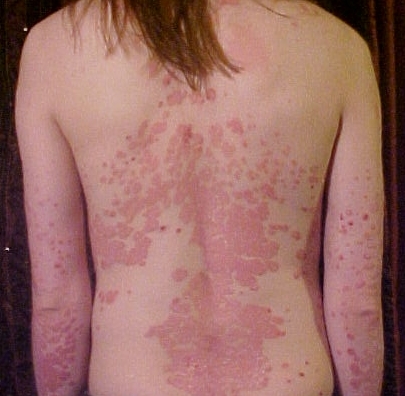
psoriasis can be cured

Psoriasis | photo: James Heilman, MD
Recently it was announced on the interwebs that a certain celebrity had been diagnosed with psoriasis.  The reason/cause for her condition was attributed to stress.  This is certainly a strong possibility as psoriasis can be an autoimmune response and as those of us with autoimmune disorders know, stress is a huge trigger.

I was saddened to hear that this young person didn't feel that she could slow down her lifestyle.  Nor was there any mention of the possibility of the influence of diet.

As long-time readers know, I am a huge fan of food as a basis for health.  While I certainly do not believe that food is the only cure, I do know from years of working with lots of different people that food can be a large part of the answer.  When we eat the way our bio-individual body needs us to we can help the ourselves to be healthier.  I'm a believer in Integrative Medicine -- there is room for both in the equation, in fact it would be silly to discount either side in a food versus medicine tug-of-war.  Learning about diet and the influence of food and nutrition on the body can be an empowering experience for many people.

This case especially caught my attention due to someone I have been working with who has experienced  a successful dietary transition.  I'd like to share her testimonial here:

"In 1995 following a life threatening flare-up of ulcerative colitis, my large intestine was surgically removed. The last two feet of the small intestine was used to create a new internal abdominal “J-Pouch.” Many pouch recipients experience complete restoration of health following this procedure. Some do not, and I fell into this category. Instead of returning to a healthy, active lifestyle, I became plagued with chronic J-Pouch infections requiring heavy steroid and antibiotic use that lasted several years. With the help of a strong probiotic, the flare-ups became less chronic and in time my health improved.


Unfortunately I developed a new health concern... scalp psoriasis that gradually spread to my elbows and trunk. I experienced some other nagging symptoms -- itching, mild fatigue, and brain fog to name a few. The chronic scalp psoriasis required daily use of a strong topical prescription steroid that barely controlled the problem. I asked my dermatologist if there were recommended dietary changes that might improve the psoriasis, and the response was there was no known diet that proved effective in clearing psoriasis.


This is where Mira comes in. Following a full scope assessment and using her health and nutrition expertise, Mira shared her results -- I was suffering with a systemic Candida yeast overgrowth most likely caused by prolonged steroid and antibiotic use. Mira presented the course of treatment, including a diet that would discontinue feeding the candida. Following a strict two weeks of dietary changes, I was amazed at the results. I skeptically stopped using the topical steroids, sure the psoriasis would return with a vengeance. It did not, and the results were amazing! "  D.R. 2011

This wonderful woman has experienced so much improvement with her psoriasis and we continue to work together to refine her health and address her overall nutrition.

I hope that the young celebrity challenged with psoriasis manages to find a connection to someone with a background in holistic nutrition to help her learn to better understand the needs of her body.  I also hope that she finds the time to slow down and be easier on herself.  We only have one body and our health is so important.  We need to remember to be kind to ourselves.

Saturday, April 2, 2011

yogurt

I've been seeing changes in yogurt in the grocery stores lately.  It used to be that yogurt was mostly a gelatinized "Swiss-style" fruit mixed in or on the bottom kind of product.  At least that's what was presented to us at the grocery store.  Then came those tubes followed by the drinkables.  Now we're getting back to the real thing and the choices for whole milk, organic, live culture yogurt are easily available.

Greek yogurt has come to the forefront.  Many people seem to prefer it even in the face of the higher cost.  Greek yogurt is higher in protein, almost 50% more according to the Berkeley Wellness Letter.  The whey is strained out giving it a thicker consistency and a longer shelf life.  When you strain out the whey you wind up with a product that is higher in fat and lower in calcium but also lower in lactose (the milk sugar that some people have trouble digesting).  So you have to decide what you want.

Of course what many people don't realize is that you can make a Greek style yogurt of your own very simply.  Take a 32 ounce container of whole milk, organic, live culture yogurt.  Place cheescloth (I use a coffee filter) into a colander.  Place the colander on top of a bowl and then dump the yogurt in.  Put the whole thing in the fridge overnight and in the morning you have a thicker, Greek style yogurt, and the whey which has strained out.  The whey is great for soaking beans or grains, it can be added to soups, and some people even drink it straight.  It's a little tart for me for that so if I have too much I usually feed it to the dogs, they consider it a great treat.

What to do with the thickened yogurt?  You can use it as a substitute for sour cream, you can add things to it to make a savory dip, mixed with a drop of stevia it makes a fabulous fresh fruit dip or you can eat it plain.  One of my favorite ways is to mix it with cottage cheese and a bunch of fresh vegetables, cucumbers, cherry tomatoes, chunks of sweet peppers add a pinch of sea salt and a grind of fresh pepper and you've got a tasty summer lunch.  Yogurt doesn't have to be used just for sweet things, it also makes a great savory dish.

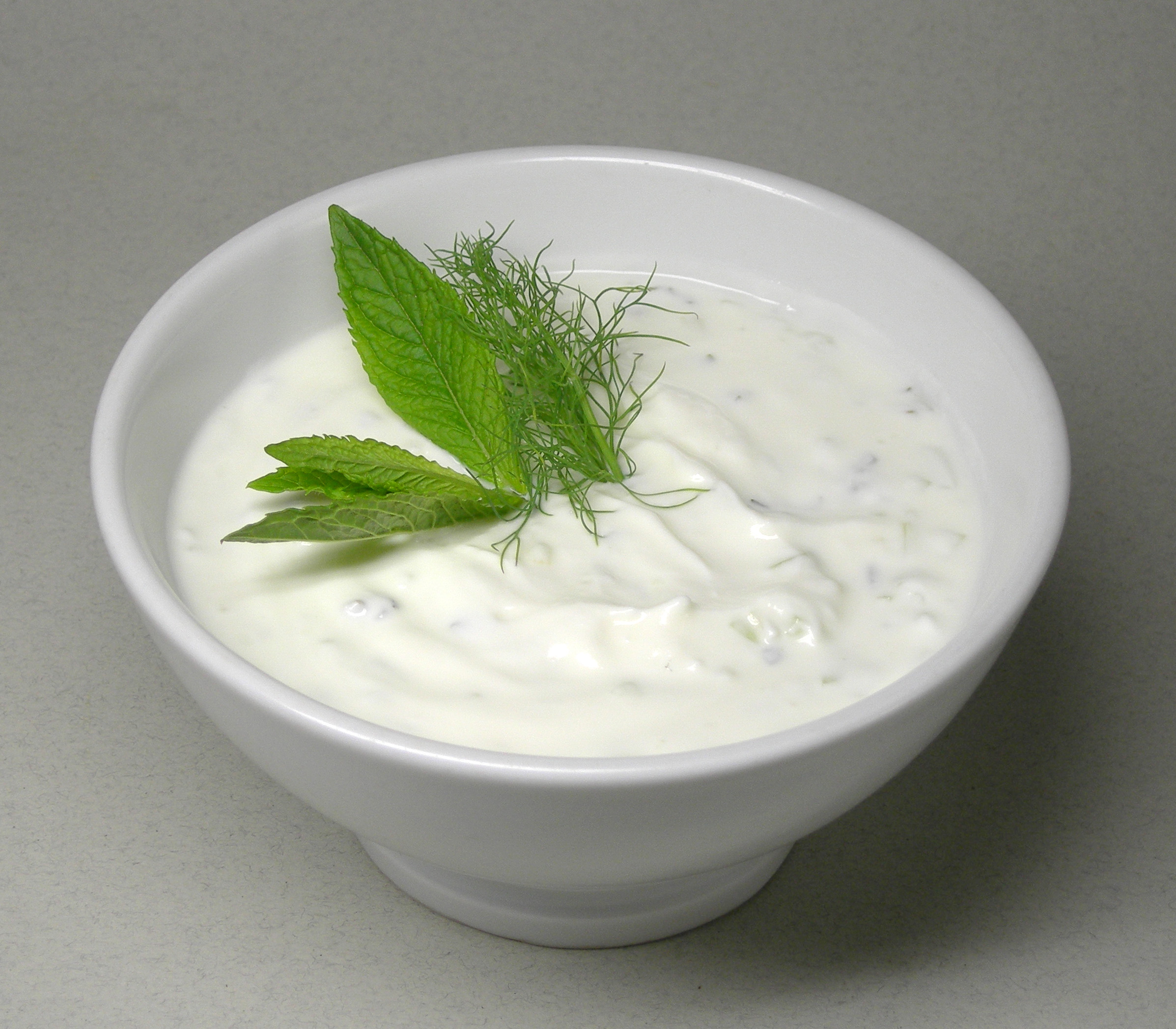
Many cultures have a yogurt dish of some kind mixed with different spices or foods to make a condiment.  For example in India there is a shredded cucumber yogurt dish with scallions, garlic, cumin and pepper that helps to cut the spicy heat of the cuisine called Raita.  A similar dish can be found in Greek cultures and is called Tzatziki; it's made with yogurt, cucumber, garlic and mint.  There's even a cold soup called Tarator from Bulgaria which has yogurt, cucumber, dill, garlic, walnuts, and oil, it makes a great starter for meal on a hot day.

The yogurt market appears to be growing by leaps and bounds.  A recent trip to the grocery store revealed coconut milk yogurt and soy milk yogurt (for those who can't have dairy), Bulgarian style, Australian style, and even Icelandic style.  As far as I can figure out the difference is primarily the type of bacteria used and perhaps how thick the yogurt is.

Also appearing more and more is kefir, a fermented yogurt that is drinkable.  The fermentation increases the probiotic activity of the yogurt and can be very healthy for you as long as the cultures are live.  Soon enough I expect that we'll start seeing bottled containers of lassi which is a similar fermented yogurt drink from India.

Whatever style or type of yogurt you are eating (or drinking) it is important to remember that you want the real stuff.  Live cultures, no added artificial ingredients, just good, healthy, probiotic, digestive supporting yogurt.

Friday, July 16, 2010

pickle update

The post I wrote on lacto-fermented pickles seems to have generated a lot of interest.  I've gotten quite a few emails from folks about it.  I believe part of the interest is because many people are becoming more aware of the ingredients that are in their food.  They no longer wish to consume artificial colors, artificial chemical preservatives and other ingredients that they can't pronounce.


Two interesting remarks came up.  I had some people who were a little concerned about the idea of lacto-fermenting without the use of whey.  Several people commented that in the book Nourishing Traditions by Sally Fallonshe uses whey.  I'm certainly not saying that you shouldn't, that is a very valid way to create a lacto-ferment.  What I am saying is that whey is not strictly necessary if the brine is at the right percentage. The brine will protect the food until the natural lacto-fermentation process takes over.   


One person told me that living in a hot climate she keeps her air conditioning on and can't get her house warm enough to get good fermentation  going.  In that case it is definitely a good idea to add whey as the pickles may not make a solid lacto-ferment otherwise.  Adding 2 T. of whey should provide a good amount to kick off the ferment.


Another person wrote that her grandmother taught her to put grape leaves in with the cucumber pickles because it helps make them crisp.  This sounds like it could be a good idea.  Grapes are also known for having a lot of natural bacteria so I'm sure the leaves would help the lacto-fermentation process along.


To make your own whey simply take a 32 ounce container of plain organic yogurt, put it into a lined colander and strain overnight in the refrigerator.  In the morning you will have a creamy Greek-style yogurt in the top of the colander and the clear strained whey in the bowl underneath.  The whey will keep for a couple of months in the fridge.  I use the whey for soaking beans, grains, and lacto-fermented foods.


photo courtesy of Agne27 | Wikimedia Commons

Thursday, June 17, 2010

lacto-fermented pickles

Back in May I attended the National Association of Nutrition Professionals Conference.  One of the sessions that I attended dealt with naturally fermented foods.

I've been canning and preserving for over 20 years, first as a way to preserve excess food for later or to control the flavors of jams, pickles and chutneys that our family ate.  Later I began to see it more as a way to control the preservatives and other chemicals that frequently appear in these kinds of foods.  Quite frankly I've never understood why pickle manufacturers felt it necessary to add yellow #2 to pickles.  It doesn't add anything to the flavor and if you want your pickles to be yellow just add turmeric.

As I learned more I began to wonder about lacto-fermented foods.  Through this process lactobacilli, an anaerobic beneficial microbe, converts starches and sugars in the food into lactic acid.  This lactic acid helps not only to preserve the food for an extended period of time, it also helps to promote a healthy bacterial balance in your gut.

There are many traditionally fermented foods such as sauerkraut, kimchi, relishes, and chutneys.  Many of these foods are now made commercially, a process that frequently does not allow for lacto-fermentation.  Part of the reason that commercially processed foods are not lacto-fermented is because it takes longer, requires more interaction with the food, and does not last as long on the shelf.

I see lacto-fermented foods as an addition to my pickled vegetables.  Let's face it, confronted with an abundance of zucchini, there is only so much lacto-fermentation I can do.  I'll make my favorite bread and butter pickles and zucchini relish with the rest.  The canned foods will last for a longer time and the lacto-fermented ones will support digestive health.

Back to the conference.  I took a class with Sandy Der and Nishanga Bliss where they demonstrated making kimchi and lacto-fermented soda.  I had always thought that lacto-fermentation required a fermentation crock.  Mostly because the books I have seem to call for one.  Both Sandy and Nishanga demonstrated using 1 gallon glass jars.  When Sandy demonstrated the kimchi she showed off her beautiful pickle weights which she makes in her ceramics studio.  I was amazed at how easy the whole process was and as soon as the lecture was over I rushed for the door to purchase a set of pickle weights.

Shortly after arriving home I dug out a one gallon jar, went to the grocery store and bought the ingredients for my first batch of kimchi.  It turned out amazingly well and having a little bit every day with a meal turned out to be a most delicious way to add probiotics to my diet.  I finished it very quickly and made some more; a gallon seems like a lot but when you are eating it every day it doesn't last long.

I then moved on to lacto-fermented pickles.  The first batch smelled fabulous and pickled really well.  Unfortunately I didn't particularly care for the flavor.  The recipe called for pickling spice.  Now I have used pickling spice before when making vinegar preserved pickles and the flavor didn't bother me then.  I'm not sure if the lacto-fermentation process intensifies the flavor or if it simply is stronger since there is no pickling and no boiling.  I wound up giving them to a friend who is from India and thought their flavor was great.  Trying another batch this time I branched out and following the basic tenets of lacto-fermentation I made a brine but modified the flavorings.  I'm waiting for this next batch to be done, frequently stopping by to enjoy the aroma of my fizzing jar of lacto-fermented pickles.

I've been writing down my lacto-fermentation adventures on my Facebook Fan Page and have gotten a request for my recipe.  This is a basic recipe, feel free to modify the spices to suit yourself.  The most important parts are that the brine be a suitable strength to preserve the cucumbers until the lactobacilli take over the preserving process and that the cucumbers be fully submerged in the brine (hence the need for pickle weights).

I made this recipe in a two quart jar as there are not that many people living in my house and a whole gallon of pickles plus a whole gallon of kimchi seemed like a lot.  If you decide to make this in a gallon jar you will need to double the recipe.

Lacto-fermented Pickles

4 large pickling cucumbers (only because this is what fit - if using baby cukes you may need more)
3 cloves of garlic, crushed, not peeled
2 bay leaves
1/2 t. celery seed
1/2 t. dill seed
1 quart of water
1 1/2 T. kosher salt

Sterilize the jar
Wash the cucumbers
Add spices to the jar
Mix together water and salt until salt is completely dissolved (this is your brine)
Pour brine over cucumbers and herbs
Use pickle weights to hold down the cucumbers
Loosely cover jar with wax paper and a ring or rubber band
Let sit in a warm (not hot) dark place
After 4 days you can cut off small pieces of pickle to taste.  When it tastes pickle-y enough you can put it in the refrigerator.  This will slow down but not completely stop the fermentation process

If you'd like to learn more about lacto-fermentation there are a few books out there that are really good resources:


Saturday, July 25, 2009

cure for colic?

In a recent study by the The University of Texas Health Science Center at Houston researchers said they believe they may know what causes colic in babies.  Anyone who has experienced a colicky baby will tell you that it is very difficult and upsetting, for both the baby and the parent.  Colic is usually defined as severe, persistent crying for no apparent reason.  Apparently as many as 15% of all newborns suffer from this condition.

Babies in the study were both breast-fed and bottle-fed which seems to indicate that the previously held assumption that breast-fed babies were less likely to suffer from colic is untrue.  The suspected culprit at this point is a bacteria called Klebsiella.    Another interesting fact is that according to J. Marc Rhodes, the lead investigator, “During our study, we also found that the babies that didn’t have colic had more types of bacteria in their intestines. The presence of more bacteria may indicate that specific bacterial species (phylotypes) are beneficial to humans,”  Plans are underway for an adult study to look at probiotics.

While further study is needed it does seem reasonable to assume (as many holistic practitioners do) that simply taking one type of probiotic, the most common being acidophilus, does not adequately serve the function of our gut.  If you eat yogurt, kefir or other fermented foods you may want to consider those products that have more than one strain of beneficial bacteria.

photo courtesy of commons.wikimedia.org/wiki/File:Crying_baby.jpg