Showing posts with label cholesterol. Show all posts

Monday, October 18, 2010

what kind of oats?

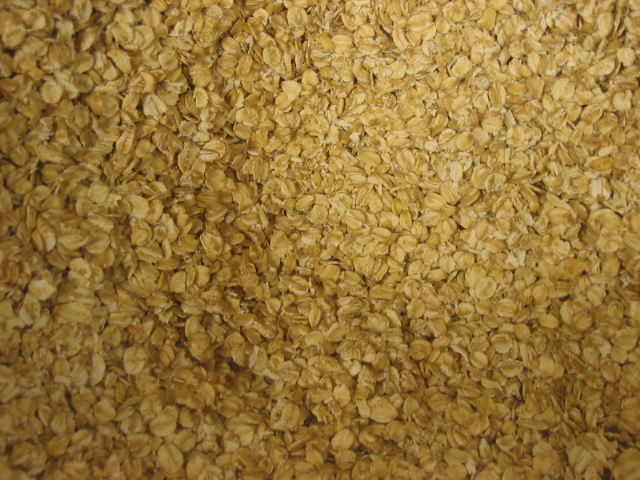
Oats | kateshortforbob | Wikimedia Commons
Bob wrote in and asked "I have heard that not all oatmeal has the same nutritional value, and I'm confused. There are so many types of oatmeal, steel-cut, instant, etc, etc. What is the most nutritious type?"

This comes up a lot. We're told that oats are really good for us, they are, and that we should eat more of them for reducing cholesterol, to help reduce cardiovascular disease and to stabilize blood sugar. Oats are a wonderful food. They contain both soluble and insoluble fiber. Soluble fiber is easily digested and helps the body by slowing down how quickly it can process simple starches and sugars. Soluble fiber also breaks down within the digestive tract, binding with cholesterol and thereby escorting it out of the body. Insoluble fiber cannot be digested and helps to create bulkier stools which move through the system more quickly. They also help mitigate certain bile acids.

More than just fiber, oats also provide manganese, selenium, tryptophan, phosphorus, and magnesium. They even provide a modest amount of protein (6 g per cup).

Quick or instant oatmeal is not as good a choice since it is broken down; your body can get through it too quickly. It's also it's more highly processed and the more processed a food is is the less nutritious it typically is. Oat groats and steel cut oats are generally considered to be the best. The groats are the whole grain, containing all of the fiber, bran and the beneficial germ. Old fashioned or rolled oats are also very good although they don't have all of the bran since some of that is removed during the rolling, or flaking, process.  I keep all three, oat groats, steel cut oats, and thick rolled oats, in my pantry all the time.  They're very versatile and are great for a wide range of recipes.

One cup of oats per day is considered to be very beneficial, especially if you have high cholesterol or are looking for foods to help stabilize blood sugar. Making it with milk will add more protein and some calcium. Adding fresh ground flax seeds, about one tablespoon, will further increase the fiber content and add a healthy omega 3 boost. Adding fresh berries, my favorite is blueberries is great, a dash of cinnamon on top and you've got a really great meal to get you going in the morning.


Sunday, July 5, 2009

what about the DASH diet

A recent question came in from Eden asking what I thought about the DASH diet.  DASH stands for Dietary Approaches to Stop Hypertension.  Here is my reply:

I think the concept of the diet is certainly a good one; low sodium (most of us eat too much already) and lots of lean protein, fresh veggies and fruit, and including whole grains in the diet. This is the basis of a good dietary approach for all of us.  As a whole, however, I do not believe that DASH goes far enough.

One of the issues I have with it is the part about low fat.  Not that I don't think we need to consider lowering our fat intake (many of us could do with a lot less) but rather that we need to think about the types of fats and the ratio of fat that we ingest.  I do not consider margarine or other fake fats to be a good choice.  Using healthy fats, as I wrote about here, in moderation is a much better choice than using trans-fats.

Another concern is that the diet does not specifically mention how increased fiber content can lower both blood pressure and cholesterol.  A study published in the Journal of the American College of Nutrition showed that "bean consumers had lower systolic blood pressure in comparison to non-consumers."  Beans and other high fiber foods need to be a part of everyone's diet and are a beneficial part of reducing blood pressure.

Also there is the concern that although the DASH diet does promote exercise it does not exactly look at the stress levels or other holistic concerns.  Teaching people how to breathe or to engage in active relaxation techniques has been proven to help lower blood pressure.  Meditation, Qi Gong, Yoga, and other mindful exercise practices also have techniques to help lower blood pressure.

Lastly, DASH does not mention or strongly promote those foods that are specifically helpful for lowering blood pressure such as garlic, onions, hibiscus, and foods that are high in magnesium or potassium.  Nor does it caution against those foods that promote higher blood pressure which I wrote about here.

So overall I think that the DASH diet is a good place to start when it comes to lowering blood pressure but I think there are some other changes that can be added to the diet to improve it.

Be well.

Thursday, June 11, 2009

heart-healthy foods

My friend Jen is 31 and was surprised at a recent physical to discover that she had high cholesterol.  Jen works very hard to provide a clean diet for herself and her family, eating organic foods, and not eating a lot of processed foods.  It never entered her mind that she might have high cholesterol.

As we were talking I mentioned that there are a few simple things that she can do to start making heart-healthy changes to her diet.  Although this list does not cover everything that you would need to do it covers the top five foods you should add to your diet for heart health.  This, of course, would be after you make other healthy changes such as quitting smoking, not eating anything with trans-fatty acids and adding some form of daily exercise to your routine (even just a 15 minute walk a day if that's all you can do to start; check out my previous post to calculate how far you walk jog run).

Flax seed: High in fiber and omega-3 fatty acids flax seeds are a great way to reduce total cholesterol and LDL, or bad, cholesterol.  With a nutty, rich taste flax seeds are a great addition to baked goods, cereals, or even sprinkled into smoothies.

Oat bran:  With high levels of soluble fiber oat bran helps to reduce LDL cholesterol.  Oat bran can be eaten as a cereal, cooked into muffins or cookies or even substituted for part of the flour in a bread recipe.

Cold water fish:  High in heart-healthy omega 3 oils this is a great way to add protein to your diet.  Versatile and quick to cook you can grill, sautee, broil or steam these fish for a great meal.  Fish in this category include salmon, sardines, tuna, rainbow trout, and herring.

Garlic:  Adding garlic to your diet has been shown to be very beneficial as it can lower total cholesterol and triglycerides while increasing HDL, or good, cholesterol.  Garlic is also good for reducing platelet aggregation (which is where the platelets stick together in the blood and can form a clot).  You can read an article I wrote about garlic here.

Spinach:  High in Co-Q10, which is important for heart (and muscle) health, as well as lutein, an antioxidant which can help reduce hardening of the arteries, spinach is a wonderful food to add to the diet.  Spinach is also high in folate which is effective in reducing homocysteine in the blood and magnesium which is helpful for reducing blood pressure.

Be heart-healthy; eat well, be well.
1. Haas, Elson, " Staying Healthy with Nutrition", Celestial Arts, Berkeley, CA, 1992, pp. 277
2. http://www.npicenter.com/anm/templates/newsATemp.aspx?articleid=22871&zoneid=26
3. http://www.whfoods.com/genpage.php?tname=foodspice&dbid=43

Sunday, April 26, 2009

carob update

I wrote a previous post about using carob as a sweetener.  Since it really is more than just a sweetener I thought I would share a little more information about this amazing legume.

Carob is currently being examined as a protein source.  Research indicates that the flour made from the germ of carob has a high protein content, 46%.  By isolating the germ further, protein content percentages, in a laboratory setting, have reached as high as 95% according to studies currently being done at the Universidad de Sevilla, Instituta de la Grassia.  This isolate is of interest because it would offer an alternative to soy or dairy proteins for protein shake formulas created for athletes and for diabetics.  

In addition to the higher levels of protein, the germ flour also yields higher levels of arginine, an essential amino acid that is important for healing wounds, immune function, and hormone release among other physiological functions.  

Carob flour and carob bean gum are also useful for people with Celiac Disease or gluten intolerance as carob contains no gluten.

Another health benefit is the effect of carob fiber, taken from the pulp of the fruit, in lowering cholesterol.  According to a study published in the European Journal of Nutrition "Daily consumption of food products enriched with carob fibre shows beneficial effects on human blood lipid profile and may be effective in prevention and treatment of hypercholesterolemia."  The fiber is also high in phenolic antioxidant substances and there are studies underway looking into the chemopreventive qualities of carob.

To rephrase all of that in a less confusing way carob is great as a sweetener substitute, it is high in protein and will probably be coming soon to a protein supplement near you.  Useful for people who can not ingest gluten, it is also showing promise as a functional food that may help lower cholesterol and help prevent oxidative cell damage.  

Consider adding carob to your diet but please remember to read the labels.  If you start seeing wonderful health claims that's fine but always check what other ingredients are in your food before you unthinkingly purchase something because of the marketing on the package.

Be well.


http://www.foodnavigator.com/Science-Nutrition/Scientists-study-carob-as-alternative-protein-source, http://www.foodsciencecentral.com/fsc/ixid15288, http://cerealchemistry.aaccnet.org/doi/abs/10.1094/CCHEM.1998.75.4.488?cookieSet=1&journalCode=cchem
, http://www.google.com/search?hl=en&client=safari&rls=en-us&defl=en&q=define:arginine&ei=AH70Sd2iH5LAM4qFnMAP&sa=X&oi=glossary_definition&ct=title, http://www.herbco.com/p-449-carob-bean-pods-cs.aspx, http://www.botanical.com/products/learn/c/carob-p.html, http://www.nutraingredients.com/Research/Carob-fibre-to-reduce-cholesterol-levels

Tuesday, April 14, 2009

national pecan day

Today is National Pecan Day.  Pecans are one of my favorite nuts.  Although they are very hard to crack they are certainly worth the effort.  Pecans have sweet, tender nutmeats that are very tasty.

Pecans (Carya illinoinensis) are a species of hickory tree that is native to the south-central region of the United States of America. The name Pecan comes from an Algonquin word that means a nut requiring a stone to crack. Although they are native to North America they have been imported and are now grown commercially in Australia, Brazil, China, Israel, Mexico, Peru and South Africa. A pecan tree can bear fruit for up to 300 years.

There has been a lot of interest in pecans and their healthy profile; they add fiber to your diet as well as providing vitamins B and C, iron, calcium, potassium, magnesium, and phosphorous.  Pecans are also a good source of monosaturated fats (the same kind of beneficial fat that is found in olive oil).  

According to studies from Loma Linda University and Texas A&M University, "a heart-healthy diet...is more effective in lowering cholesterol when pecans are added - even though the pecans added more total fat to the diet. And study participants did not gain weight on the pecan diet. This confirms that it is the type of fat in the diet (i.e. the monounsaturated and polyunsaturated fat in pecans) that is more important to heart health than total fat intake. These studies showed that the addition of pecans to a heart healthy diet decreased the levels of "bad" LDL cholesterol...and helped maintain desirable levels of "good" HDL cholesterol."

The National Cholesterol Education program states, "For every 1% reduction in LDL cholesterol, there is a 1.5% reduction in incidence of coronary heart disease. Thus, the pecan diets in the Loma Linda and Texas A&M studies would correspond with a 25% decreased risk of heart disease."

Of course the best way to eat them is to start with raw nuts.  Pecans are very versatile and can be added to a wide variety of baked goods, they go well in salads, can be used in pilaf-type recipes, or can be spiced and flavored to be eaten as a snack.

However you use them, just remember to store them properly.  Pecans need to be kept in dry, clean, airtight containers.  Out of the shell they will last at room temperature up to two months or refrigerated up to one year and frozen up to two years.  Because they are a low-moisture nut pecans can be refrozen several times without losing quality.

Eat well, be well. 
 
photo courtesy of: commons.wikimedia.org/wiki/File:2_pecan_nuts.jpg
information source: http://plantanswers.tamu.edu/recipes/pecanrecipes/healthstudies.html and http://www.royaltypecans.com/nutrition.htm and http://en.wikipedia.org/wiki/Pecan