Showing posts with label substitutions. Show all posts

Monday, January 30, 2012

super bowl snacks

superbowl party | photo: kakisky
February 6th is right around the corner.  In case you don't know, that's when the Super Bowl will be happening.  While I don't follow football very closely I do find myself curiously swept up in the party that accompanies this last game of the season.  And I admit to wanting to watch the half-time show and the, usually, creative commercials.  I find it curious that this is one day of the year when companies spend millions of dollars and put forth extra effort to make sure their commercials are smart, funny, creative, or interesting.  It's the only time I usually enjoy watching them.  This day, Superbowl Sunday, is practically a holiday, with people making elaborate plans for parties and food.  This is one of the few traditional gatherings where the menu doesn't often include an entree or side dishes; it's a smorgasbord of snacks.

If you're hosting or attending a Super Bowl Party you're probably familiar with the traditional lineup of foods:  loaded nachos smothered in queso, buffalo wings, cheesy spinach dip, chili, and sausage-laden pizza and more.  Depending on the teams (and who you're rooting for) the menu changes somewhat to accomodate the event.  It's like rooting for your favorites with food.  Unfortunately many of those food choices won't leave you in good shape.

But it doesn't have to be a day of overindulgence in fatty foods and unhealthy choices.  Here are my Seven Super Bowl Snacks that will still allow you to enjoy the spirit of the celebration without regret:

  1. Instead of buying cheesy popcorn or sugary kettle corn consider making your own.  Hot air popped popcorn with a modest amount of melted butter or coconut oil, salt and spices to taste is a crunchy delicious treat.  Try chili powder, onion powder, or my personal favorite, ground up nori.
  2. Instead of caramel popcorn or people chow try making a healthy trail mix in your slow cooker.  It's extremely tasty, and with four different options to choose from you can make something for everyone.
  3. Add a fruit platter with a yogurt dip for a healthy, delicious treat.  To make the yogurt dip take 1 cup plain organic yogurt and mix it with 1 heaping tablespoon of your favorite flavor of jam or with honey.  Much less sugar than already sweetened yogurts and it's your choice of flavors.
  4. Cut a selection of veggies into strips and rounds to use as dippers instead of chips and crackers.  These go well with bean dips and even cheese spreads.  You can also serve them with a tasty guacamole or a healthy homemade salsa.  Less simple carbs, more veggies, that's always a win.
  5. Instead of ordering giant super subs consider setting out an assortment of preservative free healthy lunch meats (Hormel Natural, Boar's Head Natural, and Applegate are all good brands) and a selection of whole grain rolls, wraps, and sandwich thins.  Let your guest make their own winning combination.
  6. Homemade meatballs served in a marinara sauce in the slow cooker make a great snack without all the grease and fuss of sausages or wings.
  7. If you're going to serve pizza consider getting a thin whole wheat crust and topping it with lots of heart healthy veggies, light on the cheese.  Avoid preservative-laden processed meats choosing grilled chicken breast instead (or add your own after delivery).

Saturday, January 7, 2012

saving calories

The New Year has come and gone.  The festivities are over, the days are getting longer and we're one week into what for many people is the annual self torture of resolutions.  As I've mentioned before I really don't like the word resolution.  It seems hard and finite and often is a rather amorphous concept.  "I resolve to lose 10 pounds"  "I resolve to go to the gym more often"  and other statements.  There's no strategy of how it's going to happen, no defined timeline and if you don't succeed you feel like you've failed.

It may seems like splitting hairs but I prefer the term goal.  The goal outlines what you hope to achieve.  And if you don't quite get there that doesn't mean you have to give up in dejected defeat.

Because so many people struggle with their weight at this time of year that tends to be one of the more common health goals I hear.  I'd like to start by sharing that weight loss is more than just eating less.  It's about changing habits, moving more, changing mindsets and, yes, eating less.  But there are ingrained habit that need to change.

Spend some time focusing on mindful eating (chew, be grateful for your food, enjoy your food, take time with your meal, and chew [yes I repeated that one, it's important and many of use don't chew enough]).   Mindful eating helps us to better digest our food in so many ways from making sure that we are breaking down the food, getting adequate salivary enzymes, and also having our body in a calm focused place to be able to digest.  Liz Lipski, the Digestive Wellness guru, tells us that we often fuel our bodies the way we fuel our cars....stop, gas, go.  She's right.  The next time you sit down to a meal stop a moment and recognize how you are eating.  Most of you will discover that you are rushing through your meal and if you take a few extra moments you will feel better and calmer.

Move more.  If you have a car and it just sits in the driveway and never goes anywhere when you eventually need it the tires are cracked and dry, the engine fluids are gummy and don't lubricate well and the car may not function the way it is supposed to.  That car is a metaphor for our bodies.  Use them and they stay active and functioning.  This is nothing you don't already know but sometimes we just need a reminder.  Park a little further away at the grocery store.  Take the stairs instead of the elevator.  Sign up for a physical movement class or find a free one on DVD or the internet.  You'll feel better and your body will be burning calories which can help with weight management.

vegetable broth | photo: Takeaway
I also like give you a few ways to make small measurable food changes that can add up, helping you to shed pounds:

  1. Consider changing your plate size.  We often cue in to the size of the plate to help us determine how much food to put on it.  If you use a smaller plate you often take less food but find yourself just as satisfied.  
  2. Consider changing your plate altogether.  Slimware is a company that sells some really attractive plates that have designs on them that are portion controlled.  This visual cue can help you learn how to choose portion sizes over serving sizes.
  3. Choose salsa instead of queso.  That cheesy dip or melted cheese topping adds up to a lot of calories and a lot of fat.  Substituting salsa for some, or all, of the cheese not only saves calories it adds delicious flavor.  A baked potato with black beans and salsa is one of my favorites and really needs no cheese or sour cream.
  4. Looking for something crunchy?  Forego the corn chips and snack mix.  Try air popped popcorn instead.  With a tiny bit of melted butter or coconut oil, a hint of salt and some spices you've got a great crunchy snack that doesn't have nearly the same caloric count.  Be sure to choose organic popcorn to avoid any potential GM contamination.
  5. Add a cup of soup to your dinnertime routine.  A delicious strong stock with veggies and herbs or even a tomato based veggie soup is a great way to get your digestion going but also to help fill your tummy.   Barbara Rolls, a Ph.D. at Penn State shares that  "Eating a 100-calorie bowl of broth-based soup...at the start of a meal takes the edge off your hunger. Even with the extra course ... you are likely to eat fewer total calories during the meal."
  6. Remember the Three Polite Bite Rule.  If you are going to have dessert have just three polite bites.  You'll get enough to satisfy that sweet tooth without overdoing the sugar intake.
Step-by-step small meaningful changes can add up to a healthier you.

Interested in making more changes?  Anyone who leaves a comment and their email address on the blog will receive a free copy of my "Eating Out - Eating Healthy" ebook.

Disclaimer: cmp.ly/5

Saturday, November 26, 2011

coconut

coconut | photo: Robert Wetzlmayr
This Thanksgiving we had coconut cream instead of whipped cream.  It was a delicious substitute for those at the table who could not have dairy and it paired very well with the pumpkin custard.

Coconut is a great food item to have in your pantry.  A source of phosphorus which is beneficial for strong teeth and bones as well as supporting kidney function, there are many different ways in which coconut can be added to the diet.

Let's start, though, by addressing the allergy issue.  According to the FDA coconuts must be labeled as a tree nut.  And there does appear to be a potential for cross-reaction for anyone who is allergic, or sensitive, to either walnuts or hazelnuts.  This means that if you have a sensitivity to either walnuts or hazelnuts and consume coconut products, you may want to discuss this with your allergist or to try an elimination diet and see if you should not eat coconut.

Ways to use coconut include:

  • Coconut meat - a tasty treat which can be eaten fresh or dried.  
  • Coconut flour - the dried ground meat can be used in baking and is especially popular for gluten free baking.  It's also a good source of protein with 100 g of coconut flour containing just over 19 g of protein.
  • Coconut water - sometimes called coconut juice, this is the liquid from the center of the coconut.  It is a fairly balanced electrolyte fluid; far tastier, and certainly far healthier, than sports drinks.
  • Coconut milk - made from the ground meat this is a tasty dairy substitute that many people enjoy.
  • Coconut cream - the solid section of the coconut milk which rises to the top; this can be skimmed off and used the same as whipping cream.
  • Coconut oil - made from the meat, this is a healthy source of medium chain fatty acids and can be used in baking and cooking.  It even makes a great facial moisturizer. 
Coconut flour, milk and water all substitute fairly well at a one-for-one ratio for their conventional counterparts.  Coconut oil substitutes one-for-one although I have found that because it melts differently it sometimes gives a different texture to baked goods.  We have added this versatile range of products to the pantry and are enjoying the tasty variety that they add to our diet.  I'm sure you will too.

Sunday, November 13, 2011

baking mishaps

A lesson in humility... Just a week ago I posted a recipe for lemon millet muffins.  I was so happy with how the recipe came together the first time.  Often that doesn't happen.  This next effort clearly demonstrates that.

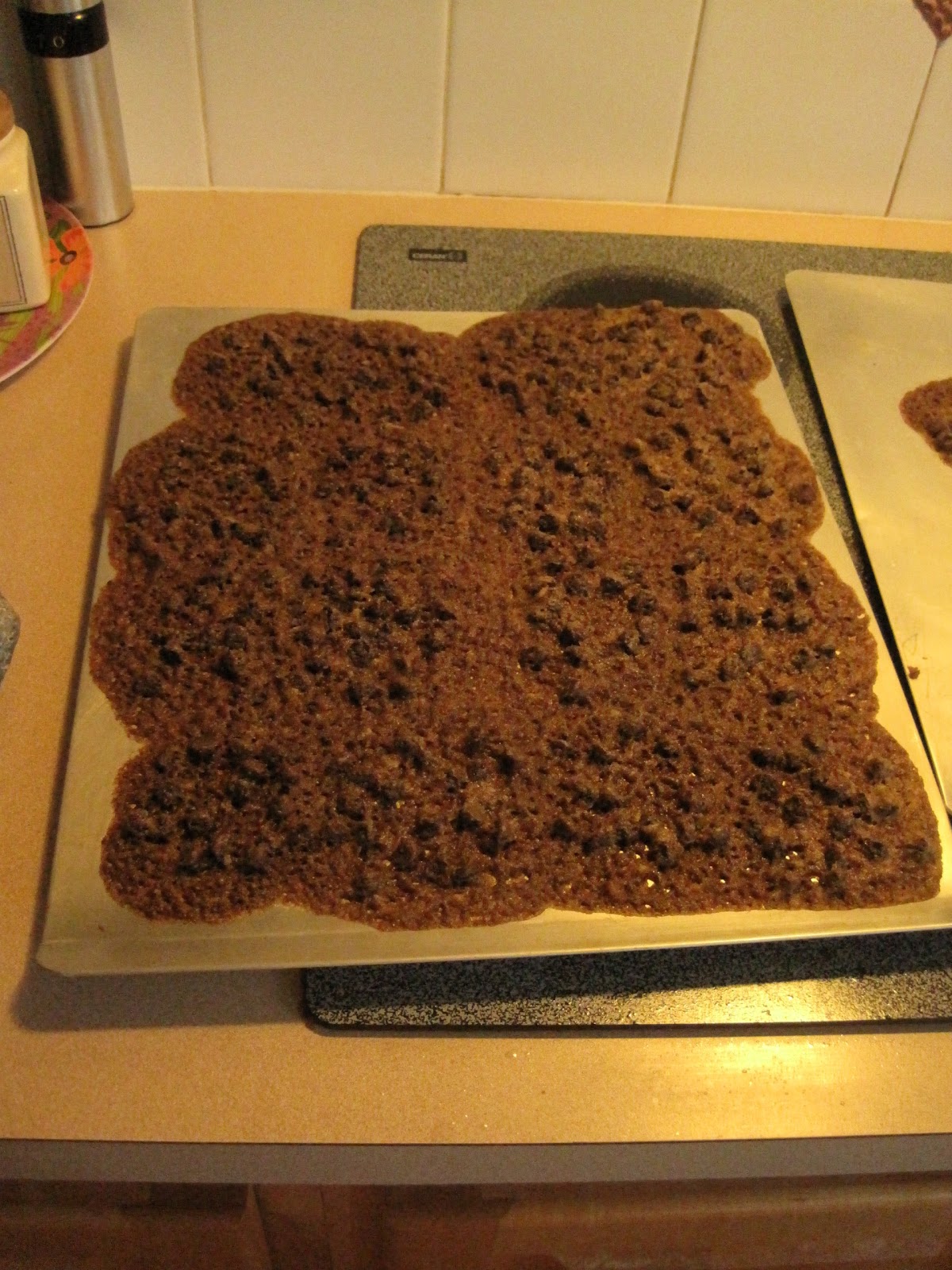
I wanted to make cookies.  The family has been requesting chocolate chip for a while and I've been experimenting with lots of other types, peanut butter, oatmeal raisin, snickerdoodles, etc, that I decided the time had come to make chocolate chip cookies.  Never content to just pick a tried-and-true recipe I wanted to make gluten free, dairy free, egg free chocolate chip cookies.

The picture shows that it was less than successful.  I will share that they taste great but they don't look so hot.  The biggest concern is what will happen when they cool.  In my experience if they spread this much they are often inedible when no longer warm.  We'll see how it goes.

And it goes without saying that this particular recipe is not exactly ready for prime time.

Thursday, October 13, 2011

sprouted flours

sprouted spelt and chia bread | photo:  wattle12
I recently received a question from Hope who wanted to know about sprouted flours (specifically spelt) and how to use them.

Sprouted flours are a very healthy way to go.  Sprouting essentially deactivates some of the enzymes that can interfere with nutrient absorption.  The grains are sprouted, dried at very low heat, and then ground into flour.  If you do not own a mill (I like both the Blendtec and WonderMill) you can purchase sprouted flours from a number of different sources.

Sprouted flours can be easily interchanged with traditional flours one for one.  There is a difference between the fiber content so if you are switching it for all-purpose flour you'll need to make some adjustments to the moisture content as well as to how long it may take to rise.

Regarding her question about spelt specifically, it is a grain similar to wheat but lower in gluten content.  Some people who do not digest wheat well find spelt to be an acceptable alternative.  For those who have celiac disease or gluten intolerance, spelt still needs to be avoided as it does contain gluten.

To Your Health Sprouted Flour Company has some delicious looking recipes on their website which specifically call for sprouted flours.

Saturday, March 5, 2011

new healthy indulgence

Photo credit: Nevit
I've only recently returned from California where I spent several days with my Mentor Helayne Waldman, working with her on her upcoming book.  It was truly wonderful to spend the time with her, we got so much accomplished and she is just an amazing person to hang out with.

As a nutrition professional she also pays a lot of attention to food and the holistic concepts of mindful and enjoyable eating.  Liz Lipski, one of my nutrition heroes, says that we frequently fuel our bodies the way we fuel our cars - stop -gas -go.  I think she's right and I definitely agree with the idea that mealtimes and enjoyment of meals should be more than just refueling.  Helayne and I certainly enjoyed some wonderful meals together, always making time to stop, take a break and enjoy our meals (both the preparation and the eating) in the midst of working.  As a foodie person I think it's great fun to learn new ideas and new recipes from other foodies.


While I was visiting, Helayne introduced me to a new healthy indulgence; it's so delicious I just have to share.  I've been enjoying it every day since I got home.  It's a great start to my morning and a satisfying addition to my usual alkalizing water, herbal tea, green tea routine.

As a disclaimer...the links to Amazon are through this blog.  If you purchase them through the link I do make a few pennies via my affiliate account.

The drink?  Equal parts of Capra Mineral When and Dandy Blend mixed together with hot water.  Then topped off with some sort of dairy alternative. Almond milk or coconut milk are great, for a really decadent treat drop a dollop of Coco-Bliss vanilla ice cream in there.

In addition to being tasty there are some other nutritional benefits to using goat whey.  It is alkaline, has a good electrolyte balance and contains over 20 different minerals.  Goat milk, and whey, is much easier on the digestive system than cows milk.  Many people who are lactose intolerant of cows milk are able to take goats milk, and whey, without a problem.

Dandy blend is a gluten-free powder containing water soluble extracts of dandelion, chicory, beets, barley and rye.  While barley and rye contain gluten the way they are processed to obtain the water soluble extracts leaves all of the gluten behind. The company was kind enough to share that they test with Elisa Technologies Laboratory on a regular basis to ensure the gluten free status of their product.  It has good levels of both major and trace minerals plus the liver and blood support provided by dandelion.  The company promotes it a a coffee alternative for those trying to get off coffee.  Having not had coffee for over 12 years that's not really an issue for me but I will say that it is delicious.

Added together I feel that the Mineral Whey and Dandy Blend drink in the morning provides me with a great mineralizing, alkalizing boost to my day.  While I'm currently drinking it as a warm beverage I can see where it might be a great substitute for iced lattes, added to smoothies or other such drinks.  If you have any ideas or recipes to share please let me know, I'd love to hear about it.

Monday, October 4, 2010

blood pressure

This post is for my friend Sam who wonders what foods are good for lowering blood pressure.

Hypertension is a growing concern in this country.  Especially when coupled with the unfortunate reality of  restaurants that over-salt their food.  Not only restaurants, even at home, we are overexposed.  Most of us tend to over-salt our foods, then we become addicted to that level of salt flavor.  It can take some time to readjust our palates.  A diet high in fat, sugar and sodium, but also a high stress lifestyle can all contribute to high blood pressure.  It is important to note that if you have blood pressure problems you need to let both your doctor and any nutrition professional you are working with know what you are doing.  Herbal remedies, lifestyle changes and medication all taken together can cause a drop in blood pressure.  Hypotension, blood pressure that is too low, is just as bad for you as hypertension.  A typical adult blood pressure is considered to be 120/80.

Alfalfa is an herb with a reputation for lowering blood pressure.  Other herbs believed to be beneficial for lower blood pressure include parsley, ginger root, nettle, and sage. Often taken as an infusion or a tea these should be avoided if you are on any sort of blood thinners.

Celery is an easily available food that has been recognized in Chinese medicine as being effective for lowering blood pressure.  Studies done in Western medicine appear to confirm this benefit.  Containing both potassium and sodium celery is not only a vasorelaxant it is also a diuretic helping to relieve the body of excess fluid.

Garlic is also known to be very beneficial for reducing not only blood pressure but also cholesterol.  Fresh garlic is better as the beneficial allicin is fully available when chopped or minced.  Letting the garlic sit for 5-10 minutes after cutting allows the allicin to fully develop.  Cook garlic lightly for 10-15 minutes (in other words closer to the end of the cooking time) to get full benefit.

Hibiscus tea is known to be very effective for lower blood pressure.  The dried flowers can be purchased either through health food stores or even some larger chain grocery stores.  A double-blind study published in 2009 in the Journal of Human Hypertension concluded that non-medicated hypertensive diabetic patients had a positive outcome from drinking two cups of infused tea every day for one month.  The report further stated, "This study supports the of similar studies in which antihypertensive effects have been shown for [Hibiscus sabdariffa]."

Sam also wanted to know about salt.  Specifically the "fake" salt that many folks go on when they are told they can't have table salt anymore.


That "fake" salt is usually potassium chloride.  Because it's not sodium it's deemed to be better for you by some medical practitioners.  I will say that if you need to avoid excess sodium I think it's better to also avoid the potassium chlorides and look for other taste alternatives.  Adding herbals blends like no salt-seasoning mix is a great way to add flavor without the salt.

I also like using lemon juice on things like black beans or sweet potatoes where I might normally use salt.  The tangy flavor really adds a boost without the need for salt.

As to the difference between salts.  I prefer to use sea salt because table salt is typically highly processed, stripped of minerals, chemicals are added to prevent clumping, and then iodine is added back in.  Sea salt is simply dried and bottled.  No additives and all the minerals are still in there.  Sea salt does tend to have less iodine than table salt and iodine is important for our health.  Adding sea vegetables to your diet is a good way to make sure you are getting enough.  Kosher salt is a coarse salt named for the process by which it is created.  To my knowledge there are no additives and it is not stripped of minerals.  But the larger crystals limit some of the uses for it depending on the flavor profile of the dish you are making.

The average person should get from 1,500 to 2,300 mg of salt per day.  1 teaspoon has about 2,000 mg and it's important to remember that many foods already have sodium in them so we don't need to add much.

Friday, April 23, 2010

step by step, food changes

Meg wrote in with the following, "For me, to truly change my eating habits, I have to go in very small and tasty steps. Once I find a healthier food or drink that I really like, after a few weeks of eating that I don't miss the junk stuff and don't feel deprived.

It would be great to find recipes / meal plans that "step you down" from junk to healthy organic by offering variations from A to B. For example, I've switched my typical breakfast from decaf with halzelnut non-dairy creamer and a cinnamon raisin bagel with cream cheese by first switching to whole wheat toast with a scrape of butter and cinnamon-sugar, then to one slice with the sugar, and finally to one slice of whole wheat bread with a scrape of butter or Nutella and a few spoonfuls of organic yogurt with walnuts.

I'm ready to tackle the (processed) decaf coffee with (chemical) halzelnut-flavored non-dairy creamer. Trouble is I really, really like the flavor and I don't really like the taste of green tea (yet). Can you recommend a healthier breakfast beverage replacement that could be transformed in stages?
"

I find that lots of folks really like their coffee and have a hard time giving it up.  Part of it is the chemical addiction to caffeine.  What's actually more harmful than the caffeine is the flavored non-dairy creamer. With Mono and Diglycerides, Sodium Stearoyl Lactylate, Dipotassium Phosphate, and Sodium Caseinate this is not food.  I would say there is nothing wrong with one cup of coffee in the morning to get you started, just use real cream instead.  If you want to give up caffeine and switch to decaf that's certainly a good thing to do, but that real cream is going to make it taste a whole lot better.  And it goes without saying that organic dairy is best, read this article for more information about that issue.  Green tea is certainly a great option, filled with anti-oxidants, but maybe starting with one cup of coffee and then switching to green tea for your other beverage choices (including water, water, water, and herbal teas) is the way to go.

The most important thing to remember about your breakfast menu is that you want to make sure you are getting some good protein, some fiber, and a healthy fat.  This will help you make it through the morning with stable blood sugar.  When choosing your bread make sure that you are getting WHOLE GRAIN instead of just whole wheat.  Unfortunately whole wheat doesn't have all of the parts of the grain, so it's not as healthy.  Marketers are aware of how much we look for those key words and so be aware that multi-grain is also not whole grain.  For butter, choose a good, organic, butter and you can have more than just a scrape.  For your yogurt and walnuts, that's a great choice.  Organic full fat yogurt is best.  Again, it helps you feel full, gives you the protein that you need and helps you start your morning with a stable blood sugar.

Monday, March 1, 2010

sequential eating

Although I am a fan of leftovers others in the house are less excited by the repetition of certain dishes. Being a big fan of not wasting food, and a new fan of Jonathan Bloom's blog Wasted Food I try to look for creative ways to repackage, if you will, the offerings at the dinner table.

One way to do this is to take a moment and plan your menu, seeing what can be re-created from what you have already made. I offer here a couple of examples (I should note, by the way, that my favorite method is to turn dinner foods into breakfast foods as it makes food prep in the morning - a typically hectic time - a little easier):

Making Tuscan Stew with polenta for dinner typically means there is leftover polenta. I take that polenta, pan fry it, top it with an over easy egg, top that with some homemade mushroom marinara and it becomes breakfast. Since polenta is made with stoneground, or fresh ground, corn meal, it's a delicious way to add some fiber to your morning and help get you off to a good start. Pan frying the polenta gives a nice change to the texture and provides a tasty base to the egg and sauce.

In case you're wondering, the Tuscan Stew is delicious as leftovers and I typically have it for lunch the next day. There don't tend to be a lot of leftovers when I make this it.

Tonight's dinner was sauteed onions, peppers and mushrooms with oregano and parsley served alongside organic chicken cilantro sausage for the meat eaters and veggie sausage for the vegetarians. The leftover veggies will be turned into an omelette in the morning. All the prep and cooking is done, which will make breakfast cooking a snap. This is a great way to use leftover sauces or cooked vegetables, adding them into omelettes, frittatas, or an egg scramble.

Another favorite is to make extra brown rice which we then turn into brown rice cereal the next morning. Adding a small knob of butter, some almond milk and a little dried fruit makes this a delicious, quick and easy breakfast. It's healthier than a bowl of store-bought cereal and more filling as well.

For dinnertime leftover usage we can get creative by rummaging through the fridge. Soup and/or chili is a great way to incorporate a lot of little-bit leftovers. Adding fresh sauteed onions, a tasty broth or sauce, and making sure the spice combinations go together well (in the case of soup, curry does not pair well with Italian spice, I'm just saying...) you can hide almost anything. Alongside fresh baked bread and a salad, it's a whole new meal.

Last but not least is the pot pie/sheperd's pie trick; you can hide almost anything under that crust. Pot pie is, of course, a pastry style crust and shepherd's, or cottage, pie uses a mashed potato crust. Taking your leftovers, combining them with added vegetables, if needed, under a crust which is then baked in the oven, you've got a new meal that doesn't take a lot of time, saves money (because you're not throwing out ingredients) and keeps everyone from getting bored with the same old leftovers.

Taking a few minutes to plan your meals will save you time and money while still allowing you to provide delicious and nutritious meals for your family.

Tuesday, February 9, 2010

diana's delights

I brought a batch of cookies to my book club meeting last night and they were a big hit. Everyone enjoyed them and I came home with only my plate and a few crumbs.

The recipe is one that I created for my daughter, Diana, it is her favorite cookie. This is a recipe that I give out freely in my cooking classes and I thought I would share it here for those who read the blog. There are two changes in the recipe below from what I hand out in class. The original uses fresh ground wheat and I've changed it to King Arthur Whole Wheat for those who don't grind their own flour. I also substituted evaporated cane juice sugar for the sucanat. To learn more about grain substitutions you can read this post and my notes about sugar substitutions can be found here.

Diana's Delights

½ C. butter
1 C. evaporated cane juice crystals
1 egg
½ t. vanilla
1 C. + 2 T. sifted whole wheat flour
½ t. salt
½ t. baking soda
1 C. rolled oats
½ C. chocolate chips
½ C. shredded coconut

preheat oven to 375º
cream butter and sucanat together
add egg and vanilla and mix well
add flour, salt and baking soda and mix well
add oats, chocolate chips and coconut and mix well

scoop 1 tsp balls of dough, roll into rounds and place on greased cookie sheet
bake 10 minutes
let cool 2 minutes on cookie sheet before moving to wire rack

Enjoy!

Monday, February 1, 2010

rescuing biscuits

"Even in failure there is success" or words to that effect.

I recently tried to create a biscuit recipe using 100% whole grain flour. To get to the rescuing part skip to the end; to learn how I got there, read on.

I'll start with a confession and tell you that I while I consider myself to be a fairly good baker and certainly do well with most baked goods there are two things that I'm still working hard at improving. One is pie crusts and the other is biscuits. They usually taste good and are certainly edible but don't always come out the way I envision them.

We recently had a curried sweet potato zucchini soup for dinner and I wanted to serve biscuits with it. Being the whole grain advocate that I am I, of course, wanted them to be 100% whole grain biscuits. One of the challenges of baking with whole grain flour is the way it changes the moisture content and also the loft, or rise, of whatever you are making. This can even be true in recipes where you make a simple switch from all-purpose to whole wheat flour. The additional fiber affects the dough.

As you can see from the picture, the biscuits did rise. But they didn't rise as much as I had imagined they would. Because of the amount of baking powder and baking soda I wasn't sure how much salt to use. They wound up not having enough so they were a bit bland. Although they were tasty enough with the soup, which was very flavorful and satisfying, they were not going to be tasty enough for jam biscuits to go with breakfast the next morning. As a matter of fact they hardened up just enough that I didn't think anyone would want to eat them.

This is where my curious nature sometimes comes into play. Faced with a half a batch of leftover biscuits (the recipe made a dozen) I wondered what you could do with leftover biscuits. My initial thought was to split them, lay them on the bottom of a casserole dish and then pour some sort of a hot fruit compote over them and see if that would work as a bottom crust. When I thought about it further I decided that might not be the best option because it would then probably result in a mushy mess at the bottom of the compote; I couldn't be sure that the biscuits would hold together enough.

Then inspiration struck (here's the rescuing part) since they weren't too salty I wondered if they could be turned into something sweet? I ground them up in my cuisinart. It turns out that 6 biscuits makes approximately 1 1/2 C. of biscuit crumbs. Combined with 6 T. of butter, 2 T. of sugar and a dash of cinnamon they create a nice graham cracker-type crust at the bottom of a pie dish. Topped with a sweet cheese filling (I used quark) and some sour cherries it made a tasty dessert.

While I certainly do not plan on making biscuits for the purpose of their crumbs I now know that at least they can be used to make a decent crust if needed.

Saturday, January 30, 2010

arrowroot

Arrowroot (Maranta arundinacea) is a large rainforest herb. It is also the word used to describe the white, odorless powder made from the starchy root. It contains a very modest amount of calcium and folate.

Arrowroot powder, also referred to as arrowroot starch or arrowroot flour, is frequently used as a thickener for puddings and sauces. It can also be used in baked goods, especially baby biscuits. I like to use it because it is gluten free, therefore easier for those who have digestive issues, and is not corn based, making it a good allergenic free thickening agent. It is considered to be less nutritious than wheat flour, however the superior thickening ability, lack of gluten, and flavorlessness of it make it a preferred choice for me.

According to information found at botanical.com arrowroot is valuable as an aid for digestive ailments such as diarrhea. Add up to one tablespoon to a pint of juice or milk. As with any thickener make a paste first with some cool fluid and then add the hot fluids stirring until thickened.

Using it does take a little getting used to, if you overheat it the thickening action breaks down. I have heard that if you make homemade ice cream you can mix some in with the base and it will prevent crystals from forming in the freezer.

When using arrowroot the substitution is two teaspoons to replace one tablespoon of cornstarch or one teaspoon to replace one tablespoon of flour. Arrowroot flour can be hard to find, my best source of high quality arrowroot flour is Penzey's Spices. If you don't have a one near you, they do have an online store.

photo courtesy of Denis Conrado | Wikimedia Commons


http://www.nutritiondata.com/facts/cereal-grains-and-pasta/5677/2
http://www.botanical.com/botanical/mgmh/a/arrow064.html
http://en.wikipedia.org/wiki/Arrowroot

Saturday, January 16, 2010

banana french toast

Banana french toast makes a delicious breakfast. It's a great way to use up that last banana or two that is close to the edge if you don't have any more room in your freezer.

I freeze bananas two different ways. Peeled and stored in a ziplock they are great for throwing in to smoothies. The frozen consistency gives a little "slush" to the smoothie. If I'm going to use them for baking I leave them in their peels. That way when they are thawed you can snip the ends and they "goosh" right out.

But we've had our fill of smoothies and banana-baked goods lately. Not wanting to store the last banana I decided to use it up a different way. When they were little my girls used to make banana milk by blending together a banana, a cup of milk, and a splash of vanilla. I did made some and soaked the bread in it (leaving out the egg) to make banana French toast. It was delicious. A nice delicate banana-y flavor and we didn't even miss the egg at all. You could even make this vegan by using almond or rice milk instead of cow's milk. I topped mine with some orange marmalade and it was fabulous.

So if you need another way to use up some bananas give this a try, I think you'll enjoy it.

photo courtesy of commons.wikimedia.org

Thursday, September 17, 2009

changing a recipe

Missy had a few questions about changing the flour in recipes, away from using wheat flour, for a ginger snap cookie she wanted to make. You can certainly substitute flours but it is important to remember that if you are using whole grain flours the density of your baked goods may vary a little bit. Also, it's important to let the batter sit for a few minutes to allow the extra fiber to absorb some of the liquid in the recipe. If you are using gluten free flours you may need to add stabilizers or thickeners to replace the missing gluten.

I have a few tips about whole grain baking and some yummy recipes on the blog, you can find the baking section
here.

Missy also wrote that she was going to replace the butter in her cookie recipe with crisco. I don't actually recommend the use of crisco; it is a hydrogenated vegetable oil and hydrogenated foods are not a healthy choice. Instead a better substitute would be coconut oil. While I am not sure exactly why she is choosing to substitute for the butter, since it is a healthy fat, coconut oil is a healthy choice and provides lauric, caprylic and capric acids, all very beneficial. [ed note: I misunderstood, Missy substituted butter for crisco which is a much better choice. If you wanted to go dairy free you could still substitute the coconut oil for the butter.]

If you are looking to reduc fat, depending on how much butter the recipe calls for (and most ginger cookies call for a lot), you can substitute up to 1/2 of the amount with applesauce. This gives a great flavor and adds moisture if needed. With ginger snaps, if you are looking for a true "snap" you won't get it with the applesauce, but if you are just looking for a soft gingery cookie you could start by substituting 1/4 the amount of fat called for with applesauce. The applesauce gives no discernable flavor. Other substitutes for fat include pumpkin butter and prune puree both of which have a flavor but it is one that can be successfully paired with the other flavors of your baked goods to enhance them.

I will share from personal experience that if you try to change everything at once you may find that you get an unpleasant result and that you're not sure why it happened. I usually change the flour first, then the fat, then the sugar. I've made some great doorstops/hockey pucks in my time by switching everything in the recipe and not understanding where I need to make further changes. Keeping notes along the way helps me to understand the evolution of the recipe.

Missy was also thinking of replacing the sugar with sucanat. This is an excellent choice, especially for a ginger cookie. Sucanat stands for SUgar CAne NATural, a very low process sugar that still retains a lot of the molasses. This gives it a very dark flavor that compliments the ginger a lot. I have written more about sweeteners here.

If you're looking for a good gingersnap type recipe here is one that I was given by my friend Barb. It's a fabulous, tasty recipe, perfect for the fall season.

Barb's Gingerthins

Melt 3 sticks of butter
Mix together with 2 C. Sucanat
Add 2 eggs
Add 2 t. baking powder, 2 t. cinnamon, 1 t. ginger, 1 t. cloves
Add 5 cups. soft white flour (if you don't mill your own you can use King Arthur White Whole Wheat)
Mix well

Let dough sit in fridge for 20 minutes while preheating the oven to 350 F

Make small balls, roll in Sucanat/cinnamon mixture or white sugar and bake on un-greased cookie sheet 8-10 minutes

Let cookies sit 1-2 minutes on cookie sheet before transferring to cookie rack

photo courtesy of commons.wikimedia.org

Monday, August 24, 2009

natural icing

A recent question on a forum that I belong to concerned what to use for icing/frosting colors so as to avoid artificial colors which are not good for you.

We use India Tree natural vegetable coloring. According to the website it's a concentrated vegetable liquid colorant. I do know that it only takes a tiny bit to color a bowl of frosting. The set is sold in a three pack of primary colors which can be combined to make any color you want.

If you want to switch away from petrochemical colorants this is a good alternative.

Monday, July 20, 2009

trailer park version

Recipes are fun to play with, they get changed around for lots of different reasons.  It's always fun to try new food and new ideas.  My friend Tracy sent me a picture and her revisions to my Eggplant Corn Fritters with Chunky Tomato Red Pepper Coulis;  she calls hers the...

Trailer Park version of Eggplant Fritters**

store-brand veg oil (
bonus points for canola)
1/2 c packaged cornbread stuffing
3/4 c generic flour (
bonus points: unbleached variety)
2 tsp baking powder (
add 1/4 tsp more if expiration date is more than 3 months)
salt
black pepper
1/3 c milk
1 egg
2 little eggplants from your friend's garden (
not quite wilted to the point of shriveled)
1/2 cup of packaged, dehydrated, mixed veggie chips
......


Turn radio on alt-rock radio station as loud as neighbors can tolerate

Cut eggplant into medium dice
Toss with 1 t. salt and let rest 20 minutes
Rinse eggplant
Combine dry ingredients (
after checking for & discarding weevils)
Use of potato masher to grind croutons in cornbread stuffing and veggie chips is fine
(Open beer left by roommate in fridge. Don't pour it in the recipe.)
Beat together milk and egg
Add milk mixture to dry ingredients (adding more milk if needed to make a smooth batter)
Stir in the eggplant. (have your 10-year-old take photos so there's proof)
Drop batter by ¼ C. measure into (medium) hot oil

(d
on't get too distracted by Red Hot Chili Peppers on radio)

Mash and turn fritters while cooking, fritters should be golden brown on both sides
Drain fritters on paper towels
Or not
Serve with jar o' salsa

**disclaimer:  Although this is Tracy's recipe, it could be modified again (dueling recipes anyone?) with the use of olive oil and whole wheat flour for a health boost.

Saturday, July 11, 2009

baking with steel cut oats

My friend Tracy recently wrote in and asked what to do with the leftover steel cut oats she has.  Her family doesn't really like eating oatmeal for breakfast in the summer and she'd like to use up the oats rather than leaving them to sit until next winter.

Steel cut oats are very coarsely chopped oat groats.  They cook up hearty and nutty, are tasty and have a lot of fiber making them a great choice for those who eat oats.  They can also be used for so much more than just oatmeal.  I have used them in chocolate chip "oatmeal" cookies when I was out of oatmeal.  I just substituted an equal amount of steel cut oats for the oatmeal.  The substitution does change the baking time a little so you need to watch them a more closely.  

Another good use for steel cut oats is to grind them in a food processor or coffee grinder to get an oat flour which can then be used in a lot of different recipes.  Oat flour tends to be lighter than wheat flour and has no gluten so it won't rise well.  This flour however is excellent for making cookies, biscotti, scones, muffins, and quick breads.  

My favorite use by far is to create steel cut oat pudding.  I was introduced to this by a friend from England and it is a truly yummy dessert.  It's fabulous all by itself and absolutely wonderful when served with vanilla ice cream.  

Freydis' Fabulous Pudding

1 C. steel cut oatmeal
4 C. water
1 C. milk
2 eggs
1 C. sucanat
2 T. butter
1/2 t. ground cinnamon
1/2 C. raisins

Toast the oatmeal in a pan until lightly browned. 
Bring the water to a boil, add the oatmeal, reduce heat and cook 20 minutes until done
Preheat oven to 350 deg F
Oil the inside of a 1.5 quart baking dish
In a large bowl mix together milk, eggs, sucanat, butter and cinnamon
Add in raisins and oatmeal
Pour into baking dish
Bake 30-35 minutes until done

Can be served warm, room temperature or cold.

Option:  Sometimes I vary this by substituting apple pie spice for the cinnamon and chopped dried apple for the raisins.  Delicious!

Enjoy!

photo courtesy of WikiMedia.org

Sunday, April 26, 2009

carob update

I wrote a previous post about using carob as a sweetener.  Since it really is more than just a sweetener I thought I would share a little more information about this amazing legume.

Carob is currently being examined as a protein source.  Research indicates that the flour made from the germ of carob has a high protein content, 46%.  By isolating the germ further, protein content percentages, in a laboratory setting, have reached as high as 95% according to studies currently being done at the Universidad de Sevilla, Instituta de la Grassia.  This isolate is of interest because it would offer an alternative to soy or dairy proteins for protein shake formulas created for athletes and for diabetics.  

In addition to the higher levels of protein, the germ flour also yields higher levels of arginine, an essential amino acid that is important for healing wounds, immune function, and hormone release among other physiological functions.  

Carob flour and carob bean gum are also useful for people with Celiac Disease or gluten intolerance as carob contains no gluten.

Another health benefit is the effect of carob fiber, taken from the pulp of the fruit, in lowering cholesterol.  According to a study published in the European Journal of Nutrition "Daily consumption of food products enriched with carob fibre shows beneficial effects on human blood lipid profile and may be effective in prevention and treatment of hypercholesterolemia."  The fiber is also high in phenolic antioxidant substances and there are studies underway looking into the chemopreventive qualities of carob.

To rephrase all of that in a less confusing way carob is great as a sweetener substitute, it is high in protein and will probably be coming soon to a protein supplement near you.  Useful for people who can not ingest gluten, it is also showing promise as a functional food that may help lower cholesterol and help prevent oxidative cell damage.  

Consider adding carob to your diet but please remember to read the labels.  If you start seeing wonderful health claims that's fine but always check what other ingredients are in your food before you unthinkingly purchase something because of the marketing on the package.

Be well.


http://www.foodnavigator.com/Science-Nutrition/Scientists-study-carob-as-alternative-protein-source, http://www.foodsciencecentral.com/fsc/ixid15288, http://cerealchemistry.aaccnet.org/doi/abs/10.1094/CCHEM.1998.75.4.488?cookieSet=1&journalCode=cchem
, http://www.google.com/search?hl=en&client=safari&rls=en-us&defl=en&q=define:arginine&ei=AH70Sd2iH5LAM4qFnMAP&sa=X&oi=glossary_definition&ct=title, http://www.herbco.com/p-449-carob-bean-pods-cs.aspx, http://www.botanical.com/products/learn/c/carob-p.html, http://www.nutraingredients.com/Research/Carob-fibre-to-reduce-cholesterol-levels

Saturday, February 21, 2009

creamer and meatless meals

My friend Karen recently asked me what she could use for a substitute for vanilla cinnamon Coffeemate creamer.  She would like to give up the artificial ingredients in the creamer.  The best substitute that I can think of is to flavor a half pint of light cream with the amount of vanilla and fresh ground cinnamon (which will be stronger than the already ground stuff).  Mix it all together and keep in the fridge until you need it.  A half pint is 8 ounces and should remain good for approximately 10 days.  The cream really is not that bad for you if you are simply using a small amount for flavor and smoothness.  Of course if you are one of those people who take a little coffee with your cream this is not going to work.

Another question was what is a legume and how can she incorporate more meatless meals into the family diet.  First the definition of a legume:  Legume refers to plants or their fruit of the leguminosae family.  The simple answer is lentils, beans, peas and peanuts.  There are others such as alfalfa, carob, etc but let's stick with the first four.

Making meatless meals is very easy, just substitute a bean or lentil for the meat in a recipe and you're good to go.  In one of my previous posts I mentioned our favorite vegetarian shepherd's pie which is an excellent and tasty dish for a meatless dinner.  We also make taco salad substituting black beans for the meat with taco seasoning, crush tortilla chips in the bottom of the bowl and everyone dresses their own salad with diced tomatoes, lettuce, peppers, shredded cheese, guacamole, sour cream, and salsa; it's a very tasty dinner.  Another great choice is a baked potato bar, I prefer to use sweet potatoes, with broccoli, beans, other vegetables and sauces to taste.  

Of course if you are looking for new recipes rather than converting recipes you already have there are some great resources on the web.  These can be found at:

  • AllRecipes twenty-for-twenty - a great list of 20 ingredients that combined create 20 dinners
  • Vegetarian Times - a neat feature here is the ability to use checkboxes to define your search by season, cuisine, meal-type, appliance and more
  • Recipe Source - formerly the SOAR, this is a list of the vegetarian recipes in the archive

  • I'm sure there are many others but these are the ones that I like the most.


    Friday, February 13, 2009

    comfort food

    Every now and again there's nothing like a pudding for comfort food.  Creamy and sweet, it hits the spot.  The other day I was in the mood for comfort food and decided that tapioca was the order of the day.  Honestly it's not the quickest comfort food to prepare, but it tastes so good that it's worth the time it takes to make it.

    I tend to have tapioca on hand not only for making pudding but so that I can grind it up into a flour when I am experimenting with gluten free mixes.

    Tapioca comes from the cassava root and in other parts of the world is referred to as yuca or manioc.  Although native to South America it has spread around the world and is the third largest source of carbohydrates for human consumption.  There are several different types of cassava root and many of them are poisonous if eaten directly (and like rhubarb, the leaves are completely inedible to humans) but with processing it becomes safe to eat.

    Many cultures around the world eat cassava root in various forms, as grated root cakes, using the flour to make thin flat breads, as a stew, to thicken soups,  and more.  In this country it is most commonly used to make tapioca pudding.  To prepare the root for making tapioca it is shredded, soaked and exposed to heat.  As it dries it forms pellets that are referred to as pearls.  The larger pearls are often used in tea drinks such as bubble tea while the smaller pearls are used for making pudding or ground into flour.  Cassava root is very high in calcium, phosphorus and vitamin C but has very little protein.

    In rummaging around my kitchen to make pudding I realized that I had very little milk on hand.  As they say, necessity is the mother of invention.  I was in the mood for pudding, didn't want to go to the store and certainly didn't have enough milk.  Having coconut milk in the pantry I decided to try it as a substitute.  I'm so glad I did because I've come up with a new favorite way to enjoy tapioca pudding.  Try it, I think you'll enjoy it too.

    Coconut Tapioca Pudding

    1/2 C. tapioca pearls
    1 C. water
    2 C. coconut milk
    2 egg yolks, beaten
    1/2 C. evaporated cane juice crystals
    pinch of salt
    1 t. vanilla
    1/2 C. grated coconut, toasted

    note:  coconut milk is sold in 15 oz cans.  If you like you can use 15 oz coconut milk and 1 oz of another milk to make the two cups.  It occurs to me that almond milk might be a nice addition

    place tapioca pearls in water and let soak for 4 hours
    In a pan gently heat grated coconut, stirring frequently, until light brown
    drain tapioca
    place in a sauce pan with coconut milk, egg yolks, cane juice crystals, and salt
    heat over medium high heat stirring constantly until mixture begins to thicken
    reduce to low heat
    continue to  stir until pearls are translucent and pudding is thick, about 20 minutes
    remove from heat and let cool 15 minutes
    add vanilla and let pudding cool completely

    To serve spoon pudding into a bowl and sprinkle with toasted coconut

    Enjoy!
     
    photo courtesy of commons.wikimedia.org/wiki/File:Tapioca_pudding.jpg